


5 Critical Differences Between RO Water and Regular Tap Water
Municipal water treatment plants do a reasonably decent job of keeping society free from cholera and dysentery epidemics. They pump surface or ground water full of chlorine, run it through basic sand filters, and declare it safe for human consumption. But let let's be completely clear: safe from immediate biological pathogens does not mean pure, optimal, or healthy for long-term cellular vitality. Every single day, millions of people turn on their kitchen faucets and blindly pour glasses of municipal fluid, trusting a crumbling public piping network that continually leaches heavy metals, microplastics, and industrial chemical residues straight into their family's drinking supply. Blind trust in public utilities is an operational hazard for your long-term health.

Evaluating what enters your body requires moving past basic municipal compliance data to analyze actual Total Dissolved Solids (TDS), volatile organic compound (VOC) matrices, and mineral absorption behaviors. Our founder believed she was living healthily. She drank 2 liters of water daily—a disciplined habit she wore like a badge of honor. Hydration was her foundation. But one ordinary day, her body sent a different message. Severe stomach pain struck without warning. Within hours, it became unbearable. The diagnosis was jarring: kidney stones. One had lodged in her ureter, trapping her in a week-long hospital stay before finally passing. During recovery, a doctor's explanation shifted everything: Water quantity matters. But water quality matters just as much. This medical reality became the catalyst for creating Puflow. From our experience, the physiological differences between RO water and regular tap water represent the dividing line between basic cellular survival and vibrant personal well-being. In this professional breakdown, we expose the five macro-level differences you cannot afford to ignore.
Table of Contents
- 1. Comprehensive Water Quality Metrics Matrix
- 2. Difference 1: Filtration Mechanics and Particulate Rejection Precision
- 3. Difference 2: Total Dissolved Solids (TDS) and Mineral Profiles
- 4. Difference 3: Volatile Chemicals, Fluoride, and Disinfection Byproducts
- 5. Difference 4: Organoleptic Characteristics (Taste, Odor, and Clarity)
- 6. Difference 5: Appliance Longevity and Household Maintenance Scaling
- 7. Sourcing the Right Reverse Osmosis Infrastructure for Your Home
- 8. Frequently Asked Questions (FAQs)
- 9. Technical References and Global Water Standards
Comprehensive Water Quality Metrics Matrix
To help guide your family\'s wellness decisions or assist your facility management teams in selecting filtration equipment, the reference table below balances municipal tap water against purified reverse osmosis fluid across critical chemical and structural performance parameters.
| Water Quality Parameter | Standard Municipal Tap Water | Reverse Osmosis (RO) Purified Water | Primary Health & Household Consequence |
|---|---|---|---|
| Filtration Precision Boundary | Approx. 5 to 20 microns (Basic mechanical screens) | 0.0001 microns (Semi-permeable membrane) | Bypasses microplastics, viruses, and heavy metals |
| Average TDS Range | 150 to 500+ ppm (Highly variable by region) | 5 to 20 ppm (Consistently low) | Prevents heavy mineral overload and scaling issues |
| Chlorine & VOC Contamination | High (Intentionally added for public distribution) | Near Zero (Fully scrubbed by carbon pre-filters) | Eliminates carcinogenic disinfection byproducts |
| Flavor Profile and Clarity | Chemical, metallic, or earthy; often cloudy | Crisp, completely neutral, optically pristine | Significantly improves hydration compliance and taste |
| Appliance Scale Accumulation | Severe (Causes limestone buildup on heating links) | Zero (Completely free of scaling carbonates) | Extends the lifespan of coffee gear and steam irons |
1. Difference 1: Filtration Mechanics and Particulate Rejection Precision
The most fundamental variance defining the differences between RO water and regular tap water is the physical scale of the mechanical separation barriers used to treat the fluid. Standard municipal tap treatment relies heavily on settling basins and basic carbon block or sediment screens. These systems are designed to strain out large pieces of floating river debris, sand, and visible mud. These primitive filters work fine for bulk debris, but they are completely useless against microscopic dissolved molecules.
Reverse Osmosis technology operates on an entirely different level of physics. An industrial or residential RO system forces pressurized water through a specialized semi-permeable membrane sheet featuring pore openings measuring exactly 0.0001 microns. To help visualize this scale, a single strand of human hair is roughly 70 microns wide, and a typical bacterium measures around 1 micron. By forcing water through a 0.0001-micron matrix, the system strips out up to 99% of microscopic contaminants—including arsenic, lead, chromium, nitrates, and modern synthetic PFAS compounds—delivering incredibly pure water directly to your glass.
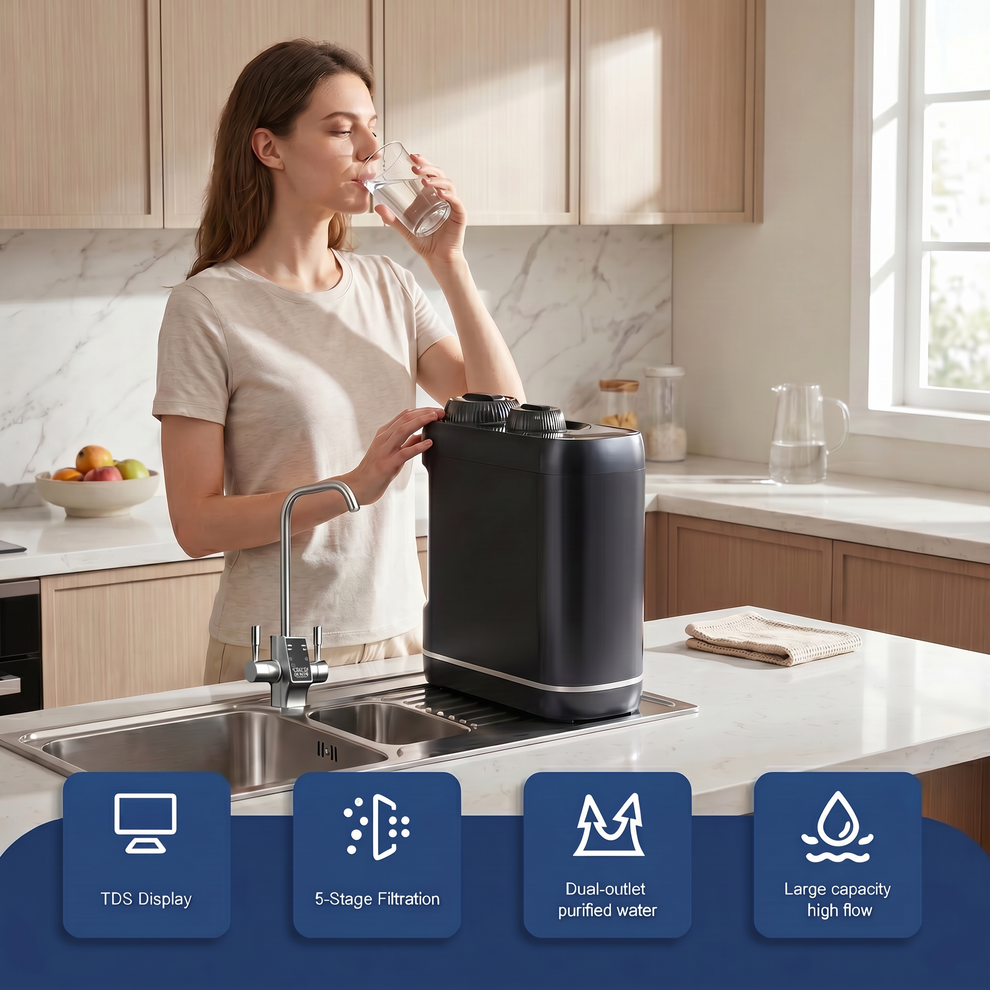
To implement this advanced level of purification in your household, explore our latest direct-to-consumer filtration hardware. Reviewing our curated New Arrival reverse osmosis system for home catalog allows you to discover space-saving, multi-stage systems built with high-rejection membranes that fit neatly beneath standard kitchen sinks, providing a reliable line of defense against public pipe contaminants.
2. Difference 2: Total Dissolved Solids (TDS) and Mineral Profiles
Total Dissolved Solids refers to the cumulative concentration of inorganic salts, organic matter, and metallic ions dissolved completely inside a liquid sample, measured in parts per million (ppm). Standard tap water consistently displays high TDS levels, frequently ranging from 150 ppm to well over 500 ppm in regions with heavy limestone deposits or agricultural runoff. While city guidelines label these dissolved minerals as safe, an excess of un-chelated calcium and magnesium carbonates can put extra strain on your body\'s filtration systems.
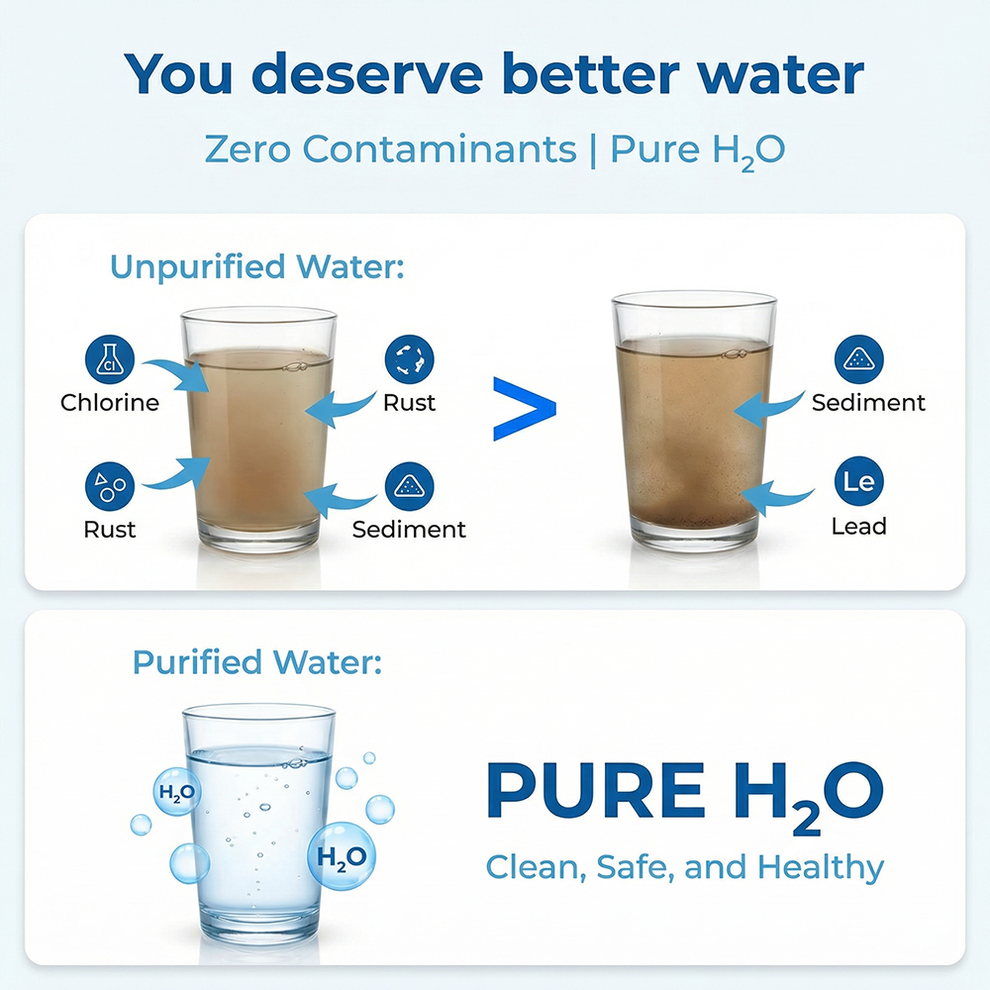
As our founder discovered during her recovery from severe kidney stones, an overabundance of heavy minerals in your daily drinking supply can lead to painful health issues. Reverse osmosis purification drops fluid TDS levels down to a pristine 5 to 20 ppm. If you are ready to completely clear out these heavy mineral compounds from your daily drinking water, we recommend browsing our comprehensive All products reverse osmosis system for home collection to discover versatile under-sink and multi-tier systems built to handle severe hard water conditions effortlessly.
3. Difference 3: Volatile Chemicals, Fluoride, and Disinfection Byproducts
To keep biological pathogens from growing inside public water lines, municipal utilities continuously dose their water networks with heavy loads of liquid chlorine or chloramines. While this chemical treatment is necessary for open public distribution, it introduces serious downsides at your kitchen tap. When free chlorine reacts with natural organic matter in the water, it generates toxic disinfection byproducts like trihalomethanes (THMs) and haloacetic acids, which are classified as known carcinogens and have been linked to long-term health risks.
Additionally, public water supplies frequently contain added synthetic fluoride compounds and trace pharmaceutical residues that pass right through standard municipal filters. A high-quality reverse osmosis setup uses multi-stage filtration to eliminate these chemical hazards completely. An initial activated carbon pre-filter strips out free chlorine gases instantly, protecting the delicate RO membrane from chemical degradation. The main membrane then filters out dissolved fluoride ions, pesticide molecules, and trace industrial chemicals, ensuring your water is clean, pure, and completely safe.
To solve this rental housing limitation without giving up high-end water purity, we recommend utilizing advanced, freestanding hardware. Deploying our specialized Countertop RO Systems provides your kitchen station with high-performance multi-stage filtration that plugs straight into standard outlets with zero plumbing adjustments required. These modern countertop units use smart internal recycling pumps to maximize water efficiency while providing a portable, rental-friendly setup that delivers crisp, pure water instantly.
4. Difference 4: Organoleptic Characteristics (Taste, Odor, and Clarity)
The sensory experience of drinking water—its taste, smell, and visual clarity—dictates how much water you and your family actually drink each day. Regular tap water frequently exhibits an unpleasant, chemical-heavy scent profile due to residual chlorine compounds. Depending on your local geology, it can also take on a metallic tang from old cast-iron water mains or a muddy, musty flavor caused by seasonal algae blooms in municipal supply reservoirs.
Reverse osmosis filtration completely transforms these sensory attributes. Stripping out the dissolved mineral salts, metallic ions, and chemical compounds that cause bad odors yields exceptionally clear, crisp water with a completely neutral taste. This improved flavor profile significantly boosts your daily hydration compliance, making it easy to hit your hydration goals. It also enhances the natural flavors of your cooking, allowing the true profiles of specialty coffee beans, loose-leaf teas, and homemade stocks to shine through without any muddy or metallic interference.
5. Difference 5: Appliance Longevity and Household Maintenance Scaling
The differences between RO water and regular tap water extend far beyond personal health, directly impacting the lifespan of your household appliances. When hard tap water is heated inside a coffee maker, steam iron, or automated ice machine, the dissolved calcium and magnesium ions drop out of solution. This process forms a rock-hard layer of calcium carbonate scale along internal copper heating elements and delicate water lines.
Over time, this scale buildup restricts water flow, reduces thermal efficiency, and causes premature heating element failures. Using reverse osmosis water eliminates these scaling minerals entirely. Running pure, low-TDS water through your high-end appliances prevents internal scale accumulation, helping you save on maintenance costs and ensuring your equipment operates efficiently for years to come.
Sourcing the Right Reverse Osmosis Infrastructure for Your Home
Selecting the right water system requires matching the hardware to your family\'s daily water usage and lifestyle needs. For active households that require large volumes of water for drinking, cooking, and washing produce, standard low-flow storage systems can create frustrating bottlenecks. We recommend upgrading to our specialized High-Flow RO Systems, which utilize tankless designs and powerful internal booster pumps to deliver fresh, pure water to your tap instantly without requiring large storage tanks.
For outdoor enthusiasts, remote off-grid cabins, or emergency preparedness setups where electricity is unavailable, you need a highly adaptable solution. Sourcing from our durable Portable & Non-Electric collection provides your team with rugged, pressure-driven filtration units that work perfectly using simple manual or gravitational pressure. These versatile, non-electric systems ensure your family has access to pure, safe drinking water during power outages or extended off-grid wilderness adventures.
No matter which specific setup fits your home—whether a sleek countertop model for a modern apartment or a high-flow under-sink system for a busy family kitchen—investing in a premium reverse osmosis filter protects your health and brings total peace of mind to your daily hydration routine. Exploring the complete catalog at Puflow allows you to discover high-performance filtration systems engineered to deliver clean, crisp water with exceptional reliability year after year.
Frequently Asked Questions
Does drinking reverse osmosis water strip essential minerals from the human body?
No, this is a common myth. While reverse osmosis filtration removes dissolved inorganic minerals from water, the human body absorbs the vast majority of its essential minerals—like calcium, magnesium, and potassium—from daily food intake and a balanced diet, not from drinking water fluid.
Why do reverse osmosis systems generate wastewater during the filtration cycle?
RO systems generate wastewater because they use a cross-flow filtration process. To prevent the ultra-fine semi-permeable membrane from clogging, a portion of the incoming water stream continuously flushes rejected minerals and contaminants down the drain, keeping the membrane clean and efficient.
How often do I need to replace the internal filters in a home RO system?
From our experience, standard sediment and carbon pre-filters should be replaced every 6 to 12 months to protect the system. The main reverse osmosis membrane is highly durable and typically lasts between 2 to 3 years, depending on your local water hardness and daily usage levels.
Can a standard counter pitcher filter remove heavy metals as effectively as an RO system?
No. Standard gravity-fed pitcher filters rely on basic carbon granules that help reduce chlorine taste and odor, but they lack the micro-pore structure and pressure required to remove dissolved heavy metals, fluoride, or synthetic PFAS chemicals from your water supply.
Technical References and Global Water Standards
1. NSF/ANSI Standard 58: Reverse Osmosis Drinking Water Treatment Systems - Point-of-Use Contaminant Reduction and Material Safety Metrics.
2. World Health Organization (WHO) - Guidelines for Drinking-water Quality: Dissolved Solids, Chemical Disinfection, and Long-Term Nutrient Profiles.
3. Environmental Protection Agency (EPA) - National Primary Drinking Water Regulations: Understanding Class 4 Contaminants and Membrane Rejection Metrology.
4. Puflow Water Quality Research Lab - Internal Field Performance Database on TDS Reduction and Membrane Longevity Patterns across Hard Water Regions.
5. Precision Fluidic Components and Industrial Dispensing Control: High-Precision Ceramic Metering Pump Systems