


7 Differences Between Tankless and Tank-Based RO Systems for Home Use
Drinking enough water is universally known as the baseline of physical well-being. However, merely tracking your volumetric intake can create a false sense of security if the fluid contains hidden dissolved solids, heavy metals, or high mineral overloads. When water purity is compromised, the human body acts as the ultimate filter, which can lead to painful health crises. Our founder believed she was living healthily, drinking 2 liters of water daily—a disciplined habit she wore like a badge of honor, assuming hydration was her foundation. But one ordinary day, her body sent a different message when severe stomach pain struck without warning. Within hours, it became unbearable, resulting in a jarring diagnosis: kidney stones. One had lodged in her ureter, trapping her in a week-long hospital stay before finally passing.

This painful medical experience forced us to realize that consuming unpurified or poorly filtered water can have immediate, severe physiological consequences. To protect your kidneys and overall health, implementing a residential reverse osmosis setup is the single most effective intervention available. When shopping for hardware, you will immediately face a primary design choice: direct-flow tankless configurations or traditional pressurized accumulator structures. Evaluating the mechanical Differences Between Tankless and Tank-Based RO Systems allows homeowners to select an architecture that aligns with their space constraints, water usage habits, and maintenance capabilities.
Table of Contents
- 1. Secondary Contamination and Fluid Freshness
- 2. Spatial Footprint and Under-Sink Real Estate Utilization
- 3. Flow Rate Delivery and Immediate Gallon-Per-Day Output
- 4. Wastewater Ratios and Pure-to-Drain Efficiency
- 5. Electrical Power Dependence and Mechanical Simplicity
- 6. Maintenance Complexity and Filter Lifecycle Dynamics
- 7. Upfront Equipment Investment and Total Ownership Costs
- 8. Summary Comparison Matrix
- 9. Discover the Puflow Engineering Advantage
- 10. Frequently Asked Questions (FAQs)
- 11. Professional and Clinical References
1. Secondary Contamination and Fluid Freshness

The primary engineering difference between tankless and tank-based designs lies in where the purified water goes immediately after passing through the RO membrane. Traditional systems pump product water into a pressurized rubber bladder storage tank. While this tank ensures water is ready when you open the faucet, storing standing water in a dark, sealed container for hours or days introduces distinct hygiene risks. Over time, the internal rubber diaphragm can degrade, or a stagnant biofilm can develop, altering taste and compromising purity.
From our experience, tankless configurations remove this secondary storage risk entirely. When you turn on a tankless faucet, an internal booster pump activates instantly, pushing tap water through the filtration layers in real time. Because the water flows straight from the membrane to your glass without sitting in a holding area, it remains crisp, clean, and highly fresh. This direct-flow design eliminates secondary stagnation, providing a safer option for family wellness.
2. Spatial Footprint and Under-Sink Real Estate Utilization
Kitchen cabinet space under the sink is premium real estate, frequently occupied by garbage disposals, plumbing traps, and household cleaners. Traditional tank systems are physically bulky, requiring a large accumulator tank that typically holds 3 to 5 gallons of water. This tank takes up significant space, often forcing homeowners to modify their under-sink layout or sacrifice valuable storage area.
We recommend tankless multi-port systems if you want to maximize cabinet space. Without a large storage tank, a tankless reverse osmosis unit features a sleek, integrated design that takes up a fraction of the space. This small profile allows it to fit neatly into tight corners or compact modern apartments, leaving plenty of room for other under-sink essentials while keeping the installation tidy.
3. Flow Rate Delivery and Immediate Gallon-Per-Day Output
How the system dispenses water highlights another major operational contrast between the two designs. Tank systems rely on the compressed air pocket inside the accumulator to push water up to the tap. This design delivers a fast initial flow rate, filling a pitcher quickly. However, once the tank empties, the flow drops to a slow trickle, and you must wait hours for the system to slowly refill the tank.
Tankless systems handle flow delivery differently, utilizing high-output membranes measured in Gallons Per Day (GPD). A premium tankless system can provide an uninterrupted flow rate of 600 GPD to 1000 GPD. While the initial cup might fill a second slower than a full tank system, a tankless unit provides an endless supply of purified water. You can fill multiple large pots for cooking back-to-back without ever running out or waiting for a tank to slowly rebuild pressure.
4. Wastewater Ratios and Pure-to-Drain Efficiency
Reverse osmosis filtration naturally produces wastewater to flush away impurities and prevent the main membrane from fouling prematurely. However, the ratio of purified water to discharged wastewater varies significantly between these two configurations due to changes in backpressure.
In traditional tank setups, as the storage tank fills, it creates internal backpressure against the RO membrane. This backpressure slows down the filtration process and increases wastewater, often resulting in an inefficient ratio where 3 to 4 gallons of water are sent down the drain for every single gallon of pure water produced. Tankless systems utilize built-in electric booster pumps to maintain consistent pressure without backpressure interference. This allows them to achieve highly efficient waste ratios, often delivering 2:1 or 3:1 pure-to-waste performance, which significantly lowers household water consumption.
5. Electrical Power Dependence and Mechanical Simplicity
Understanding the utility requirements of each system is essential for proper kitchen planning and installation. Traditional tank-based reverse osmosis setups operate using purely mechanical water pressure. The incoming line pressure forces water through the filters and into the holding tank without requiring an electrical connection. This means the system continues to supply purified water from its storage reserve even during a complete power outage.
Tankless systems require a continuous power source to run their internal high-pressure booster pumps and automated flushing valves. If your kitchen island or under-sink cabinet lacks an accessible GFCI electrical outlet, you will need to factor in electrical modifications during setup. For homes in remote regions prone to regular grid outages, balancing this electrical requirement against your family's daily water needs is an important part of system selection.
6. Maintenance Complexity and Filter Lifecycle Dynamics
Long-term maintenance routines directly shape ownership satisfaction and ongoing operating costs. Traditional multi-stage tank systems require an involved filter replacement process, often involving dedicated housing wrenches, loose o-rings, and manual disinfection of the interior storage bladder to prevent biological growth. Additionally, because these systems lack smart monitoring sensors, users must manually track filter dates, which often leads to overdue replacements and reduced water quality.
From our experience, modern tankless systems streamline this maintenance routine with quick-twist modular cartridges that can be swapped out in seconds without shutting off the main water line. Most tankless units include smart LED displays directly on the chassis or faucet handle to monitor real-time Total Dissolved Solids (TDS) and track exact filter lifespans. This integrated monitoring removes the guesswork, ensuring your system always filters effectively to protect your family's health.
7. Upfront Equipment Investment and Total Ownership Costs
Budget allocation involves balancing immediate purchase costs against long-term operational expenses. Traditional tank systems use simpler mechanical designs, making them highly affordable entry-level options for budget-conscious buyers. However, their lower initial cost is often offset over time by shorter filter lifespans and higher water bills caused by their less efficient wastewater ratios.
Tankless reverse osmosis systems require a higher upfront investment due to their integrated booster pumps, smart sensor arrays, and high-flow membranes. However, they offset this initial expense over time through lower wastewater output and extended filter lifespans. For homeowners viewing water purification as a long-term investment in health and property value, a high-efficiency tankless system offers compelling lifetime savings.
8. Summary Comparison Matrix
To help you evaluate these technical Differences Between Tankless and Tank-Based RO Systems, the following responsive table outlines how both configurations perform across core residential metrics.
| Operational Feature | Traditional Tank-Based Systems | Advanced Tankless RO Systems | Core Household Impact |
|---|---|---|---|
| Secondary Contamination Risk | Moderate; standing water can develop biofilm over time | Zero; real-time filtration ensures maximum freshness | Protects sensitive individuals from stagnant impurities |
| Cabinet Space Requirement | High; requires substantial space for a 4-gallon tank | Minimal; sleek unit fits easily into tight cabinets | Preserves valuable under-sink storage areas |
| Continuous Water Supply | Limited to tank capacity; requires hours to refill | Infinite; continuous real-time high-GPD output | Supports heavy cooking and large family gatherings |
| Pure-to-Waste Water Ratio | Poor; often wastes 3 to 4 gallons per pure gallon | Excellent; high-efficiency ratios up to 3:1 | Lowers municipal utility bills and saves water |
| Electricity Requirement | None; runs entirely on mechanical line pressure | Required; runs internal booster pump and sensors | Determines under-sink wiring and outlet placement |
| Filter Status Monitoring | Manual tracking; no built-in status displays | Smart indicators track TDS and filter lifespans | Guarantees timely maintenance for optimal water quality |
9. Discover the Puflow Engineering Advantage
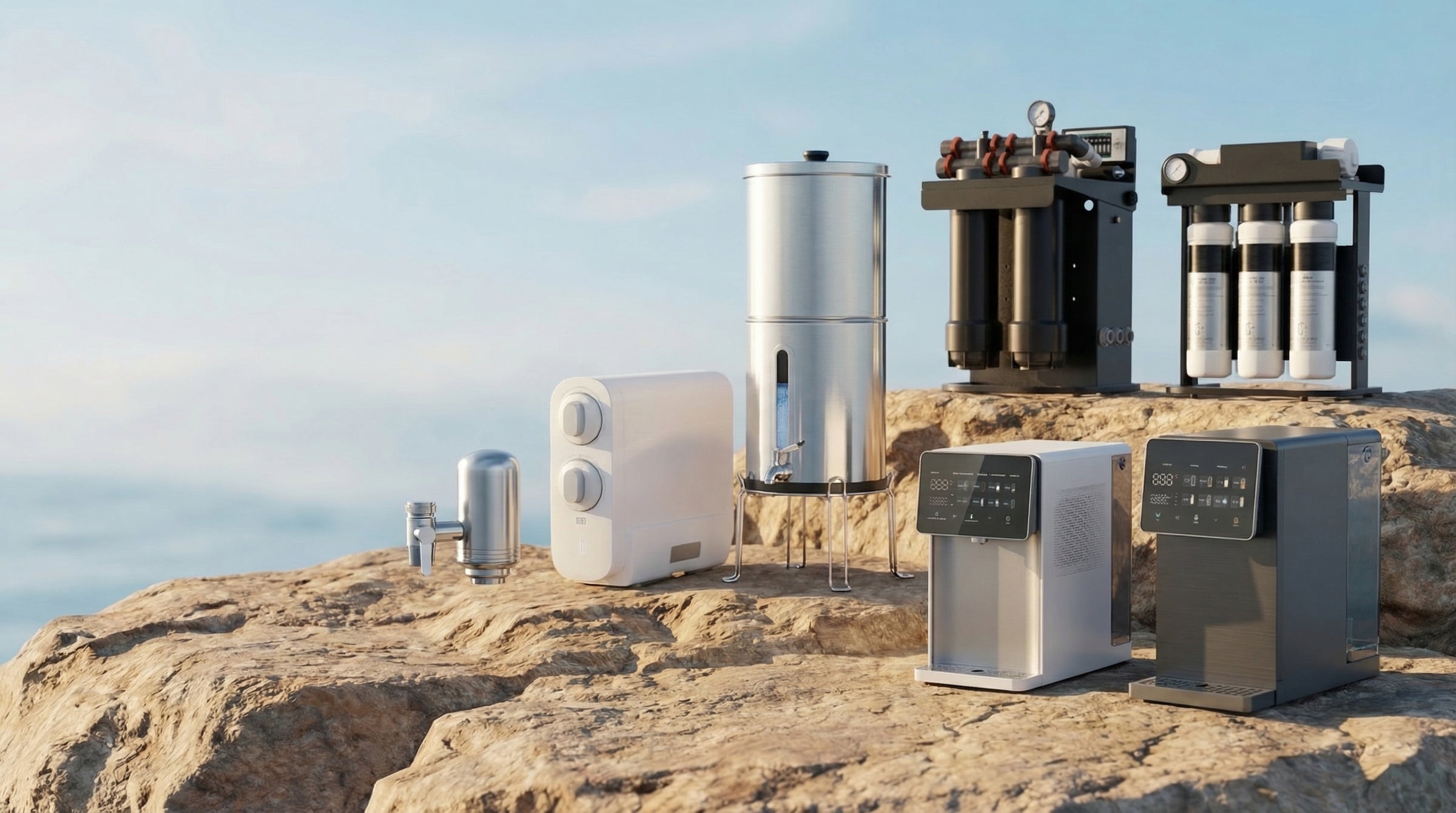
Choosing the ideal filtration setup requires matching advanced purification technology with your home's unique layout. Puflow develops high-performance water treatment systems engineered to deliver outstanding reliability, precise micro-filtration, and pristine output quality. By utilizing premium, multi-stage filtration composites, our systems remove dangerous dissolved solids and heavy metals, protecting your kidneys and ensuring peace of mind for your household.
For households looking to integrate a sleek system into a finished kitchen countertop or bar area without drilling through stone counters, we recommend exploring our premium Countertop RO Systems. If you live in an older home, rental property, or a location without under-sink electrical outlets, you can browse our versatile Portable & Non-Electric systems to find efficient, power-free filtration choices.
For busy kitchens, large families, or homes that require fast, continuous water delivery for cooking, we suggest implementing our advanced High-Flow RO Systems. To view our newest design updates and explore special promotional offers, you can browse our New Arrival reverse osmosis system for home collection, or view our complete residential product line by exploring All products reverse osmosis system for home to upgrade your family's water safety.
10. Frequently Asked Questions (FAQs)
11. Professional and Clinical References
1. Water Quality Association. (2024). Residential Reverse Osmosis Drinking Water Treatment Systems: Performance and Structural Integrity Standards (WQA S-300). Lisle, IL. Available via (https://wqa.org/)
2. National Kidney Foundation. (2025). Dietary Hydration Interventions, Groundwater Mineral Concentrations, and Clinical Pathogenesis of Nephrolithiasis. Kidney Health Journal Portfolio.
3. International Code Council. (2026). International Residential Plumbing Code - Section P2902: Water Efficiency and Cross-Connection Backflow Regulation for Household Treatment Systems. Available via (https://www.iccsafe.org/)