


5 Tips to Reduce Waste Water from Reverse Osmosis: An Industry Guide
Reverse osmosis (RO) remains the undisputed gold standard for residential and commercial water purification. However, the legacy engineering behind traditional RO systems harbors a dark, environmentally hostile secret: massive water rejection rates. It is not uncommon for a standard, under-sink RO system purchased at a big-box hardware store to waste four gallons of water for every single gallon of purified water it produces. In an era of escalating municipal water costs and global drought conditions, flushing 80% of your incoming water supply down the drain is an unacceptable commercial and ethical failure.

From our experience engineering advanced filtration technologies at Puflow, we categorically reject the notion that high purity must come at the expense of high waste. The technology to optimize membrane efficiency exists today. Whether you are dealing with a legacy system that is driving up your utility bills or researching a fresh installation, you must address the hydrostatic pressure dynamics that cause this waste. Today, we will outline exactly how to reduce waste water from reverse osmosis through precise mechanical upgrades, maintenance protocols, and advanced system replacements.
Quick Answer: How to Reduce RO Wastewater
To directly answer the search intent, here are the 5 definitive tips to reduce waste water from reverse osmosis:
- Install a Permeate Pump: This non-electric device isolates the RO membrane from the back-pressure of the storage tank, increasing net pressure and reducing wastewater by up to 80%.
- Upgrade to a Tankless RO System: Modern tankless systems use internal electric booster pumps to force water through the membrane rapidly, achieving a highly efficient 1.5:1 or 2:1 pure-to-waste ratio.
- Utilize a Zero-Waste Retrofit Kit: These kits reroute the rejected brine water back into your home's hot water line instead of dumping it down the drain.
- Repurpose the Reject Water: Route the wastewater line into a collection barrel or directly into your garden. RO reject water is simply concentrated tap water and is perfectly safe for irrigation and cleaning.
- Maintain Pre-Filters Religiously: Clogged sediment and carbon filters drop the incoming water pressure before it hits the RO membrane. Low pressure exponentially increases the volume of wastewater produced.
Table of Contents
- What It Is and How It Works: The Mechanics of RO Waste
- The 5 Actionable Tips in Detail
- Benefits of Optimizing Your RO System
- Limitations and Drawbacks of Zero-Waste Modifications
- Who Should Use It vs. Who Does Not Need It
- Common Mistakes Homeowners Make
- Buying Considerations for Low-Waste Systems
- Quick Summary Table: Waste Reduction Methods
- Comparison Table: Traditional vs. Modern RO Systems
- Pros and Cons Table: Retrofitting vs. Upgrading
- Expert Recommendation from Puflow
- The Bottom Line
- Frequently Asked Questions (FAQ)
What It Is and How It Works: The Mechanics of RO Waste
To successfully reduce waste water from reverse osmosis, you must first understand why the waste exists. Reverse osmosis is a "cross-flow" filtration process. Unlike a coffee filter that traps particles until it clogs, an RO membrane splits the incoming water into two streams. One stream is forced through the microscopic pores of the semi-permeable membrane, becoming your purified drinking water (permeate). The other stream rapidly sweeps across the surface of the membrane, washing away the rejected heavy metals, fluoride, and total dissolved solids (TDS).
This "washing" action is the wastewater (brine). Without this constant flushing, the membrane would scale over and permanently clog within hours. However, the ratio of pure water to wastewater is heavily dependent on hydrostatic pressure. Traditional systems use pressurized storage tanks. As the tank fills with pure water, it creates "back-pressure" that pushes back against the RO membrane. The membrane has to work harder and harder to push water into the tank, resulting in a dramatic drop in efficiency. By the time a traditional tank is 80% full, the system might be wasting 6 or 7 gallons of water just to squeeze out one final pint of pure water.
The 5 Actionable Tips in Detail
1. Install a Permeate Pump

In most professional situations involving legacy tank-based RO systems, a permeate pump is the most cost-effective mechanical upgrade available. This device requires no electricity. It harnesses the hydraulic energy of the wastewater stream to push the purified water into the storage tank. Crucially, it creates a physical barrier between the tank's back-pressure and the RO membrane. By allowing the membrane to operate as if it is filtering into an empty atmospheric tank, efficiency skyrockets, extending membrane life and reducing waste by up to 80%.
2. Upgrade to a Tankless RO System
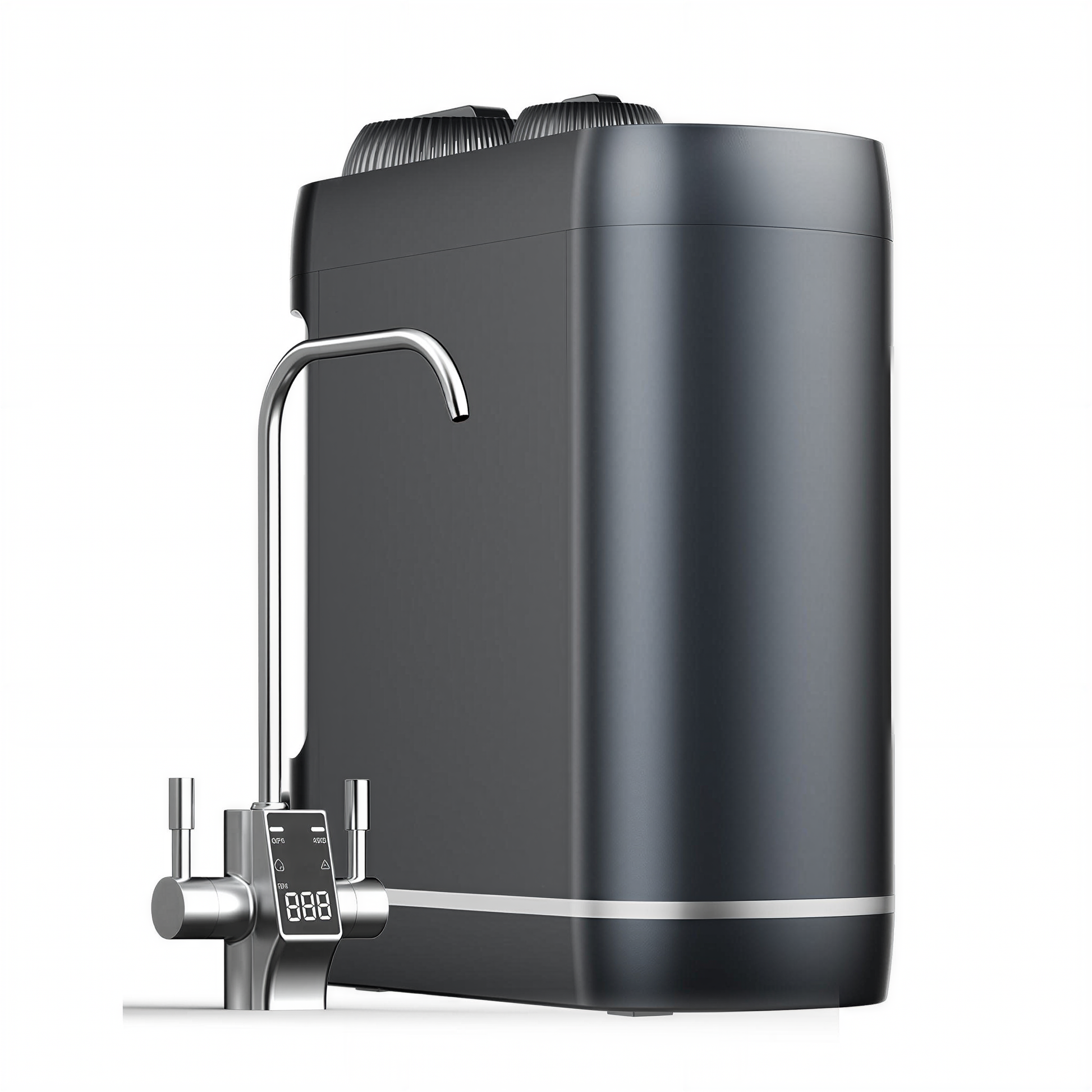
If you are frustrated by the limitations of older technology, we recommend abandoning the storage tank entirely. Modern tankless systems, such as the A10S 800G Tankless RO System, utilize integrated electric booster pumps. These pumps generate massive, consistent pressure across the membrane, producing water on-demand at flow rates of up to 800 gallons per day. Because there is no tank back-pressure to overcome, these systems routinely achieve a 2:1 pure-to-waste ratio, drastically cutting your water bill.
3. Install a Zero-Waste Retrofit Kit

A zero-waste kit physically interrupts the wastewater drain line and reroutes it back into your home's plumbing—typically the hot water supply line under your sink. When you use hot water elsewhere in the house, the RO reject water is utilized rather than wasted. While theoretically brilliant, these kits require a nearby 110V outlet for an electric pump and complex plumbing modifications. They also slightly increase the TDS of your hot water line.
4. Repurpose the Reject Water
If you are mechanically averse and do not want to alter your plumbing, the simplest solution is to repurpose the brine. The wastewater from an RO system is not toxic sludge; it is simply tap water with a 20% to 30% higher concentration of minerals. By running an extended 1/4-inch polyethylene tube from the RO drain port out to a rain barrel or a garden bed, you can use this water for landscaping, washing your car, or flushing toilets.
5. Maintain Pre-Filters Religiously
Reverse osmosis membranes require an ideal incoming pressure of at least 60 PSI to function efficiently. The water must pass through sediment and carbon pre-filters before reaching the membrane. If you neglect replacing these filters, they become clogged with silt and chlorine byproducts, dropping the pressure reaching the membrane to 30 or 40 PSI. At low pressures, the RO system cannot force water through the microscopic pores effectively, sending almost all of the incoming tap water straight down the drain.
Benefits of Optimizing Your RO System
When you take proactive steps to reduce waste water from reverse osmosis, the benefits extend far beyond a lower monthly utility bill. Lowering your waste ratio means less water is passing through your expensive pre-filters, extending their lifespan by months. Furthermore, by increasing system efficiency, your storage tank will refill much faster, ensuring you never run out of purified water when cooking or entertaining guests. Upgrading to a highly efficient unit like the C9 Pro RO Water Purifier represents a commercial and practical judgment that pays dividends in hardware longevity and environmental stewardship.
Limitations and Drawbacks of Zero-Waste Modifications
We must present a balanced, expert view: attempting to eliminate all wastewater is dangerous to the hardware. If you restrict the drain line too aggressively to artificially boost your recovery ratio, the membrane will not have enough water velocity to wash away the rejected contaminants. This leads to rapid "scaling"—where calcium and magnesium permanently bond to the membrane surface. In our testing, forcing a 1:1 ratio on extremely hard well water without proper softening pretreatment destroys an RO membrane within three months.
Who Should Use It vs. Who Does Not Need It
For commercial users and urban homeowners: If you live in a municipality with high water tier rates or strict drought restrictions, you absolutely must implement these waste reduction tips or upgrade to a high-efficiency tankless system. The cost of wasted water will quickly exceed the cost of the system itself.
Who does not need it: If your incoming water has a shockingly high TDS (over 1000 ppm), such as rural well water, you actually need a higher waste ratio to keep the membrane from fouling. Alternatively, if you want zero waste and zero installation hassle, bypass RO entirely and utilize a Gravity Water Filter 3.8L. These systems use capillary action through carbon and ceramic elements, producing zero wastewater, though they cannot remove dissolved salts like an RO system can.
Common Mistakes Homeowners Make
The most egregious mistake we see is ignoring the ambient water temperature. RO membranes are rated at 77°F (25°C). For every degree the water temperature drops below 77°F, membrane production decreases by roughly 1.5%. If you live in a cold climate and your tap water is 45°F in the winter, your system will produce vastly more wastewater. Installing a simple booster pump can overcome the increased viscosity of cold water.
Another frequent error is buying cheap, unbranded replacement filters that lack proper micron ratings, allowing sediment to bypass and blind the RO membrane. Always ensure you are using certified replacements, much like you would secure a M8-2 Under Sink Water Filter with exact OEM specifications.
Buying Considerations for Low-Waste Systems
If you are choosing to replace your system rather than retrofit it, you must evaluate the recovery ratio explicitly stated by the manufacturer. Do not buy any system in 2026 that advertises a 1:3 or 1:4 pure-to-waste ratio. Look for systems that guarantee a 1:1 or 2:1 recovery rate. Furthermore, evaluate whether your kitchen can support an under-sink installation, or if you require a specialized countertop unit that eliminates plumbing modifications entirely.
Quick Summary Table: Waste Reduction Methods
| Method | Average Cost | Waste Reduction Impact | Installation Difficulty |
|---|---|---|---|
| Permeate Pump | $50 - $80 | Up to 80% reduction | Moderate (Requires tubing cuts) |
| Tankless RO Upgrade | $300 - $600 | Achieves 1.5:1 or 2:1 ratio | Easy to Moderate |
| Zero-Waste Retrofit | $150 - $250 | 100% elimination (reroutes water) | Hard (Plumbing & electrical required) |
| Repurpose Drain Line | $10 - $20 | 0% reduction, 100% reuse | Easy |
Comparison Table: Traditional vs. Modern RO Systems
| System Type | Water Waste Ratio (Pure:Waste) | Space Requirement | Water Delivery Method |
|---|---|---|---|
| Traditional Tank RO | 1:4 (Poor) | High (Requires large storage tank) | Stored and pressurized |
| Tankless Electric RO | 1.5:1 or 2:1 (Excellent) | Low (Slim profile) | On-demand via booster pump |
| Countertop Dispenser RO | Recirculating (Minimal Waste) | Countertop only | On-demand, often with heating |
Pros and Cons Table: Retrofitting vs. Upgrading
| Approach | Pros | Cons |
|---|---|---|
| Retrofitting Legacy RO (Permeate Pump/Valves) | Low initial capital expenditure; utilizes existing hardware; significantly improves tank fill times. | Requires manual tubing modifications; introduces new points of failure (leaks); does not match modern tankless efficiency. |
| Upgrading to Tankless/Countertop RO | Massive water savings out of the box; reclaims under-sink space; eliminates stagnant tank water bacteria risks. | Higher upfront purchase cost; requires an electrical outlet under the sink or on the counter. |
Expert Recommendation from Puflow
From our experience, attempting to band-aid a 15-year-old traditional RO system with complex zero-waste retrofit kits often results in catastrophic plumbing leaks and premature membrane fouling. In most professional situations, we recommend a total paradigm shift away from under-sink tank systems. If you want absolute control over your water waste without sacrificing purity, we engineer specific solutions to solve this exact problem.
We highly recommend the Puflow RO32 Countertop Reverse Osmosis System. This unit completely eliminates the need for complex under-sink plumbing and drastically reduces wastewater through intelligent internal recirculation algorithms. It features a 0.0001μm RO Membrane and provides instant hot water up to 205°F.
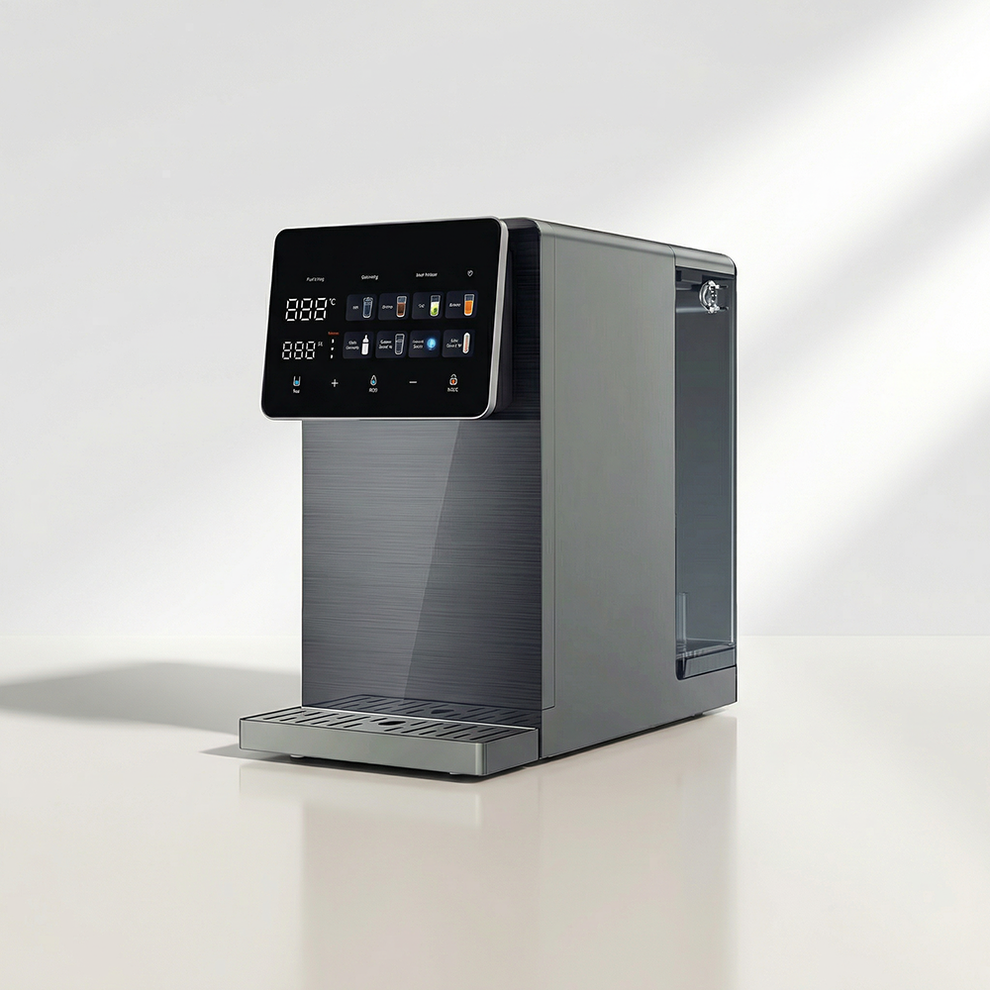
Puflow RO32 Countertop RO Hot Water System
- Filtration Precision: 0.0001μm RO Membrane
- Heating Temperature: 113°F–205°F (45°C–96°C)
- Water Tank Capacity: 7 Liters
- Flow Rate: 0.2 L/min
- Certifications: NSF, CE, RoHS, REACH
Alternatively, for heavy-duty applications where ambient humidity permits, bypassing RO entirely via a G10 Atmospheric Water Generator extracts pure drinking water directly from the air, creating a literal zero-waste scenario.
The Bottom Line
You no longer have to accept excessive wastewater as the inherent cost of clean drinking water. Whether you choose to implement a permeate pump to combat tank back-pressure, repurpose your brine line for agricultural use, or upgrade entirely to a high-efficiency tankless or countertop unit from Puflow, taking action is a commercial and environmental imperative. Evaluate your household's daily water consumption, inspect your current system's pressure dynamics, and make the pragmatic decision to upgrade your filtration architecture today.
Frequently Asked Questions (FAQ)
Reverse osmosis relies on cross-flow filtration. The "waste" water is actually a rapid flush that sweeps across the surface of the microscopic membrane. If this water did not constantly wash away the rejected heavy metals, fluoride, and minerals, the pores of the membrane would permanently clog with scale within hours, destroying the filter.
No, you should not drink the reject water. It contains a highly concentrated slurry of all the contaminants, heavy metals, and total dissolved solids (TDS) that were removed from your tap water. However, it is perfectly safe to use for watering non-edible plants, washing your car, or flushing toilets.
A permeate pump is most effective in homes with low to moderate incoming water pressure (30 to 50 PSI). If your municipal water pressure is already exceptionally high (above 65 PSI), the RO membrane has enough driving force to overcome the storage tank's back-pressure naturally, making a permeate pump largely redundant.
Authoritative Industry References
- Environmental Protection Agency (EPA) WaterSense - National guidelines on residential water efficiency, conservation standards, and mitigating appliance water waste.
- Water Quality Association (WQA) - The premier trade association representing the residential commercial water treatment industry, providing fact sheets on RO cross-flow filtration dynamics.
- NSF International - The leading global public health and safety organization developing rigorous testing standards (such as NSF/ANSI 58) for reverse osmosis drinking water treatment systems.