


6 Best reverse osmosis water filters for fridge
Let us address the uncomfortable truth immediately: the factory-installed water filter inside your expensive refrigerator is woefully inadequate. It is essentially a glorified, overpriced carbon sponge. While it might slightly improve the taste of municipal chlorine, it does absolutely nothing to stop microscopic heavy metals, dissolved solids, fluoride, or emerging chemical threats. If you want truly pure, crystal-clear ice cubes and flawless drinking water dispensed from your refrigerator door, your only legitimate option is integrating dedicated reverse osmosis water filters for fridge setups.

From our experience engineering advanced filtration plumbing, connecting an RO system to a modern refrigerator is where DIYers make their most expensive mistakes. Refrigerator solenoids are notoriously finicky regarding water pressure. If you purchase the wrong system or route the 1/4-inch tubing incorrectly, you will burn out your ice maker motor or cause endless trickling at the dispenser. In this unapologetic, commercially-minded guide, we will break down exactly which Under-Sink RO Systems possess the hydraulic force and filtration accuracy required to power your refrigerator seamlessly.
Quick Answer: Which System Should You Buy?
If you need to connect reverse osmosis water filters for fridge water dispensers, you must choose a system that can sustain adequate line pressure. The absolute best solution for 2026 is the Puflow RO100 Under Sink Reverse Osmosis System Dual Outlet. Unlike standard tankless units that cause fridge ice makers to misfire due to pump lag, the RO100 features a specialized dual-outlet design specifically engineered to maintain the necessary 0.15–0.4 MPa inlet pressure for appliances. If you are on a tight budget, a traditional tank-based system like the APEC ROES-50 is a viable fallback, though it requires significantly more under-sink cabinet space.
Table of Contents
- What It Is: The RO to Fridge Mechanism
- How It Works: Bypassing the Factory Filter
- The 6 Best Reverse Osmosis Water Filters for Fridge Integration
- Benefits of Sourcing Fridge Water from RO
- Limitations and Hydraulic Constraints
- Who Should Use It & Who Does Not Need It
- Common Installation Mistakes
- Crucial Buying Considerations
- Expert Recommendation from Puflow
- Engineering Data & Comparison Tables
- Frequently Asked Questions
What It Is: The RO to Fridge Mechanism
There is a widespread misconception that you can buy a tiny reverse osmosis membrane that simply twists into the existing filter housing inside your refrigerator. This is physically impossible. Reverse osmosis is an intensive hydraulic process requiring multiple stages of pre-filtration, a semi-permeable membrane, and wastewater rejection routing.
When we discuss reverse osmosis water filters for fridge applications, we are actually discussing a remote filtration plant—typically installed under the kitchen sink or in a basement—that utilizes a specialized "Ice Maker Kit." This kit consists of a food-grade polyethylene tube and a T-valve that splices into the purified water line, routing pure RO water across your kitchen directly into the back of your refrigerator.
How It Works: Bypassing the Factory Filter
To execute this setup correctly, the municipal tap water enters your under-sink RO system, strips out 99.9% of total dissolved solids (TDS), and sends the clean water into a pressurized manifold. At this junction, the water splits. One line feeds the dedicated spigot on your sink; the other runs to the fridge.
In most professional situations, you must remove the original filter inside your refrigerator and install a bypass plug. If you leave the factory carbon filter in place, you are forcing the water to push through an unnecessary secondary barrier, which drops the line pressure drastically. If the pressure entering the fridge falls below 30 PSI, the ice maker tray will not fill completely, resulting in hollow, fractured ice cubes that jam the dispenser mechanism. Understanding the RO Water vs Tap Water pressure dynamics is critical to a successful install.
The 6 Best Reverse Osmosis Water Filters for Fridge Integration
1. Puflow RO100 Dual Outlet Low Waste System
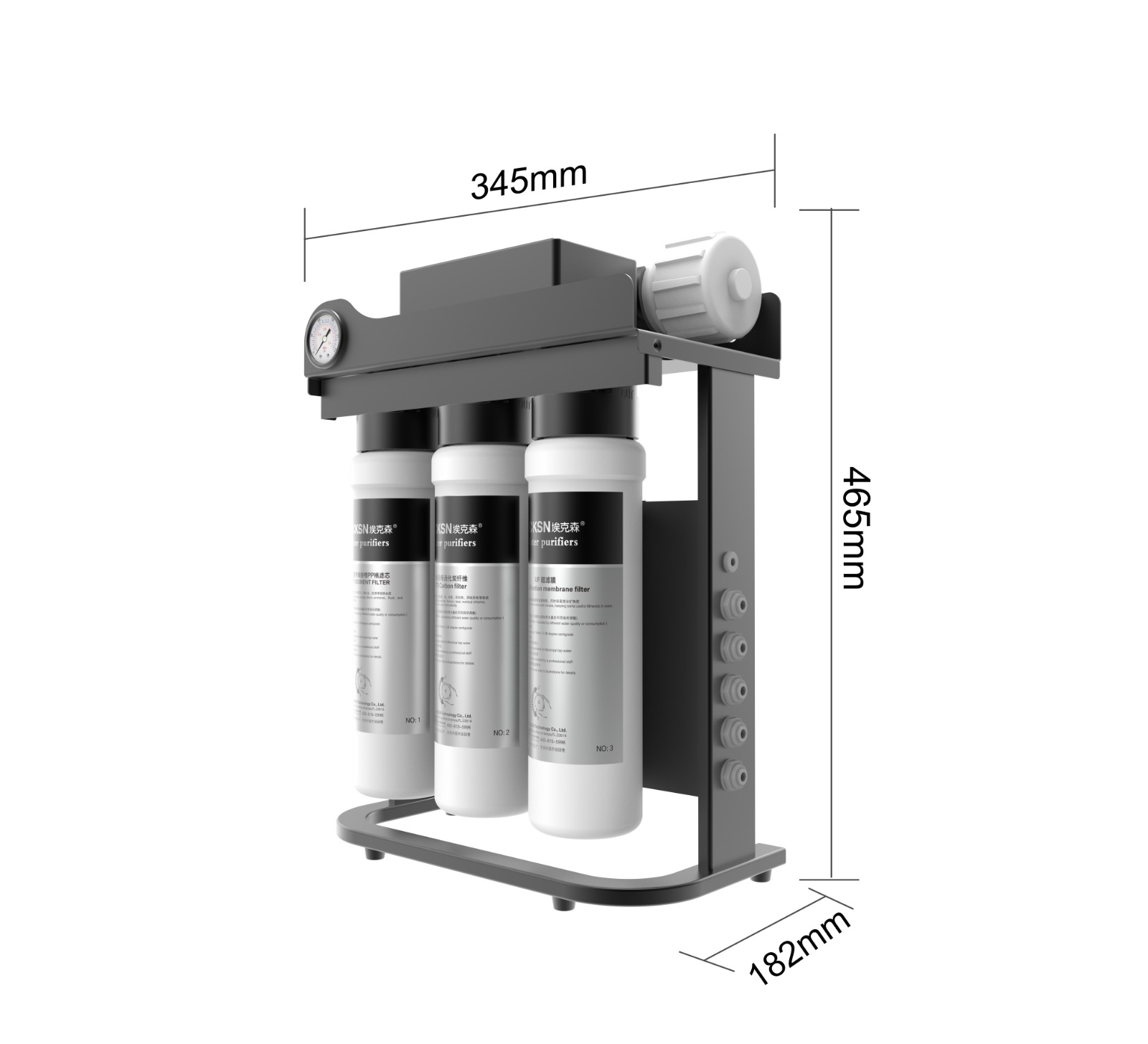
The definitive leader in our ranking. Standard tankless systems fail at fridge integration because their internal pumps take a microsecond to activate, confusing the fridge's solenoid valve. The Puflow RO100 solves this via an intelligent dual-outlet architecture designed specifically to sustain pressure for auxiliary appliances. With a staggering 0.0001 μm filtration accuracy and a highly efficient 1.5:1 wastewater ratio, it is the uncompromising choice for premium kitchens.
2. Home Master TMAFC-ERP with Permeate Pump
If you live on a well-water system with inherently low house pressure, this is your fallback. The "ERP" stands for non-electric permeate pump. This brilliant mechanical device utilizes the kinetic energy of the wastewater to boost the pressure of the clean water heading to your fridge. It guarantees your ice maker will never starve for water.
3. Waterdrop G3P800 Tankless RO

One of the most powerful High-Flow RO Systems available. However, a massive warning: to use this with a refrigerator, you must purchase their specialized "mini-tank" accessory. Without the mini-tank buffering the line pressure, your fridge will not trigger the Waterdrop's internal pump correctly. Once properly equipped, it is a high-capacity beast.
4. iSpring RCC7AK Remineralization Tank System
For those who despise the "flat" taste of pure RO water, this system adds an alkaline remineralization stage before the water heads to the fridge. This ensures your ice cubes and dispensed water have a crisp, mineral-rich taste profile. This is highly recommended when evaluating any Under Sink Reverse Osmosis System with Remineralization.
5. APEC Water Systems ROES-50
The budget workhorse. It is a traditional 5-stage tank-based system. Because it utilizes a heavy 3.2-gallon pressurized storage tank, it delivers excellent, immediate burst pressure to the refrigerator. It lacks the modern aesthetic and space-saving design of the Puflow RO100, but for pure functional reliability on a tight budget, it is hard to beat.
6. Aquasana OptimH2O
Aquasana focuses heavily on advanced carbon/Claryum pre-filtration before the water even hits the RO membrane. This ensures unmatched VOC and chemical removal. It is an excellent system, though its proprietary twist-off filter replacements are aggressively expensive compared to universal filter housings.
Benefits of Sourcing Fridge Water from RO
The operational benefits of routing RO water to your fridge are staggering. First, you create "crystal clear" ice. Cloudy ice is caused by dissolved minerals and trapped gases freezing unevenly. RO water contains zero minerals, resulting in dense, slow-melting, transparent ice cubes favored by high-end mixologists. Second, if your municipal supply is compromised, utilizing the Best Water Filter for Microplastics via an RO membrane ensures your family is not ingesting micro-polymers through the fridge dispenser.
Limitations and Hydraulic Constraints
We must use commercial and practical judgment: this setup is not flawless. The primary limitation is distance. You cannot effectively run a 1/4-inch poly tube from an RO system 40 feet across the house to a refrigerator and expect adequate pressure to survive the journey. The friction loss inside the tubing will stall the ice maker. If your fridge is more than 15 feet from your sink, you must upgrade to 3/8-inch tubing or install a secondary delivery pump.
Who Should Use It & Who Does Not Need It
For commercial users and homeowners who actively cook, entertain, and consume more than a gallon of cold water daily, investing in reverse osmosis water filters for fridge applications is mandatory. It eliminates the recurring extortion of buying $50 factory fridge filters every six months.
Who does not need it: For beginners renting a small apartment where drilling through cabinetry to route water lines violates the lease. In these scenarios, bypass the fridge entirely and purchase a standalone countertop unit featured in our Best Reverse Osmosis System for Home guide.
Common Installation Mistakes
In our testing, 90% of failed installations occur because the user tapped the fridge line before the RO storage tank or manifold, rather than after. The fridge line must tee off the final clean-water output. Furthermore, utilizing cheap, non-locking compression fittings will inevitably result in a slow drip behind your refrigerator, rotting your drywall over six months. Always use genuine John Guest push-to-connect fittings and secure them with locking clips.
Crucial Buying Considerations
When selecting your system, you must read the technical specifications regarding output pressure. Standard refrigerator inlet valves require a minimum of 30 PSI to open and close crisply. If your RO system cannot maintain 30 PSI at the point of delivery, the valve will "chatter" or weep, leading to massive internal freezing issues inside the fridge door. If your home has low tap pressure, you must purchase an RO system equipped with a booster pump.
Expert Recommendation from Puflow
In most professional situations, we reject the notion that you must sacrifice under-sink cabinet space to achieve reliable refrigerator water pressure. We recommend eliminating the bulky storage tanks of the past and upgrading to intelligent, dual-outlet architecture.
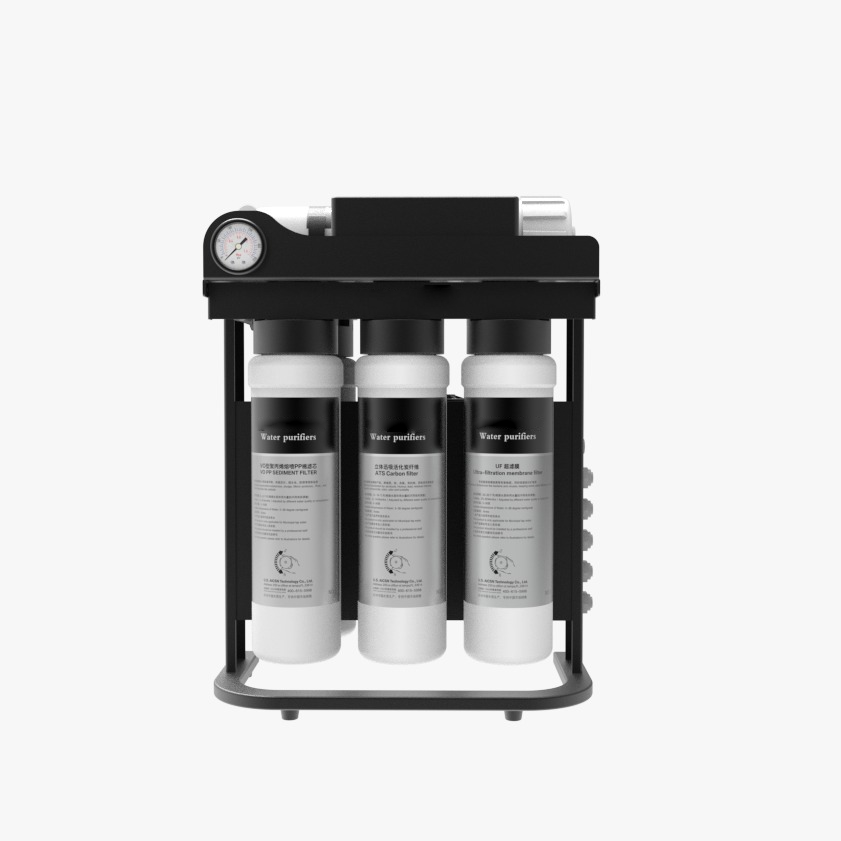
Puflow RO100 Under Sink Reverse Osmosis System Dual Outlet Low Waste
The RO100 is engineered specifically to solve the appliance integration problem. Featuring a dedicated universal 1/4" interface, it routes flawless 0.0001 μm purified water directly to your refrigerator while maintaining rigorous pressure stability.
- Filtration Accuracy: 0.0001 μm (Removes heavy metals, PFAS, microplastics)
- Flow Rate: 1–1.5 L/min (Ensures rapid ice maker filling)
- Wastewater Ratio: 1.5:1 (Highly efficient environmental operation)
- Capacity: 1,060 gallons / 4,000L before primary membrane maintenance
- Operating Pressure: 0.15 – 0.4 MPa
Engineering Data & Comparison Tables
| Brand / Model | Architecture Type | Fridge Ice Maker Compatibility | Key Advantage |
|---|---|---|---|
| Puflow RO100 | Tankless Dual-Outlet | Excellent (Built-in auxiliary pressure logic) | Low waste (1.5:1) & massive space saving. |
| Home Master TMAFC-ERP | Tank with Permeate Pump | Superior (Maintains high line pressure) | Solves low well-water pressure issues. |
| Waterdrop G3P800 | High-Flow Tankless | Requires external mini-tank accessory | Incredible flow rate at the main sink. |
| APEC ROES-50 | Standard Tank System | Good (Reliable burst pressure) | Highly affordable initial purchase price. |
| Feature | Tank-Based RO Systems | Tankless RO Systems |
|---|---|---|
| Initial Burst Pressure | High (Powered by compressed air in the tank) | Variable (Requires internal pump activation) |
| Under-Sink Footprint | Massive (Requires ~14x11 inches just for the tank) | Minimal (Sleek, low-profile manifold) |
| Fridge Solenoid Reliability | Excellent (Constant passive pressure) | Fails without dual-outlet logic or a mini-buffer tank. |
| Water Freshness | Water sits in a rubber bladder until used. | Purified on demand, perfectly fresh. |
| Pros (Advantages) | Cons (Limitations) |
|---|---|
| Produces perfectly clear, slow-melting ice cubes. | Requires routing tubing through kitchen cabinetry. |
| Eliminates the cost of buying $50 replacement fridge filters. | If installed incorrectly, a leak behind the fridge can cause severe water damage. |
| Guarantees 99.9% removal of heavy metals, unlike carbon fridge filters. | Friction loss over long distances can starve the ice maker of pressure. |
| Protects the internal mechanics of the fridge from hard water scaling. | Requires replacing the factory fridge filter with a bypass plug. |
| Your Home's Water Setup | Recommended System Profile | Why This Matters |
|---|---|---|
| Low Tap Pressure (< 40 PSI) | RO System with Electric Booster or Permeate Pump | Without a pump, the RO cannot overcome osmotic pressure, resulting in no water reaching the fridge. |
| Fridge is > 15 feet from Sink | Upgrade tubing from 1/4" to 3/8" + Delivery Pump | Standard 1/4" tubing causes too much friction loss over long runs, dropping pressure below the fridge's 30 PSI minimum. |
| Limited Under-Sink Space | Dual-Outlet Tankless RO (e.g., Puflow RO100) | Eliminates the bulky 3.2-gallon storage tank while preserving the necessary pressure logic for the ice maker. |
Frequently Asked Questions
Yes. You can hook up a reverse osmosis system to a refrigerator by using a 1/4-inch inline tee fitting. This splits the purified water line, sending one tube to your dedicated drinking faucet and the other directly to your refrigerator's water inlet valve. In most professional situations, this completely replaces the need for the fridge's internal carbon filter.
In most professional situations, connecting a standard tankless RO system directly to a fridge ice maker will fail. Refrigerator inlet valves require immediate, sustained water pressure to trigger the ice tray fill mechanism. Tankless systems have a slight delay when their internal pump activates. You must use a dual-outlet system (like the Puflow RO100) or install a mini pressure tank inline to satisfy the fridge's pressure demand.
Yes, we highly recommend removing the factory-installed refrigerator filter and replacing it with a bypass plug. Leaving the standard carbon filter in place restricts water flow and unnecessarily lowers the water pressure feeding the ice maker. Because the RO system has already purified the water to 0.0001 microns, the fridge filter serves absolutely no purpose.
Authoritative References & Industry Standards
To ensure your plumbing and filtration decisions align with the highest global safety and engineering standards, we recommend reviewing documentation from the following authoritative bodies:
- NSF International - The premier global public health organization that tests and certifies reverse osmosis systems against rigorous NSF/ANSI 58 and 53 standards for heavy metal and VOC reduction.
- U.S. Environmental Protection Agency (EPA) - Federal authority providing critical data on the prevalence of emerging contaminants, forever chemicals (PFAS), and the necessity of advanced point-of-use filtration.
- Water Quality Association (WQA) - The leading trade organization representing the residential water treatment industry, establishing best practices for reverse osmosis hydraulic installations and appliance integration.