


7 Best Water Filters for Cryptosporidium (2026 Expert Guide)
If you're reading this, you probably know that Cryptosporidium is a chlorine-resistant parasite that can cause severe gastrointestinal illness. It's a common contaminant in surface water sources, and even municipal water supplies can be vulnerable during storm events or system failures.

To effectively remove Cryptosporidium from drinking water, you need a filter that is NSF/ANSI Standard 53 or 58 certified for cyst reduction, uses reverse osmosis, or has an absolute pore size of 1 micron or smaller. In our experience, the most reliable options are reverse osmosis systems (which provide comprehensive protection) and NSF 53-certified filters like the Everpure PBS-400 or OMNIFILTER OT32. For outdoor use, the Katadyn BeFree and LifeStraw Peak Series with 0.1–0.2 micron pore sizes are excellent choices. Remember: chlorine and iodine do NOT kill Cryptosporidium – filtration is essential.
What Is Cryptosporidium and Why Filter It? 7 Best Water Filters for Crypto Comparison Table Pros & Cons Buying Guide FAQ
From our experience at Puflow, where we develop advanced water filtration systems, we've seen too many people rely on ineffective solutions like carbon filters or UV light – which simply don't work against Crypto. In this guide, we'll cut through the marketing and show you 7 of the best water filters for Cryptosporidium that actually work.
For comprehensive home protection, see our Under Sink RO Water System.
What Is Cryptosporidium and Why Does Filtration Matter?

Cryptosporidium is a microscopic parasite that causes cryptosporidiosis, an illness characterised by watery diarrhea, stomach cramps, nausea, and fever. It's particularly dangerous for immunocompromised individuals, young children, and the elderly.
Why Boiling and Chlorine Aren't Enough
- Chlorine resistance – Cryptosporidium has a tough outer shell that makes it resistant to standard chlorine disinfection. This is why water treatment plants use filtration as the primary removal method.
- Boiling works – Bringing water to a rolling boil for 1 minute (3 minutes at high altitudes) kills Crypto. But boiling is impractical for daily use.
- Filtration is the practical solution – The only reliable way to remove Crypto from drinking water at home is through mechanical filtration or reverse osmosis.
For a high-performance RO option, check out the C9 Pro RO Water Purifier.
7 Best Water Filters for Cryptosporidium
NSF 53 1. Everpure PBS-400 – Best Under-Sink Filtration
The Everpure PBS-400 is an under-sink filter system certified to NSF/ANSI Standard 53 for cyst removal. It features a 0.5-micron rating and reduces Cryptosporidium and Giardia by mechanical means. It's an excellent choice for a dedicated drinking water tap in kitchens or offices.
Key specs: 0.5 micron rating, 3,000-gallon capacity, 2.2 gpm flow rate.
NSF 53 2. OMNIFILTER OT32 – Best for Comprehensive Chemical Reduction

The OMNIFILTER OT32 is a two-stage under-sink system that reduces over 50 chemicals, including lead, VOCs, and PFAS, while also being NSF 53-certified to reduce cysts like Cryptosporidium and Giardia. It's a versatile system for homeowners who want broad protection.
Key specs: NSF 53 cyst reduction, reduces lead and PFAS, includes separate faucet.
NSF 53 3. Everpure H-300-HSD – Best for Small Volumes
This cartridge is NSF 53-certified for Cryptosporidium and Giardia cyst reduction. It's ideal for smaller households or as a replacement cartridge for existing Everpure systems.
Key specs: 0.5 gpm flow rate, 300-gallon capacity, reduces scale and lead.
NSF P231 4. LifeStraw Peak Series 3-in-1 – Best for Outdoor and Emergency

The LifeStraw Peak Series uses a 0.2-micron hollow-fibre membrane that removes 99.999% of parasites, including Cryptosporidium and Giardia. It meets or exceeds US EPA and NSF P231 standards. The modular system works as a straw, squeeze bottle, or gravity filter, making it ideal for camping, hiking, and emergency kits.
Key specs: 0.2 micron, removes 99.999% of parasites, modular design.
0.1 Micron 5. Katadyn BeFree – Best High-Flow Portable Filter
The Katadyn BeFree features a 0.1-micron hollow-fibre filter that removes bacteria and protozoa, including Cryptosporidium and Giardia. It's a top choice for trail runners and hikers who need fast flow rates in a lightweight package.
Key specs: 0.1 micron, fast flow, compatible with soft flasks.
RO 6. Reverse Osmosis Systems – Best for Total Protection
Reverse osmosis systems are one of the few technologies that reliably remove Cryptosporidium, as confirmed by the CDC and multiple health authorities. RO systems use a semi-permeable membrane with pore sizes much smaller than 1 micron, effectively filtering out parasites, bacteria, viruses, and dissolved contaminants.
Puflow's under-sink RO systems, like the C9 Pro, provide comprehensive protection against Cryptosporidium and many other contaminants.
SIPP 7. Silver Impregnated Porous Pot (SIPP) Filters – Best Low-Cost Option (Testing)
For those in developing regions or with limited budgets, silver-impregnated porous pot (SIPP) filters have demonstrated 96–100% removal of Cryptosporidium oocysts in environmental water sources. While not NSF-certified, they offer a low-cost alternative where other options are unavailable.
Note: SIPP filters are not widely available in the US/Canada and are best used as a temporary solution.
For portable options, see our Portable Water Filter Bottle.
Comparison Table: Best Water Filters for Cryptosporidium
| Filter | Type | Removal Method | Certification | Best For |
|---|---|---|---|---|
| Everpure PBS-400 | Under-sink | 0.5 micron mechanical | NSF 53 | Dedicated drinking tap |
| OMNIFILTER OT32 | Under-sink | 0.5 micron + carbon | NSF 53 | Broad chemical reduction |
| Everpure H-300-HSD | Under-sink cartridge | 0.5 micron | NSF 53 | Small households |
| LifeStraw Peak Series | Portable | 0.2 micron hollow fibre | NSF P231 | Outdoor, emergency |
| Katadyn BeFree | Portable | 0.1 micron hollow fibre | Tested | High-flow hiking |
| Reverse Osmosis | Under-sink | RO membrane | NSF 58 | Total water purification |
| SIPP Filter | Low-cost/developing | Silver impregnated | Study-tested | Budget-conscious |
Pros & Cons of Cryptosporidium Filtration Technologies
- Reverse Osmosis – Removes >99.9% of Crypto, bacteria, viruses, chemicals.
- NSF 53 Filters – Third-party certified, reliable cyst removal.
- Absolute 1-micron filters – Consistently remove Crypto-sized particles.
- Portable filters – 0.1–0.2 micron pore sizes are effective for outdoor use.
- Carbon filters alone – Do NOT remove Cryptosporidium.
- UV light – Not reliable for Crypto removal in home systems.
- Nominal 1-micron filters – May allow 20–30% of 1-micron particles to pass.
- Chlorine disinfection – Crypto is highly resistant to chlorine.
Buying Guide: How to Choose a Cryptosporidium Filter
From our experience, here's a practical checklist for selecting a Crypto filter.
For additional filtration options, see our Fluoride Reduction Filter.
Our Expert Recommendation: The Best Crypto Filter Strategy
Based on our industry experience and available data, here's our recommended approach:
- For home use: Install a reverse osmosis system or an NSF 53-certified under-sink filter like the Everpure PBS-400. This gives you reliable, on-demand protection.
- For outdoor / emergency: Use a portable filter with a 0.1–0.2 micron pore size, such as the LifeStraw Peak Series or Katadyn BeFree.
- For budget-conscious: If you can't afford RO, an NSF 53-certified carbon block filter with absolute 1-micron rating is a good alternative.
- Never rely on chlorine or UV alone – Cryptosporidium is chlorine-resistant and UV is unreliable for this parasite in point-of-use systems.
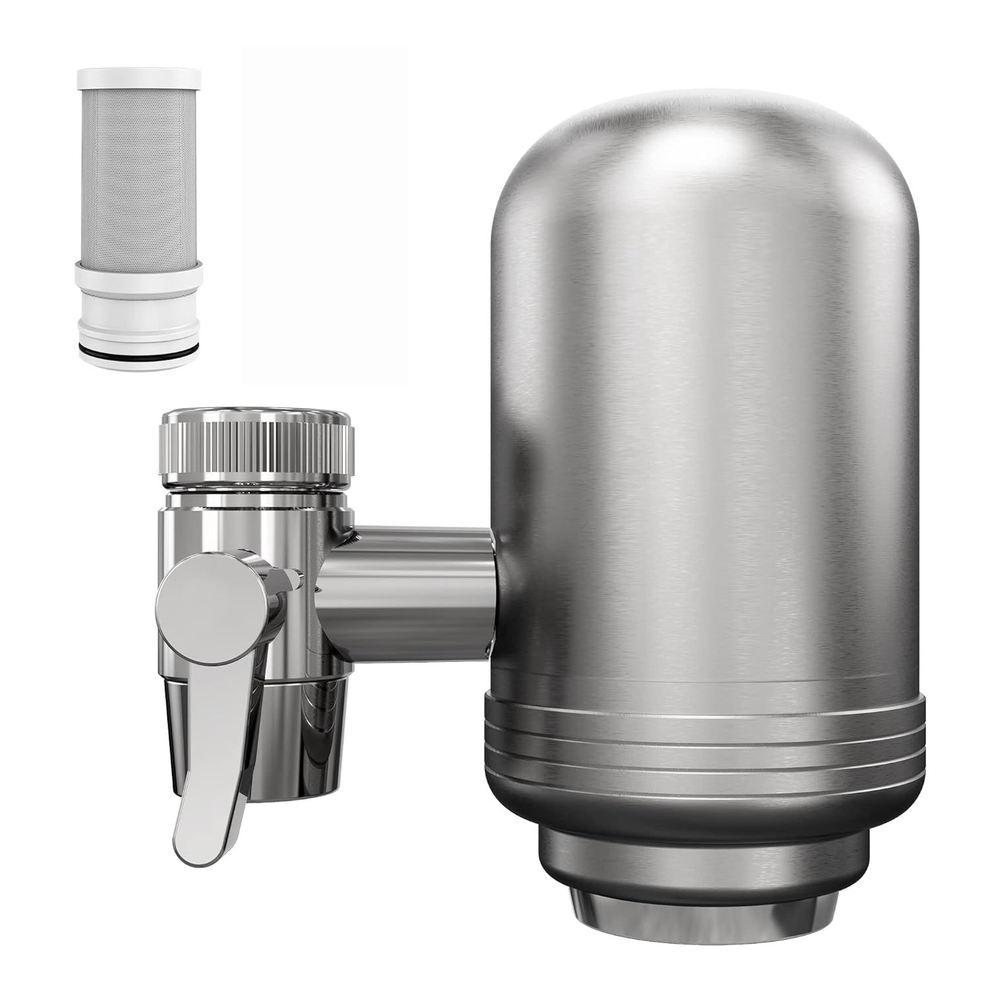
Easy tap-mount install · 2 L/min flow rate · 15–100 psi working pressure
No power required · Fits most removable aerator faucets
Ideal for kitchens, apartments, rentals, dorms, and RVs
Explore our full range of water filtration systems for home and outdoor use.
Common Mistakes When Choosing a Crypto Filter
- Buying a filter without certification – Just because a filter "claims" to remove cysts doesn't mean it's been tested. Look for NSF 53/58.
- Confusing "nominal" with "absolute" – Nominal 1-micron filters can allow 20–30% of 1-micron particles through. Absolute is much more reliable.
- Using carbon filters only – Activated carbon may improve taste but does NOT remove Cryptosporidium.
- Relying on UV light – While UV can inactivate Crypto, many home systems aren't designed for this application. Mechanical filtration is the proven method.
- Not changing filter cartridges – Even the best filter fails if you don't replace it on schedule. Follow manufacturer recommendations.
Frequently Asked Questions
What type of water filter removes Cryptosporidium?
Reverse osmosis systems, filters with an absolute pore size of 1 micron or smaller, and filters certified to NSF/ANSI Standard 53 or 58 for cyst removal.
Does a standard Brita filter remove Cryptosporidium?
No. Standard Brita filters are typically only NSF 42-certified for taste and odour, not for cyst removal. They do not reliably remove Cryptosporidium.
Can I use a UV water filter for Cryptosporidium?
While UV can inactivate Cryptosporidium, it's not recommended as the sole method for home use. Mechanical filtration (RO or 1-micron absolute) is the proven, reliable approach.
What is the difference between "absolute" and "nominal" 1-micron filters?
An absolute 1-micron filter is designed to remove 99.9% of particles at 1 micron. A nominal filter may allow 20–30% of 1-micron particles to pass through. For Cryptosporidium, choose absolute 1-micron.
- 1. CDC – A Guide to Water Filters for Cryptosporidium
- 2. CDC – Cryptosporidium Prevention in Commercial Settings
- 3. NSF International – Standards 53 and 58 for Cyst Reduction
- 4. Pentair – Everpure PBS-400 Product Specifications
- 5. Pentair – OMNIFILTER OT32 Specifications
Explore more: F20 Atmospheric Water Generator | G10 Atmospheric Water Generator | M8-2 Under Sink Water Filter | Carbon Water Filter Replacement | A10S Replacement Filter Set