


8 Best Reverse Osmosis System Under Sink 2026: What to Buy, What to Skip, and Why
The best reverse osmosis system under sink is the one that fits your household water needs, your cabinet space, and your maintenance habits. In 2026, the market is crowded with tankless systems, direct-flow systems, countertop alternatives, and high-flow units, but the real buying decision comes down to performance, filtration precision, waste management, and how easy the system is to live with every day.

Puflow’s line makes the comparison easier because it separates core under-sink systems from alternative formats like countertop and portable non-electric units. If you are building a clean water plan from scratch, start with the Under-Sink RO Systems collection, then compare it with All products reverse osmosis system for home and the New Arrival reverse osmosis system for home page.
Our position: the best under-sink RO system is not just about low TDS. It is about how well the system removes the contaminants you actually care about, how often filters need replacement, and whether the design makes sense for your family’s routine. NSF says residential RO systems are governed by voluntary standards, and NSF/ANSI 58 specifically covers point-of-use RO systems. CDC guidance also notes that RO can remove or reduce a range of chemicals, including lead, copper, chromium, arsenic, fluoride, and nitrate depending on the product label. ([nsf.org]() ) ([cdc.gov]() )
What actually matters in an under-sink RO system
People often shop for the best reverse osmosis system under sink by chasing the biggest claims, but that is the wrong starting point. Reverse osmosis is a membrane-based process that uses pressure to force water through a semipermeable barrier, leaving dissolved contaminants behind. The Water Quality Association describes RO that way, and NSF/ANSI 58 is the point-of-use standard that matters when you want a serious residential system.
That matters because not every household wants the same thing from filtration. CDC guidance notes that RO systems can remove some chemicals including lead, copper, chromium, chloride, and sodium, and may also reduce arsenic, fluoride, radium, sulfate, calcium, magnesium, potassium, nitrate, and phosphorus depending on the system’s label. EPA also notes that reverse osmosis systems can be used to reduce some contaminants of concern, including PFAS in certain situations.
We recommend evaluating systems in this order: filtration precision, flow rate, pressure requirements, recovery rate, installation style, and filter replacement discipline. If a system looks impressive but is hard to maintain, it is not the best reverse osmosis system under sink. It is just the most annoying one after month three.
For a quick shopping path, the Countertop RO Systems page is useful if you cannot drill or install under a cabinet, while Portable & Non-Electric works better for off-grid, rental, or backup use. Those categories matter because the best water system is the one you can actually install and maintain.
Quick summary table
| Best for | Recommended option | Main strength | Practical note |
|---|---|---|---|
| Overall under-sink performance | A10S 800G Tankless RO System with Smart TDS | Smart TDS display, tankless design, 0.0001μm filtration precision | Strong all-around fit for most households |
| High-efficiency direct flow | Under Sink RO System 600 GPD Direct Flow TDS Display | 600 GPD flow, 60% recovery, 95% salt rejection | Good when speed and visible TDS feedback matter |
| Brand comparison | Under-Sink RO Systems | Easy product comparison inside one category | Start here if you are still deciding |
| Latest releases | New Arrival reverse osmosis system for home | Shows the newest additions first | Useful when you want current models only |
| Family kitchens | High-Flow RO Systems | Better for higher daily water demand | Worth it if multiple people use filtered water all day |
| Renters and compact kitchens | Countertop RO Systems | No cabinet installation required | Best when plumbing changes are not realistic |
| Off-grid or backup use | Portable & Non-Electric | No reliance on the same under-sink install path | Practical as a secondary option |
| Long-term ownership | Replacement Filters | Easy maintenance planning | Always budget for replacements before buying the system |
The 8 best reverse osmosis systems under sink in 2026
1. A10S 800G Tankless RO System with Smart TDS — best overall
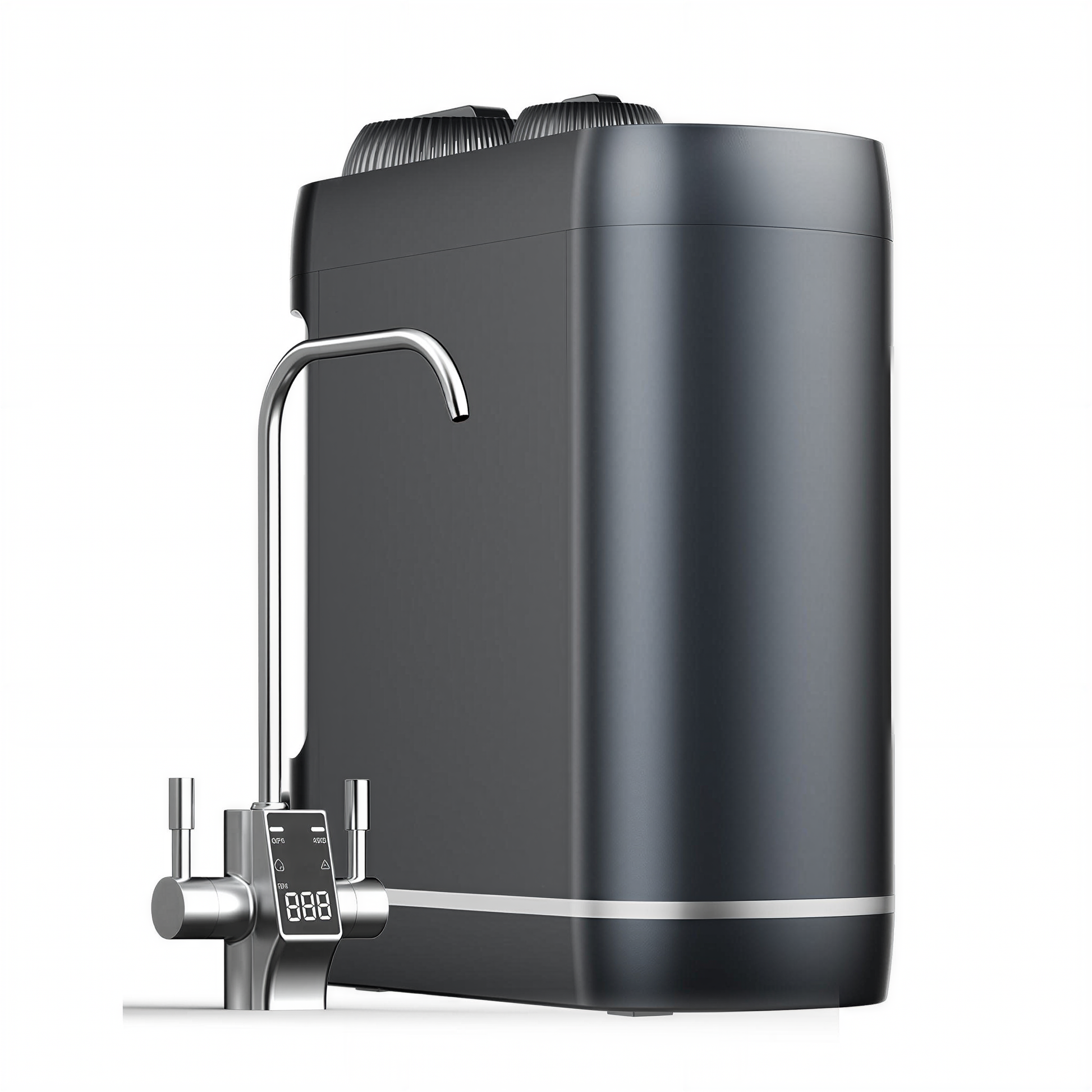
The A10S is the strongest all-around under-sink choice in the Puflow lineup for buyers who want a tankless system with a smart display and serious filtration precision. Puflow lists 0.0001μm filtration precision, 1.58–2.1 L/min flow, a 4000L rated capacity, 0.1–0.4 MPa water pressure range, and a 5–38°C operating temperature window. It is designed for municipal tap water and uses 220V / 50Hz power, with a note that a US 110V version should be confirmed if needed.
From our experience, tankless is the right word when you care about cabinet space and speed. The A10S keeps the footprint compact at 381 × 165 × 435 mm and around 12 kg, so it is easier to live with than bulkier under-sink systems. We recommend this model for households that want one dependable solution instead of a complicated filtration stack.
2. Under Sink RO System 600 GPD Direct Flow TDS Display — best direct-flow value
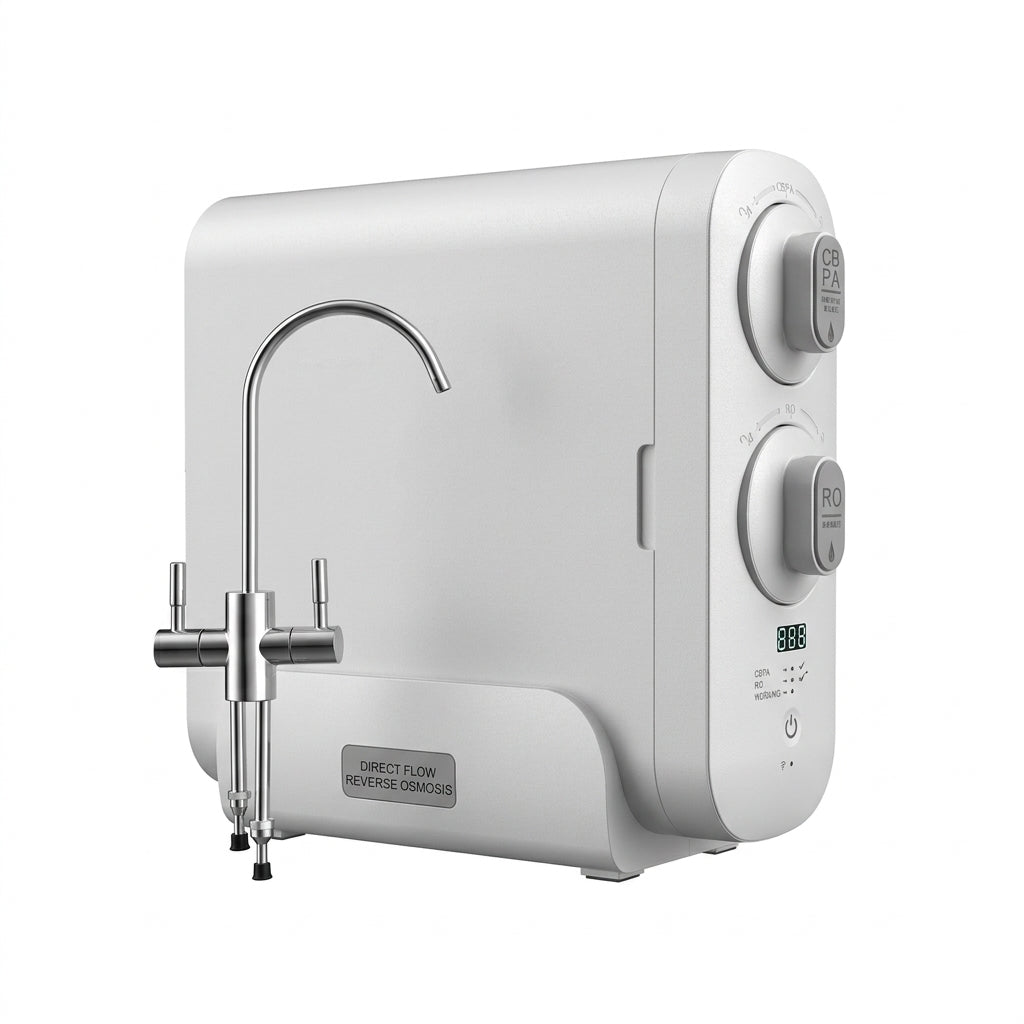
The A9-600 is the practical high-efficiency option when you want a direct-flow under-sink system with clear performance numbers. Puflow lists 1.5–1.6 L/min flow, 0.0001μm filtration accuracy, a 100–240V AC / 24V DC power supply, 70W consumption, 0.1–0.6 MPa working pressure, 5–45°C water temperature support, a 60% recovery rate, and 95% salt rejection. The unit measures 435 × 160 × 400 mm.
This is the model we would favor for buyers who want the system to feel efficient without becoming fragile or overcomplicated. The visible TDS display makes day-to-day confidence easier, because users can see that the system is still behaving the way it should. If you want a strong middle-ground choice, the 600 GPD direct-flow model is hard to ignore.
3. Under-Sink RO Systems collection — best place to start comparing
If you do not know which model to buy yet, the Under-Sink RO Systems collection is the most sensible starting point. A good category page saves time because it lets you compare system types without jumping across unrelated products. That matters when you are trying to separate tankless, direct-flow, and higher-capacity solutions.
We recommend beginning here if you already know you want an under-cabinet system but still need to decide how much flow, recovery, and cabinet space you want to spend. A category page is not glamorous, but in water filtration, clarity beats glamour every time.
4. High-Flow RO Systems — best for families and heavier water use
The High-Flow RO Systems category is the better fit when multiple people use filtered water throughout the day. If your kitchen sees a lot of cooking, coffee, bottle-filling, and cooking-water demand, a higher-flow system usually feels less frustrating than a slower one.
From our experience, flow rate is one of the most underappreciated comfort factors in home filtration. Buyers often focus on purity first and then get annoyed when the faucet feels slow. A high-flow setup is worth considering if convenience is part of the goal.
5. Countertop RO Systems — best when under-sink installation is not realistic
The Countertop RO Systems category is the smart choice for renters, temporary living situations, and kitchens where cabinet plumbing is not ideal. It is not the classic under-sink solution, but it is a useful alternative when drilling, space, or landlord rules limit what you can install.
We recommend countertop systems for buyers who want reversibility. If you might move soon or do not want to modify the cabinet, this is the safer procurement path.
6. Portable & Non-Electric — best backup option
The Portable & Non-Electric page is useful for backup planning, travel, or off-grid scenarios. It is not the primary answer to an under-sink RO question, but it is relevant when households want a secondary clean-water option that does not depend on the same electrical or installation assumptions.
From our experience, a backup filtration route is often underestimated until a household loses water access or needs a temporary solution. If you want resilience, think beyond the main kitchen filter.
7. New Arrival reverse osmosis system for home — best for latest models
The New Arrival reverse osmosis system for home collection is where you go if you want the newest Puflow releases first. That is useful if you care about updated control panels, improved cabinet fit, or newer design details that may not be obvious from old product pages.
We recommend checking new arrivals when you are not locked into a specific model. New product pages can reveal incremental improvements in usability that make daily ownership easier, even when the core filtration principle stays the same.
8. All products reverse osmosis system for home — best for full catalog browsing
The All products reverse osmosis system for home page is the broadest shopping view in the Puflow store. It is best used after you narrow the category by installation style or flow need. That way, you can compare the under-sink units, then decide whether any alternative format is worth considering.
From our experience, a full catalog page is the right tool when the buyer is balancing household expectations with cabinet reality. The best reverse osmosis system under sink is not always the first one you see; sometimes it is the one that only becomes obvious after comparing the whole line.
How to choose the right under-sink RO system
Choose by flow first. A slower system may still be excellent, but if your family uses a lot of water, a low-flow unit will feel irritating. The A10S and A9-600 both show why flow matters: one emphasizes a tankless format with 1.58–2.1 L/min, while the other gives 1.5–1.6 L/min direct flow and a 60% recovery rate. Those are real usage differences, not just spec-sheet decoration. ([puflow.com](https://www.puflow.com/products/a10s-800g-tankless-ro-water-filter)) ([puflow.com](https://www.puflow.com/products/under-sink-ro-system-600-gpd))
Choose by cabinet space second. Tankless systems are useful because they reduce the footprint under the sink. That matters if you store cleaning supplies, a trash bin, or plumbing hardware in the same cabinet. The A10S, for example, is compact enough to fit more easily than older tank-based systems. ([puflow.com](https://www.puflow.com/products/a10s-800g-tankless-ro-water-filter))
Choose by recovery rate if you care about waste and efficiency. RO systems always balance purification with rejected water, so a better recovery ratio is useful in households that want to reduce waste without sacrificing performance. Water-quality organizations and buyer guides note that RO is effective but also resource-sensitive, which is why the recovery rating deserves attention instead of being treated as a minor detail. ([wqa.org](https://wqa.org/resources/reverse-osmosis-ro/) ) ([grainger.com](https://www.grainger.com/know-how/equipment/kh-water-filter-and-water-purifier-guide) )
Choose by certifications and claims last, but do not skip them. NSF says residential RO systems are covered by voluntary standards rather than federal regulations, which means buyers should verify what a system is actually certified or tested to do instead of assuming performance from marketing language. That is the habit that separates good buyers from expensive mistakes. ([nsf.org](https://www.nsf.org/consumer-resources/articles/standards-water-treatment-systems) )
Maintenance and filter replacement reality
RO ownership becomes frustrating when filter replacement is an afterthought. That is why the replacement path matters before you buy the system. The best reverse osmosis system under sink is not the one with the cheapest upfront price; it is the one you can maintain without drama for years.
We recommend checking the Replacement Filters page before you complete the order. If the replacement path is clear, the system is more likely to stay in service. If it is vague, ownership becomes harder than it should be.
CDC guidance is blunt and useful here: RO performance depends on the specific chemicals listed on the product label, so maintenance and correct part replacement matter if you want the system to keep doing what you bought it for. EPA similarly emphasizes that filter performance and cost vary by product, which is another reason replacement planning matters from day one.
From our experience, households that succeed with RO do three things well: they keep a visible replacement schedule, they check TDS or system feedback periodically, and they buy filters before they are desperate. That is boring advice, but boring advice is what keeps the water clean.
Why Puflow fits this category
Puflow is a good fit for shoppers who want a structured path through under-sink filtration because the catalog is organized around actual use cases: under-sink systems, high-flow systems, countertop systems, portable non-electric options, atmospheric water generation, and replacement filters. That makes it easier to build a real household water plan instead of one random product purchase.
The A10S and A9-600 show the kind of detail that matters in a serious shopping decision. The A10S is tankless with Smart TDS, compact dimensions, and municipal-water compatibility. The A9-600 adds direct-flow convenience, 60% recovery, and 95% salt rejection. Those are the numbers that help buyers decide whether they want compactness, speed, or efficiency. ([puflow.com](https://www.puflow.com/products/a10s-800g-tankless-ro-water-filter)) ([puflow.com](https://www.puflow.com/products/under-sink-ro-system-600-gpd))
If you want a quicker first pass, the New Arrival reverse osmosis system for home and All products reverse osmosis system for home pages are the best entry points. If you want the systems that matter most for a permanent kitchen install, stay with Under-Sink RO Systems and then move to Replacement Filters once you have narrowed the model down.
Our recommendation: if your cabinet has space and you want the cleanest long-term ownership experience, start with A10S. If you want a fast direct-flow feel with a visible TDS display and strong recovery behavior, start with A9-600. If you are still deciding, compare those two against the full Under-Sink RO Systems collection before you buy.
FAQs
What is the best reverse osmosis system under sink for most homes?
The best reverse osmosis system under sink for most homes is usually the one that balances filtration precision, flow, and maintenance simplicity. In the Puflow lineup, the A10S 800G Tankless RO System with Smart TDS is the strongest all-around option.
Is tankless better than a tank-based under-sink RO system?
Tankless is usually better if you want a smaller footprint and a more modern installation style. Tank-based systems can still work well, but they take up more cabinet space.
Do RO systems remove PFAS?
EPA says reverse osmosis systems can be used to reduce some contaminants of concern, including PFAS in certain situations. Effectiveness depends on the specific product and label. ([epa.gov](https://www.epa.gov/system/files/documents/2024-04/water-filter-fact-sheet.pdf) )
How often do I need to replace filters?
Replacement timing depends on the exact system, water quality, and household use. That is why checking the Replacement Filters page before you buy matters so much.
Should I choose the 800G tankless or the 600 GPD direct-flow model?
Choose A10S if you want the cleanest tankless fit and Smart TDS. Choose A9-600 if you prefer a direct-flow model with clear recovery and salt-rejection figures. Both are strong, but they serve slightly different buying priorities.
Do I need NSF certification?
We recommend verifying certification or testing claims whenever possible. NSF says residential RO systems are covered by voluntary standards, and NSF/ANSI 58 is the standard that applies to point-of-use RO systems. That makes certification a meaningful comparison point rather than a formality. ([nsf.org](https://www.nsf.org/consumer-resources/articles/standards-water-treatment-systems) )