


Cost by System Type of Reverse Osmosis System for Home 2026
The municipal water infrastructure across many regions is failing. With increasing reports of heavy metal contamination, PFAS (forever chemicals), and extreme chlorination, homeowners can no longer rely blindly on the tap. You must take control of your residential water quality. When researching purification methods, Reverse Osmosis (RO) emerges as the undisputed gold standard. However, from our experience at Puflow, engineering advanced filtration solutions, the residential RO market is flooded with deceptive pricing structures. Consumers frequently purchase a system based on a low upfront price tag, only to be financially bled dry by proprietary filter replacements and massive wastewater utility bills.

In most professional situations, treating water purification as a generic appliance purchase is a profound miscalculation. You must use commercial and practical judgment when evaluating the Cost by System Type of Reverse Osmosis system. An $800 tankless system that wastes only 1 gallon for every 2 gallons purified is a significantly better investment than a $150 traditional system that sends 4 gallons of water down the drain for every 1 gallon you drink. In this definitive guide, we take an uncompromising, expert stance on the RO market for 2026. We will break down the true costs associated with under-sink, countertop, and whole-house configurations, expose the hidden long-term maintenance fees, and provide you with the exact technical blueprint to secure the highest purity water without destroying your budget.
Quick Answer: The 2026 Cost Breakdown by RO Type
If you are actively seeking to install an RO system, you must understand the financial brackets and operational realities of the three primary categories:
- Traditional Under-Sink (With Tank): $150 – $400 upfront. High wastewater ratio (often 3:1 or 4:1). Takes up significant cabinet space. High long-term utility cost.
- Tankless Under-Sink (Direct Flow): $400 – $800 upfront. Highly efficient (1.5:1 or 1:1 ratio). Minimal space required. Immediate, continuous flow. This is the optimal residential choice.
- Whole-House RO Systems: $4,000 – $12,000+ upfront. Requires commercial-grade pumps and massive storage tanks. Only recommended for homes operating on highly toxic or saline well water.
We recommend that anyone upgrading their kitchen plumbing completely bypass traditional tank systems and invest strictly in a modern, tankless Under Sink RO Water System to minimize wastewater and mitigate the risk of bacterial biofilm growth inside a storage tank.
Table of Contents
- What It Is: The Mechanics of Reverse Osmosis
- How It Works: The Cost Drivers
- Detailed Cost by System Type
- Commercial and Health Benefits
- Limitations and Hidden Risks
- Who Should Use RO Systems
- Who Does Not Need RO
- Common Procurement Mistakes
- Expert Buying Considerations
- Summary and Comparison Tables
- Expert Recommendation & Hardware Spotlight
- Frequently Asked Questions
What It Is: The Mechanics of Reverse Osmosis
To accurately evaluate the Cost by System Type of Reverse Osmosis system hardware, you must understand the technology. RO is not mere filtration; it is hyper-filtration. Standard carbon filters rely on absorption to grab chlorine and bad tastes. Reverse Osmosis utilizes massive hydrostatic pressure to force water molecules through a semi-permeable membrane with pores as small as 0.0001 microns. This physical barrier violently rejects heavy metals (lead, arsenic), dissolved solids (TDS), fluoride, and pharmaceutical runoff, flushing them down the drain as wastewater (brine).
How It Works: The Cost Drivers
How it works behind the scenes dictates the price tag. The core cost driver of an RO system is the membrane's Gallon Per Day (GPD) rating. A cheap $150 system utilizes a 50 GPD membrane. Because it produces water so slowly (a trickle), it requires a pressurized storage tank to hold water so you can fill a glass quickly.
A premium $600 tankless system utilizes a massive 600 GPD to 800 GPD membrane. When you open the faucet, an internal booster pump instantly forces water through the membrane fast enough to fill your glass in real-time. You are paying for the high-capacity membrane and the integrated smart pump. When examining options like the C9 Pro RO Water Purifier, you are investing in immediate flow and extreme wastewater efficiency.
Detailed Cost by System Type
In our testing and continual auditing of the residential purification market, we classify RO systems into four distinct financial profiles.
1. Traditional Tank-Based Under-Sink RO ($150 – $400)
This is the legacy architecture. It utilizes 3 to 5 separate filter housings and a 3-gallon steel storage tank.
The Hidden Cost: The wastewater. For every 1 gallon you drink, 3 to 4 gallons are sent to the sewer. Furthermore, replacing the 5 individual filters requires shutting off valves, using plastic wrenches, and dealing with massive water spillage under your sink.
2. Tankless Direct-Flow Under-Sink RO ($400 – $800)
The modern standard. These systems condense the filtration stages into sleek, composite cartridges. They eliminate the tank entirely.
The Value Proposition: Wastewater is reduced to a 1.5:1 or 1:1 ratio. Replacing a filter takes 3 seconds via a twist-and-pull mechanism. If you demand pure water without sacrificing half your cabinet space, this is the only logical choice.
3. Countertop RO Systems ($250 – $500)
Designed for renters or those unwilling to drill a hole in their granite countertop for a dedicated faucet. These units plug into the wall and require you to manually fill a raw water pitcher.
The Value Proposition: Zero plumbing installation costs. However, you must manually empty the wastewater reservoir daily, and flow rates are generally lower.
4. Whole-House Reverse Osmosis ($4,000 – $12,000+)
This is industrial hardware applied to a residential footprint. It purifies every drop of water entering the home, requiring massive commercial booster pumps and 200-gallon atmospheric storage tanks.
The Value Proposition: Only required if your well water contains extreme, dangerous levels of salt, arsenic, or heavy metals that cannot be remediated by standard whole-house carbon blocks or water softeners. The installation requires a licensed plumber and electrician.
Commercial and Health Benefits
The primary benefit of utilizing an RO system is absolute control over your ingestion profile. You completely remove the variables of aging municipal pipes and fluctuating city chlorination schedules. For families concerned about neurotoxins, an RO membrane is one of the only reliable methods to strip fluoride from water, a capability that standard fridge filters completely lack. If you are not ready for a full RO install, you must at least deploy a dedicated Fluoride Reduction Filter.
Limitations and Hidden Risks
We must use commercial and practical judgment: RO water is dead water. Because the 0.0001-micron membrane strips out everything, it also removes beneficial alkaline minerals like calcium and magnesium. This leaves the water slightly acidic and flat-tasting. Premium systems mitigate this by integrating a remineralization stage post-membrane to restore pH balance and taste. Furthermore, RO systems require a minimum of 40 PSI of feed water pressure to operate effectively without a booster pump.
Who Should Use RO Systems
For Homeowners and Families: Anyone living in an area with high Total Dissolved Solids (TDS), hard water, agricultural runoff, or aging lead infrastructure must install point-of-use RO. It is the ultimate insurance policy for your kitchen.
Who Does Not Need RO
For Users in Pristine Municipalities: If you live in an area known for exceptionally clean, low-TDS municipal water (e.g., glacial runoff sources) and your only complaint is a slight chlorine taste, an expensive RO system is overkill. A high-capacity M8-2 Under Sink Water Filter utilizing ultrafiltration (0.01μm) will remove cysts, bacteria, and chlorine without wasting any water or stripping minerals.
Common Procurement Mistakes
From our experience, the most catastrophic mistake consumers make is ignoring the annual maintenance cost. A manufacturer will sell a tankless RO system at a massive discount ($250) but charge $120 for the proprietary RO600 Replacement Filter that must be swapped annually. You must calculate the 5-year Total Cost of Ownership (TCO), not just the initial purchase price. Always verify the cost of the A10S Replacement Filter Set or equivalent before buying the machine.
Expert Buying Considerations
When selecting your hardware, scrutinize the wastewater ratio. A 1:1 ratio is excellent; a 1.5:1 ratio is standard for premium tankless units. If the specs say 3:1, walk away. Secondly, evaluate the smart features. A modern unit should feature a TDS meter integrated into the faucet, giving you real-time visual confirmation that the membrane is functioning and your water is pure. If you are operating completely off-grid or require emergency preparedness, bypass traditional plumbing entirely and investigate an F20 Atmospheric Water Generator which creates pure water from ambient humidity.
Summary and Comparison Tables
Comparison Table: Tank-Based vs. Tankless RO
| Metric | Traditional Tank RO | Modern Tankless RO |
|---|---|---|
| Upfront Cost | $150 - $400 | $400 - $800 |
| Wastewater Ratio (Brine:Pure) | 3:1 or 4:1 (Highly inefficient) | 1.5:1 or 1:1 (Highly efficient) |
| Space Required | Massive (Consumes entire cabinet) | Minimal (Sleek tower design) |
| Bacterial Growth Risk | High (Standing water in bladder) | Zero (Direct flow production) |
Pros and Cons of Whole-House RO Systems
| Pros (Why you might need it) | Cons (The operational reality) |
|---|---|
| Provides bottled-quality water to every shower and faucet. | Astronomical upfront capital expenditure ($5,000+). |
| The only solution for extreme well-water contamination. | Requires complex pretreatment (softeners) to protect the membrane. |
| Completely eliminates scale buildup in water heaters and pipes. | Massive wastewater generation increases utility bills. |
Expert Recommendation & Hardware Spotlight
Is investing the capital into a high-end tankless RO system actually worth it over a cheap pitcher filter? Emphatically, yes. Pitcher filters rely on minimal carbon contact time and do absolutely nothing to stop heavy metals, PFAS, or radioactive isotopes. We recommend that commercial users and residential homeowners completely abandon outdated tank-based systems. The risk of biofilm accumulation inside the storage bladder negates the point of purification. Upgrade to a direct-flow, tankless architecture.
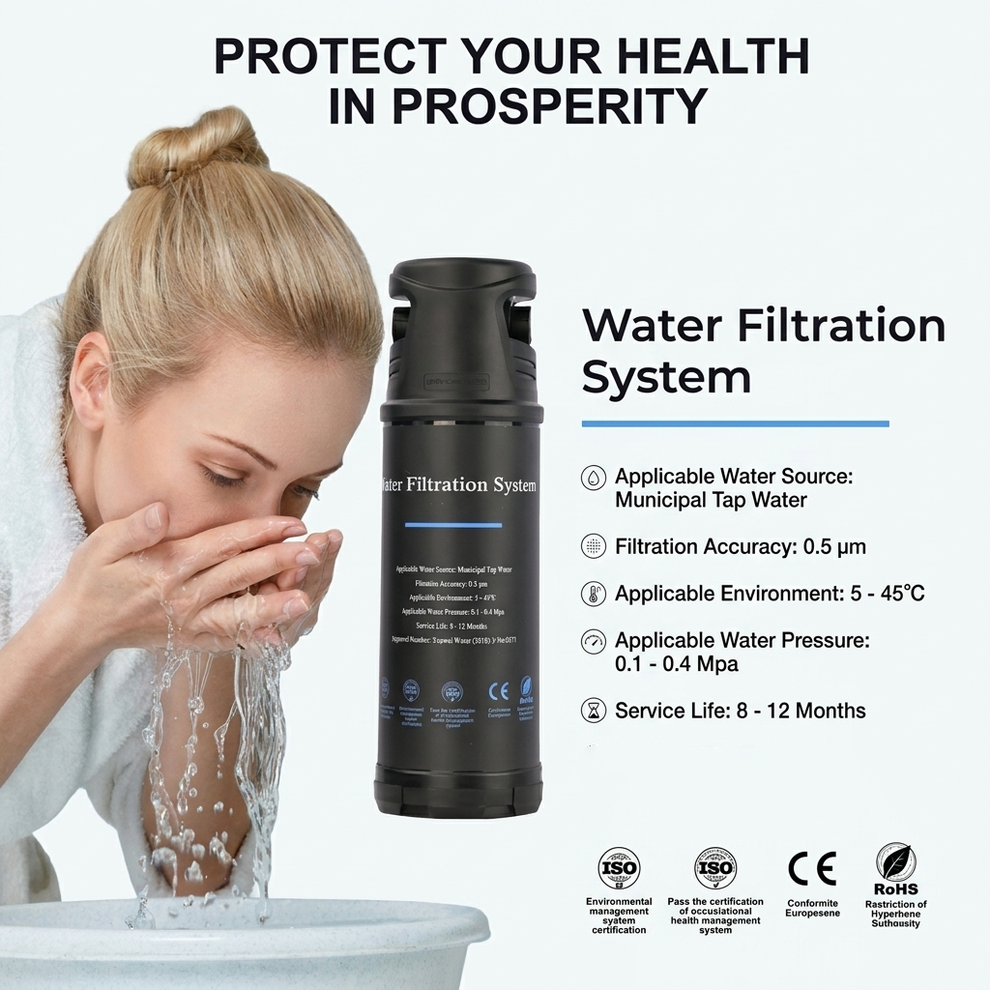
However, if you reside in an area where your primary concern is microbiological (bacteria, cysts) rather than heavy metals, or if you refuse to tolerate any wastewater generation, an advanced Ultrafiltration (UF) system is a highly viable, cost-effective alternative to RO.
For operations requiring absolute independence from municipal water grids, exploring advanced G10 Atmospheric Water Generator technology provides point-of-use pure water extraction from thin air, completely bypassing the risks of subterranean pipe infrastructure.
Frequently Asked Questions
How much does a reverse osmosis system cost for a home in 2026?
From our experience, the Cost by System Type of Reverse Osmosis system ranges drastically based on architecture. A basic, legacy under-sink unit with a storage tank costs between $150 and $400. Modern, tankless high-efficiency under-sink models run from $400 to $800. Whole-house RO systems are heavy-duty, commercial-grade investments, typically costing between $4,000 and $12,000 depending on your GPD (Gallon Per Day) flow rate requirements.
Are tankless RO systems worth the extra cost?
In most professional situations, yes. Tankless systems eliminate the risk of bacterial biofilm growth inside a pressurized storage tank, save massive amounts of under-sink cabinet space, and drastically reduce wastewater production from a terrible 4:1 ratio down to an efficient 1.5:1 ratio, saving you significant money on water utility bills over the system's lifespan.
What is the hidden maintenance cost of RO systems?
The true cost lies in filter replacements. A cheap RO system often utilizes proprietary, chipped filters that lock you into paying $80 to $120 every six months. Before buying, verify the annual cost of the pre-filters (sediment and carbon) and the replacement cycle of the primary RO membrane (which should last 12 to 24 months).
Does reverse osmosis remove fluoride and PFAS?
Yes. Due to the 0.0001-micron pore size of the semi-permeable membrane, reverse osmosis is one of the only residential technologies capable of effectively removing fluoride, PFAS (forever chemicals), arsenic, and heavy metals like lead. Standard activated carbon pitcher filters cannot remove these elements effectively.
Industry References & Authoritative Guidelines
To ensure our water purification guidance aligns with the highest global safety and engineering standards, Puflow references the protocols established by the following authoritative organizations:
- NSF International / ANSI: The premier global public health organization that develops the NSF/ANSI 58 standard, dictating the strict material safety and contaminant reduction claims (such as lead, cyst, and VOC reduction) for reverse osmosis drinking water treatment systems. Review NSF RO Standards
- Water Quality Association (WQA): The leading voice of the residential, commercial, and industrial water treatment industry, providing rigorous certification programs (Gold Seal) validating the efficacy and wastewater efficiency of tankless and traditional RO systems. Review WQA Certification Data
- Environmental Protection Agency (EPA): Federal agency providing guidelines on safe drinking water acts, maximum contaminant levels (MCLs) for heavy metals and PFAS, and the necessity of point-of-use filtration in areas with failing municipal infrastructure. Review EPA Drinking Water Guidelines