


How Long Should Reverse Osmosis Drain? A Practical Guide to RO Wastewater
A reverse osmosis system should drain wastewater while it produces purified water, but it should not run continuously without a reason. For many conventional residential RO systems, the drain flow operates during active filtration and may continue briefly after the storage tank is full, depending on the system design. If the drain keeps running for hours when no water is being used, or never shuts off, that is a fault worth investigating.
The important distinction is between normal wastewater production and a drain that is stuck open. Understanding how your RO system works helps you decide whether the sound and flow are normal, whether a filter or valve needs attention, or whether it is time to upgrade the purifier.

Quick Answer: How Long Should Reverse Osmosis Drain?
A reverse osmosis system normally drains wastewater whenever it is actively making purified water. The drain should generally stop or reduce to an intermittent flow once the storage tank reaches its shut-off pressure and the automatic shut-off valve closes. The exact time depends on tank size, water pressure, membrane capacity, water temperature, water quality and system design.
For a typical residential tank-based RO purifier, a refill can take several hours. That does not mean the drain should run indefinitely. If wastewater continues flowing after the tank is full, or flows constantly when the system is idle, check the automatic shut-off valve, check valve, tank pressure and other components. Always compare operation with the manufacturer's specifications.
What Is RO Drain Water?
Reverse osmosis (RO) is a water purification process that uses pressure to push water through a semi-permeable membrane. The membrane allows much of the water to pass through while rejecting a large proportion of dissolved salts and other contaminants. The purified output is called permeate or product water. The concentrated water carrying rejected substances is called concentrate, reject water or wastewater.
This wastewater is not necessarily sewage or dirty water in the ordinary sense. It is the portion of feed water that carries concentrated dissolved substances away from the membrane. It is discharged through the drain line so those substances do not build up on the membrane surface.
That is why a reverse osmosis system needs a drain connection. Without a way to remove concentrated reject water, membrane performance can deteriorate and scaling or fouling may become more likely.
Is RO wastewater supposed to run all the time?
No. It is normal for wastewater to flow during active production, but a residential system with an automatic shut-off mechanism should stop producing water when its storage tank reaches the designed shut-off pressure. Some system designs may have a brief delay or different operating cycle, so use the manufacturer's instructions as the reference.
If you hear water running continuously even when the storage tank is full and no one is using purified water, do not dismiss it as normal RO operation. The system may be failing to shut off, or another component may be allowing water to pass.
How Does Reverse Osmosis Drainage Work?
A standard residential RO system typically has a sediment pre-filter, carbon pre-filter, RO membrane, flow restrictor, check valve, automatic shut-off valve and storage tank. Exact arrangements vary between manufacturers and tankless designs.
- Pre-filtration: Sediment and carbon filters reduce particles, chlorine and other substances that could damage or affect the membrane.
- Membrane filtration: Pressurized feed water passes through the RO membrane. Purified water moves toward the storage tank or dispensing outlet.
- Reject flow: Concentrated water containing rejected dissolved substances travels through the flow restrictor and into the drain line.
- Tank filling: In a tank-based system, purified water accumulates in the storage tank as the system produces it.
- Automatic shut-off: When the tank reaches the system's specified pressure, the automatic shut-off valve stops or substantially reduces feed water entering the membrane circuit.
The flow restrictor is important because it controls the wastewater flow relative to the membrane's operating conditions. If it is missing, incorrectly sized or malfunctioning, the system may waste too much water or fail to operate as intended.
How Long Should Reverse Osmosis Drain Normally?
There is no universal number of minutes that applies to every RO purifier. A small system making a few litres of water has a different production cycle from a high-capacity tankless unit. A tank-based system may run for a long period after the tank has been emptied, particularly when incoming water pressure is low or the water is cold.
For a conventional residential RO system, it is more useful to judge drainage by the operating cycle than by a fixed timer:
- When the system is producing water: Continuous reject flow is normal for many conventional RO designs.
- While a storage tank is refilling: Drain flow may continue for an extended period. Several hours can be possible depending on system capacity and conditions.
- When the tank is full: A correctly functioning automatic shut-off arrangement should stop the production cycle according to the manufacturer's design.
- When the system is idle: Persistent, uninterrupted drain flow is generally not normal for a conventional tank-based system.
How long does it take to fill an RO tank?
Tank refill time depends on the membrane's rated output, feed pressure, temperature, total dissolved solids (TDS), filter condition and the amount of water drawn. A membrane advertised at a certain gallons-per-day rating is tested under specified conditions; actual household output may be lower.
For example, a system with a small storage tank may refill faster than a large-capacity setup, but only if the membrane and incoming water conditions can support that rate. A tank that repeatedly takes much longer to refill than it used to deserves a pressure, filter and membrane check.
How long should a tankless RO system drain?
Tankless RO systems generally produce purified water on demand rather than filling a pressurized storage tank. Their drain flow is usually associated with active dispensing or a programmed flush cycle. Some models also perform automatic flushing at startup, shutdown or scheduled intervals. The correct duration is model-specific, so consult the operating manual rather than applying a tank-based rule.
What Affects How Long Reverse Osmosis Drains?
If your RO system drains for longer than expected, several operating conditions may explain the change. Check these factors before assuming that the membrane is defective.
1. Incoming water pressure
RO membranes need adequate pressure to produce water efficiently. Low feed pressure can reduce purified-water production and change the reject-water ratio. If household pressure is consistently below the purifier's specified operating range, a booster pump may be worth considering, provided the system supports one.
2. Water temperature
Cold water generally passes through an RO membrane more slowly than warmer water. Seasonal changes can therefore affect production time. Do not try to compensate by using hot feed water unless the manufacturer explicitly allows it; excessive water temperature can damage components and the membrane.
3. Feed water TDS and composition
High dissolved-solids levels can affect membrane performance and the amount of concentrate that needs to be discharged. Hardness, scaling potential and other water chemistry characteristics also matter. A TDS meter can provide useful information, but it does not identify every contaminant or establish that water is safe to drink.
4. Filter and membrane condition
Clogged sediment filters, exhausted carbon filters or a fouled RO membrane can reduce production. If the system has gradually become slower, check the filter replacement schedule and the manufacturer's recommended membrane service interval.
5. Flow restrictor selection
The flow restrictor must match the membrane and system design. An incorrectly sized component can cause excessive wastewater or insufficient concentrate flow. Replacing it with an arbitrary part is not a good repair strategy.
6. Storage tank pressure and capacity
A tank with incorrect air pre-charge pressure may hold less usable water or affect the system's shut-off behaviour. Tank pressure must be checked using the manufacturer's procedure, usually with the tank emptied of water. Do not assume that a tank is faulty simply because refill time is long.
Why Does My Reverse Osmosis System Keep Draining?
When the drain line continues to discharge water after the storage tank should be full, the automatic shut-off system is one of the first areas to investigate. Several components can cause this symptom.
| Possible cause | Typical symptom | What to check |
|---|---|---|
| Faulty automatic shut-off valve | Drain flow continues after the tank is full | Valve operation and correct installation |
| Leaking check valve | System may fail to hold pressure or shut off correctly | Check valve condition and orientation |
| Low tank pressure or damaged tank bladder | Reduced usable water and unusual refill behaviour | Tank pressure and tank integrity |
| Incorrect flow restrictor | Abnormal wastewater volume or poor system performance | Part specification against membrane rating |
| Leak or faulty connection | Water continues moving or appears around fittings | Tubing, connectors and seals |
| Tank never reaches shut-off pressure | System keeps producing water for an unusually long time | Feed pressure, membrane output, tank condition and leaks |
A tankless system may behave differently. Some units intentionally flush the membrane for a short period after dispensing or at scheduled intervals. Before treating this as a fault, check the manufacturer's description of the automatic flush cycle.
How to Troubleshoot Excessive RO Drainage
Use a step-by-step process. Replacing the membrane immediately is often an expensive guess, especially when the actual problem is a valve, pressure issue or incorrectly installed restrictor.
Step 1: Confirm whether the system is actively producing water
Check whether someone has recently used the RO faucet or whether an appliance connected to the system is drawing water. A tank that has been emptied will naturally trigger a refill cycle. Allow the system to operate according to the manufacturer's normal refill guidance.
Step 2: Check whether the tank is full
Many residential tanks feel heavier when full, but weight alone is not a precise pressure test. Check the system's normal shut-off behaviour and compare it with the operating manual. If the tank never fills properly, investigate production and pressure rather than focusing only on the drain line.
Step 3: Inspect visible tubing and connections
Look for kinks, loose fittings, leaks or damaged tubing. Make sure the drain connection is installed as specified. Do not disconnect pressurized lines without first following the manufacturer's shutdown and depressurization procedure.
Step 4: Check filters and membrane service history
Review when the sediment, carbon and membrane components were last replaced. A neglected pre-filter can reduce membrane performance. Use the correct replacement parts for your model rather than selecting filters based only on physical appearance.
For example, owners of compatible Puflow systems should use the specified A10S replacement filter set or the appropriate replacement kit for their particular purifier. Filter compatibility is model-specific.
Step 5: Have the automatic shut-off and check valves tested
If the system continues to drain after the tank reaches the expected full condition, the shut-off valve or check valve may need inspection. These components work together to control pressure and stop production. A technician can test them and confirm whether replacement is necessary.
Step 6: Measure production and wastewater
Where the manufacturer provides a test procedure, measure the purified-water output and reject-water output over the same period. Use a consistent test condition and record feed pressure and water temperature if possible. This provides more useful diagnostic information than estimating flow by listening to the drain.
What Is a Normal Reverse Osmosis Wastewater Ratio?
RO systems produce both purified water and reject water. The ratio depends on membrane design, operating pressure, water temperature, feed-water chemistry, flow restrictor and whether the unit uses recovery-enhancing technology.
Older or conventional residential systems may have relatively high reject-water volumes. Newer systems may be designed for improved recovery, but a claimed ratio should always be evaluated under its stated test conditions. A low wastewater ratio is not automatically better if it is achieved by operating the membrane outside its recommended conditions.
How to calculate your RO drain ratio
Collect the purified output and wastewater separately over the same test period. Divide the reject-water volume by the purified-water volume to calculate the wastewater-to-product ratio.
For example, if a test produces 8 litres of reject water and 4 litres of purified water, the ratio is 2:1. That means the system sends two litres to the drain for every litre of purified water produced. This is an illustrative calculation, not a performance specification for every RO purifier.
Compare your result with the product documentation. If your measured ratio is far outside the manufacturer's stated range, check feed pressure, temperature, restrictor size and membrane condition before deciding to replace the system.
Tank-Based RO vs Tankless RO vs Non-RO Water Filters
If your main concern is long drain cycles, it is worth asking whether reverse osmosis is the right type of filtration for your household. RO is useful when you need reduction of many dissolved contaminants, but it is not the only way to improve drinking water.
| System type | How it handles water | Drainage behaviour | Best use case | Main trade-off |
|---|---|---|---|---|
| Tank-based RO | Produces purified water and stores it in a pressure tank | Reject water flows during production and normally stops after shut-off | Households needing RO water available from a dedicated faucet | Needs storage space and produces wastewater |
| Tankless RO | Produces purified water on demand | Drain flow generally occurs during production and programmed flushing | Homes prioritising compact installation and higher on-demand output | Requires electricity and model-specific maintenance |
| Under-sink carbon filtration | Uses adsorption and other media to reduce selected contaminants | Typically does not produce a continuous RO reject stream | Users targeting chlorine, taste and odour or specific certified reductions | Does not provide the same broad dissolved-solids reduction as RO |
| Gravity filtration | Water passes through filter media under gravity | No RO concentrate drain is normally required | Portable, off-grid or non-electric water filtration needs | Performance depends on the filter media and contaminants it is certified to reduce |
| Atmospheric water generator | Condenses moisture from air and treats the collected water | Drainage depends on condensate and treatment design | Specialised water production where environmental conditions support it | Output depends heavily on humidity, temperature and power consumption |
For households that want RO purification but prefer a compact installation, compare the available countertop RO systems and under-sink RO systems. If you need higher output for a busy household, review the high-flow RO systems based on actual daily demand and rated performance.
Pros and Cons of Reverse Osmosis Systems
| Advantages | Limitations |
|---|---|
| Can reduce many dissolved salts and selected contaminants when the system is properly designed and maintained | Produces a reject-water stream that must be discharged |
| Provides a dedicated source of treated drinking water at home | Requires regular filter and membrane maintenance |
| Can improve taste by reducing substances such as dissolved salts and certain taste-affecting compounds | May reduce some minerals along with unwanted dissolved substances |
| Available in tank-based, tankless and countertop formats | Performance depends on feed pressure, water chemistry and installation |
| Can be selected for specific contaminant-reduction needs | Not every RO system is certified to reduce every contaminant |
Reverse osmosis is worth buying when its contaminant-reduction capability matches a real water-quality need. It is not automatically the best purchase for every household. Start with a water report or suitable testing, identify the contaminants of concern and then select a system with independently verified performance claims.
Should You Repair or Upgrade Your RO System?

If your RO system drains for too long, the correct decision depends on the cause. A worn valve or incorrect restrictor may be an inexpensive repair. A heavily fouled membrane, obsolete design or repeated component failures may make replacement more sensible.
Repair the system when:
- The purifier is otherwise in good condition and has a clear service history.
- The problem is traced to a replaceable valve, fitting or flow restrictor.
- The membrane still performs within the manufacturer's expected range.
- Replacement parts are available and the system remains appropriate for your water needs.
Consider upgrading when:
- The system has recurring faults or replacement parts are difficult to obtain.
- Actual purified-water output is consistently too low for household demand.
- The system's wastewater performance is poor compared with suitable modern alternatives.
- You need a different installation format, such as a countertop or tankless system.
- Your water-quality requirements have changed and the existing unit is not certified for the contaminants you need to reduce.
Cost-benefit considerations
Do not compare systems by purchase price alone. Include replacement filters, membrane cost, electricity, water use, installation, service access and expected operating life. A cheaper unit may cost more over several years if its filters are expensive or its output is poorly matched to your household.
For a household that needs a conventional RO setup, the Puflow C9 Pro RO Water Purifier is one product to evaluate against your daily demand and installation requirements. Check its current specifications, certifications and filter replacement details before purchasing.
If you prefer a system that does not require a plumbing connection or electricity, RO may not be necessary for your use case. Compare non-electric options before paying for a more complex purifier.
When You May Not Need Reverse Osmosis
Some households buy RO because they assume it is the highest-quality option for every water problem. That is not a sound buying approach. The right treatment method depends on the source water and the contaminants you actually need to reduce.
Choose an under-sink carbon filter when
Your main concern is chlorine taste, odour or specific contaminants covered by the filter's certification. A product such as the M8-2 under-sink water filter may be worth comparing if its certified reduction claims match your water-quality requirements.
Choose gravity filtration when
You need a non-electric option for an apartment, RV, camping or emergency-preparedness use case. The Big Flow 2 Stainless Steel Gravity Water Filter is a different type of solution from an RO purifier and should be evaluated by its own filtration specifications.
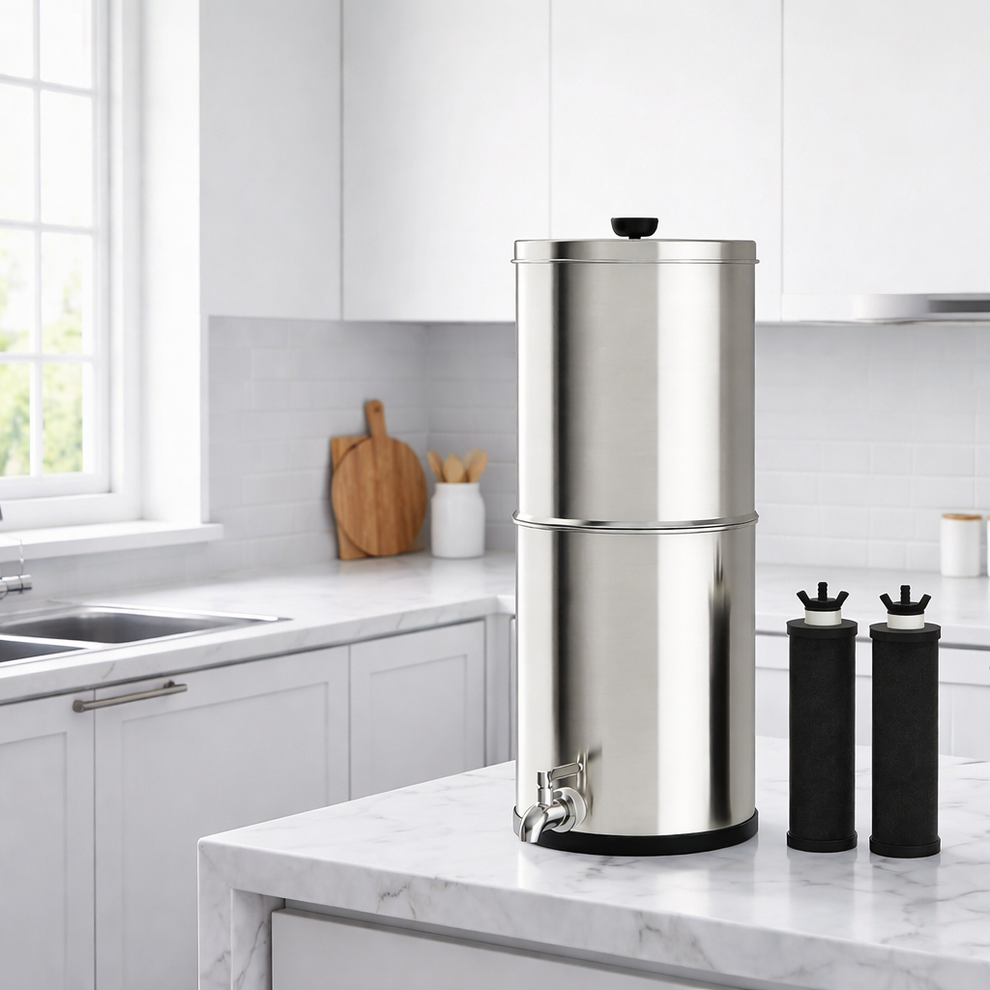
Its stated specifications include an 8.5-litre capacity, 304 stainless steel construction, no electricity requirement, no plumbing installation and a filter life of up to 6,000 gallons. The stated flow rate is up to 4 gallons per hour. Actual performance and filter life depend on water quality and operating conditions, so follow the product instructions and replacement guidance.
This type of gravity filter does not operate like an RO membrane system and should not be expected to provide identical contaminant reduction. If your water has a known chemical or microbiological risk, confirm that the selected filter is specifically certified for the contaminant of concern.
Choose an atmospheric water generator when
You are exploring water production from atmospheric humidity rather than treating a conventional water supply. This is a specialised option whose output depends on humidity, temperature, power and maintenance. Compare the atmospheric water generator range and products such as the G10 atmospheric water generator or P50 atmospheric water generator only if this approach suits your environment and expected water demand.
For portable outdoor use, a portable water filter bottle may be more practical than installing a household RO unit. Again, verify the filter's intended use and contaminant claims before relying on it as a drinking-water treatment device.
Expert Recommendation: Judge RO Drainage by the Shut-Off Cycle, Not a Stopwatch
When someone asks, "How long should reverse osmosis drain?", our first question is whether the system is actively making water or whether it is supposed to be idle. That distinction is more useful than giving every household the same number of minutes.
For a tank-based RO purifier, expect wastewater during production and a shut-off when the tank reaches its designed pressure. For tankless units, expect drainage during water production and any manufacturer-programmed flush cycle. If the drain runs continuously when the system should be idle, investigate the shut-off valve, check valve, tank pressure, flow restrictor and leaks.
We recommend measuring actual purified-water output and wastewater volume before replacing parts or buying a new purifier. For commercial or high-use situations, record operating conditions and compare performance with the manufacturer's specifications. A small amount of diagnosis can prevent unnecessary filter purchases and reduce avoidable water waste.
Frequently Asked Questions About Reverse Osmosis Drain Time
1. How long should reverse osmosis drain after filling the tank?
In a correctly operating tank-based system, the drain should stop when the tank reaches the system's designed shut-off pressure. A refill cycle may take several hours depending on tank size, membrane output, feed pressure, water temperature and filter condition. Persistent drainage after the system should have shut off needs investigation.
2. Is it normal for an RO system to drain continuously while making water?
Yes. Many conventional RO systems continuously discharge reject water while producing purified water. This is part of the membrane separation process. The flow should stop or change according to the system's shut-off design once production is complete.
3. Why does my reverse osmosis drain keep running when the tank is full?
A faulty automatic shut-off valve, leaking check valve, incorrect flow restrictor, tank pressure problem or plumbing leak may prevent the system from shutting off correctly. Have the components checked according to the manufacturer's service procedure.
4. Can I stop RO wastewater by closing the drain line?
No. Do not block, clamp or plug the RO drain line. The system needs to discharge concentrated reject water to operate as designed. Blocking the line can interfere with membrane performance and may damage the purifier.
5. Does low water pressure make an RO system drain longer?
Low feed pressure can reduce purified-water production and extend the time required to fill a storage tank. It can also affect the wastewater-to-product ratio. Check the purifier's minimum operating pressure and consider a compatible booster pump if pressure is consistently inadequate.
6. Do tankless RO systems drain water when not in use?
Some tankless systems perform automatic flushing at startup, shutdown or scheduled intervals. However, continuous drainage when the unit is idle is not something to assume is normal. Check the specific model's manual to understand its flush cycle.
7. How can I reduce reverse osmosis wastewater?
Maintain adequate feed pressure, replace filters on schedule, use the correct flow restrictor and keep the membrane in good condition. If water efficiency is a major concern, compare systems designed for higher recovery and check their performance claims under clearly stated test conditions.
8. Is RO drain water safe to reuse?
RO reject water contains concentrated dissolved substances from the feed water. Depending on the source water and system design, it may be suitable for some non-drinking uses, such as certain cleaning or outdoor applications, but it should not be assumed safe for plants, pets or every household use. Check water chemistry and avoid reuse where the concentrated contaminants could cause harm.
Final Takeaway
Reverse osmosis should drain while it is producing purified water, not indefinitely. A residential tank-based RO system normally stops its production cycle when the storage tank reaches the designed shut-off pressure. A tankless system may also perform programmed flush cycles, but those should match the manufacturer's specifications.
If your drain line keeps flowing when the system is idle, check the automatic shut-off valve, check valve, tank pressure, flow restrictor and plumbing connections. Do not block the drain line or replace the membrane without diagnosing the cause.
For most households, the best RO system is not simply the one with the lowest wastewater ratio or highest advertised output. It is the one that matches your water quality, daily demand, installation conditions and maintenance budget. Choose based on verified performance and reliable service support.
References
- U.S. Environmental Protection Agency – Ground Water and Drinking Water. Background on drinking-water quality, contaminants and treatment considerations.
- NSF – Water Filters, Testing and Treatment. Consumer guidance on water filtration and certification for contaminant reduction.
- Water Quality Association. Water treatment industry resources and technical information on residential filtration and reverse osmosis.
Note: RO performance, wastewater ratio and maintenance intervals vary by model and source-water conditions. Always follow the specific purifier's installation and operating instructions. For health-related water-quality concerns, use appropriate testing and certified treatment equipment.