


Is It Worth Getting a Reverse Osmosis Water Filter? An Expert Analysis
The water filtration industry is saturated with fear-based marketing, pseudo-science, and overpriced plastic pitchers that do little more than mask the taste of chlorine. When consumers realize their standard fridge filters are failing to remove serious contaminants, they inevitably ask: is it worth getting a reverse osmosis water filter? As professionals who engineer and deploy advanced water purification systems at Puflow, we refuse to give a neutral, diplomatic answer. The reality is that Reverse Osmosis (RO) is the most aggressive, uncompromising filtration technology available to residential consumers—but it is absolutely not the right choice for everyone.

From our experience, purchasing an RO system without understanding your specific water chemistry is a commercial miscalculation. You must diagnose the problem before applying the cure. In this comprehensive guide, we will strip away the marketing jargon to explain exactly how RO works, evaluate its hidden costs, and provide hard, practical guidance so you can decide whether it is actually worth using, buying, or upgrading for your home.
Quick Answer: The Verdict on Reverse Osmosis
Yes, it is worth getting a reverse osmosis water filter if your local water supply suffers from high Total Dissolved Solids (TDS), heavy metals like lead or arsenic, agricultural runoff, or emerging contaminants like PFAS (forever chemicals). In these scenarios, RO is the only technology that guarantees absolute purity.
However, it is not worth it if you live in a municipality with incredibly clean, soft water and your only complaint is a slight chlorine odor. In that case, an RO system will unnecessarily waste water, strip healthy minerals, and overcomplicate your plumbing. For those users, an Ultrafiltration (UF) or advanced carbon system is a far more practical and economical investment.
Table of Contents
- What is Reverse Osmosis?
- How It Works: The Filtration Stages
- Pros and Cons of RO Systems
- The Unmatched Benefits
- Limitations and Hard Truths
- Comparison: RO vs. Ultrafiltration vs. Carbon
- Who Should Use It
- Who Does Not Need It
- Cost-Benefit Analysis
- Common Mistakes Buyers Make
- Expert Buying Considerations
- Puflow Expert Recommendation
- Frequently Asked Questions (FAQ)
What is Reverse Osmosis?
Reverse Osmosis is an industrial-grade water purification process downscaled for residential use. Unlike standard carbon filters that act like a sponge to absorb chemicals, RO acts as an impenetrable microscopic wall. The core of the system is a semi-permeable membrane with pores as small as 0.0001 microns. To put that into perspective, a human hair is about 70 microns thick, and a bacterium is about 1 micron. The RO membrane is so tight that it essentially only allows pure H2O molecules to pass through, rejecting dissolved salts, heavy metals, viruses, and pharmaceuticals.
How It Works: The Filtration Stages
In most professional situations, an RO system is never just a single membrane. Exposing a delicate RO membrane directly to raw tap water would destroy it in days due to chlorine and sediment. A proper system operates in a staged sequence:
- Sediment Pre-Filter: Captures large particles, rust, and silt that would physically clog the system.
- Carbon Block Pre-Filter: Crucial for removing chlorine and chloramines. Chlorine acts like acid on an RO membrane; replacing your Carbon Water Filter Replacement on schedule is mandatory to protect the expensive membrane.
- The RO Membrane: The heart of the system. Water is forced under pressure against the membrane. Pure water passes through, while the contaminated "brine" is flushed down the drain.
- Post-Carbon Polishing Filter: Because water sits in a holding tank (in traditional systems), it passes through a final carbon stage to remove any residual tastes or odors before reaching your faucet.
- Remineralization (Optional but Recommended): RO water is so pure it is slightly acidic and tastes "flat." Premium systems pass the water through a calcium/magnesium bed to restore healthy minerals and balance the pH.
Pros and Cons of Reverse Osmosis Systems
| Pros (Advantages) | Cons (Limitations) |
|---|---|
| Removes up to 99% of total dissolved solids (TDS), heavy metals, and toxins. | Generates wastewater (brine) to flush the membrane. |
| The only reliable residential defense against PFAS and specific isotopes. | Strips natural minerals from the water (unless remineralized). |
| Dramatically improves the taste of coffee, tea, and cooking water. | Slower flow rate compared to standard tap water. |
| Replaces the need for environmentally destructive bottled water. | Requires under-sink plumbing and dedicated faucet installation. |
The Unmatched Benefits
If you are debating whether it is worth getting a reverse osmosis water filter, look at the chemical state of modern municipal water. The EPA regulates over 90 contaminants, but thousands of emerging chemicals remain unregulated. The primary benefit of RO is its broad-spectrum elimination capability.
For heavy-duty applications—such as homes drawing from private wells near agricultural runoff—RO is non-negotiable. It effectively strips out nitrates, pesticides, and herbicides. Furthermore, with the rising awareness of microplastics and per- and polyfluoroalkyl substances (PFAS), an Under-Sink RO System provides absolute peace of mind. Standard fridge filters simply do not have the contact time or micron rating to capture these microscopic threats.
Limitations and Hard Truths
We must use commercial and practical judgment when discussing RO; it has distinct drawbacks that aggressive salespeople try to hide.
The Wastewater Issue: Reverse osmosis uses water to clean itself. Older systems wasted up to 4 gallons of water for every 1 gallon of pure water produced. Modern High-Flow RO Systems have vastly improved this ratio to 1.5:1 or even 1:1, but you are still increasing your water consumption. If you live in a drought-stricken area with strict water rationing, this is a serious consideration.
Demineralization: RO water is aggressive. Because it has been stripped of its natural minerals, it seeks to absorb minerals from its environment. This is why you cannot run RO water through copper pipes—it will slowly dissolve the copper. It also tastes flat to many people, which necessitates a remineralization stage.
Comparison: RO vs. Ultrafiltration vs. Carbon Pitchers
| Feature | Reverse Osmosis (RO) | Ultrafiltration (UF) | Standard Carbon Pitcher |
|---|---|---|---|
| Filtration Accuracy | 0.0001 Microns | 0.01 Microns | 1.0 - 5.0 Microns |
| Removes Heavy Metals? | Yes (Lead, Arsenic, Chromium) | Limited (Reduces some particulate lead) | Rarely (Unless specially treated) |
| Removes Minerals? | Yes (Creates empty, pure water) | No (Retains healthy minerals) | No |
| Produces Wastewater? | Yes | No | No |
| Power/Pressure Required? | High pressure (often needs electric pump) | Standard municipal pressure | Gravity |
Who Should Use It
We recommend RO systems for specific, identifiable water profiles. If you use a cheap TDS meter and your tap water registers above 250 ppm (parts per million), you will vastly benefit from RO. It is highly recommended for commercial users operating espresso machines (to prevent scale buildup), individuals with compromised immune systems, and families living in homes built before 1986 that may possess lead solder in their plumbing.
If you are renting and cannot drill into the sink, Countertop RO Systems offer the exact same purification power without permanent plumbing alterations.
Who Does Not Need It
In our testing, we frequently encounter customers who purchase massive RO systems despite living in municipalities with excellent, soft water (TDS under 100 ppm). If your water is already safe and your only complaint is the chemical smell of chlorine, an RO system is overkill. You are wasting water and money. A high-capacity carbon block or an Ultrafiltration system will remove the chlorine, VOCs, and microplastics while leaving the healthy minerals intact and producing zero wastewater.
Cost-Benefit Analysis
When calculating if it is worth getting a reverse osmosis water filter, you must look at the total cost of ownership versus your current habits. If a family of four consumes a 24-pack of bottled water weekly ($6.00), they spend roughly $312 annually, generating massive plastic waste. A premium tankless RO system might cost $300-$400 upfront. Annual filter replacements—such as the A10S Replacement Filter Set—cost approximately $60-$80. By year two, the RO system has completely paid for itself, offering limitless pure water on demand for pennies a gallon.
Common Mistakes Buyers Make
If you do not replace the pre-carbon filter every 6 to 12 months, chlorine will breach the barrier and physically burn holes through the delicate RO membrane. You will end up drinking raw tap water without realizing it, because the system will continue to flow. Furthermore, beginners often buy cheap systems with undersized tubing, resulting in a frustratingly slow trickle at the faucet. Always look for systems advertising a high GPD (Gallons Per Day) rating.
Expert Buying Considerations
If you have decided that an RO system is right for you, you face the debate of Tank vs. Tankless. Traditional systems use a 3-gallon storage tank under the sink. They are reliable and cheap but take up massive space and are prone to bacterial biofilm if left unsterilized. Tankless systems are the modern standard. They use an internal booster pump to force water through a high-capacity membrane (like a 600 GPD membrane) on demand. If you want a modern, space-saving solution, we strongly recommend a tankless Under Sink RO Water System.
Puflow Expert Recommendation
As industry practitioners, our final verdict on whether it is worth getting a reverse osmosis water filter is heavily conditional. For hardcore purification needs, we stand by our C9 Pro RO Water Purifier. However, we consistently advise clients that if their water is microbiologically safe but requires superior taste, microplastic removal, and zero wastewater generation, Ultrafiltration is the smarter, more efficient commercial choice.
For those who want absolute filtration down to 0.01 microns without the wastewater penalty of RO, we highly recommend the TM8-2 system.
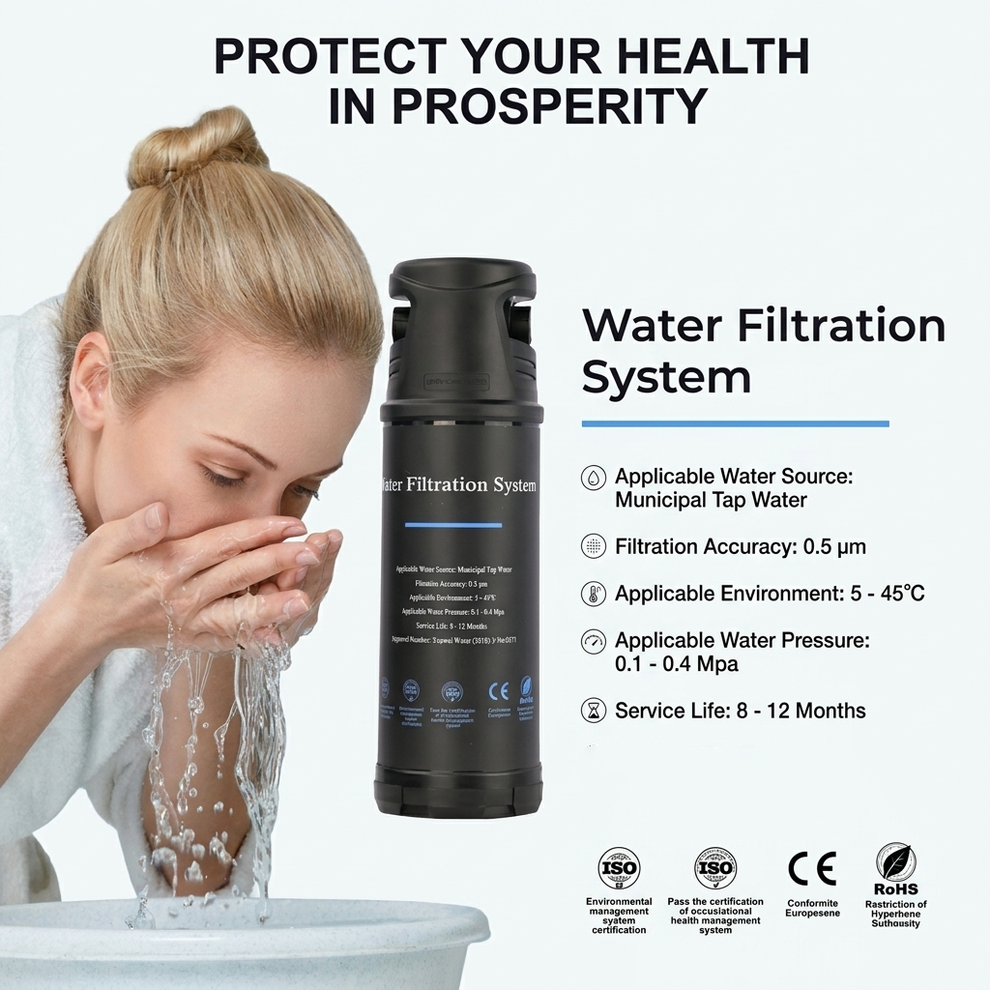
TM8-2 Under Sink Water Filter System 0.01μm Ultrafiltration
Designed for households that demand exceptional water clarity without the environmental drawbacks of reverse osmosis. The TM8-2 utilizes advanced ultrafiltration to block bacteria, rust, and microplastics while preserving essential natural minerals in your drinking water. It requires no electricity and generates absolutely zero wastewater.
| Filtration Accuracy | 0.01μm |
| Flow Rate | Up to 400 L/h |
| Working Pressure | 0.1–0.4 MPa |
| Power Requirement | None (Eco-Friendly) |
| Installation | Under Sink (Compact 130 × 110 × 345 mm) |
Whether you choose the absolute barrier of RO or the efficient retention of UF, upgrading your home's water infrastructure is a definitive investment in your long-term health and culinary experience. For those constantly on the move, maintaining that water quality requires adapting; keeping a Portable Water Filter Bottle on hand ensures you are never reliant on questionable public fountains.
Frequently Asked Questions (FAQ)
Does a reverse osmosis filter remove healthy minerals from water?
Yes. Because the RO membrane has a pore size of 0.0001 microns, it cannot distinguish between "bad" heavy metals and "good" minerals like calcium and magnesium. It strips everything, resulting in highly pure, slightly acidic water. We highly recommend purchasing an RO system with a remineralization stage to add these healthy minerals back into the water before it reaches your glass.
How often do I need to replace the filters in an RO system?
In most professional situations, the pre-filters (sediment and carbon blocks) must be replaced every 6 to 12 months to protect the main membrane from chlorine damage. The actual RO membrane typically lasts between 24 to 36 months, depending on your incoming water hardness and total usage.
Is it normal for my reverse osmosis system to constantly drain water?
An RO system should only send water down the drain while it is actively producing purified water to fill the tank (or while the faucet is open on a tankless system). If you hear a constant hissing or draining sound 24/7, your automatic shut-off valve is broken, or your membrane is ruptured. This requires immediate maintenance.
Can I connect my RO system to my refrigerator ice maker?
Yes, traditional tank-based RO systems can easily be teed off to supply a refrigerator ice maker. However, tankless RO systems require a specific pressure-delivery setup to trigger the fridge's internal solenoids. Always check the manufacturer's specifications before running a line from a tankless unit to a fridge.
Authoritative References & Water Quality Standards
To ensure our filtration guidance aligns with the highest scientific standards, we reference data from the following public health and environmental authorities:
- U.S. Environmental Protection Agency (EPA): Guidelines on National Primary Drinking Water Regulations and the impact of PFAS and heavy metals in municipal supplies. Visit EPA Drinking Water
- NSF International: The definitive certification body for water filtration standards, including NSF/ANSI 58 for Reverse Osmosis systems. Visit NSF Water Filter Standards
- Centers for Disease Control and Prevention (CDC): Public health guidance regarding home water treatment technologies and pathogen removal efficacies. Visit CDC Water Treatment Guide