


Is Reverse Osmosis Water Good or Bad for You? The Uncensored 2026 Truth
If you have spent any amount of time researching home water purification, you have inevitably crashed into a wall of conflicting information. Health bloggers, aggressive filter salespeople, and armchair chemists are engaged in a relentless debate over a single question: is reverse osmosis water good or bad for your biological health? Some claim it is the only viable defense against the catastrophic failure of modern municipal water infrastructure. Others loudly insist that it strips the body of essential minerals, creating "dead water" that aggressively leaches calcium from your bones.

We absolutely refuse to tolerate this level of misinformation. From our experience as industry experts, the conversation surrounding whether reverse osmosis water good or bad has been intentionally muddied by companies peddling inferior, overpriced carbon block filters that cannot remove heavy metals or forever chemicals (PFAS). When you look at the raw, uncompromising data regarding global water toxicity in 2026, the necessity of absolute filtration is no longer a matter of opinion—it is a matter of physiological survival.
In this relentlessly practical and authoritative guide, we are tearing down the myths. We will dissect the exact mechanical process of semi-permeable membranes, address the mineral depletion fallacy with clinical facts, and provide a definitive, engineering-based answer to the question: is reverse osmosis water good or bad for you?
Table of Contents
- The Core Mechanics: How Reverse Osmosis Actually Works
- The Mineral Myth: Demystifying "Dead Water"
- Assessing Municipal Toxicity vs. RO Purity
- Evaluating RO Systems in 2026: Form and Function
- Innovations in Water Extraction and Filtration
- Summary Table: The True Pros and Cons of Reverse Osmosis
- Frequently Asked Questions (FAQs)
- Clinical and Government References
The Core Mechanics: How Reverse Osmosis Actually Works
To accurately determine if reverse osmosis water good or bad, you must first understand the physics of the system. Reverse osmosis is not a simple sieve. It is a highly pressurized, multi-stage molecular separation process. Water is forcefully pushed through a semi-permeable membrane containing microscopic pores. We are talking about filtration down to the ionic level.
Standard refrigerator filters and pitcher filters rely on activated carbon, which works via adsorption to remove chlorine taste and odor. They are completely useless against dissolved solids, radioactive isotopes, and microscopic heavy metals. A premium New Arrival reverse osmosis system for home utilizes a membrane with pores sized at 0.0001 microns. To put that into perspective, a human hair is roughly 70 microns wide. The RO membrane strips away lead, arsenic, fluoride, chromium-6, microplastics, and pharmaceutical runoff, rejecting them as wastewater while allowing only pure H2O molecules to pass through into your holding tank.
When critics ask is reverse osmosis water good or bad, they often point to the thoroughness of this exact process. They argue that because the membrane removes absolutely everything, it creates an unnatural liquid. We completely disagree. In a world where municipal water supplies consistently fail to meet basic safety standards, removing "everything" is the only logical starting point for safe hydration.
The Mineral Myth: Demystifying "Dead Water"
The most pervasive argument claiming that reverse osmosis water good or bad leans toward the negative rests entirely on the "mineral depletion" theory. The argument states that because RO removes calcium, magnesium, and potassium from the tap water, drinking it will dehydrate you and leach minerals from your skeletal system. From our experience, this is the most scientifically illiterate claim in the water filtration industry.
Humans do not rely on drinking water for their essential mineral intake; we are biologically designed to extract minerals from the food we consume. The calcium found in hard tap water is inorganic rock dust. Your body cannot easily bio-absorb inorganic calcium. Conversely, the calcium found in a single leaf of spinach or a slice of cheese is highly bioavailable. You would literally have to drink dozens of bathtubs of un-filtered municipal tap water to equal the magnesium found in a single handful of almonds.
Therefore, when concluding whether reverse osmosis water good or bad regarding mineral content, the answer is undeniably positive. Yes, it removes inorganic minerals, but those minerals were not providing substantial nutritional value anyway. If you are genuinely concerned about the slight drop in pH (RO water is slightly acidic due to the removal of alkaline minerals), modern Countertop RO Systems frequently feature alkaline remineralization stages that add a precise, safe amount of crushed organic calcium back into the water right before it hits your glass.
Assessing Municipal Toxicity vs. RO Purity
The debate over is reverse osmosis water good or bad cannot exist in a vacuum. You must compare RO water to the alternative: drinking straight from the tap. In 2026, the prevalence of Per- and polyfluoroalkyl substances (PFAS)—often referred to as "forever chemicals"—has reached crisis levels globally. These synthetic compounds, used in non-stick cookware and firefighting foam, do not break down in the environment or the human body. They are linked to severe thyroid disease, immune suppression, and various cancers.
Standard water treatment plants are not structurally equipped to filter out PFAS. However, the high-pressure membrane inside High-Flow RO Systems physically rejects these massive molecular chains. When you weigh the non-existent threat of "missing minerals" against the very real, documented threat of ingesting carcinogenic forever chemicals, the question of whether reverse osmosis water good or bad becomes laughably simple. It is the definitive, non-negotiable solution for protecting your household.
Evaluating RO Systems in 2026: Form and Function
Not all RO systems are engineered equally. Legacy systems from a decade ago were notorious for terrible wastewater ratios—often wasting four gallons of water to produce a single gallon of pure drinking water. We do not tolerate that level of inefficiency today. If you are searching for an All products reverse osmosis system for home, you must scrutinize the technical specifications to ensure environmental and electrical efficiency.
To demonstrate the pinnacle of current engineering, we look at the exact specifications required of a modern, premium unit.
RO100 Under Sink Reverse Osmosis System Dual Outlet Low Waste
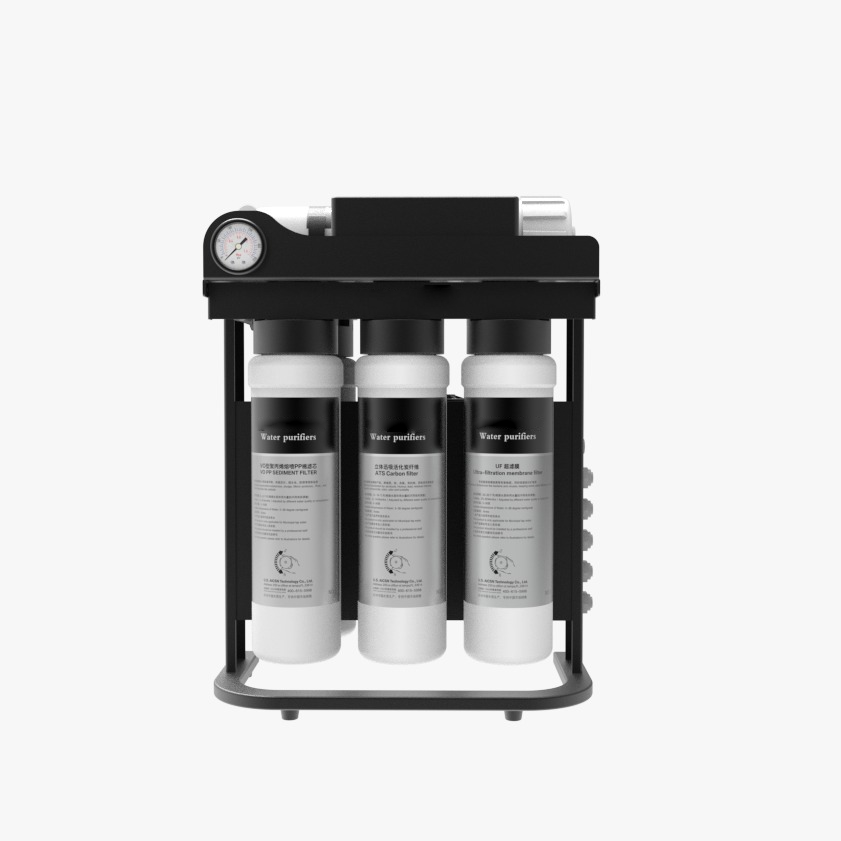
This unit exemplifies why the modern answer to whether reverse osmosis water good or bad is overwhelmingly positive. We recommend this exact structural profile for residential integration:
- Filtration System: 5-stage (Provides comprehensive pre-filtration to protect the delicate RO membrane).
- Filtration Accuracy: 0.0001 μm (The absolute gold standard for stripping heavy metals and viral pathogens).
- Flow Rate: 1–1.5 L/min (Eliminates the agonizing wait time associated with older, tankless systems).
- Wastewater Ratio: 1.5:1 (A massive leap in eco-efficiency, minimizing utility bills and environmental impact).
- Voltage: DC 24V (Safe, low-voltage operation under the sink).
- Capacity: 1,060 gallons (4,000L) (Ensures long-term performance before maintenance is required).
- Inlet Water Temperature: 5°C – 45°C
- Inlet Pressure: 0.15 – 0.4 MPa
- Interface Size: 1/4" universal connection (Ensures rapid, plumber-free installation).
By upgrading to highly efficient Under-Sink RO Systems like the RO100, you bypass the archaic flaws of early-generation water purification technology.
Innovations in Water Extraction and Filtration
The pursuit of pure hydration has expanded beyond just scrubbing municipal tap water. For those living in areas with catastrophic pipe infrastructure, heavily contaminated well water, or those pursuing a nomadic, off-grid lifestyle, traditional plumbing is no longer a requirement. The market has introduced highly advanced Portable & Non-Electric RO gravity systems that provide survival-grade purification anywhere in the world.
Furthermore, we are witnessing the rise of the Atmospheric Water Generator. These brilliant machines pull ambient humidity directly from the air, condense it into water, and push it through a multi-stage RO membrane. It is literally creating pristine, toxin-free drinking water out of thin air. However, regardless of the water source, the underlying mechanical requirement remains the same: you must adhere to strict maintenance schedules. The effectiveness of any RO system immediately plummets if you fail to swap out your Replacement Filters according to the manufacturer's gallon-capacity guidelines.
Summary Table: The True Pros and Cons of Reverse Osmosis
To definitively conclude the debate on whether reverse osmosis water good or bad, we have organized the clinical realities into this uncompromising comparison matrix.
| Factor | The Myth / Common Claim | The Clinical & Engineering Reality |
|---|---|---|
| Mineral Content | It strips essential minerals, causing dehydration. | Minerals are derived from food. The inorganic minerals in tap water offer negligible bio-absorption. |
| Contaminant Removal | Carbon pitcher filters are just as effective. | Only RO membranes (0.0001 μm) physically reject PFAS, lead, arsenic, and radioactive isotopes. |
| Acidity / pH Levels | RO water is too acidic and harms the body. | RO water is slightly acidic (pH 6-6.5), but stomach acid (pH 1.5) instantly neutralizes it. The body buffers pH internally. |
| Wastewater | RO systems waste too much water to be sustainable. | Modern systems (like the RO100) achieve a 1.5:1 ratio, making them vastly more efficient than older 4:1 models. |
| Cost vs. Value | Bottled water is cheaper and safer. | Bottled water is unregulated, prone to microplastic shedding, and astronomically expensive over a 5-year timeline compared to a home RO system. |
Frequently Asked Questions (FAQs)
1. So ultimately, is reverse osmosis water good or bad for daily consumption?
From our experience, it is unequivocally good. When you weigh the severe physiological dangers of ingesting heavy metals, forever chemicals, and pharmaceutical runoff found in tap water against the completely manageable reality of slightly lower mineral content in RO water, reverse osmosis is the only logical choice for daily hydration.
2. Does reverse osmosis water taste flat or weird?
Reverse osmosis water tastes like absolute nothingness—which is exactly what pure H2O is supposed to taste like. If you are accustomed to the taste of chlorine, sulfur, or iron in your tap water, the sudden absence of those chemical contaminants might initially feel "flat" to your palate. However, most modern systems utilize a final post-carbon or remineralization stage to "polish" the water, ensuring a crisp, refreshing finish.
3. How do I know when my RO membrane needs replacing?
The pre-filters (sediment and carbon blocks) usually require replacement every 6 to 12 months to prevent chlorine from degrading the main membrane. The actual RO membrane typically lasts 24 to 36 months depending on your incoming water hardness. The most accurate way to test membrane health is using an inexpensive TDS (Total Dissolved Solids) meter. If the TDS reading of your filtered water starts climbing significantly, it is time for a replacement.
Clinical and Government References
To ensure our analysis of whether reverse osmosis water good or bad is grounded in unassailable scientific fact, we rely on established epidemiological data and water quality regulations. We highly recommend consulting the following authoritative bodies for further technical reading regarding municipal water toxicity and filtration standards:
- World Health Organization (WHO). "Drinking-water Fact Sheet." (Global guidelines detailing the physiological impacts of chemical contaminants, heavy metals, and microbial pathogens in municipal water supplies).
- Centers for Disease Control and Prevention (CDC). "Home Water Treatment Technologies: Reverse Osmosis." (Federal analysis confirming the mechanical efficacy of RO systems in removing protozoa, bacteria, viruses, and complex chemical contaminants).