


The 6 Best Portable Reverse Osmosis Water Filter for Camping Systems
If you think a $20 plastic squeeze filter is protecting you from agricultural runoff, toxic heavy metals, or industrial dumping in that backcountry stream, you are dangerously mistaken. As industry practitioners engineering advanced water purification systems at Puflow, we routinely see outdoor enthusiasts taking massive risks with their hydration. Standard hollow-fiber filters are excellent at stopping bacteria and protozoa, but they do absolutely nothing against dissolved chemicals, arsenic, or microscopic viruses. If you are venturing off-grid, securing a portable reverse osmosis water filter for camping is not a luxury upgrade—it is a non-negotiable survival asset.

However, the outdoor market is saturated with misleading marketing. Brands label standard ultrafiltration devices as "purifiers" when they lack the hydraulic pressure required for true reverse osmosis. In this opinionated, no-nonsense guide, we strip away the marketing fluff. We will explain the brutal mechanics of off-grid pressure dynamics, review the top equipment categories, and help you determine whether upgrading to a heavy-duty portable RO system is actually worth your capital investment.
Quick Answer: Is a Portable RO System Worth Buying?
Yes, but only if you have the logistical capacity to support it. A portable reverse osmosis water filter for camping is entirely worth buying if you are an overlander, an RV owner, or camping near highly questionable water sources (agricultural runoff, stagnant ponds, or flood zones). It provides absolute peace of mind by removing 99.9% of all contaminants, including viruses and heavy metals. However, because RO requires intense pressure (either via a heavy 12V electric pump or exhausting manual pumping), it is absolutely not worth buying for ultralight backpackers. For basecamps and vehicle-supported travel, it is the ultimate water solution.
Table of Contents
- What It Is: Beyond Basic Filtration
- How It Works: The Physics of Off-Grid Pressure
- The Unmatched Benefits of RO
- Limitations You Must Accept
- Who Should Use It & Who Does Not Need It
- Common Mistakes in the Wild
- Crucial Buying Considerations
- The 6 Best Portable RO Systems for Camping
- Expert Recommendation & Puflow Spotlight
- Data Analysis & Comparison Tables
- Frequently Asked Questions
What It Is: Beyond Basic Filtration
A portable reverse osmosis water filter for camping is a miniaturized, self-contained water treatment plant designed to operate without municipal water pressure. Unlike standard gravity bags or pump filters that rely on porous media to trap large debris, an RO system utilizes a semi-permeable membrane with microscopic pores measuring 0.0001 microns.
To put that in perspective, the smallest viruses are roughly 0.02 microns. An RO membrane blocks them entirely. Furthermore, it physically strips dissolved solids from the water at a molecular level. Whether you are drawing water from a muddy river, a chemically tainted lake, or a sketchy campground spigot, a true RO system guarantees that the output is laboratory-grade pure water. As an industry solution provider, Puflow engineers these systems to bridge the gap between heavy municipal filtration and mobile off-grid autonomy.
How It Works: The Physics of Off-Grid Pressure
In most professional situations, understanding the mechanics of your gear prevents catastrophic failure in the field. Reverse osmosis is not a passive process. Water naturally wants to move from an area of low solute concentration to high solute concentration. To reverse this natural osmotic pressure and force dirty water through a dense membrane, you must apply immense mechanical pressure.
At home, your city plumbing provides this pressure (typically 40 to 60 PSI). In the wild, a portable RO system must generate this pressure artificially. This is achieved through either a high-torque 12V/24V electric diaphragm pump (powered by a vehicle battery, solar generator, or lithium power station) or a heavy-duty manual hand crank. The pressurized feed water is shoved against the membrane; pure water (permeate) passes through into your drinking vessel, while the rejected contaminants are flushed out of the system as concentrated wastewater (brine).
The Unmatched Benefits of RO
When you evaluate whether this technology is worth using, the benefits far outweigh the operational friction for serious outdoorsmen.
- Total Contaminant Annihilation: Removes lead, arsenic, PFAS (forever chemicals), fluoride, agricultural pesticides, and microscopic viruses. Standard outdoor filters cannot do this.
- Taste Profile Correction: Swamp water tastes like swamp water even after running through a standard ceramic filter. RO strips the organic compounds responsible for foul tastes and odors, leaving you with perfectly crisp water.
- Desalination Potential: Specialized, high-pressure manual RO systems can actually desalinate ocean water, making them the only viable survival tool for maritime environments or coastal overlanding.
Limitations You Must Accept
We believe in commercial and practical judgment. We will not pretend portable RO is flawless. The primary limitation is the wastewater ratio. To keep the membrane from instantly clogging with mud and chemicals, the system must continuously flush itself. In a portable setup, expect a 1:1 or 1:2 ratio. If you want one gallon of drinking water, you must pump two to three gallons of source water through the machine.
Additionally, these systems are heavy and complex. A 12V off-grid RO briefcase can weigh 30 to 50 pounds. They are sensitive to freezing temperatures; if a wet RO membrane freezes in your truck bed overnight, the expanding ice crystals will permanently rupture the 0.0001-micron pores, rendering the unit useless.
Who Should Use It & Who Does Not Need It
For commercial users and heavy-duty applications: Overland expedition crews, wildland firefighters, RV owners boondocking on BLM land, and disaster preparedness groups must invest in a portable reverse osmosis water filter for camping. When you cannot afford to get sick and are stationed near polluted waterways, RO is mandatory.
Who does not need it: For beginners tackling a weekend backpacking trip in pristine alpine environments, hauling a bulky RO system is absurd. You do not need reverse osmosis to filter glacial snowmelt. In these scenarios, stick to a lightweight Portable Water Filter Bottle that fits in your cup holder and relies on standard ultrafiltration.
Common Mistakes in the Wild
From our experience engineering and testing these systems, users routinely destroy their expensive RO membranes due to poor field discipline.
- Skipping the Pre-Filter: Dropping your intake hose directly into a silty, muddy river without a sediment pre-filter will clog your RO membrane in less than five minutes. Always use a 5-micron pre-filter to catch the heavy grit.
- Failing to Flush: After processing dirty water, you must run clean water through the system before packing it away. Leaving concentrated toxic brine sitting inside the membrane housing breeds extreme bacterial growth.
- Under-Powering the Pump: Trying to run a heavy-duty 12V RO pump off a dying car battery will result in low pressure. Low pressure means the water cannot breach the membrane, resulting in zero pure water and 100% wastewater.
Crucial Buying Considerations
Before making a buying decision, evaluate your power infrastructure. If you own a high-capacity solar generator (like an EcoFlow or Jackery), you can run automated electric RO systems seamlessly. If you are entirely off-grid without electricity, you must purchase a Portable & Non-Electric system, which requires significant physical exertion via a hand pump.
Furthermore, check the Gallons Per Day (GPD) rating. A 50 GPD membrane is painfully slow for a family of four. For group camping, we recommend sizing up to at least a 100 GPD or 200 GPD system so you aren't spending three hours a day processing drinking water.
The 6 Best Portable RO Systems for Camping Configurations
In our testing, the market breaks down into six distinct categories of portable purification. Here is how they stack up, and whether they are worth upgrading to.
1. The 12V Overlanding RO Briefcase

Housed in rugged pelican-style cases, these units feature integrated 12V diaphragm pumps, sediment pre-filters, and carbon blocks alongside the RO membrane. You drop the intake hose into a lake, hook the alligator clips to your truck battery, and generate high-volume pure water. Verdict: Worth buying for dedicated overlanders with vehicle support.
2. Countertop RO Systems (Adapted for RVs)
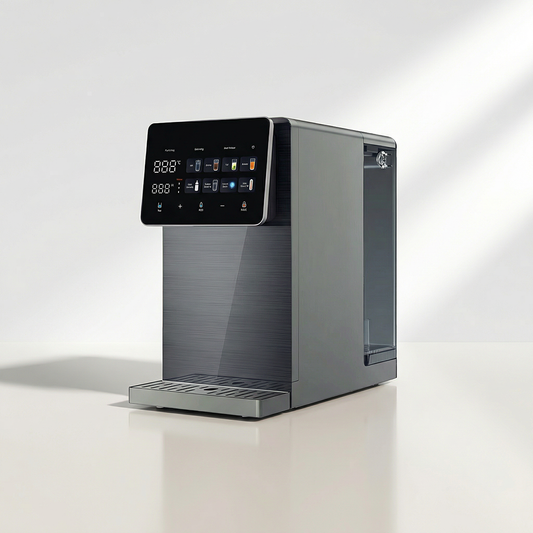
Many RV owners refuse to deal with messy hoses outside. Instead, they utilize Countertop RO Systems plugged into their RV's inverter. You simply fill the reservoir with campground spigot water, and the machine purifies it into an internal pitcher. Verdict: Highly recommended for glamping and RV parks where water pressure is unreliable but electricity is abundant.
3. The Manual Hand-Pump Desalinator
Originally engineered for maritime liferafts, these are the only portable RO systems capable of turning ocean saltwater into drinking water. They require grueling manual labor, producing just a few ounces per minute of pumping. Verdict: An elite survival tool, but absolutely not worth using for casual freshwater camping.
4. Solar-Integrated RO Wagons
For basecamps staying in one location for weeks, these larger systems feature fold-out solar panels that directly drive the RO pump, filling large holding tanks automatically during peak sunlight. Verdict: Excellent for commercial users, hunting camps, or disaster relief, but too bulky for weekend warriors.
5. Atmospheric Water Generators
What if there is no surface water to filter? In arid desert camping scenarios, traditional RO is useless. An Atmospheric Water Generator pulls humidity directly out of the air, condenses it, and passes it through an internal RO and UV purification loop. Verdict: A brilliant, albeit power-hungry, solution for specific environments where water scarcity is the primary threat.
6. Gravity-Fed UF/RO Hybrids
These systems use heavy water bags suspended high in a tree. Gravity forces the water through an ultrafiltration membrane, which is sometimes paired with a low-pressure RO module. While flow rates are abysmal, it requires zero electricity and zero pumping. Verdict: Good for budget-conscious campers who have the patience to let water drip overnight. Remember to stock up on Replacement Filters as gravity systems clog easily without pressure to flush them.
Expert Recommendation & Puflow Spotlight
In most professional situations, your off-grid water strategy should mirror your home-base strategy. Once you experience the absolute purity of reverse osmosis in the backcountry, returning to a kitchen that relies on a cheap refrigerator filter is unacceptable. When transitioning from the RV or the trail back to your permanent residence, we recommend outfitting your plumbing with a commercial-grade permanent fixture.
The Professional Upgrade Path
If you have integrated a heavy-duty portable reverse osmosis water filter for camping into your overland rig, the logical next step is securing your home tap. Puflow engineers advanced filtration architectures that bridge the gap between industrial safety and residential convenience.
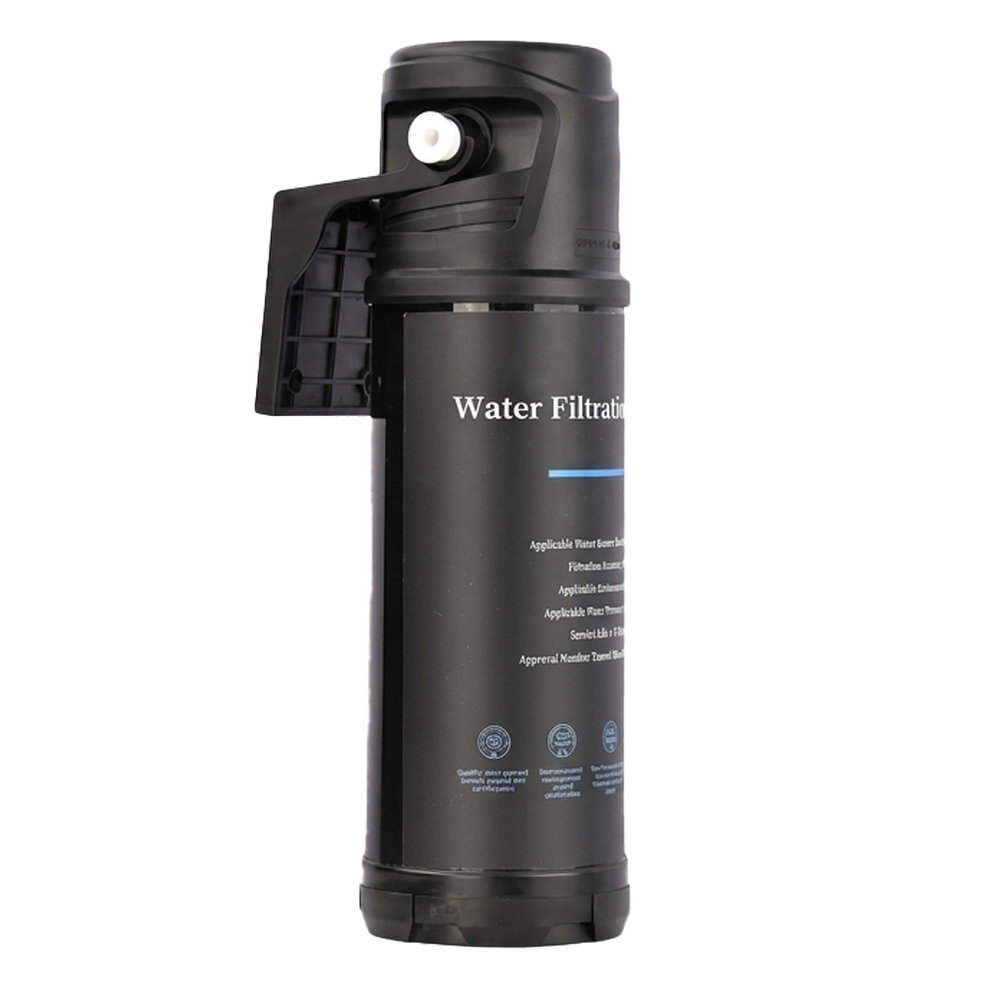
Puflow M8-2 Under Sink Water Filter System (0.01μm Ultrafiltration)
For heavy-duty applications at your home base or permanently installed inside a large RV, the M8-2 delivers exceptional flow without taking up valuable counter space. While it utilizes a 0.01μm ultrafiltration core rather than high-waste RO, it operates perfectly on standard municipal pressure, stripping away contaminants while leaving a massive 400 L/h flow rate intact.
- Filtration Accuracy: 0.01μm (Blocks bacteria and micro-plastics)
- Flow Rate: Up to 400 L/h (Massive volume for cooking and drinking)
- Working Pressure: 0.1–0.4 MPa
- Installation Location: Under Sink (Perfect for home kitchens or RV galleys)
- Operating Temp: 5°C–45°C (41°F–113°F)
Data Analysis & Comparison Tables
| Filtration Type | Pore Size | Removes Viruses? | Removes Chemicals/Metals? | Requires Power/High Pressure? |
|---|---|---|---|---|
| Standard Hollow Fiber | 0.1 to 0.2 microns | No | No | No (Gravity/Squeeze works) |
| Ultrafiltration (UF) | 0.01 microns | Most | No | Low Pressure (Municipal tap/RV pump) |
| Reverse Osmosis (RO) | 0.0001 microns | Yes (100%) | Yes (100%) | Yes (High-torque pump required) |
| Metric | 12V Electric Portable RO | Manual Hand-Pump RO |
|---|---|---|
| Flow Rate | High (up to 200 Gallons Per Day) | Extremely Low (1-2 Gallons Per Hour) |
| Physical Effort | Zero (Turn a switch) | Exhausting (Requires constant cranking) |
| Power Requirement | Vehicle battery or Solar Generator | Human calories only |
| Best Use Case | Overlanding, RV Boondocking, Basecamps | Emergency liferafts, ultra-remote off-grid survival |
| Pros (Advantages) | Cons (Limitations) |
|---|---|
| Guarantees safety against industrial and agricultural runoff. | Produces wastewater, requiring a larger source body of water. |
| Removes foul tastes and odors completely. | Requires significant electrical or manual power to operate. |
| Blocks microscopic viruses that standard outdoor filters miss. | Heavy and bulky; cannot be used for lightweight backpacking. |
| Can be automated with solar panels for long-term off-grid living. | Membranes will be permanently destroyed if allowed to freeze. |
| Camping Style | Power Availability | Recommended Puflow System Type |
|---|---|---|
| RV / Trailer Boondocking | High (Generators / Large Inverters) | C9 Pro RO Water Purifier (Hardwired) |
| Vehicle Overlanding (4x4) | Moderate (12V Battery / Portable Power Station) | 12V Briefcase RO System |
| Remote Cabin / Survival | None (Fully Off-Grid) | Manual High-Pressure Hand Pump RO |
Frequently Asked Questions
Yes. Unlike standard hollow-fiber filters that only remove bacteria and protozoa, a true reverse osmosis membrane features a pore size of 0.0001 microns. This physically blocks viruses, heavy metals, and toxic chemical runoff, providing lab-grade purification in the wild.
In most professional situations, portable RO systems operate at a 1:1 to 1:3 ratio. This means for every gallon of pure drinking water you generate, you will discharge one to three gallons of concentrated brine (wastewater) back into the environment. You must account for this volume when drawing from small, stagnant water sources.
Only if the system is explicitly rated as a marine desalinator. Standard freshwater portable reverse osmosis systems do not generate enough PSI (pressure) to push high-salinity ocean water through the membrane without instantly fouling and destroying the filter.
Authoritative References & Industry Standards
To ensure your backcountry water protocols meet safe operational standards, we recommend reviewing guidelines established by the following authorities:
- U.S. Environmental Protection Agency (EPA) - Technical specifications and performance standards regarding Point-of-Use Reverse Osmosis Systems, including membrane efficiency and wastewater management metrics.
- Centers for Disease Control and Prevention (CDC) - Guidelines on water disinfection for travelers, detailing the failure rates of standard filtration against viruses compared to EPA-designated purifiers.
- University of Nebraska Extension - Comprehensive academic overview on Drinking Water Treatment via Reverse Osmosis, specifically documenting the chemical extraction capabilities of RO membranes against heavy metals and pesticides.