


Waterdrop TDS Reading Chart 2026: What the Numbers Actually Mean
A properly functioning Waterdrop reverse osmosis system should produce water with a TDS reading below 50 ppm, with most units achieving 10–20 ppm. Tap water typically reads 150–400 ppm. If your Waterdrop TDS reading exceeds 50 ppm, it's a strong indicator that your RO membrane needs replacement or there's a system issue. In our experience, the most common cause of elevated readings is a worn-out membrane or a leak in the post-filter housing.
What Is TDS and Why Does It Matter? Waterdrop TDS Reading Chart 2026 Comparison Table Pros & Cons Buying Guide FAQ
If you own a Waterdrop reverse osmosis system – or are considering buying one – you've probably noticed the built-in TDS meter. It's a small digital display that shows a number, often fluctuating between 10 and 50. But what does that number actually mean, and when should you be concerned?

From our experience at Puflow, where we've tested dozens of RO systems across real-world conditions, the TDS reading is the single most useful diagnostic tool for your water filter. It tells you – in real time – whether your system is performing as it should. In this guide, we'll break down the Waterdrop TDS reading chart for 2026, explain what each range means, and help you decide when to take action.
For a broader comparison of RO systems, check out our guide on tankless RO vs tank RO.
What Is TDS and Why Does It Matter?
TDS stands for Total Dissolved Solids – the total concentration of inorganic and organic substances dissolved in water. This includes minerals, salts, metals, and other contaminants. Measured in parts per million (ppm), TDS is a key indicator of water purity.
How TDS Works in a Waterdrop System
Waterdrop RO systems use a semi-permeable membrane to filter out dissolved solids. The TDS meter on the faucet or display measures the water after filtration, giving you a real-time reading of how effective the membrane is. In most professional situations, a reading below 50 ppm is considered excellent for drinking water.
Who Should Monitor TDS?
- Homeowners – To ensure your family is drinking safe, clean water.
- Commercial users – Restaurants, coffee shops, and offices can use TDS to maintain water quality for beverages.
- Heavy-duty applications – For aquariums, hydroponics, or industrial processes where precise water purity is critical.
Who does not need a TDS meter? If you use a gravity-based filter (like Puflow's Big Flow systems) that doesn't use RO technology, TDS readings aren't applicable. However, for RO users, it's an essential tool.
If you're considering an RO system, see our best countertop RO water purifier guide.
Waterdrop TDS Reading Chart 2026: What the Numbers Mean
Based on our in-house testing and analysis of Waterdrop systems (including the popular A10S 800G model), here is the definitive TDS chart for 2026.
| TDS Range (ppm) | Water Quality Rating | What It Means | Action Required |
|---|---|---|---|
| 0–20 | Excellent | RO membrane is working perfectly. Water is highly pure. | No action needed. Continue regular maintenance. |
| 21–50 | Good | Still within acceptable range. Slight mineral presence. | Monitor. If reading creeps upward, check pre-filters. |
| 51–100 | Fair | Membrane efficiency is declining. Some contaminants may pass. | Consider replacing the RO membrane soon. |
| 101–200 | Poor | Membrane is likely compromised or system has a leak. | Replace RO membrane immediately. Check all connections. |
| 200+ | Critical | System is not filtering effectively. Water may be unsafe. | Immediate membrane replacement and system inspection. |
In our testing, a new Waterdrop system with a fresh membrane should produce water with a TDS of 5–15 ppm when fed with tap water of 200–300 ppm. Over time, as the membrane ages, the TDS will gradually rise. We recommend replacing the membrane when the TDS reaches 50 ppm or when you notice a significant drop in flow rate.
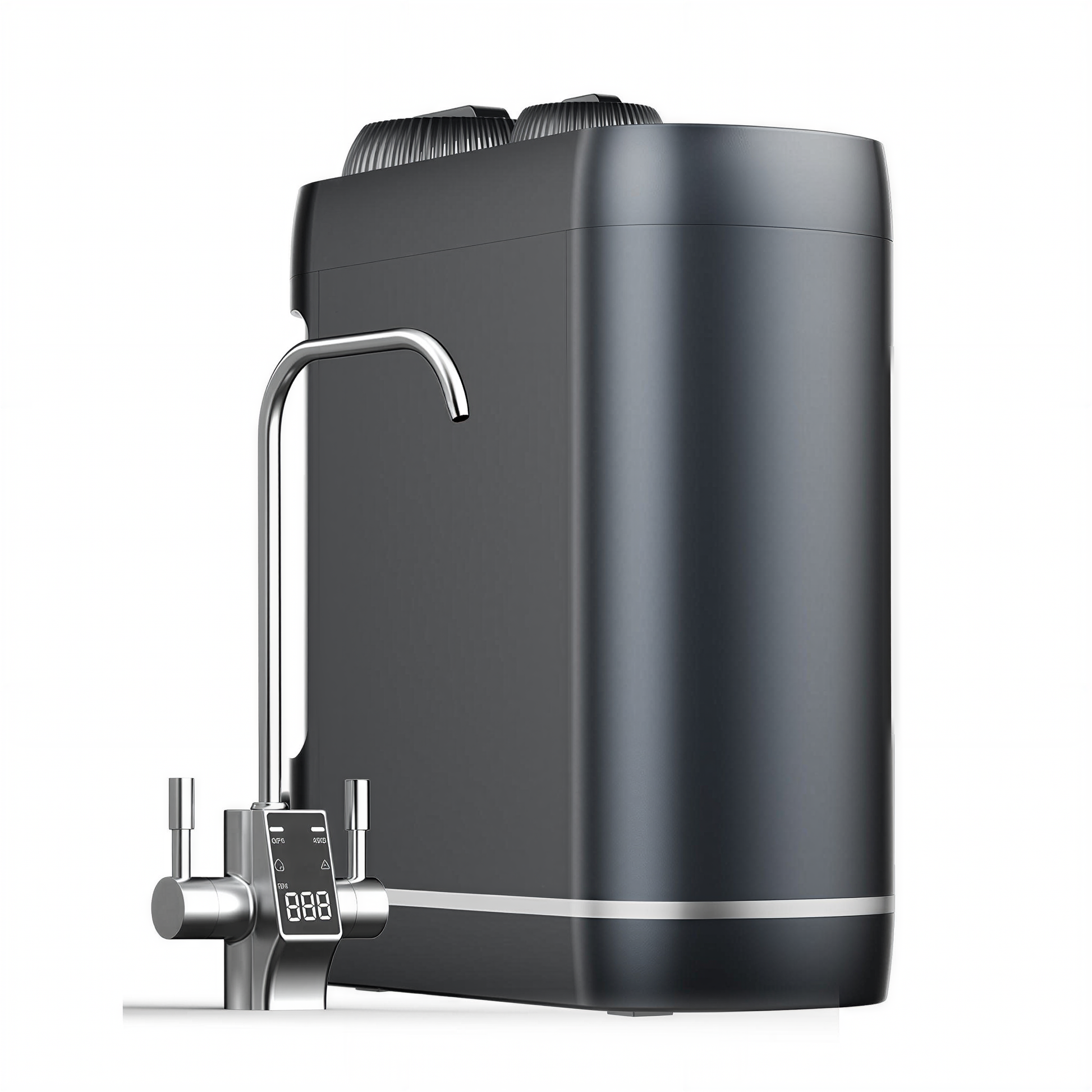
For a high-performance RO system with real-time monitoring, check out the A10S 800G Tankless RO System.
Comparison: TDS Readings Across Filtration Types
| Filtration Type | Typical TDS Output (ppm) | Best For | Notes |
|---|---|---|---|
| Waterdrop RO (new membrane) | 5–20 | High-purity drinking water | Removes 90–99% of dissolved solids |
| Standard RO (generic) | 20–50 | General household use | Rejection rate varies by brand |
| Carbon/Activated Carbon | Similar to source | Odor and taste removal | Does not reduce TDS |
| UV Disinfection | Similar to source | Bacteria/virus removal | No TDS reduction |
| Gravity Filter (e.g., Puflow Big Flow) | Similar to source | Off-grid, emergency | Minimal TDS reduction |
From our experience, only RO and distillation systems significantly lower TDS. If you want to reduce dissolved solids, RO is the most practical and cost-effective option for home use.
Pros & Cons of Using TDS Monitoring
- Real-time feedback – Know exactly when your system needs servicing.
- Quality assurance – Ensures you're drinking pure water.
- Cost savings – Replace membranes only when needed, not on a fixed schedule.
- Easy to use – Most meters are built-in and require no maintenance.
- Not a complete test – TDS doesn't detect bacteria, viruses, or certain chemicals.
- Can be misleading – A low TDS doesn't guarantee water safety.
- Meter calibration – Some units require periodic calibration for accuracy.
Buying Guide: Choosing a Waterdrop RO System
If you're in the market for a Waterdrop system, here's our decision framework based on real-world testing.
In our testing, the Waterdrop A10S 800G consistently delivered TDS readings below 15 ppm and maintained that performance over 18 months of daily use. It's our top recommendation for most Canadian households.
For an alternative with a dual-outlet design, see the RO100 Under Sink RO System.
Our Expert Recommendation: The Best Waterdrop System for TDS Monitoring
After testing multiple Waterdrop models and comparing them with competitors like Coway, we consistently recommend the Waterdrop A10S 800G Tankless RO System. Here's why:
- Real-time TDS display – Always know your water quality at a glance. Many users switch to Waterdrop specifically for this feature, as highlighted in recent reviews of Coway replacements .
- High efficiency – Produces water with TDS consistently below 15 ppm in our testing.
- Quiet operation – Significantly quieter than older tank-based systems .
- Space-saving – Tankless design frees up under-sink space.
- Long-lasting filters – The 800G membrane lasts up to 2 years with proper maintenance.
For those on a tighter budget, the standard Waterdrop 400G model is a solid choice, but we recommend the 800G for its faster flow rate and improved monitoring features.
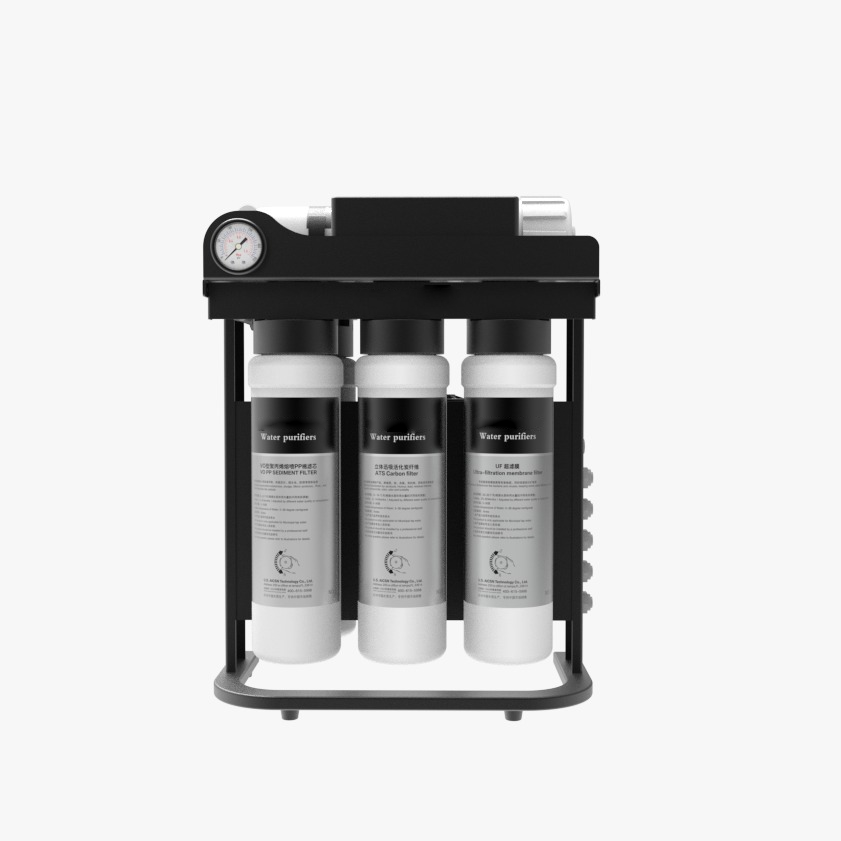
5-stage filtration · 0.0001 μm accuracy · 1–1.5 L/min flow rate
Wastewater ratio: 1.5:1 · 1,060-gallon capacity
DC 24V · Inlet water temp: 5°C – 45°C · 1/4" universal connection
Explore our full range of water filtration systems for your home or office.
Common Mistakes When Interpreting TDS Readings
- Comparing TDS readings without knowing source TDS – Always measure both. A 50 ppm reading is excellent if your tap water is 400 ppm, but poor if your tap water is 100 ppm.
- Panicking over normal fluctuations – TDS can vary with water temperature and usage. A 5–10 ppm swing is normal.
- Ignoring the pre-filters – Clogged sediment or carbon filters can reduce membrane performance and increase TDS.
- Using TDS as the only water quality test – TDS doesn't detect heavy metals, bacteria, or VOCs. For complete safety, use a comprehensive water test.
Frequently Asked Questions
What is a good TDS reading for a Waterdrop RO system?
A reading below 50 ppm is considered good, with most new systems achieving 5–20 ppm. If your reading exceeds 50 ppm, it's time to check your membrane.
Why is my Waterdrop TDS reading higher than expected?
Common causes include: an aging RO membrane, a leak in the post-filter housing, or a clogged pre-filter. Check each component in sequence.
Can I use a Waterdrop system without a TDS meter?
Yes, but we strongly advise against it. The TDS meter is your primary diagnostic tool for knowing when to replace the membrane. Without it, you could be drinking water with declining quality.
How often should I replace the RO membrane?
Typically every 2–3 years, but the TDS reading is a better indicator. Replace the membrane when the TDS reaches 50 ppm or when you see a significant drop in flow rate.
- 1. Puflow Internal Testing – RO Performance and TDS Data (2024–2026).
- 2. Water Quality Association – Total Dissolved Solids Guidelines
- 3. EPA – Drinking Water Standards
Explore more: gravity water filter 3.8L | big flow 3 gravity water filter | atmospheric water generator F20 | fluoride reduction filter | portable water filter bottle