


Why Am I Thirsty After Drinking Reverse Osmosis Water?
If you feel thirsty again shortly after drinking reverse osmosis water, it is reasonable to question whether your RO system is producing water that actually hydrates you. The short answer is that properly produced reverse osmosis water does hydrate you. Its low mineral content does not automatically make it dehydrating or prevent your body from absorbing it.
However, there are several reasons you may still feel thirsty: you may not be drinking enough fluid, your diet or activity may be increasing your fluid needs, the water's taste may make it less satisfying to drink, or what feels like thirst may actually be dry mouth. The condition of your filtration system also deserves attention.

Reverse osmosis water does not normally cause dehydration. RO filtration removes many dissolved substances, including minerals such as calcium and magnesium, which can change the water's taste. Some people find very low-mineral water less pleasant to drink, but that is different from a proven inability to hydrate.
If thirst continues despite drinking enough fluids, do not assume the RO system is responsible. Check your hydration habits, filter maintenance, and possible non-water-related causes. Persistent excessive thirst, especially with frequent urination, needs medical evaluation.
| Quick Summary | What You Should Know |
|---|---|
| Does RO water hydrate? | Yes. It provides water your body can absorb and use. |
| Does RO remove minerals? | Yes. Reverse osmosis reduces many dissolved minerals and salts, depending on the membrane and system design. |
| Can low mineral content affect taste? | Yes. Mineral composition contributes to drinking-water taste and mouthfeel. |
| Does low TDS mean poor hydration? | No. TDS is a measure of dissolved substances, not a direct hydration score. |
| Should you add electrolytes? | Usually not for ordinary daily drinking. They may be useful in specific situations involving substantial fluid and electrolyte losses. |
| When should you investigate further? | When thirst is persistent, unusual, or accompanied by frequent urination, unexplained fatigue, or other symptoms. |
1. Why Am I Thirsty After Drinking Reverse Osmosis Water?
There is rarely one explanation for feeling thirsty after drinking RO water. In most situations, the cause is more likely to involve fluid intake, daily habits, taste preferences, or an unrelated health factor than the reverse osmosis process itself.
1.1 You may not be replacing the fluid you lose
Your body continuously loses water through breathing, sweating, and urination. If you exercise, work outdoors, spend time in hot weather, or have a fever, your fluid needs can rise. Drinking a glass of RO water does not necessarily replace everything you have lost.
For example, someone working outdoors in warm weather may drink a glass of water at lunch and still feel thirsty later in the afternoon. The issue is not necessarily the filtration method. The person may simply need more fluid throughout the day and, after substantial sweating, may also need to replace electrolytes.
1.2 The taste of low-mineral water may be less satisfying
Reverse osmosis membranes reduce many dissolved substances. That includes minerals that contribute to the familiar taste of tap water or mineral water. The result can taste unusually neutral, flat, or different from the water you are accustomed to drinking.
Water taste matters because it affects how much people choose to drink. If you dislike the taste of your RO water, you may take smaller sips or drink less frequently without noticing. This can contribute to insufficient fluid intake, even though the water itself is capable of hydrating you.
1.3 You may be experiencing dry mouth rather than thirst
Thirst and dry mouth can feel similar, but they are not identical. Dry mouth is related to reduced saliva or changes in the mouth's moisture. It can occur even when your body has enough fluid.
Common contributors include mouth breathing during sleep, certain medications, tobacco use, anxiety, and some medical conditions. If drinking more water does not relieve the sensation, consider whether your mouth or throat feels dry rather than assuming the water is inadequate.
1.4 Your food and drinks may be increasing thirst
A salty meal, spicy food, alcohol, or substantial caffeine intake can affect how thirsty you feel. A person who drinks plenty of water but regularly eats high-sodium meals may continue to feel thirsty.
From our experience evaluating household water choices, consumers sometimes focus entirely on the filter while overlooking the rest of their daily routine. Before replacing an RO system, consider what you ate, how active you were, and whether your fluid intake matched your needs.
1.5 Persistent thirst may have nothing to do with RO water
Frequent or excessive thirst can be associated with dehydration, medication effects, and medical conditions such as diabetes. Frequent urination alongside unusual thirst is particularly important to investigate.
2. Does Reverse Osmosis Water Actually Hydrate You?
Yes. Properly produced reverse osmosis water hydrates the body. The basic function of drinking water is to supply fluid, and RO filtration does not remove the water molecule. It reduces selected dissolved substances as water passes through a semipermeable membrane.
This distinction matters because a common online claim suggests that purified water cannot hydrate the body unless minerals are added back. That is an oversimplification. Mineral content can influence taste and contribute to dietary mineral intake, but low-mineral RO water is not automatically dehydrating.
How reverse osmosis works
In a typical household RO system, incoming water passes through pretreatment stages before reaching the reverse osmosis membrane. Pressure pushes water through the membrane, while many dissolved substances are rejected and carried away in a separate wastewater stream. The treated water is then stored or delivered through the faucet, depending on the system design.
A common configuration includes:
- Sediment filtration: Helps reduce suspended particles that could affect downstream components.
- Carbon pretreatment: Reduces chlorine and certain compounds that may affect taste or damage some RO membranes.
- RO membrane: Reduces many dissolved salts and other substances, subject to system design and operating conditions.
- Post-treatment: Some systems use a final carbon filter or a remineralization stage to adjust taste and water composition.
For a closer look at the technology and available configurations, compare under-sink RO systems, countertop RO systems, and high-flow RO systems.
What does TDS tell you?
Total dissolved solids, commonly shortened to TDS, is an estimate of the concentration of dissolved substances in water. A handheld TDS meter can help you compare the dissolved-solids readings of incoming and treated water.
But TDS is not a complete water-quality test. It does not identify every substance in the water, tell you whether a particular contaminant is present, or measure hydration performance. A low reading can indicate that an RO membrane is reducing dissolved solids, but it does not prove that the water is sterile or that every possible contaminant has been removed.
For commercial and household buyers, we recommend looking beyond a single TDS number. Check the system's documented contaminant-reduction claims, applicable certifications, maintenance requirements, and the quality of the source water.
3. What Happens When Reverse Osmosis Removes Minerals?
Calcium, magnesium, sodium, potassium, and other dissolved substances may be present in source water. Reverse osmosis reduces many of them, although the exact result depends on the source water, membrane performance, and system configuration.
There are three practical effects worth understanding.
3.1 Water taste can change
Minerals contribute to the taste of drinking water. Water with a different mineral profile can taste less familiar, even when it is suitable for drinking. Research on drinking-water sensory quality has found that mineral composition and TDS can influence how people describe water's taste and mouthfeel.
This is one reason some consumers prefer remineralized RO water. A post-RO mineral stage can add selected minerals back to the treated water and produce a taste profile that feels closer to their preference.
3.2 RO water may contribute fewer minerals to your diet
Drinking water can provide some minerals, but it is generally not the only or primary source of essential minerals for people eating a varied diet. Food contributes minerals such as calcium and magnesium in meaningful amounts.
If your diet is limited, or a healthcare professional has advised you to monitor mineral intake, discuss your overall intake with them. Do not assume that adding a remineralization cartridge is a substitute for a balanced diet or medical advice.
3.3 Remineralization can improve taste, but it is not a cure for thirst
We recommend considering remineralization when the main problem is that you dislike the taste of RO water. It is a practical water-quality preference, not a proven treatment for persistent thirst.
Some systems include a mineralization stage after the RO membrane. Others allow users to add a compatible post-filter. Before buying one, confirm which minerals it adds, whether the replacement cartridge is readily available, and whether the manufacturer provides clear specifications.
4. How to Check Your RO Water and Filtration System
If thirst started after installing a new RO system, checking the equipment is sensible. The timing may be coincidental, but it is worth confirming that the system was installed, flushed, and maintained correctly.
Step 1: Confirm the system was flushed correctly
New filters and membranes usually require a specified flushing procedure before normal use. Follow the manufacturer's instructions for the exact model. Do not assume that every system has the same flushing time or startup process.
Step 2: Check the filter replacement schedule
Old or exhausted filters can affect taste, flow, and treatment performance. A carbon post-filter, for example, may be important for the final taste of the water. Check the replacement intervals for every stage rather than replacing only the RO membrane.
Use compatible replacement water filters and follow the manufacturer's maintenance instructions. For Puflow owners, the appropriate cartridge depends on the specific model. For example, the A10S replacement filter set is intended for the A10S system, while the RO600 replacement filter is designed for the RO600.
Step 3: Compare source-water and treated-water readings
If you have a TDS meter, compare the incoming water with the treated water using the same meter and consistent testing conditions. A substantial reduction can indicate that the membrane is performing its dissolved-solids reduction function.
However, do not use TDS as your only pass-or-fail test. If the reading changes unexpectedly, check the manufacturer's troubleshooting guidance and consider a more complete water test when source-water safety is uncertain.
Step 4: Inspect the storage and dispensing components
For systems with a storage tank, check the tank, tubing, faucet, and connections according to the maintenance instructions. For countertop systems, clean the components that come into contact with water as directed. A neglected dispensing area can affect water quality after filtration.
Step 5: Check certification and performance claims
For RO products, NSF/ANSI 58 is a relevant standard covering reverse osmosis drinking-water treatment systems. It addresses areas such as material safety, structural integrity, TDS reduction, efficiency, recovery, and contaminant-reduction claims.
Importantly, certification to a standard does not mean a product automatically reduces every contaminant. Check the specific model and the individual claims that have been verified. This is a more useful buying approach than relying on broad phrases such as “removes everything.”
5. What Should You Do If RO Water Does Not Satisfy Your Thirst?
Rather than immediately replacing your water filter, use a practical process to identify the issue.
Adjust your drinking routine
Drink regularly throughout the day instead of waiting until you feel extremely thirsty. Increase fluid intake when you are sweating more than usual, exercising, or spending time in hot conditions. Your needs vary with activity, climate, diet, and individual health.
Try chilled water if taste is the issue
Some people find chilled RO water more refreshing. A clean, covered bottle or refrigerator-safe container can make it easier to keep water available. If you add fruit or other ingredients for flavor, wash them properly and keep the container clean.
Consider a remineralization stage
If your RO water tastes flat and you consistently prefer water with more mineral character, a compatible remineralization stage may be worth considering. Compare the stated mineral additions, cartridge life, and replacement cost before choosing one.
Do not add salt or electrolyte powders without a reason
Adding salt to every glass of RO water is not a sensible general solution. Most people do not need to turn ordinary drinking water into an electrolyte drink. Electrolyte replacement is more relevant when fluid and mineral losses are substantial, such as during prolonged intense exercise or certain episodes of vomiting and diarrhea. Follow appropriate medical or sports-nutrition guidance for those situations.
Investigate symptoms that do not improve
If thirst continues even when you are drinking enough, do not keep experimenting with filters. Review possible medication side effects and speak with a healthcare professional. This is particularly important if you also urinate frequently or experience other new symptoms.
6. RO Water vs. Remineralized RO Water vs. Gravity-Filtration Water
Not every household needs the same filtration method. The best choice depends on source-water conditions, the contaminants you want to reduce, installation constraints, maintenance preferences, and taste.
| Water Option | How It Works | Main Advantage | Limitation | Best For |
|---|---|---|---|---|
| Standard RO water | Uses a semipermeable membrane to reduce many dissolved substances. | Broad reduction of dissolved solids when the system is properly selected and maintained. | Can have a very low-mineral taste; produces a wastewater stream in many configurations. | Households that need RO-level treatment for their source water. |
| Remineralized RO water | RO filtration followed by a stage that adds selected minerals. | Can provide a taste profile some people prefer. | Additional cartridge cost and maintenance; not a treatment for unexplained thirst. | People who prefer mineral-style taste after RO treatment. |
| Carbon filtration | Uses activated carbon to reduce specified substances, often including chlorine and some taste- or odor-causing compounds. | Can improve taste with a relatively simple system. | Does not provide the same dissolved-solids reduction as RO. | Source water that needs the specific reductions the chosen carbon filter is certified or rated to provide. |
| Gravity filtration | Water passes through filter media under gravity rather than an electric pump. | No plumbing or electricity is required for many models. | Performance depends on the filter media and verified reduction claims; flow is usually slower than powered systems. | Renters, RV users, camping, and households seeking a non-electric option. |
| Bottled mineral water | Packaged water with a naturally occurring or adjusted mineral profile. | Convenient and often has a familiar mineral taste. | Recurring purchase cost, packaging waste, and brand-to-brand mineral variation. | Occasional use or consumers who prioritize convenience and a particular taste. |
Which option is actually worth buying?
For households dealing with dissolved contaminants that require RO treatment, a properly specified RO system is generally the more appropriate choice than switching to a basic carbon filter simply because the water tastes different.
If your source water is already suitable and your main concern is chlorine taste or odor, a suitable carbon filtration system may be more economical. If you rent, travel, or need a no-electricity setup, a gravity filter may be more practical.
For readers comparing different use cases, Puflow also provides portable and non-electric filtration options and an atmospheric water generator collection. These are different approaches to water access and should be selected according to the actual need, not as automatic replacements for RO treatment.
7. A Practical Non-Electric Option: Puflow Big Flow 2 Gravity Water Filter
Not every household needs an electric RO system at every water-use point. For an apartment, RV, camping setup, or emergency-preparedness plan, a gravity-fed filter can offer a different balance of convenience and installation flexibility.
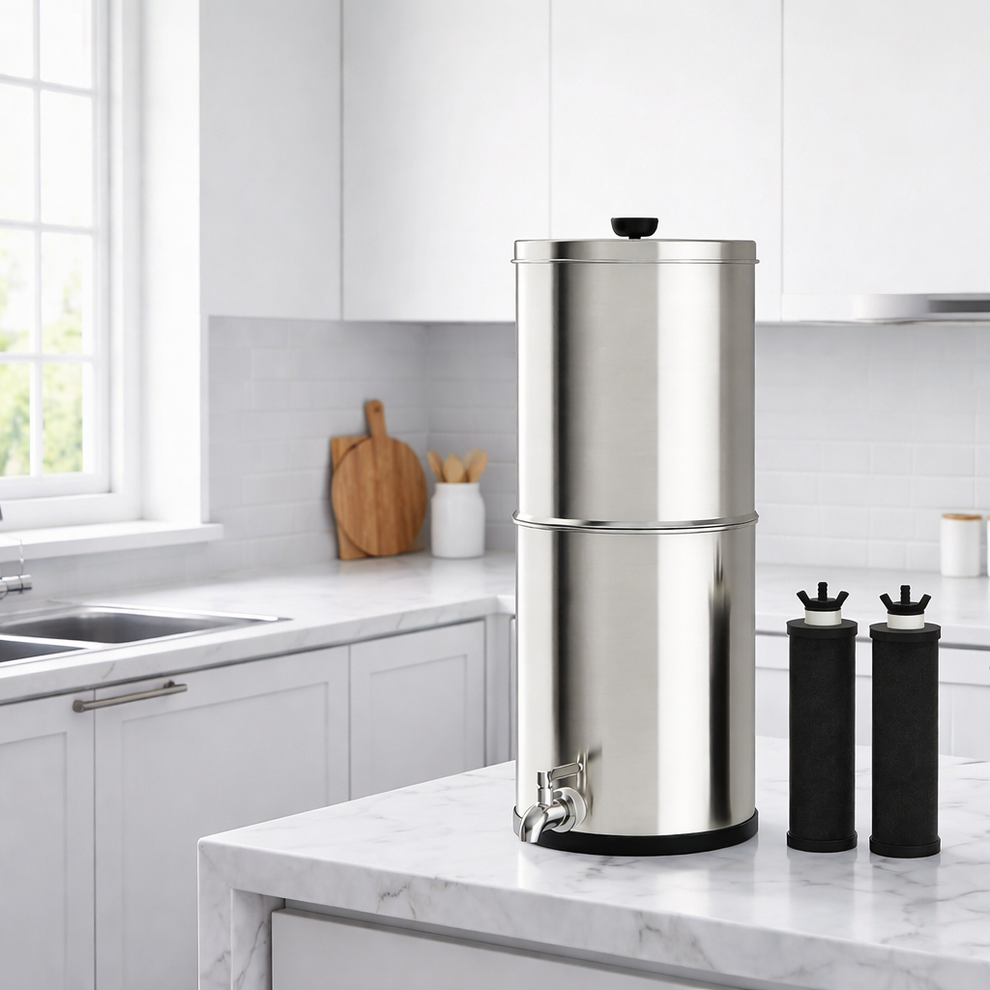
Puflow Big Flow 2 Stainless Steel Gravity Water Filter 8.5L
The Big Flow 2 is a non-electric gravity filtration option designed for households and mobile use where plumbing and electrical installation are inconvenient.
- Capacity: 2.25 gallons (8.5 liters)
- Filter life: up to 6,000 gallons
- Flow rate: up to 4 gallons per hour
- Material: 304 stainless steel
- Power: none required
- Installation: no plumbing needed
- Typical applications: home, apartment, RV, camping, and emergency preparedness
Actual filter life and flow rate depend on source-water quality and operating conditions. Confirm the specific contaminant-reduction claims and maintenance instructions for the installed filter.
We would not recommend buying a gravity filter as a direct substitute for RO without first comparing the treatment claims. Gravity filtration and reverse osmosis use different technologies and may target different water-quality problems.
For users who value portability and simple operation, the Big Flow 2 offers a practical no-electricity format. For a household that specifically needs RO treatment, compare it with a dedicated system such as the Puflow A10S 800G tankless RO system instead.
8. Common Mistakes When Dealing With Thirst After RO Water
| Common Mistake | Why It Is a Problem | Better Approach |
|---|---|---|
| Assuming RO water causes dehydration | It confuses low mineral content with an inability to hydrate. | Recognize that RO water supplies fluid; investigate other causes of thirst. |
| Using TDS as the only quality test | TDS does not identify individual contaminants or prove overall safety. | Review certification, performance data, and source-water testing. |
| Adding salt to every glass | Unnecessary sodium intake is not a general solution to thirst. | Use electrolyte products only when there is a relevant need. |
| Ignoring filter replacement | Expired or poorly maintained filters can affect performance and taste. | Follow the model-specific replacement schedule. |
| Buying a remineralizer to treat persistent thirst | It may change taste without addressing the actual cause. | Use remineralization for taste preference, not as medical treatment. |
| Ignoring frequent urination | Persistent thirst with frequent urination may signal a health issue. | Seek medical evaluation instead of repeatedly changing filters. |
9. Buying Considerations: What Matters More Than a Low TDS Reading?
If you are choosing an RO system because you are concerned about water quality, evaluate the system as a complete treatment product. A low TDS reading is useful information, but it should not be the only reason to buy.
Match the system to your source water
Start with a water-quality report if you use a municipal supply. If you use a private well, consider appropriate testing because source-water conditions can vary considerably. Identify the substances you want to reduce before comparing products.
Look for specific, verifiable performance claims
Check whether the complete system has relevant certification and whether the exact contaminant-reduction claim is covered. NSF/ANSI 58 is particularly relevant to RO systems, but not every optional contaminant claim is automatically included in every certified model.
Calculate the ongoing cost
The purchase price is only part of the cost. Include replacement filters, membrane replacement where applicable, water usage, installation, and the time required for maintenance. A lower-priced system can become more expensive if proprietary cartridges are costly or difficult to obtain.
Choose the right capacity and installation format
A small household may be comfortable with a countertop system. A family that uses filtered water for cooking and drinking throughout the day may prefer an under-sink or higher-capacity option. For travel or locations without electricity, a gravity system may be a better fit.
We recommend comparing the full range of countertop water filtration systems and high-flow systems based on daily demand, installation space, and verified treatment performance—not simply on marketing claims about purity.
10. Pros and Cons of Reverse Osmosis Water
| Pros | Cons and Trade-Offs |
|---|---|
| Can reduce many dissolved salts and selected contaminants when the system is properly designed and maintained. | Performance depends on the membrane, pretreatment, source water, and maintenance. |
| Can improve the taste of water affected by certain dissolved substances. | Some users dislike the neutral or low-mineral taste. |
| Offers a practical point-of-use treatment option for drinking and cooking water. | Many systems require installation, filter replacement, and a wastewater connection. |
| Can be combined with post-treatment stages to adjust taste. | Additional stages add cost and require their own maintenance. |
| Provides measurable TDS reduction when the system is performing as intended. | TDS alone does not prove that water is free of all contaminants or microbiologically safe. |
11. Our Expert Recommendation: Should You Stop Drinking RO Water?
No—not simply because you feel thirsty after drinking it. If your RO system is appropriate for your source water, correctly installed, and properly maintained, there is no general reason to stop using it because of the myth that purified water cannot hydrate you.
We recommend making the decision in this order:
- Check your hydration routine. Consider how much fluid you drink and whether heat, exercise, illness, or salty food has increased your needs.
- Check the water's taste. If you dislike the neutral taste of RO water, try chilled water or evaluate a compatible remineralization stage.
- Check your filtration system. Confirm that the filters are within their service life, the system was flushed correctly, and the water is being stored and dispensed hygienically.
- Check the actual water-quality requirements. Use source-water information and verified product performance claims rather than relying only on a TDS number.
- Get medical advice if thirst persists. Ongoing excessive thirst is not a problem that a new filter can reliably solve.
For beginners, the best upgrade is often not a more complicated filtration system. It is choosing a system that matches the source water and maintaining it properly. For commercial users or larger households, capacity, service intervals, replacement-filter availability, and verified treatment performance deserve more attention than a single headline specification.
Puflow's range includes RO systems, replacement filters, and non-electric gravity filtration options. The right product depends on the water you start with and the job you need the system to do. If your only concern is that RO water tastes too flat, investigate taste adjustment before replacing the entire filtration setup.
12. Frequently Asked Questions
1. Can reverse osmosis water make you dehydrated?
Properly produced RO water does not normally cause dehydration. It supplies water that your body can absorb and use. Dehydration occurs when fluid losses exceed fluid intake, not simply because drinking water has a low mineral content.
2. Why does RO water make my mouth feel dry?
Low-mineral water can taste different from the water you are used to, and some people describe its mouthfeel as flat or dry. However, persistent dry mouth may also be related to medications, mouth breathing, dehydration, or other conditions. If the sensation continues, investigate beyond the water filter.
3. Should I add minerals to reverse osmosis water?
Not everyone needs to. A remineralization filter can improve taste for people who prefer water with more mineral character. It should not be treated as a necessary step for hydration or as a substitute for dietary minerals.
4. Does low TDS mean RO water is unhealthy?
No. TDS measures the estimated concentration of dissolved substances, not the overall health value of water. A low reading can be consistent with effective RO treatment. It does not, by itself, establish whether the water is safe or unsafe.
5. Is remineralized RO water better than regular RO water?
It may be better for people who prefer its taste or want a particular mineral profile. It is not automatically better for hydration. Choose based on taste, system specifications, and your actual water-quality needs.
6. Can I drink RO water every day?
RO water is commonly used as everyday drinking water when the system is suitable for the source water and maintained according to its instructions. Make sure replacement filters are changed on schedule and that the system's treatment claims match your needs.
7. Should I use electrolyte powder with RO water?
Usually not for ordinary daily hydration. Electrolytes may be useful when you lose substantial fluid and salts through prolonged intense exercise, heavy sweating, or illness. Follow medical advice when electrolyte replacement is needed, especially if you have a condition that affects fluid or mineral balance.
8. How can I tell if my RO system is working properly?
Review the manufacturer's maintenance schedule, inspect the system for leaks, confirm that startup flushing was completed, and compare source-water and treated-water TDS readings if appropriate. For a more complete assessment, use relevant water testing and verify the exact model's certified performance claims.
9. Why am I thirsty even after drinking plenty of water?
Possible explanations include high-sodium meals, sweating, dry mouth, medication effects, and medical conditions. Persistent thirst, especially when accompanied by frequent urination, should be discussed with a healthcare professional.
10. Is a gravity water filter better than an RO system?
Neither is universally better. RO is designed to reduce many dissolved substances, while gravity filters use different media and have different performance claims. Choose based on the contaminants you need to address, verified product specifications, installation requirements, and how you intend to use the water.
Final Takeaway
Feeling thirsty after drinking reverse osmosis water does not mean the water is failing to hydrate you. RO filtration reduces many dissolved substances, including minerals that influence taste, but low mineral content is not the same as dehydration.
Start by checking your fluid intake, diet, activity, and whether the sensation is actually dry mouth. Then confirm that your RO system is maintained correctly and that its performance matches your source-water requirements. If you prefer a mineral-style taste, consider remineralization as a taste adjustment—not a cure for thirst.
The most useful water system is not necessarily the one with the lowest TDS reading or the most filtration stages. It is the one that treats the substances you need to address, fits your household's daily use, and can be maintained reliably.
References
- NSF – NSF/ANSI 58: Reverse Osmosis Drinking Water Treatment Systems. Explains the scope of the standard and the performance claims that may be evaluated for RO systems.
- World Health Organization – Calcium and Magnesium in Drinking-water. Reviews mineral content in drinking water, including taste and acceptability considerations.
- NHS – Excessive Thirst. Outlines common causes of thirst, dehydration symptoms, and when persistent thirst should be medically assessed.