


10 Factors to Consider When Choosing a Reverse Osmosis Water Filter System
Stop buying reverse osmosis systems based on generic marketplace reviews. The consumer water filtration industry is heavily saturated with uncertified, white-labeled plastic housings that leak under pressure, waste thousands of gallons of municipal water, and indiscriminately strip your drinking supply of vital minerals without putting anything back. When choosing a reverse osmosis water filter system, you are essentially installing a high-pressure, multi-stage micro-refinery under your sink. You need commercial and practical judgment to ensure it performs safely, efficiently, and effectively.

From our experience engineering advanced hydration solutions at Puflow, the difference between a premium filtration hub and a catastrophic kitchen flood comes down to evaluating core architectural metrics: membrane flow rate, internal pump integration, and third-party sanitation certifications. In this comprehensive guide, we bypass the marketing fluff to deliver the exact operational and financial factors you must evaluate before making a procurement decision.
Quick Answer: What is the Best Approach for Choosing an RO System?
When choosing a reverse osmosis water filter system, prioritize a tankless architectural design with a minimum 400 GPD capacity, an internal booster pump to overcome low feed pressure, and an explicit remineralization stage. The system must possess verified NSF/ANSI 58 certification to guarantee at least a 75% reduction in Total Dissolved Solids (TDS) [1]. Avoid legacy systems with a 4:1 wastewater ratio; modern standards dictate a highly efficient 1.5:1 or 2:1 pure-to-drain ratio.
Table of Contents
- What is a Reverse Osmosis System?
- How It Works: The Mechanics of Filtration
- The 10 Factors to Consider When Choosing a Reverse Osmosis Water Filter System
- Benefits of Upgrading to Reverse Osmosis
- Limitations: What Brands Rarely Tell You
- Who Should Use It (And Who Does Not Need It)
- Common Mistakes When Buying RO Systems
- Expert Recommendation & System Spotlight
- Frequently Asked Questions
What is a Reverse Osmosis System?
A Reverse Osmosis (RO) system is an advanced water purification appliance designed to force pressurized tap water through a semi-permeable membrane. The pores on this membrane measure approximately 0.0001 microns. To put that into perspective, it is dense enough to physically block dissolved salts, heavy metals like lead and arsenic, pharmaceutical residues, microplastics, and radioactive isotopes. Unlike simple activated carbon pitcher filters that merely mask chlorine taste and odor, RO physically separates pure H2O molecules from dissolved contaminants.
How It Works: The Mechanics of Filtration
The system operates on a pressure gradient. In most professional situations, municipal water enters the system and passes through a sequence of pre-filters (typically spun polypropylene and compressed carbon blocks). These stages remove large sediments, rust, and chlorine, which would otherwise chemically degrade the sensitive RO membrane.
Next, an internal booster pump drives the water forcefully against the RO membrane. Pure water molecules pass through the barrier, while the rejected contaminants are continuously flushed down a dedicated drain line. Finally, the purified water passes through a post-carbon filter to polish the taste before it is dispensed from your dedicated faucet.
The 10 Factors to Consider When Choosing a Reverse Osmosis Water Filter System
1. Source Water Quality and Target Contaminants
Do not purchase a system blindly without analyzing your incoming water. City water heavily treated with chloramines requires aggressive catalytic carbon pre-filtration, while well water heavy in iron or manganese will immediately foul an RO membrane without dedicated pre-treatment. If you are targeting highly specific toxins, you must ensure your pre-filters can handle the load. For aggressive municipal fluoride issues, integrating a Fluoride Reduction Filter upstream extends the life of your expensive RO membrane dramatically.
2. NSF/ANSI 58 Certification
Marketing claims like "filters to 99%" mean absolutely nothing without third-party laboratory validation. You must look for systems certified to the NSF/ANSI 58 standard. This is the definitive benchmark for point-of-use reverse osmosis systems. It guarantees structural integrity under pressure, verifies that plastic housings will not leach toxins into your water, and mandates a minimum 75% reduction in Total Dissolved Solids (TDS) under strict testing protocols [1].
3. Wastewater (Drain) Ratio Efficiency
In our testing, older legacy RO systems are notoriously wasteful, frequently sending 4 gallons of reject water down the drain for every 1 gallon of purified water produced. For commercial users and environmentally conscious homeowners, this is completely unacceptable. Modern, high-efficiency systems utilize integrated booster pumps and optimized membrane configurations to achieve a 1.5:1 or 2:1 pure-to-waste ratio. Always check the wastewater specifications before buying.
4. System Architecture: Tankless vs. Pressurized Storage Tanks
The debate regarding Tankless RO vs Tank RO defines the modern consumer market. Legacy systems use a bulky 3-gallon pressurized bladder tank because their low-capacity membranes filter water too slowly for on-demand dispensing. These tanks consume massive under-sink space and run the risk of secondary bacterial contamination if the internal rubber bladder degrades. We strongly recommend tankless systems. They filter water instantly at the turn of the faucet, save premium cabinet space, and provide an infinitely continuous supply of fresh water without stagnation.
5. Remineralization Stage
Reverse osmosis membranes do not discriminate; they strip out harmful lead and arsenic, but they simultaneously strip beneficial calcium and magnesium [2]. The resulting water is slightly acidic, tastes "flat," and can aggressively pull minerals from your body over long-term consumption. Choosing an Under Sink Reverse Osmosis System with Remineralization ensures the water passes through an alkaline post-filter that reintroduces essential electrolytes, correcting the pH and dramatically improving the mouthfeel.
6. Daily Production Capacity (GPD)
Gallons Per Day (GPD) dictates the speed of water delivery. A basic 50 GPD system with a storage tank will take hours to refill after heavy use. For tankless setups, you absolutely need a high-flow membrane to ensure a fast flow rate directly at the faucet. We consider 400 GPD the bare minimum for a standard household. For heavy-duty applications, such as large families or commercial break rooms, the A10S 800G Tankless RO System delivers commercial-grade speed, filling a standard cup of water in just four seconds.
7. Incoming Water Pressure and Booster Pumps
Reverse osmosis is a pressure-driven process. The absolute minimum feed pressure required is 40 PSI, but 60 PSI is optimal for high rejection rates [2]. If your home suffers from low municipal water pressure or you operate on a low-yield well, a standard un-pumped RO system will experience poor contaminant rejection and produce massive amounts of wastewater. Always select a system with an integrated electric booster pump to guarantee consistent, high-efficiency operation.
8. Form Factor and Installation Location
Assess your available square footage. While under-sink installations are the gold standard for dedicated drinking lines, renters or those with complex plumbing layouts should explore the Best Countertop RO Water Purifier models. Countertop units require zero plumbing modifications and operate via an integrated water reservoir, making them highly portable and ideal for apartments and small offices.
9. Annual Filter Replacement Cost and Maintenance
Consumers frequently fall into the trap of buying a cheap RO system, only to discover that the proprietary replacement filters cost hundreds of dollars annually. Review the manufacturer's suggested replacement intervals. Typically, pre-filters require changing every 6 months, while the main RO membrane lasts 24 to 36 months depending on feed water hardness. Ensure the filter pods feature quick-change "twist-and-pull" designs that allow you to swap cartridges without shutting off main water valves or hiring a plumber.
10. Smart Features and Real-Time Monitoring
Operating a high-end water filter blind is an operational risk. You should know exactly when a filter is exhausted. Premium systems feature integrated LED smart faucets or digital chassis displays that monitor real-time TDS levels and track the lifespan of each individual filter cartridge. This data-driven approach prevents you from discarding healthy filters prematurely or unknowingly consuming contaminated water through an expired membrane.
Benefits of Upgrading to Reverse Osmosis
When choosing a reverse osmosis water filter system, you are securing the ultimate baseline for hydration and cooking. By removing up to 99% of dissolved solids, heavy metals, and persistent PFAS (forever chemicals) [1], your coffee tastes better, your ice cubes freeze crystal clear, and you protect your family from decaying municipal pipe infrastructure. Furthermore, transitioning to an RO system drastically reduces your household's reliance on expensive, environmentally damaging single-use bottled water.
Limitations: What Brands Rarely Tell You
RO systems are not flawless. Modern tankless units require an active under-sink electrical outlet to power the internal booster pump. Because the filtration process inherently rejects contaminated water, your utility water bill will marginally increase. If you are operating on a strict private septic system, dumping continuous RO wastewater into your tank may strain your infrastructure. Finally, RO water without a remineralization stage is highly aggressive and can slowly corrode copper or brass plumbing fixtures if routed through standard household pipes.
Who Should Use It (And Who Does Not Need It)
We strongly recommend RO systems for households with excessively hard water (TDS exceeding 300 ppm), municipal supplies with known lead pipe infrastructure, or communities experiencing chemical runoff. It is the definitive, heavy-duty solution for high-purity hydration demands.
If you live in an area with pristine, naturally filtered mountain spring water and your only complaint is a slight chlorine odor, a reverse osmosis system is commercial overkill. For these users, a robust gravity carbon filter is entirely sufficient. Systems like the Gravity Water Filter 3.8L, the Big Flow 3 Gravity Water Filter, or the high-capacity Big Flow 2 Gravity Water Filter provide exceptional chemical reduction without stripping essential minerals. They produce zero wastewater and require zero electricity.
For commercial users or homeowners looking to bypass municipal plumbing entirely, advanced atmospheric extraction technologies like the F20 Atmospheric Water Generator or the G10 Atmospheric Water Generator literally pull pure water directly from ambient humidity, representing the absolute frontier in off-grid hydration independence.
Common Mistakes When Buying RO Systems
- Ignoring Remineralization: Drinking highly purified, acidic water long-term can lead to gastrointestinal issues and systemic mineral depletion [2]. Always add an alkaline stage.
- Failing to Address Hard Water: If your incoming municipal water exceeds 10 grains per gallon (GPG) of hardness, calcium scale will blind the RO membrane within months. You must install a whole-house water softener upstream of the RO unit.
- Sizing the System Incorrectly: Buying a 50 GPD legacy tank system for a family of six guarantees you will run out of purified water during dinner preparation. Match your GPD to your peak demand.
| Feature | Tankless Reverse Osmosis | Traditional Tank Reverse Osmosis |
|---|---|---|
| Space Required | Minimal (Single compact chassis) | High (Requires space for 3-gallon bladder tank) |
| Flow Rate | On-Demand, Continuous (400-800 GPD) | Fast initially, drops to a trickle when tank empties |
| Wastewater Ratio | Highly Efficient (1.5:1 to 2:1 pure-to-waste) | Highly Inefficient (1:3 or 1:4 pure-to-waste) |
| Bacterial Risk | Very Low (Direct flow) | Moderate (Stagnant water in pressurized bladder) |
| Cost Profile | Higher upfront investment | Lower initial cost |
Pros of Reverse Osmosis
- Unmatched physical removal of heavy metals, PFAS, and radioactive isotopes.
- Substantially improves the flavor profile of drinking water, coffee, and culinary stocks.
- Modern tankless systems occupy very little under-sink cabinet space.
- Drastically reduces reliance on expensive and polluting single-use plastic water bottles.
Cons of Reverse Osmosis
- Produces unavoidable wastewater during the purification and membrane-flushing process.
- Strips naturally occurring beneficial minerals, mandating a remineralization stage.
- High-performance tankless models require a dedicated under-sink electrical outlet.
- Subject to rapid membrane fouling if incoming hard water is not aggressively pre-treated.
Expert Recommendation & System Spotlight
If you are evaluating purification systems but do not have the water pressure, under-sink electrical access, or budget for a high-end tankless RO unit, heavy-duty Ultrafiltration (UF) is the premier engineering alternative. UF technology provides highly precise 0.01-micron filtration—physically blocking bacteria, cysts, and microplastics—while allowing healthy dissolved minerals to pass through unimpeded, generating absolutely zero wastewater in the process.
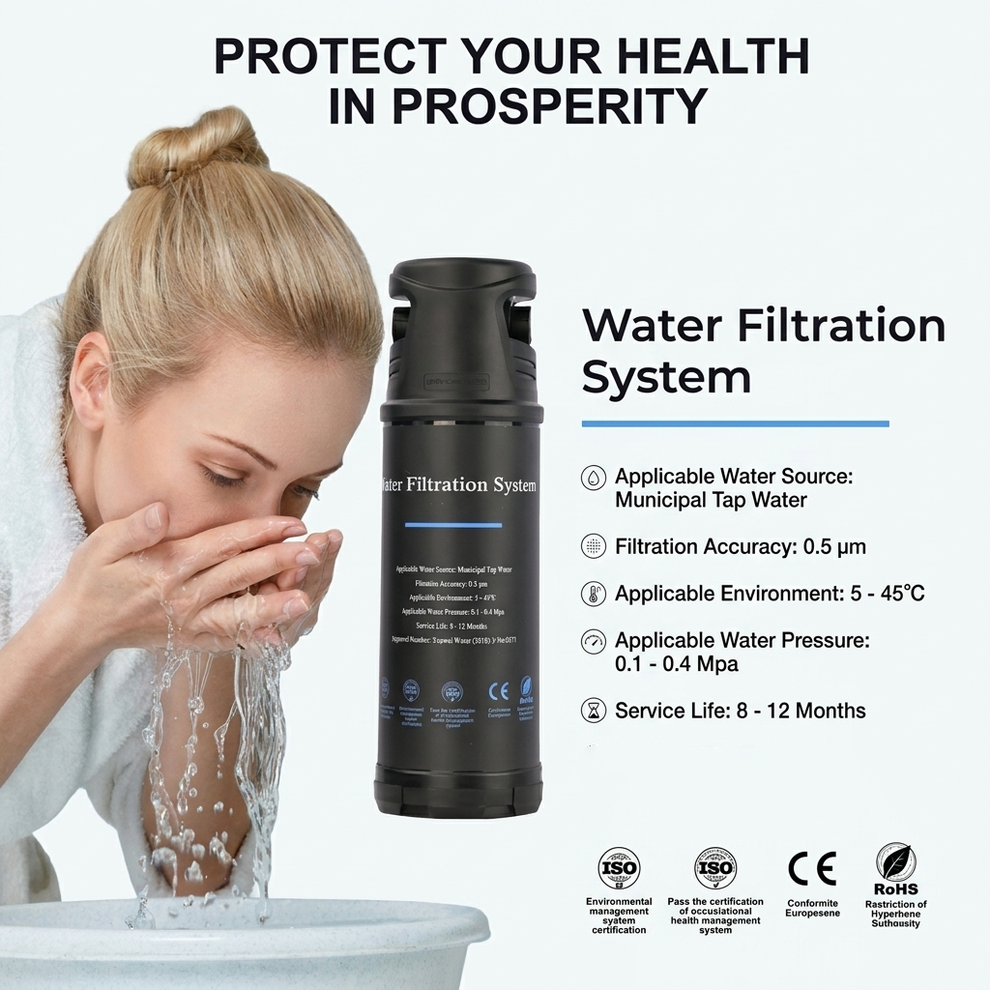
TM8-2 Under Sink Water Filter System 0.01μm Ultrafiltration
For those who demand zero wastewater and have no under-sink electricity, yet refuse to compromise on biological and particulate filtration, the Puflow TM8-2 delivers commercial-grade performance in an ultra-compact footprint.
- Filtration Accuracy: 0.01μm (Removes bacteria, cysts, and microplastics)
- Flow Rate: Up to 400 L/h (Instant, high-speed delivery without a tank)
- Working Pressure: 0.1–0.4 MPa
- Power Requirement: None (Operates entirely on standard municipal line pressure)
- Installation: Compact Under Sink design (130 × 110 × 345 mm)
Frequently Asked Questions
Yes. Reverse osmosis membranes contain pores measuring 0.0001 microns, which are small enough to strip heavy metals and toxins, but also small enough to remove beneficial dissolved calcium, magnesium, and potassium. We strongly recommend purchasing a system that includes an alkaline remineralization post-filter to restore these electrolytes and properly balance the water's pH.
In most professional situations, the carbon and sediment pre-filters must be replaced every 6 to 12 months to protect the delicate RO membrane from chlorine damage and sediment blinding. The reverse osmosis membrane itself typically lasts between 24 and 36 months, depending strictly on your incoming water hardness and daily usage volume.
RO systems naturally use water to clean the membrane and flush rejected contaminants down the drain. However, if your system runs continuously for hours without stopping, you likely have low incoming water pressure, a ruptured check valve, or a failed auto-shutoff valve. If your home's feed pressure is below 40 PSI, you must install an internal booster pump to achieve proper membrane shut-off efficiency.
Reverse osmosis utilizes a 0.0001-micron membrane to remove dissolved solids, heavy metals, and viruses, which requires high pressure and inevitably generates wastewater. Ultrafiltration (UF) utilizes a 0.01-micron hollow fiber membrane that blocks bacteria, cysts, and suspended solids but allows dissolved minerals to pass through. Crucially, UF does not produce wastewater and operates effectively on standard municipal water pressure without electricity.
Authoritative Industry References
To ensure our filtration guidance aligns with public health and engineering standards, we base our recommendations on documentation from the following authoritative bodies:
- U.S. Environmental Protection Agency (EPA) - Federal guidelines on PFAS ("forever chemicals") contamination and approved drinking water treatment solutions.
- Centers for Disease Control and Prevention (CDC) - Official guide to home water treatment technologies, micron ratings, and pathogen removal efficacy.
- NSF International - Official consumer guide to understanding NSF/ANSI 58 certifications for point-of-use reverse osmosis drinking water treatment systems.