


10 Things to Know Before Buying a Reverse Osmosis Water Filter
The residential water purification industry is heavily saturated with aggressive marketing that positions Reverse Osmosis (RO) as the undisputed champion of home filtration. While RO technology is undeniably the most effective commercial method for stripping heavy metals, total dissolved solids (TDS), and harsh chemical contaminants from your drinking supply, it is not a flawless, universal solution. Buying a Reverse Osmosis Water Filter without a calculated understanding of your household's water pressure, under-sink real estate, and willingness to tolerate wastewater ratios is a recipe for buyer's remorse.

From our experience engineering advanced filtration architectures at Puflow, we routinely see consumers purchase complex, multi-stage RO systems only to realize they lack the necessary plumbing pressure to operate them efficiently, or they are shocked by the flat, acidic taste of completely demineralized water. An RO system is an investment in long-term health infrastructure, not a simple kitchen appliance. In this uncompromising guide, we will dissect the mechanical realities, the hidden maintenance costs, and the 10 critical factors you must evaluate before Buying a Reverse Osmosis Water Filter for your home or business.
Quick Answer: The Core Verdict
Buying a Reverse Osmosis Water Filter is the absolute best decision you can make if your primary goal is the complete eradication of lead, arsenic, fluoride, PFAS (forever chemicals), and high TDS from your water supply. However, you must account for the system's wastewater ratio (which can range from 1:1 to 5:1), the necessary space required under your sink, and the mandatory need for a remineralization stage to restore healthy calcium and magnesium for optimal taste and pH balance. For commercial users or large families, we recommend high-efficiency, tankless RO systems to bypass the slow refill rates of traditional storage tanks.
Table of Contents
- What is Reverse Osmosis?
- How the Filtration Mechanics Work
- The Definitive Benefits
- Limitations and Hidden Trade-offs
- Who Should Use It & Who Doesn't Need It
- 10 Things to Know Before Buying a Reverse Osmosis Water Filter
- Common Procurement Mistakes
- Strategic Buying Considerations
- Essential Comparison Tables
- Expert Recommendation from Puflow
- Frequently Asked Questions (FAQ)
What is Reverse Osmosis?
Reverse Osmosis is a highly advanced water purification technology that utilizes municipal water pressure to force unfiltered water through a semi-permeable membrane. Unlike standard carbon filters that merely absorb chlorine and bad tastes, an RO membrane contains microscopic pores—approximately 0.0001 microns in size. To put that in perspective, these pores are small enough to block dissolved salts, heavy metals, radioactive isotopes, and microscopic pathogens that effortlessly bypass traditional pitcher filters.
How the Filtration Mechanics Work
In most professional situations, a standard under-sink RO system operates in multiple stages to protect the delicate central membrane. First, incoming water passes through a sediment filter to remove rust, dirt, and silt. Next, a carbon block filter removes chlorine and chloramines, which would otherwise chemically degrade the RO membrane. The water is then pressurized against the RO membrane itself, where the true purification occurs. The pure water (permeate) is sent to a pressurized storage tank or directly to your faucet, while the rejected contaminants (brine) are continuously flushed down your drain pipe. Finally, a post-carbon or alkaline filter polishes the water before it hits your glass.
The Definitive Benefits
The primary benefit of Buying a Reverse Osmosis Water Filter is absolute peace of mind. If you rely on aging municipal infrastructure or unverified well water, RO provides a clinical-grade barrier between your family and neurotoxins like lead and arsenic. Furthermore, RO systems effectively remove up to 99% of total dissolved solids, yielding a pure, ultra-clean base. When integrating a premium system like the C9 Pro RO Water Purifier, you achieve bottled-water quality directly from your tap, eliminating the recurring cost and microplastic contamination of single-use plastic bottles.
Limitations and Hidden Trade-offs
We must exercise commercial and practical judgment: RO systems have inherent mechanical drawbacks. The most significant limitation is water waste. Traditional systems waste 3 to 5 gallons of water to produce 1 gallon of pure water. Additionally, the purification process strips out beneficial alkaline minerals, leaving the water slightly acidic and "flat" tasting unless actively remineralized. Finally, traditional tank-based systems take hours to refill once depleted, which can be frustrating during high-demand cooking scenarios.
Who Should Use It & Who Doesn't Need It
For commercial users and heavy-duty applications: Homes with well water, families living in areas with known heavy metal contamination, or those dealing with exceptionally hard water absolutely require the brute force purification of a Reverse Osmosis system. It is the only reliable way to handle dangerously high TDS levels.
Who does not need it: For beginners or renters who live in cities with exceptionally clean municipal water, drilling holes into granite countertops and managing wastewater lines is a massive overreaction. In our testing, simply utilizing an advanced M8-2 Under Sink Water Filter or a freestanding Gravity Water Filter 3.8L provides excellent chlorine and VOC removal without the invasive plumbing requirements of RO.
10 Things to Know Before Buying a Reverse Osmosis Water Filter
1. The Reality of the Wastewater Ratio
Reverse Osmosis is a separation technology, not just a filter. It requires water to wash the rejected contaminants off the membrane to prevent clogging. When Buying a Reverse Osmosis Water Filter, you must audit its efficiency. Legacy systems operate at a 4:1 waste-to-pure ratio. You should aggressively seek modern systems equipped with internal permeate pumps that achieve a 1:1 or 2:1 ratio, drastically lowering your municipal water bill.
2. The Necessity of Remineralization
RO strips everything—the bad and the good. Drinking demineralized water long-term deprives your body of essential calcium and magnesium and yields an unpleasantly acidic taste. Do not buy a system unless it includes a dedicated alkaline or remineralization post-filter stage to balance the pH to a healthy 7.5 - 8.5 range.
3. Tank vs. Tankless Architectures
Traditional RO systems require a bulky 3.2-gallon pressurized storage tank taking up half your under-sink cabinet because their membranes filter water very slowly (e.g., 50 Gallons Per Day). Modern "tankless" architectures use massive 400 to 800 GPD membranes and internal booster pumps to produce pure water on demand. Tankless systems save massive real estate but require a nearby electrical outlet to run the pump.
4. Water Pressure Dependency
An RO membrane requires a minimum of 40 PSI (Pounds per Square Inch) of incoming line pressure to function. If your home's water pressure is lower, the system will barely trickle, and the wastewater ratio will skyrocket to 10:1. If you have low pressure, you must purchase an RO system with an integrated electric booster pump.
5. Proprietary vs. Standard Replacement Filters
This is where manufacturers lock you in. Some systems use universal 10-inch filter housings, allowing you to buy cheap replacement filters from any hardware store. Sleek, modern tankless systems use proprietary "twist-and-lock" cartridges. While proprietary cartridges are infinitely easier to change (no messy wrenches required), they guarantee you must buy replacements exclusively from the original manufacturer at a premium price.
6. Specific Contaminant Targeting
Not all RO systems handle exotic contaminants equally. If your local municipality heavily fluoridates the water or you live near agricultural runoff, ensure your chosen system utilizes high-density carbon blocks and TFC (Thin Film Composite) membranes capable of targeting these specific molecules. For specialized needs, occasionally pairing your setup with a dedicated Fluoride Reduction Filter stage is required.
7. Maintenance Schedules are Non-Negotiable
Buying a Reverse Osmosis Water Filter is an ongoing commitment. The pre-filters (sediment and carbon) must be changed every 6 to 12 months to protect the RO membrane. The RO membrane itself lasts 2 to 3 years. Failing to adhere to this schedule will result in chlorine destroying the membrane, leading to total system failure and cross-contamination.
8. Plumbing and Installation Requirements
Under-sink RO systems are not plug-and-play. You must install a dedicated dispensing faucet (which requires an open hole in your sink or countertop), splice into your cold water supply line, and drill a saddle valve into your PVC drain pipe for the wastewater line. If you are not comfortable modifying plumbing, factor professional installation costs into your budget.
9. Off-Grid and Emergency Independence
RO systems are completely dependent on municipal water pressure. If the grid goes down, your RO system stops working immediately. If you are preparing for emergencies or live off-grid, you must supplement your home with systems that require zero pressure, such as relying on a Replacement Gravity Water Filter setup, or investing in next-generation technology like the F20 Atmospheric Water Generator which pulls pure water directly from ambient humidity.
10. Flow Rates and GPD (Gallons Per Day)
Understand your volume requirements. A 50 GPD system is sufficient for a couple filling water glasses and a coffee maker. If you have a large family, hook the system up to your refrigerator's ice maker, and use filtered water for cooking pasta and washing vegetables, you will quickly drain a traditional tank. For high volume, a 400+ GPD tankless system is mandatory.
Common Procurement Mistakes
In our testing, the most devastating mistake consumers make is purchasing a system based strictly on the upfront hardware cost while ignoring the annual filter replacement costs. A $150 system is useless if the proprietary replacement filters cost $120 a year. Calculate the 3-year Total Cost of Ownership (TCO) before checking out.
Another profound error is ignoring the air gap faucet requirement. Many local plumbing codes require an air-gap RO faucet to prevent dirty drain water from siphoning back into your pure water system in the event of a clogged sink. Ensure you purchase the correct faucet type to remain code-compliant.
Strategic Buying Considerations
When finalizing your purchase, rigorously audit the certifications. Do not accept marketing fluff like "tested to NSF standards." The system must carry official certification seals from the NSF, ANSI, or the WQA (Water Quality Association) for Standard 58 (Reverse Osmosis) and Standard 53 (Health Effects). If you travel frequently or require purified water outside the home, complement your kitchen RO setup with a Portable Water Filter Bottle to ensure access to clean water without resorting to bottled plastics.
Essential Comparison Tables
| Filtration Type | Primary Mechanism | Best Application |
|---|---|---|
| Reverse Osmosis (RO) | 0.0001-micron membrane rejection | Removing heavy metals, high TDS, and fluoride. |
| Carbon Block / Under-Sink | Adsorption of chemicals | Removing chlorine, bad taste, and VOCs in clean municipal water. |
| Gravity Filtration | Micro-porous ceramic/carbon drip | Off-grid, emergency prep, zero-plumbing environments. |
| Feature | Traditional Tank RO System | Tankless RO System |
|---|---|---|
| Space Required | Massive (requires half of under-sink cabinet) | Minimal (sleek, compact tower) |
| Wastewater Ratio | High (typically 3:1 or 4:1) | Low (1:1 or 2:1 due to internal pumps) |
| Water Delivery Speed | Fast initially, but stops completely when tank empties | Continuous, unlimited supply on demand |
| Power Requirement | None (runs on water line pressure) | Requires 110V electrical outlet for the booster pump |
| The Pros (Advantages) | The Cons (Disadvantages) |
|---|---|
| Provides the highest level of residential water purity available. | Generates significant wastewater during the purification process. |
| Completely removes lead, arsenic, PFAS, and pharmaceutical runoff. | Requires invasive plumbing modifications (drilling sink/drain). |
| Saves hundreds of dollars annually compared to buying bottled water. | Strips beneficial minerals (requires remineralization add-on). |
Expert Recommendation from Puflow
In most professional situations, treating drinking water procurement as an afterthought is a serious health and financial liability. If your water source suffers from high dissolved solids, heavy metals, or failing municipal pipes, relying on basic carbon pitchers is dangerously inadequate. We strongly recommend upgrading to a structurally sound, low-waste reverse osmosis system to guarantee the integrity of your hydration.
For those who require the brute force of an RO system but lack the under-sink space or the desire to drill into their plumbing, Puflow engineers aggressive, freestanding alternatives.
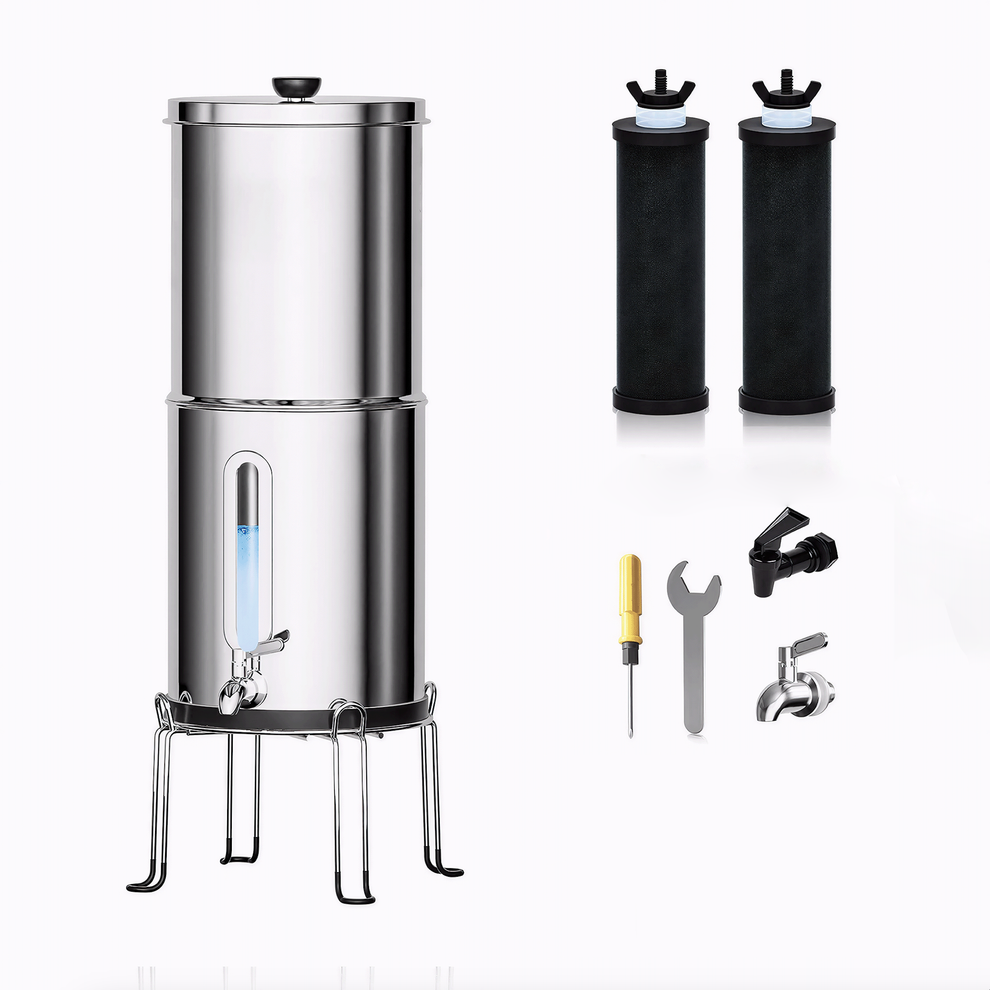
RO100 Under Sink Reverse Osmosis System Dual Outlet Low Waste
Engineered for relentless purity without the invasive installation, this high-capacity gravity system acts as an elite alternative to plumbed RO setups. Perfect for renters, RV owners, and emergency preparedness.
- Capacity: 1.5 Gallons (5.7L)
- Flow Rate: Up to 3 Gallons Per Hour
- Filter Life: Up to 6,000 Gallons Per Filter Pair
- Material: 304 Stainless Steel
- Power Required: None
- Installation: No Plumbing Needed
- Use: Home, Apartment, RV, Camping & Emergency Preparedness
If you are exploring total water independence, review our advanced P50 Atmospheric Water Generator to pull pristine drinking water directly from the air, completely bypassing the aging municipal grid.
Frequently Asked Questions (FAQ)
Authoritative Industry References
To ensure your filtration choices adhere to rigorous global health and safety standards, we advise consulting the following scientific and regulatory organizations:
- United States Environmental Protection Agency (EPA) - Provides definitive guidelines on national drinking water regulations, contaminant limits, and the efficacy of reverse osmosis in removing heavy metals and PFAS.
- NSF International - The premier independent certification organization setting the strict public health standards (NSF/ANSI 58) for reverse osmosis drinking water treatment systems.
- Water Quality Association (WQA) - A leading professional trade organization representing the residential, commercial, and industrial water treatment industry, offering robust technical resources on membrane filtration efficacy.