


8 Differences Between Whole House RO Filter and Point-of-Use RO System
The water purification industry is plagued by aggressive upselling. Homeowners frequently approach us at Puflow, terrified by a local water test, convinced they need to spend $15,000 to purify every drop of water entering their property. From our experience engineering advanced filtration systems, this is one of the most destructive and financially ruinous misconceptions in the residential water sector. Purifying the water you use to flush your toilets to 0.0001 microns is not just an egregious waste of capital; it creates a cascading sequence of structural plumbing failures.

In most professional situations, the choice between treating water at the point of entry versus the point of consumption dictates your entire maintenance budget for the next decade. You must exercise commercial and practical judgment. Reverse Osmosis (RO) is an incredibly aggressive, highly precise technology. When applied incorrectly at a macro scale, it destroys pipes and skyrockets utility bills. In this definitive guide, we take a clear, uncompromising position on the Differences Between Whole House RO Filter and Point-of-Use RO System setups. We will break down exactly how these architectures diverge, expose the hidden costs, and provide you with the exact technical criteria to make a rational purchasing decision for your home or commercial facility.
Quick Answer: Which System Should You Choose?
If you are trying to make an immediate procurement decision, understanding the Differences Between Whole House RO Filter and Point-of-Use RO System comes down to scale, cost, and necessity:
- Point-of-Use (POU) RO: Installed under a single sink. It purifies only the water you drink and cook with. It costs between $300 and $800, wastes very little water, and requires zero modifications to your home's main plumbing. This is the correct choice for 98% of homes on municipal tap water.
- Whole House RO (Point-of-Entry): Purifies all water entering the house. It requires massive atmospheric storage tanks, heavy-duty repressurization pumps, and commercial remineralization to prevent it from destroying your copper pipes. It costs between $4,000 and $15,000+. Only recommended for extreme well-water contamination scenarios.
We recommend entirely bypassing whole-house RO unless mandated by a hydrologist. Instead, secure a high-quality Under-Sink RO System to protect your internal health, while using a standard carbon/sediment filter for the whole house to protect your appliances.
Table of Contents
- What It Is: Defining the Architectures
- How It Works: The Physics of Scale
- The 8 Critical Differences
- Commercial and Health Benefits
- Limitations and Hidden Liabilities
- Who Should Use Which System
- Who Does Not Need RO
- Common Procurement Mistakes
- Expert Buying Considerations
- Summary and Comparison Tables
- Expert Recommendation & Hardware
- Frequently Asked Questions
What It Is: Defining the Architectures
To understand the Differences Between Whole House RO Filter and Point-of-Use RO System, we must define the scope of application. A Point-of-Use (POU) system is localized. It sits under a kitchen counter or operates as one of our Countertop RO Systems, filtering 50 to 800 gallons per day strictly for human consumption.
A Whole House RO system is a massive industrial skid installed at the point where the municipal line or well pump enters the property. It must be capable of processing thousands of gallons daily to satisfy simultaneous demands from showers, washing machines, dishwashers, and irrigation systems.
How It Works: The Physics of Scale
How it works remains fundamentally the same across both systems: water is forced under high pressure through a semi-permeable membrane, stripping away heavy metals, PFAS, microplastics, and dissolved solids. The clean water (permeate) goes to the user, and the rejected contaminants (brine) are flushed down the drain.
However, physics dictates that RO membranes process water slowly. In a POU system, this is solved by a small, pressurized 3-gallon under-sink tank or a direct-flow booster pump. In a whole-house scenario, because a shower demands 2.5 gallons per minute, the RO membrane cannot keep up in real-time. Therefore, it must slowly fill a massive 200-gallon to 500-gallon atmospheric holding tank in your garage. When you open a tap, a secondary, loud electrical delivery pump fires up to push that stored water into your home's plumbing.
The 8 Critical Differences Between Whole House RO Filter and Point-of-Use RO System
In our testing and daily interactions with commercial and residential plumbing frameworks, these eight factors represent the operational chasm between the two systems.
1. Capital Expenditure and Installation Complexity
A premium POU system from Puflow can be installed by a homeowner in 45 minutes using standard wrenches, costing well under $1,000. A Whole House RO system is a major construction project. It requires a licensed plumber, a dedicated 220V electrical circuit, concrete pad pouring for the tanks, and specialized drain routing. The starting cost rarely falls below $5,000 and can easily exceed $15,000.
2. The Copper Killer: Plumbing Degradation
When investigating RO Water vs Tap Water, you learn that pure RO water is highly aggressive. Because it has zero minerals, it acts as a solvent, aggressively seeking ions. If you push pure RO water through standard copper or galvanized pipes, it will leach the metal, causing catastrophic pinhole leaks throughout your home's infrastructure within a year. POU systems avoid this by utilizing dedicated, safe polyethylene tubing directly to a stainless-steel drinking faucet.
3. Wastewater Generation (The Brine Reality)
RO systems generate wastewater. A highly efficient POU system might waste 1 to 2 gallons for every gallon of drinking water produced. Since a family drinks maybe 3 gallons a day, the waste is negligible. A Whole House RO system wastes water for every shower, toilet flush, and laundry load. You could easily flush 500 to 1,000 gallons of wastewater down the drain daily, resulting in staggering utility bills and environmental waste.
4. Target Contaminant Profiles
Why are you purifying the water? If your goal is to secure the Best Water Filter for Microplastics for your children's drinking water, POU is the surgical tool you need. Purifying toilet water or lawn irrigation water to 0.0001 microns is structurally absurd unless your raw water is so toxic (e.g., extreme arsenic) that it burns the skin upon contact.
5. Maintenance Overhead and Filter Costs
Changing filters on a POU system involves twisting out a small cartridge every 6 to 12 months, costing roughly $60 to $100 annually. A Whole House system requires massive 20-inch pre-filters, commercial-grade anti-scalant chemical injections to protect the large membrane, and UV lamp replacements to prevent bacteria from growing in the 500-gallon holding tank. Annual maintenance easily exceeds $600 to $1,000.
6. Footprint and Spatial Requirements
A POU system occupies a fraction of the space under a kitchen sink. A Whole House RO system requires a dedicated utility room. You must house the pre-treatment tanks, the RO skid, the atmospheric holding tank, and the repressurization pumps. It consumes as much space as a small parked car.
7. Remineralization Demands
While an Under Sink Reverse Osmosis System with Remineralization uses a small, inexpensive cartridge to add calcium back into drinking water for taste, remineralizing an entire house requires a massive calcite neutralizing tank. Failure to remineralize whole-house RO water will result in water that feels "squeaky" and strips natural oils from human skin during showers.
8. Energy Consumption
Many POU systems require zero electricity, operating entirely on municipal line pressure. Even those with booster pumps use a tiny 24V transformer. Whole House systems require heavy-duty, high-horsepower electrical pumps running 24/7 to push water through the membrane and then out of the atmospheric tank into the home.
Commercial and Health Benefits
The primary benefit of choosing a targeted POU system is resource allocation. By isolating your purification efforts to the kitchen sink and refrigerator line, you can afford to buy the absolute Best Reverse Osmosis System for Home use, featuring advanced multi-stage composites and smart faucets, rather than spending that same budget on massive, rudimentary industrial pre-filters for your garage.
Limitations and Hidden Liabilities
We must use commercial and practical judgment: the limitation of POU is that it does not protect your skin or your home's appliances. If you live in an area with extreme hard water (calcium/magnesium), an under-sink RO system will not stop your showerheads from crusting over or your water heater from failing. However, the solution to hard water is a simple, inexpensive Water Softener, not a $10,000 Whole House RO system.
Who Should Use Which System
For Commercial Users and Extreme Well Water: You should only install a Whole House RO system if you are drawing water from a coastal well suffering from saltwater intrusion, or if the water is heavily contaminated with industrial run-off that makes it dangerous to inhale via shower steam. Furthermore, your home MUST be plumbed entirely with PEX or PVC piping, not copper.
For 99% of Residential Homeowners: You must deploy a Point-of-Use RO system. If you want whole-house protection for appliances, pair your kitchen POU RO system with a basic whole-house carbon block filter (to remove chlorine gas) and a water softener.
Who Does Not Need RO
For beginners living in municipalities with excellent water quality (low TDS, zero heavy metals), you might not need RO at all. Reverse osmosis strips everything. If your only issue is the taste of chlorine and occasional sediment, a sub-micron Ultrafiltration (UF) system is vastly more efficient. It wastes zero water and requires no electricity.
Common Procurement Mistakes
From our experience, the most catastrophic mistake homeowners make is buying a Whole House RO system without conducting a comprehensive water panel test. Water treatment is not a guessing game. You do not treat water blindly. A high-quality High-Flow RO Systems installation requires specific pre-treatment based on your water chemistry; otherwise, iron or manganese will permanently blind the expensive RO membrane in a matter of weeks.
Expert Buying Considerations
When selecting your POU system, evaluate the daily capacity (GPD). Do not buy a legacy 50 GPD system with a bulky tank if you lack under-sink space. Modern tankless architectures can deliver 400 to 800 GPD on demand. If you are a renter or travel frequently, entirely bypass plumbing installations and secure one of our premium, self-contained countertop units.
Summary and Comparison Tables
Comparison Table: Whole House RO vs. Point-of-Use RO
| Specification | Whole House RO (Point-of-Entry) | Point-of-Use RO (Under Sink) |
|---|---|---|
| Primary Function | Purifies all water for bathing, flushing, drinking | Purifies designated tap for consumption |
| Capital Cost | $5,000 - $15,000+ | $300 - $800 |
| Wastewater Generated | Massive (300+ Gallons/Day) | Minimal (2-5 Gallons/Day) |
| Plumbing Modifications | Severe (Requires PEX/Plastic piping) | Zero (Dedicated safe tubing included) |
| Maintenance Complexity | Commercial-grade (Plumber required) | DIY (Twist-and-pull cartridges) |
Pros and Cons of Whole House RO
| Pros (Why it exists) | Cons (The operational reality) |
|---|---|
| Total eradication of severe, toxic well-water contaminants. | Aggressive water will destroy standard copper pipes. |
| Removes airborne contaminants (VOCs) released during hot showers. | Astronomical water waste and utility bills. |
| Provides absolute peace of mind for off-grid survival setups. | Requires a massive footprint for atmospheric storage tanks. |
Expert Recommendation & Hardware Spotlight
Are the extreme costs associated with whole-house purification actually worth it? No. Unless you live on a highly toxic industrial brownfield, do not let commissioned salesmen talk you into a $10,000 system. We recommend that commercial users and homeowners alike utilize surgical precision: filter the water entering your body to the absolute highest standard, and leave the utility water alone.
If you realize you do not need the aggressive stripping of RO because your municipal water has low Total Dissolved Solids (TDS), but you still demand clinical-grade protection against bacteria, microplastics, and chlorine, we highly recommend upgrading to an Ultrafiltration architecture.
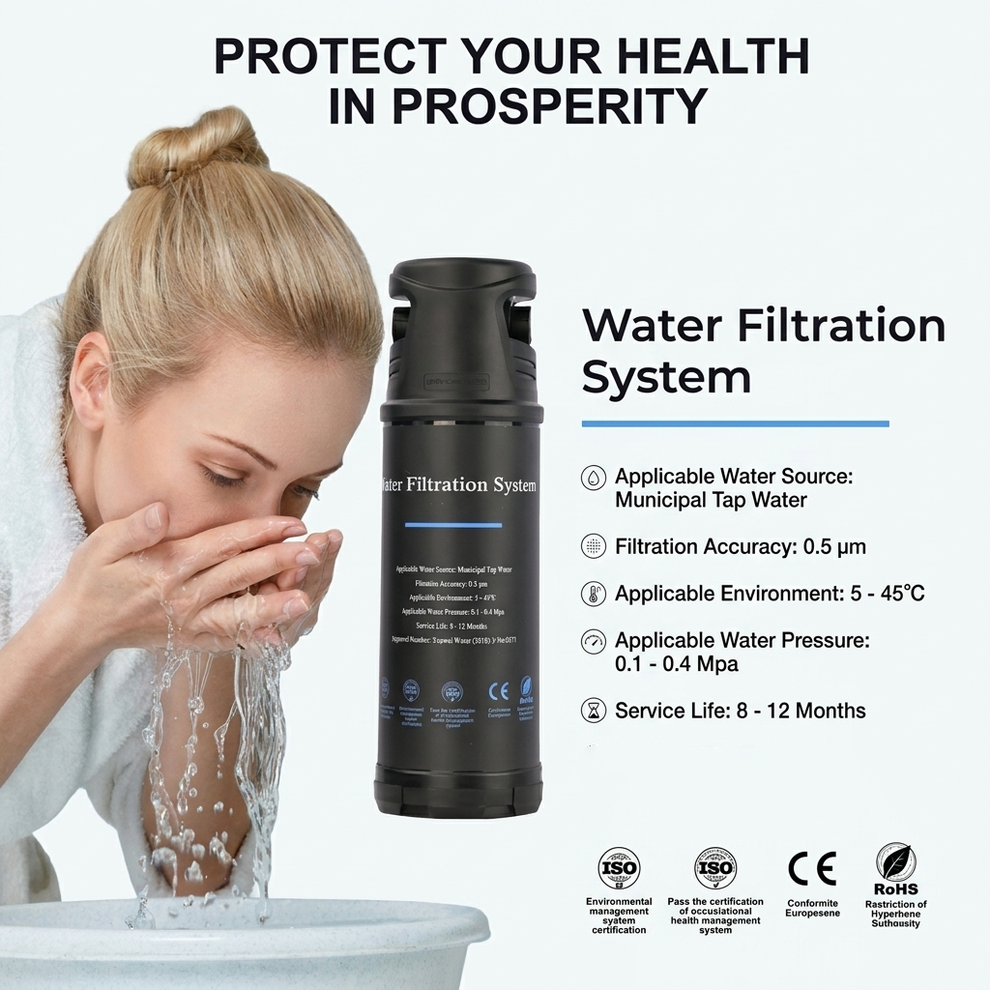
For individuals seeking uncompromised purity regardless of geographic location, bypassing municipal infrastructure entirely with an advanced Atmospheric Water Generator provides total independence from ground-water variables.
Frequently Asked Questions
Is a whole house RO system worth the investment?
In most professional situations, no. Unless your well water is highly contaminated with industrial runoff, heavy metals, or severe salt intrusion, installing a whole house RO system is a massive, unnecessary expense that will degrade your copper plumbing and waste thousands of gallons of water annually.
Will a whole house RO system destroy my home's plumbing?
Yes, if you have copper or galvanized steel pipes and fail to install a commercial remineralization tank. Pure RO water is aggressive and mildly acidic; it will rapidly leach metal from your pipes, causing catastrophic pinhole leaks throughout the house. PEX or CPVC plastic piping is strictly required.
Can I use a point-of-use RO system for my entire kitchen?
Yes. A modern, high-flow point-of-use RO system can be split using a simple T-fitting to feed a dedicated drinking water faucet, your refrigerator's ice maker, and a coffee machine simultaneously, completely eliminating the need to filter water designated for washing dishes.
Does RO remove healthy minerals from water?
Yes, RO is non-selective; it removes heavy metals and healthy minerals (calcium, magnesium) alike. This is why premium POU systems include an alkaline remineralization post-filter to add healthy minerals back into the water, optimizing the pH and vastly improving the taste profile.
Industry References & Authoritative Guidelines
To ensure our filtration guidance adheres to the strictest global safety and environmental protocols, Puflow references the frameworks established by the following authoritative organizations:
- Water Quality Association (WQA): The leading voice of the residential, commercial, industrial, and small community water treatment industry, providing strict certification standards for the operational efficiency and safety of point-of-use and point-of-entry RO systems. Review WQA Industry Certifications
- Environmental Protection Agency (EPA): Federal agency providing critical data on emerging drinking water contaminants (like PFAS) and dictating public health standards for municipal and private well water safety. Review EPA Drinking Water Guidelines
- NSF International: The premier global public health organization that develops strict standards (such as NSF/ANSI 58) for the contaminant reduction claims, structural integrity, and material safety of Reverse Osmosis systems. Review NSF Water Treatment Standards