


8 Tips to Choosing a Reverse Osmosis Filter for Kitchen Sink: An Expert Guide
Municipal water treatment facilities are designed to deliver water that meets baseline legal safety requirements, not water that optimizes human health or culinary flavor. From our experience engineering and deploying advanced water purification systems at Puflow, homeowners blindly trusting aging municipal infrastructure are drinking a cocktail of chlorine, microplastics, and dissolved heavy metals daily. Standard refrigerator filters and generic carbon pitchers do absolutely nothing to strip these microscopic threats from your glass. If you demand absolute, uncompromising baseline purity, integrating a reverse osmosis filter for kitchen sink usage is the only scientifically sound decision.

However, the consumer water filtration market is currently flooded with deceptive marketing, inflated flow rate claims, and systems that waste grotesque amounts of water. You cannot simply purchase the cheapest unit online and expect it to perform. In most professional situations, specifying an under-sink purification system requires evaluating wastewater ratios, assessing mineral stripping, and understanding the physical constraints of your plumbing. In this uncompromising guide, we will cut through the noise, establish the hard truths of reverse osmosis mechanics, and deliver 8 critical tips to ensure your procurement decision yields flawless, clinical-grade hydration.
Quick Answer: Top Tips for Selecting a Kitchen Sink RO System
If you are actively searching for a reverse osmosis filter for kitchen sink installation, prioritize these fundamental criteria before deploying your capital:
- Audit Your Space: Decide between a traditional tank-based system (requires massive cabinet space) and a modern tankless system.
- Verify the Pure-to-Drain Ratio: Never buy a system with a 1:4 ratio (wasting 4 gallons for every 1 purified). Demand at least a 1:1 or 2:1 efficiency.
- Demand Remineralization: RO water is acidic and dead. You must choose a system that adds calcium and magnesium back into the water.
- Check Flow Rates (GPD): For a busy kitchen, insist on a minimum of 400 Gallons Per Day (GPD) to avoid agonizingly slow glass fill times.
- Evaluate Filter Replacement Costs: A cheap upfront system often hides exorbitant, proprietary filter replacement costs down the line.
- Confirm Certifications: Look for strict NSF/ANSI 58 certifications to guarantee the removal of heavy metals and forever chemicals.
- Assess Smart Features: Real-time TDS (Total Dissolved Solids) monitoring on the faucet ensures the membrane has not failed.
- Know Your Plumbing Limits: Ensure your sink deck can accommodate a secondary dedicated pure water faucet without cracking quartz or granite countertops.
We recommend heavily evaluating the footprint and electrical requirements beneath your sink before proceeding. If installing an RO system proves impossible, consider high-end ultrafiltration alternatives.
The Direct Answer: Navigating Your Purchase
When choosing a reverse osmosis filter for kitchen sink applications, your primary directive is to balance pure water output against wastewater generation and physical footprint. The era of bulky, inefficient tank-based systems is ending. You should actively pursue modern, tankless RO systems equipped with internal booster pumps. These systems maximize under-sink real estate, drastically reduce wastewater down to a 2:1 ratio, and provide instantaneous flow rates that eliminate the frustrating pressure drops associated with older pneumatic storage tanks.
Table of Contents
- What It Is: The Mechanics of Reverse Osmosis
- How It Works Under Your Sink
- The 8 Crucial Buying Tips (Buying Considerations)
- Commercial and Health Benefits
- Limitations and Hard Truths
- Who Should Use RO
- Who Does Not Need RO
- Common Installation Mistakes
- Interactive System Comparison
- Summary and Comparison Tables
- Expert Recommendation: The Puflow Alternative
- Frequently Asked Questions (FAQ)
What It Is: The Mechanics of Reverse Osmosis
Reverse Osmosis is not a mere filtration method; it is a molecular separation process. Standard carbon filters rely on absorption, pulling chemicals like chlorine out of the water as it passes through a block. An RO system forces tap water under high pressure through a semi-permeable membrane. The pores on this membrane are 0.0001 microns wide. To put this in perspective, a human hair is roughly 70 microns thick.
Because the pores are so microscopic, only pure H2O molecules can physically squeeze through. Everything else—including lead, arsenic, fluoride, microplastics, bacteria, and viruses—is blocked and subsequently flushed down the drain line. This is why RO is the undisputed champion when comparing RO Water vs Tap Water.
How It Works Under Your Sink
A comprehensive Under-Sink RO System operates in stages. First, water hits a sediment pre-filter to remove rust and dirt that would otherwise tear the delicate membrane. Next, it enters a carbon block to neutralize chlorine, which degrades RO membranes rapidly. The water is then forced through the central RO membrane, achieving absolute purification. Finally, the purified water runs through a post-carbon polishing filter to remove any residual taste before hitting your glass.
The 8 Crucial Tips to Choosing Your System (Buying Considerations)
1. Audit Your Under-Sink Space (Tank vs. Tankless)
Traditional RO systems utilize a 3-gallon pressurized storage tank. This will consume roughly 60% of your cabinet space, making garbage disposal and cleaning supply storage nearly impossible. Modern tankless systems feature internal booster pumps to generate water on demand, saving massive amounts of space. Always measure your clearance.
2. Analyze the Pure-to-Drain Ratio
The dark secret of reverse osmosis is wastewater. To keep the membrane clean, the system must continuously flush rejected contaminants down the drain. Older systems waste up to 4 gallons of water to produce 1 gallon of pure water. In 2026, this is unacceptable. You must seek out efficient systems boasting a 1.5:1 or 2:1 pure-to-waste ratio.
3. Demand Remineralization
Because the RO membrane strips everything from the water, the resulting liquid is slightly acidic and tastes flat. Furthermore, drinking demineralized water long-term is suboptimal. It is critical that you choose an Under Sink Reverse Osmosis System with Remineralization. This final stage passes the pure water over natural stones, adding alkaline calcium and magnesium back into the glass.
4. Verify Flow Rate (GPD)
Gallons Per Day (GPD) dictates how fast water will flow from your faucet. A 50 GPD system with an empty tank will take minutes to fill a single pasta pot. For active kitchens, we strongly advise looking at High-Flow RO Systems that push 400 GPD to 800 GPD, delivering a rapid stream of water directly to your glass without lag.
5. Evaluate Filter Replacement Complexity
Do not be fooled by a cheap initial price tag. Manufacturers often hook you with a low-cost system and then extort you on proprietary replacement filters. Furthermore, if changing the filters requires a wrench, turning off the main water supply, and dealing with spilling housing canisters, you will eventually stop doing it. Look for modular, twist-and-pull cartridges that take three seconds to swap.
6. Look for NSF Certifications
Marketing claims are irrelevant without third-party validation. If a manufacturer claims to remove heavy metals and PFAS (forever chemicals), you must verify their NSF Certified Reverse Osmosis System status, specifically looking for NSF/ANSI Standard 58.
7. Consider Smart Faucets and TDS Monitoring
How do you know if your RO membrane has ruptured? Without a Total Dissolved Solids (TDS) meter, you don't. Premium systems now include smart faucets with digital displays that show you the exact purity of your water in real-time, instantly alerting you when the membrane requires replacing.
8. Assess Your Plumbing Competence
RO systems require you to drill a hole in your sink deck for the dedicated faucet and drill a hole in your PVC drain pipe to attach the wastewater saddle. If you are renting an apartment, drilling into the landlord's granite countertop is a fast track to losing your deposit. In these cases, you must pivot away from under-sink units.
Commercial and Health Benefits
The primary benefit of utilizing an under-sink RO system is absolute control over your hydration baseline. You eliminate the reliance on environmentally disastrous single-use plastic water bottles. You ensure that your cooking water, coffee, and infant formula are completely free from municipal lead spikes and unregulated pharmaceutical runoff. For heavy-duty applications, such as home brewing or maintaining expensive espresso machines, feeding them 0 TDS water drastically extends the lifespan of the equipment by preventing catastrophic limescale buildup.
Limitations and Hard Truths
We must present practical judgment: RO systems have distinct operational burdens. Tankless RO systems require a dedicated 110V electrical outlet under the sink to power the internal booster pump. If you do not have power under your sink, hiring an electrician to run a line adds significant cost to the installation.
Additionally, the wastewater factor cannot be ignored. Even highly efficient systems dump water down the drain. If you live in an area experiencing extreme drought restrictions, utilizing a system that wastes 2 gallons for every 1 gallon purified is environmentally irresponsible and potentially expensive on your utility bill.
Who Should Use RO
For commercial users and families on contaminated water: If your home is on private well water susceptible to agricultural pesticide runoff, or if your city infrastructure is antiquated and leaching heavy metals, you absolutely must install a reverse osmosis system. It is the only guaranteed physical barrier against severe chemical contamination.
Who Does Not Need RO
For beginners and renters: If your city's water quality report is generally excellent, and your primary concern is the foul taste of chlorine, minor sediment, and the presence of microplastics, an RO system is overkill. The electrical requirements, wastewater generation, and invasive plumbing are unnecessary. You are far better served by exploring Portable & Non-Electric solutions or advanced Ultrafiltration (UF) systems.
Common Installation Mistakes
When installing the drain saddle clamp onto the PVC pipe, if the drilled hole does not align perfectly with the saddle opening, the high-pressure wastewater will back up, causing the RO system to constantly cycle, destroying the pump, and flooding the cabinet floor. Always verify alignment before tightening the bolts.
Summary and Comparison Tables
Comparison Table: Reverse Osmosis vs. Ultrafiltration vs. Carbon
| Feature | Reverse Osmosis (RO) | Ultrafiltration (UF) | Standard Carbon Filter |
|---|---|---|---|
| Filtration Threshold | 0.0001 Microns | 0.01 Microns | 1.0 to 5.0 Microns |
| Removes Heavy Metals & TDS | Yes (99%) | No (Leaves healthy minerals) | Minimal |
| Wastewater Generated | Yes (Requires drain line) | No (Zero waste) | No (Zero waste) |
| Electricity Required | Yes (For tankless pumps) | No (Operates on line pressure) | No |
Comparison Table: Tank vs. Tankless RO Systems
| Metric | Traditional Tank RO | Modern Tankless RO |
|---|---|---|
| Under-Sink Footprint | Massive (Filters + 3-gallon tank) | Compact (Single unified chassis) |
| Flow Dynamics | Fast initially, slows as tank empties | Continuous, steady high-pressure flow |
| Stagnation Risk | High (Water sits in rubber bladder) | Zero (Water purified on demand) |
| Power Requirement | None (Usually relies on line pressure) | Requires 110V wall outlet |
Pros and Cons of Under-Sink RO Systems
| Pros (Advantages) | Cons (Limitations) |
|---|---|
| Provides clinical-grade, absolute water purity. | Generates wastewater continuously during purification. |
| Removes dangerous forever chemicals (PFAS) and heavy metals. | Strips natural minerals, requiring remineralization filters. |
| Eliminates the financial burden of purchasing bottled water. | Invasive installation (drilling countertops and drain pipes). |
| Protects expensive kitchen appliances from limescale buildup. | Tankless models require dedicated under-sink electricity. |
Expert Recommendation: The Puflow Alternative
In our testing, we acknowledge that the rigorous installation demands, wastewater generation, and electrical requirements of a reverse osmosis filter for kitchen sink use can be dealbreakers for many households. If you demand premium filtration without the severe operational drawbacks of RO, we recommend pivoting to our advanced Ultrafiltration technology.
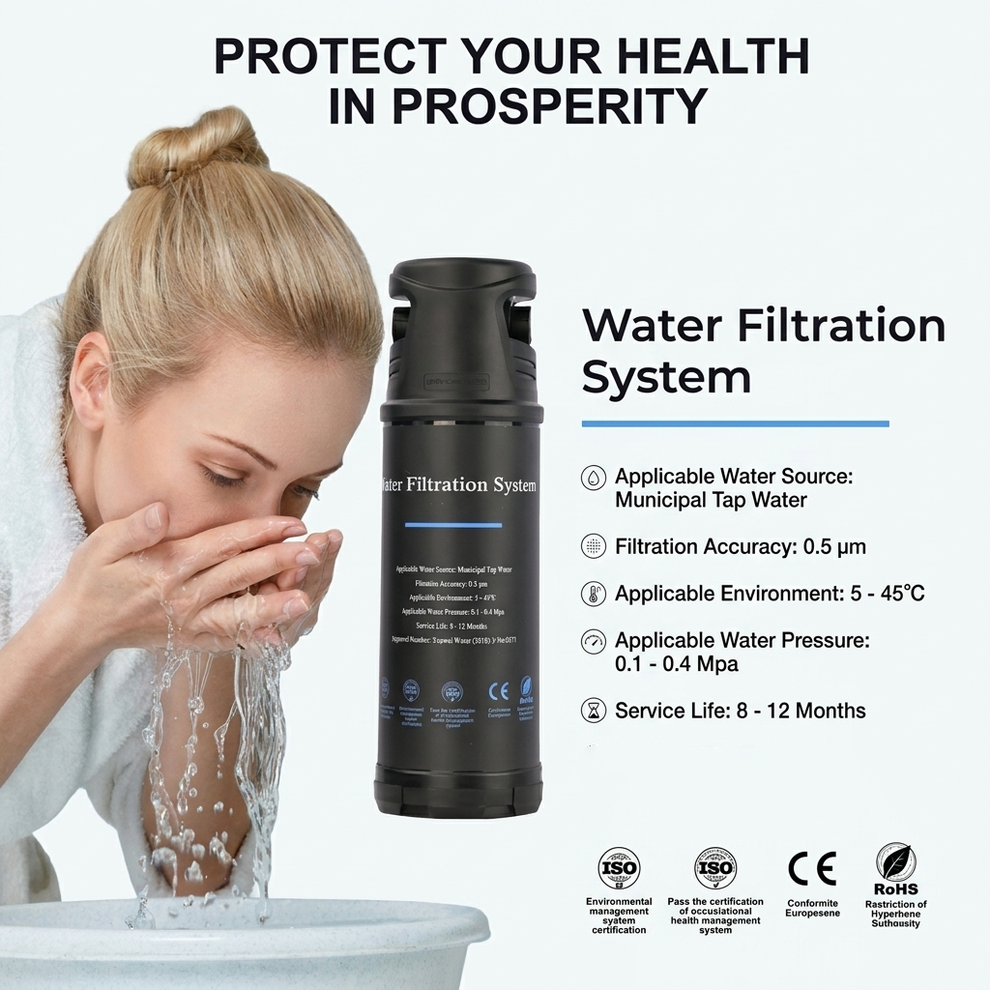
TM8-2 Under Sink Water Filter System 0.01μm Ultrafiltration
For users who want to eradicate bacteria, microplastics, and chlorine, but refuse to deal with wastewater tubes and electrical cords. The TM8-2 operates at a microscopic 0.01-micron threshold—blocking pathogens while allowing essential, healthy minerals like calcium to pass through to your glass.
- Filtration Accuracy: 0.01μm (Exceptional pathogen and microplastic blocking).
- Flow Rate: Up to 400 L/h (Massive flow without internal pumps).
- Power Requirement: None. Operates entirely on standard municipal line pressure (0.1–0.4 MPa).
- Footprint: Ultra-compact 130 × 110 × 345 mm design preserves your cabinet space.
By evaluating the Best Water Filter for Microplastics alongside your specific plumbing constraints, you can make a commercially sound decision. Whether you opt for a New Arrival reverse osmosis system for home use to achieve absolute 0 TDS, or choose the zero-waste elegance of the TM8-2, Puflow engineers the exact hydration solution for your infrastructure.
Frequently Asked Questions (FAQ)
Does a reverse osmosis filter remove healthy minerals?
Yes. A reverse osmosis membrane cannot distinguish between a toxic lead particle and a healthy calcium ion; it strips everything. This leaves the water highly purified but slightly acidic and flat-tasting. This is why we mandate selecting a system that features a final remineralization stage to add healthy alkaline minerals back into the water before consumption.
How often do I need to replace the RO membrane and pre-filters?
In most professional situations, the carbon and sediment pre-filters must be replaced every 6 to 12 months to protect the core membrane from chlorine degradation. The central reverse osmosis membrane itself is highly durable and typically only requires replacement every 2 to 3 years, depending heavily on your municipal water's baseline hardness and sediment levels.
Can I connect my under-sink RO system to my refrigerator ice maker?
Yes, but it requires careful plumbing. Traditional tank-based RO systems have excellent pressure to push water 15 feet to a refrigerator. However, some modern tankless RO systems require a secondary mini-tank or a booster pump to maintain the line pressure necessary to trigger the mechanical solenoid valve inside the refrigerator's ice maker. Always verify compatibility before running the line.
Authoritative Industry References
To ensure our water purification guidance aligns with rigorous federal and scientific standards, we reference data from the following authorities:
- Environmental Protection Agency (EPA): Federal guidelines outlining safe drinking water thresholds, municipal reporting, and the efficacy of home water treatment units. Visit the EPA Drinking Water Guidelines
- NSF International: The premier independent certification organization for public health standards, detailing the specific testing protocols for Reverse Osmosis systems (NSF/ANSI Standard 58). Visit NSF International
- Centers for Disease Control and Prevention (CDC): Providing public health guidance on waterborne pathogen removal and the mechanical differences between RO and Ultrafiltration. Visit the CDC Water Treatment Guide