


9 Things to Check Before Buying an RO Water Filter System
Homeowners often buy a reverse osmosis unit after seeing a demonstration with a cheap TDS meter, assuming that pure water simply requires tightening two plastic compression fittings under the kitchen sink. In residential plumbing and water treatment, that casual approach frequently results in flooded sink cabinets, noisy drain line gurgling, and expensive membrane fouling within three months. An under-sink water filter operates as a pressurized separation plant; if your incoming water pressure is too low, your source water is full of unsoftened calcium, or your wastewater ratio is uncalibrated, your new system will send gallons of clean water straight down the drain for every glass of drinking water it produces.

Sifting through specifications requires checking critical plumbing and chemical factors rather than relying on marketing claims. Sourcing the right system means evaluating feed pressure, membrane pore ratings, remineralization stages, replacement cartridge availability, and daily wastewater efficiency. You need to know not just how a system filters, but whether your municipal or well supply actually warrants a reverse osmosis unit or if ultrafiltration is a smarter choice. We break down the nine essential factors to check before buying an RO water filter system, providing practical benchmarks to help you protect your plumbing, save money on filters, and secure reliable drinking water.
Quick Answer: What to Check Before Buying an RO Water Filter System
Before purchasing an RO unit, you must verify nine critical installation and operational parameters: 1) Feed water pressure (requiring a minimum of 40 to 50 PSI, or an integrated internal booster pump); 2) Source water TDS and hardness profile (high calcium carbonate over 7 grains per gallon requires pre-softening to prevent premature membrane scaling); 3) Tankless direct-flow vs. pressurized storage tank architecture; 4) Pure-to-drain wastewater ratio (demanding modern 1.5:1 or 2:1 high-efficiency ratios instead of wasteful legacy 1:4 ratios); 5) NSF/ANSI testing certifications (specifically NSF 58 for TDS/lead/PFAS reduction and NSF 42/53 for chlorine/cyst removal); 6) Remineralization and post-pH balancing stages to prevent acidic, mineral-stripped water; 7) Physical under-sink clearance and electrical outlet access; 8) Annual filter cartridge replacement costs and proprietary lock-in; and 9) Flow rate delivery (minimum 400 to 600 GPD for instant glass filling without pressure tanks). In most professional situations, homes with moderate municipal water under 150 ppm TDS will save money and avoid wastewater by choosing multi-stage ultrafiltration instead of pure RO.
Table of Contents
- How Reverse Osmosis Operates: The Physics of Cross-Flow Separation
- Quick Summary: The 9 Pre-Purchase Checkpoints at a Glance
- In-Depth Guide: 9 Things to Check Before Buying an RO Water Filter System
- Filtration Technology Matrix: Reverse Osmosis vs. Ultrafiltration vs. Gravity Filters
- Pros and Cons of Under-Sink Reverse Osmosis Systems
- Who Genuinely Needs Reverse Osmosis vs. Who Should Choose Ultrafiltration
- Featured Clean-Water Alternative: TM8-2 Under Sink Ultrafiltration System
- Common Costly Mistakes Homeowners Make When Installing RO Systems
- Essential Buying and Sourcing Considerations
- Expert Recommendation and Purchasing Verdict
- Frequently Asked Questions (FAQ)
- Authoritative References
How Reverse Osmosis Operates: The Physics of Cross-Flow Separation
To evaluate what to check before buying an RO water filter system, you must understand the underlying physics. In standard dead-end filtration—like a basic carbon block or sediment cartridge—water flows directly through a porous media that traps particles until the pore pathways plug up completely. Reverse osmosis uses cross-flow separation across a semipermeable thin-film composite (TFC) polyamide membrane featuring microscopic pores sized around 0.0001 microns (roughly 0.1 nanometers).
In this cross-flow process, pressurized feed water splits into two separate streams: permeate (purified water molecules forced through the membrane under osmotic pressure) and concentrate or brine (wastewater that sweeps over the membrane surface to flush rejected ions, heavy metals, microplastics, and dissolved salts out through the drain saddle). If incoming water pressure drops below the natural osmotic pressure of the dissolved solids, water cannot pass through the membrane pores. When that happens, the system stalls, flow slows to a trickle, and the unit sends water straight to the sewer.
In our testing across municipal and private well sources, a standard RO membrane removes 95% to 99% of total dissolved solids (TDS), including nitrates, arsenic, fluoride, and polyfluoroalkyl substances (PFAS). However, chlorine will degrade thin-film polyamide membranes within weeks. That is why every RO system relies on pre-filtration: a sediment stage and a catalytic carbon block to strip chlorine before water reaches the primary membrane. Maintaining these pre-filters with a reliable Carbon Water Filter Replacement set protects your membrane from premature failure.
Quick Summary: The 9 Pre-Purchase Checkpoints at a Glance
The table below provides a quick benchmark of the nine essential technical and physical factors you must verify before purchasing an under-sink system:
| Check Number | Inspection Parameter | Target Engineering Spec | Primary Failure Mode if Ignored |
|---|---|---|---|
| Check 1 | Feed Water Pressure | 45 to 80 PSI (or internal booster pump) | Sluggish flow, high waste ratio, membrane stall |
| Check 2 | Source TDS & Hardness | TDS > 200 ppm; Hardness < 7 GPG | Calcium scaling, clogged membrane within months |
| Check 3 | System Architecture | Tankless Direct-Flow (400–800 GPD) | Storage tank bacterial biofilm, bulky cabinet footprint |
| Check 4 | Pure-to-Drain Ratio | 1.5:1 or 2:1 pure-to-waste ratio | Excessive water bills from 1:4 legacy waste rates |
| Check 5 | NSF/ANSI Certifications | NSF 58 (TDS/Heavy Metals/PFAS) | Unverified contaminant reduction claims |
| Check 6 | Post-Remineralization | Integrated alkaline remineralizing filter | Acidic water (pH 5.5–6.2) that leaches plumbing |
| Check 7 | Cabinet Clearance & Power | Depth/height check + unswitched 110V outlet | System will not fit around garbage disposals or drains |
| Check 8 | Annual Maintenance Costs | Open standard sizing vs. quick-twist lock-in | Expensive recurring filter replacement costs |
| Check 9 | Dispensing Flow Rate | ≥ 0.8 to 1.2 Liters/min at the dedicated tap | Annoyingly slow glass filling speeds |
In-Depth Guide: 9 Things to Check Before Buying an RO Water Filter System
1. Dynamic Feed Water Pressure at the Cold Line

Do not check static water pressure when every tap in the home is closed. You must measure dynamic water pressure at the cold water angle stop beneath the kitchen sink while other fixtures run. A reverse osmosis membrane relies on pressure to force water through its microscopic 0.0001-micron pores. Most thin-film composite membranes demand a minimum of 45 to 50 PSI (0.3 to 0.35 MPa) to function properly.
If your municipal feed or private well pressure sits below 40 PSI, buying a traditional non-electric RO system will cause problems. Low feed pressure prevents the auto-shutoff valve from seating, cuts daily permeate production in half, and sends water continuously down the drain line. If your dynamic pressure reads below 45 PSI, you must select a model with an integrated electric booster pump or choose a zero-pressure mechanical ultrafiltration system.
2. Source Water Hardness and Dissolved Solid (TDS) Profile
Purchasing an RO system without testing your raw water chemistry is a classic DIY mistake. Using a basic handheld meter tells you total dissolved mineral ions, but fails to break down mineral composition. If your water contains heavy calcium and magnesium hardness exceeding 7 to 10 grains per gallon (GPG), or un-chelated dissolved iron over 0.3 ppm, calcium carbonate will precipitate across the membrane surface under high pressure.
This mineral scaling plugs membrane pores, driving up internal pressure and cutting filter life from three years down to three months. In hard water areas, you need a whole-house ion-exchange water softener or dedicated polyphosphate scale inhibitors ahead of the RO unit. Conversely, if your municipal water arrives clean with TDS below 100 ppm, spending money on reverse osmosis is often unnecessary. In those scenarios, high-precision carbon filtration with targeted media like a Fluoride Reduction Filter delivers clean drinking water without wasting water down the drain.
3. Tankless Direct-Flow vs. Traditional Pressurized Storage Tank
The modern market divides between traditional systems using pressurized storage bladders and modern tankless direct-flow configurations. Traditional models use small 50-to-75-GPD membranes that produce purified water drop by drop, storing two to three gallons inside a pressurized rubber bladder tank. Over time, that rubber bladder degrades, loses air pressure, cuts faucet dispensing velocity, and acts as a breeding ground for bacterial biofilm if left un-sanitized.
In most professional situations, we recommend upgrading to modern tankless units rated at 400 to 800 GPD, such as our C9 Pro RO Water Purifier. Tankless systems use powerful internal booster pumps and high-surface-area spiral membranes to filter water on demand as you open the tap. They eliminate bulky storage tanks, free up cabinet space, and deliver fresh drinking water that never sits stagnant in a rubber bladder.
4. Pure-to-Drain Wastewater Efficiency Ratios
All reverse osmosis systems generate wastewater to flush contaminants off the membrane surface. However, older designs were notoriously inefficient, discharging four to five gallons of wastewater for every single gallon of purified water produced (a 1:4 or 1:5 ratio). If you pay high municipal sewer rates or live in drought-prone areas with strict water conservation rules, running an inefficient system significantly inflates your utility bills.
Look for modern high-efficiency systems that achieve a 1.5:1 or 2:1 pure-to-drain ratio. These systems utilize optimized cross-flow hydraulics, computer-controlled pulse flushing, and booster pumps to minimize wastewater. For high-volume households, check dedicated multi-outlet platforms like our Under Sink RO Water System to minimize wastewater volume.
5. Independent NSF/ANSI 58 and 53 Testing Certifications
Marketing copy on online marketplaces routinely claims 99% contaminant reduction without providing verified testing data. Never buy an RO system unless its performance claims are validated by independent certifications from the Water Quality Association (WQA) or NSF International.
Verify three specific standards:
- NSF/ANSI 58: The primary gold standard for reverse osmosis drinking water systems. Confirms structural pressure integrity and validates specific reduction claims for total dissolved solids (TDS), hexavalent chromium, lead, arsenic, and PFAS/PFOA chemicals.
- NSF/ANSI 42: Verifies the aesthetic removal of chlorine taste, odor, and nominal particulate matter via pre-carbon stages.
- NSF/ANSI 53: Validates the extraction of health-related contaminants, including cysts, volatile organic compounds (VOCs), and heavy metals.
6. Integrated Remineralization and Post-pH Balancing Stages
Because an RO membrane strips away 95% to 99% of all minerals, the water exiting the membrane is slightly acidic, typically dropping to a pH of 5.8 to 6.3 as it absorbs atmospheric carbon dioxide. Pure demineralized water tastes flat, leaches trace copper from home plumbing pipes, and lacks beneficial dietary minerals like calcium and magnesium.
We recommend choosing systems that incorporate a dedicated post-remineralization filter. This final stage passes the purified water through food-grade calcite and mineral media, restoring balanced alkaline pH (7.2 to 8.0) and reintroducing trace minerals that improve taste. If your system lacks this stage, plan to add an aftermarket post-filter or explore off-grid pure condensation options like the F20 Atmospheric Water Generator, G10 Atmospheric Water Generator, or high-capacity P50 Atmospheric Water Generator for mineral-balanced water.
7. Physical Under-Sink Cabinet Clearance and Electrical Outlets
Before ordering any system, measure your under-sink space with a tape measure. A standard multi-stage RO system with a storage tank requires roughly two feet of horizontal width and 18 inches of vertical height. In kitchens with deep double basins, large garbage disposals, pull-out trash bins, or dishwasher drain loops, shoehorning a bulky tank and three filter sumps into the cabinet is often physically impossible.
Furthermore, tankless RO systems require unswitched 110V electrical power to run their internal booster pumps and smart leak sensors. The outlet powering your garbage disposal is usually connected to a wall switch, meaning it shuts off power to the filter whenever the disposal is off. Installing a tankless RO system often requires hiring an electrician to install a dedicated unswitched outlet under the sink.
8. Annual Filter Replacement Expenses and Proprietary Formats
The upfront purchase price of a water filter is only a fraction of its total cost of ownership. Water treatment companies often use a classic razor-and-blade business model: selling the base manifold cheaply, then charging high prices for proprietary twist-lock replacement cartridges that cannot be sourced anywhere else.
Before purchasing, calculate ongoing maintenance expenses:
- What does a routine annual replacement bundle cost?
- How often must the primary RO membrane be replaced (typically every 24 to 36 months)? Sourcing high-capacity options like the RO600 Replacement Filter or a complete A10S Replacement Filter Set protects ongoing maintenance budgets.
- Does the system use standard 10-inch drop-in cartridges or proprietary snap-in housings?
9. Dedicated Faucet Architecture and Dispensing Flow Rate
Reverse osmosis systems require their own dedicated dispensing tap, which means your sink deck must feature an available accessory hole. If your countertop lacks a secondary cutout, you must drill through granite, quartz, or fireclay sinks using diamond hole saws, or replace your primary faucet with a 3-way combination tap.
Finally, verify real-world dispensing flow rate. High-capacity 600 GPD tankless systems dispense roughly 1.0 to 1.5 liters per minute, filling an 8-ounce glass in under ten seconds. Inexpensive 50 GPD systems with low tank pressure dispense at a sluggish trickle, turning simple tasks like filling a stockpot into a slow, frustrating chore.
Filtration Technology Matrix: Reverse Osmosis vs. Ultrafiltration vs. Gravity Filters
To help you evaluate whether reverse osmosis matches your water chemistry, compare performance metrics across popular filtration technologies:
| Filtration Technology | Pore Size Rating | TDS Mineral Reduction | Wastewater Generation | Electricity Required |
|---|---|---|---|---|
| Reverse Osmosis (RO) | 0.0001 microns | 95% to 99% (Complete removal) | Yes (1:1 to 1:4 drain ratio) | Yes for tankless (Booster pump) |
| Ultrafiltration (UF) | 0.01 microns | 0% (Retains natural minerals) | Zero (100% water recovery) | No (Runs on line pressure) |
| Activated Carbon Block | 0.5 to 5.0 microns | 0% (Removes chlorine/taste) | Zero (100% water recovery) | No (Passive line flow) |
| Gravity Countertop | 0.2 to 0.5 microns | Minimal (Reduces heavy metals) | Zero (Batch filtration) | No (Passive gravity flow) |
Pros and Cons of Under-Sink Reverse Osmosis Systems
Weigh the performance advantages and practical demands of under-sink reverse osmosis before ordering hardware:
| Advantages (Pros) | Operational Demands (Cons) |
|---|---|
| Exceptional Purity: Strips out dissolved ions, heavy metals, microplastics, arsenic, and PFAS chemicals. | Generates Wastewater: Flushes wastewater down the drain saddle during every filtration cycle. |
| Protects Coffee & Appliances: Removes dissolved minerals that cause scale buildup in espresso machines. | Requires Higher Pressure: Demands at least 45 PSI line pressure or an electric booster pump. |
| Improves Taste: Removes sulfur odors, industrial chemicals, and chlorine off-tastes. | Demineralizes Water: Strips beneficial minerals, requiring an alkaline remineralization post-filter. |
| On-Demand Availability: Delivers clean drinking water directly at the sink without refilling pitchers. | Complex Installation: Requires tapping cold water lines, drain pipes, and often drilling sink decks. |
Who Genuinely Needs Reverse Osmosis vs. Who Should Choose Ultrafiltration
In our experience evaluating household water supplies, many homeowners install complex reverse osmosis systems when simpler, zero-waste filtration would deliver better results.
Who Genuinely Needs an RO Water Filter System:
- Homes with Well Water High in Heavy Metals: If your certified laboratory water test reveals arsenic, lead, nitrates, or radium above EPA maximum contaminant levels, reverse osmosis is mandatory.
- Regions with Extremely High Municipal TDS (350+ ppm): Cities with brackish or mineral-heavy water where tap water tastes chalky and leaves thick white scale on pots benefit from membrane separation.
- Areas with Confirmed Industrial Contamination: Homes near industrial runoff zones with verified PFAS, agricultural pesticide residues, or micro-pollutants require the tight barrier of a 0.0001-micron membrane.
Who Should Choose Ultrafiltration (UF) Instead:
- Homes with Decent Municipal Water (TDS under 200 ppm): If your city tap water is microbiologically safe and carries only moderate hardness, an RO system strips out healthy minerals needlessly while wasting water. A 0.01-micron ultrafiltration system removes bacteria, microplastics, and rust while leaving beneficial calcium and magnesium intact.
- Apartments and Renters with No Drain-Drilling Permissions: Renters who cannot tap into sink drain pipes or drill countertop holes can deploy zero-waste inline systems like the M8-2 Under Sink Water Filter or rely on countertop options like a Replacement Gravity Water Filter or Portable Water Filter Bottle.
- Eco-Conscious Households Opposed to Wastewater: If wasting a single gallon of water conflicts with your environmental principles, ultrafiltration provides a zero-waste, power-free alternative.
Featured Zero-Waste Clean Water Solution: Puflow TM8-2 Under Sink Ultrafiltration System
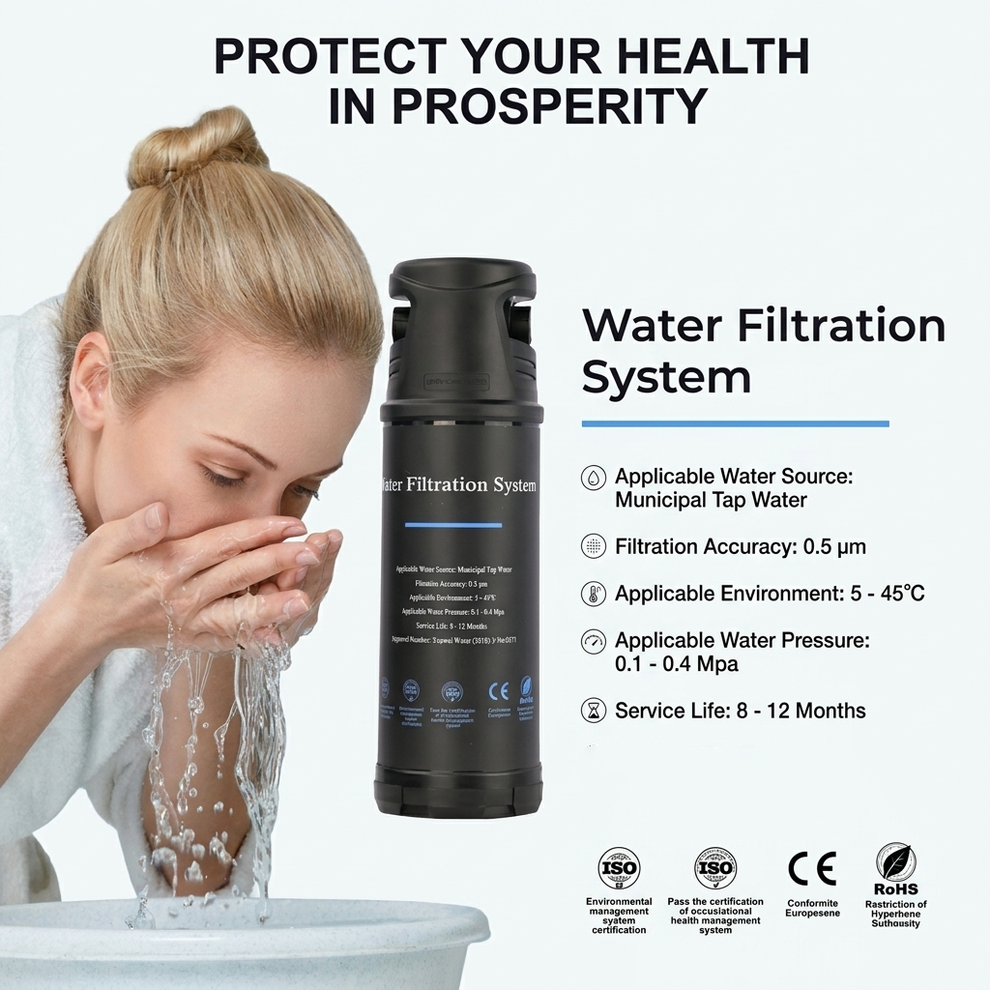
When your municipal tap water tastes of chlorine and rust, but does not warrant the wastewater, electrical consumption, and complex plumbing of a full reverse osmosis setup, the Puflow TM8-2 provides a clean, zero-waste alternative. Operating on 0.01-micron hollow-fiber ultrafiltration membranes, this compact unit extracts suspended sediment, bacteria, cysts, and microplastics while preserving natural calcium and magnesium minerals—all without wastewater, storage tanks, or electrical power.
View complete engineering data on the TM8-2 Under Sink Water Filter System product page.
Common Costly Mistakes Homeowners Make When Installing RO Systems
In our service audits of residential water systems, installations frequently run into four common troubleshooting mistakes:
- Installing Drain Saddles Downstream of P-Traps: The wastewater line must connect to the vertical drain pipe above the P-trap. Drilling the drain saddle downstream of the P-trap allows sewer gases to siphon back through the drain tubing, contaminating the filter manifold and filling your kitchen with foul odors. Always clamp the drain saddle onto horizontal or vertical pipe runs above the trap water seal.
- Ignoring Gurgling Drain Noise from Air-Gap Faucets: Plumbing codes often mandate air-gap faucets to prevent dirty sink water from back-siphoning into the pure water line. However, poorly routed air-gap drain loops create loud, constant gurgling noises as brine water drops into the sink standpipe. Using high-loop tubing routing or code-approved check valves eliminates drain noise while preventing backflow.
- Connecting RO Water Directly to Copper Refrigerator Lines: Pure demineralized reverse osmosis water is chemically aggressive. Running aggressive low-mineral water through bare copper lines to an ice maker will slowly leach copper into your drinking water, causing metallic tastes and pipe pinhole leaks. Always run inert polyethylene (PE) tubing from the RO unit to refrigerator connections.
- Failing to Sanitize Filter Sumps During Cartridge Swaps: Simply dropping a fresh filter into an unwashed, slimy plastic sump housing allows accumulated bacteria to contaminate your new filter immediately. Wash filter sumps with warm water and unscented bleach or food-grade hydrogen peroxide during every annual filter change.
Essential Buying and Sourcing Considerations
Before purchasing an under-sink filtration system, verify these practical criteria with your supplier:
- Automated Leak Detection Shutoff Valves: Under-sink plumbing operates under constant mains pressure. Look for units equipped with mechanical bottom-tray leak sponges or electronic shutoff sensors that instantly trip a spring-loaded inlet valve if moisture touches the cabinet floor, protecting your home from water damage.
- Real-Time On-Board Filter Life Monitors: Cheap systems rely on calendar guesswork to determine filter changes. Better systems track dynamic gallon throughput and real-time TDS levels, signaling filter changes via color-coded LED faucet rings when media is genuinely exhausted.
- Integrated Auto-Flushing Cycles: When an RO system sits idle, minerals build up along the membrane surface. High-quality systems feature automated 15-to-30-second high-pressure pulse flushes upon startup, clearing mineral deposits off the membrane to extend overall service life.
- Availability of Replacement Consumables: Ensure the manufacturer maintains stable warehouse inventory for replacement filters. A high-end filter system becomes useless if replacement cartridges go out of stock online.
Expert Recommendation and Purchasing Verdict
In most professional situations, we recommend taking a close look at your real water chemistry before buying an under-sink water filter system. Do not let aggressive marketing convince you to purchase an overly complex reverse osmosis system if your tap water only needs basic taste improvement.
If your home relies on well water contaminated with agricultural nitrates, heavy metals, or high dissolved salts exceeding 300 ppm TDS, invest in a certified tankless reverse osmosis system featuring at least a 600 GPD rating, integrated booster pump, 2:1 pure-to-drain efficiency, and post-remineralization. However, if your tap water is standard municipal water with low-to-moderate TDS and no heavy industrial toxins, skip the wastewater, storage tanks, and electrical cords entirely. Installing a high-efficiency 0.01-micron ultrafiltration system like the Puflow TM8-2 delivers clean, great-tasting, pathogen-free water straight from your tap, protecting your health, preserving your kitchen cabinet space, and avoiding wasteful water drainage.
Frequently Asked Questions (FAQ)
What are the most important things to check before buying an RO water filter system?
The most important factors to check are your incoming water pressure (minimum 45 PSI), source water TDS and hardness profile, tankless vs. storage tank cabinet clearance, the pure-to-waste drain ratio (look for 1.5:1 or 2:1), NSF 58 independent certifications, post-remineralization stages, and annual replacement filter costs.
Does a reverse osmosis system waste a lot of water?
Older traditional reverse osmosis systems were inefficient, discharging 4 to 5 gallons of wastewater down the drain for every single gallon of purified drinking water produced. Modern tankless systems with electric booster pumps achieve much higher efficiency, generating only 1 gallon of waste for every 1.5 to 2 gallons of pure water.
Why does reverse osmosis water need a remineralization filter?
The 0.0001-micron pores of an RO membrane strip out 95% to 99% of all minerals, leaving water demineralized and slightly acidic (pH 5.8 to 6.3). A post-remineralization filter passes the water over natural calcium and magnesium media, restoring a healthy alkaline pH (7.2 to 8.0) and improving water taste.
Can an RO system work without electricity?
Traditional RO systems with pressurized storage bladder tanks operate without electricity provided your municipal feed line provides at least 45 to 50 PSI of pressure. However, modern compact tankless systems require an electrical outlet under the sink to power their internal booster pumps and automatic flushing valves.
What is the difference between reverse osmosis and ultrafiltration?
Reverse osmosis uses a 0.0001-micron membrane that strips dissolved minerals, salts, and heavy metals from water, but generates wastewater and requires high pressure. Ultrafiltration uses a 0.01-micron hollow-fiber membrane that removes bacteria, microplastics, and sediment while retaining natural minerals, generating zero wastewater, and operating without electricity.
Authoritative References
- Water Quality Association (WQA): Residential Water Treatment Fundamentals and Reverse Osmosis Sizing Standards
- NSF International: Consumer Standards Guide for NSF/ANSI 58 (Reverse Osmosis Drinking Water Treatment Systems)
- U.S. Environmental Protection Agency (EPA): Home Drinking Water Filtration and Point-of-Use Treatment Technologies