


Do Countertop Reverse Osmosis Filters Work? An Expert Laboratory Review
Consumers routinely waste hundreds of dollars annually on basic carbon pitcher filters, believing they are removing dangerous total dissolved solids (TDS), microplastics, and heavy metals from their municipal tap water. They are not. If you are serious about water purification but lack the ability to alter your kitchen plumbing, you must bypass the primitive gravity pitchers and invest in high-pressure membrane technology. The frequent question we receive from health-conscious renters and homeowners is simple: do countertop reverse osmosis filters work exactly like their under-sink counterparts? The definitive answer requires a hard look at hydrostatic pressure, pore size, and rejection rates.

From our experience engineering advanced filtration technology at Puflow, we can unequivocally state that modern freestanding RO systems are not a compromise. They utilize the exact same 0.0001-micron membrane technology found in commercial bottling plants. In this expert analysis, we will strip away the marketing jargon and explain the precise mechanics behind these systems, identifying where they excel, where they fall short, and how to verify you are purchasing a legitimate purification machine rather than a glorified carbon filter.
Quick Answer: Do Countertop Reverse Osmosis Filters Work?
Yes, countertop reverse osmosis filters work exceptionally well. They utilize the exact same 0.0001-micron semi-permeable membrane technology as hard-plumbed under-sink systems to physically reject up to 99% of all total dissolved solids, including lead, fluoride, arsenic, PFAS (forever chemicals), and microplastics. In our testing, premium Countertop RO Systems reduce tap water TDS from 300+ parts per million (ppm) down to single digits within minutes. They are highly effective, require zero plumbing installation, and are the undisputed best choice for renters or those who cannot drill into their countertops.
Table of Contents
- Direct Answer: The Efficacy of Freestanding RO
- What It Is: Beyond the Basic Pitcher
- How It Works: The Hydrostatic Process
- Core Benefits of Countertop Systems
- Limitations to Consider
- Who Should Use It
- Who Does Not Need It
- Common Mistakes Buyers Make
- Strict Buying Considerations
- Expert Recommendation
- Summary and Comparison Tables
- Frequently Asked Questions
Direct Answer: The Efficacy of Freestanding RO
To directly address the query—do countertop reverse osmosis filters work—we must evaluate their rejection rates. Standard carbon filters rely on adsorption; they trap chlorine and bad odors but allow dissolved heavy metals and microscopic toxins to pass straight through into your drinking glass. A countertop reverse osmosis system forces water through a microscopic mesh that is physically smaller than the contaminants themselves. Because these countertop units feature integrated electric booster pumps, they generate the exact same high hydrostatic pressure required to force water through the membrane as a plumbed-in Under Sink RO Water System. The result is laboratory-grade purified water delivered instantly to your countertop.
What It Is: Beyond the Basic Pitcher
A countertop RO filter is a self-contained, electrically powered water purification plant that sits on your kitchen counter. Unlike a standard Replacement Gravity Water Filter, an RO system requires electricity to power a high-pressure pump. It features a raw water reservoir that you manually fill at your sink, an internal multi-stage filtration block, and a dispensing mechanism. The highest quality systems, such as the C9 Pro RO Water Purifier, also include integrated heating elements, allowing you to dispense purified water at precise temperatures for coffee, tea, or infant formula instantly.
How It Works: The Hydrostatic Process
In most professional situations, a countertop RO system executes a rigorous 3 to 4 stage filtration protocol. When you press dispense, the internal pump draws tap water from the rear reservoir.
First, the water passes through a Polypropylene (PP) and Carbon Block composite filter. This stage removes large sediment, rust, and chlorine, which is critical because chlorine will permanently destroy an RO membrane. Next, the high-pressure pump forces the water into the Reverse Osmosis membrane. The pores here are 0.0001 microns wide. Water molecules pass through, while heavy metals, viruses, bacteria, and PFAS are rejected. Finally, the purified water passes through a post-Carbon Water Filter Replacement to polish the taste before dispensing. The rejected contaminants are flushed back into a separate wastewater section of the tank.
Core Benefits of Countertop Systems
The primary benefit is absolute installation freedom. You do not need a plumber, you do not need to drill a hole in your expensive quartz countertop, and you do not lose valuable storage space under your kitchen sink. You simply plug it into a standard wall outlet. Furthermore, modern countertop units are highly efficient. While traditional under-sink RO systems waste up to three gallons of water for every one gallon purified, advanced countertop systems operate on a 2:1 or even 3:1 pure-to-drain ratio, drastically reducing water waste.
Limitations to Consider
We must use commercial and practical judgment: these systems have physical bottlenecks. Because they are not hard-plumbed to your water line, you must manually refill the raw water reservoir daily. For a family of two, this is a minor chore. For heavy-duty applications—such as a family of six attempting to cook, drink, and make ice—manually refilling a 7-liter tank five times a day will become a severe operational annoyance. Additionally, countertop systems occupy valuable lateral counter space, which can be problematic in compact apartment kitchens.
Who Should Use It
We recommend countertop RO systems explicitly for renters, college students in dorms, RV owners, and homeowners who refuse to modify their existing plumbing infrastructure. For beginners transitioning away from bottled water, the visual interface of a countertop unit displaying real-time TDS readings provides immediate confidence in the water quality.
Who Does Not Need It
For commercial users operating cafes, large offices, or massive households exceeding five people, a countertop system is the wrong tool for the job. You require a direct-line, high-flow plumbed system. Attempting to use a countertop unit in a high-volume environment will wear out the internal booster pump prematurely and frustrate users with constant tank refilling.
Common Mistakes Buyers Make
The most catastrophic mistake consumers make is ignoring the filter replacement schedule. RO membranes capture hazardous material; if you fail to swap out your A10S Replacement Filter Set or equivalent cartridges when the machine prompts you, the membrane will foul, bacteria will proliferate, and the machine will dispense contaminated water. Another common error is drinking the wastewater. The system separates pure water from concentrated wastewater. You must dump the wastewater down the sink drain; never run it back through the machine.
Strict Buying Considerations
When selecting a unit, prioritize finding the Best Countertop RO Water Purifier that holds explicit certifications. Demand to see a verified 0.0001-micron rating. Look for an NSF Certified Reverse Osmosis System component verification, ensuring the plastics used are BPA-free and will not leach chemicals into your pure water. Evaluate the feature set: does the unit offer UV sterilization in the holding tank to prevent bacterial growth? Does it offer instant hot water functionality to eliminate the need for a separate electric kettle?
Summary and Comparison Tables
| Filtration Stage | Micron Rating | Primary Contaminants Removed |
|---|---|---|
| Sediment / PP Cotton | 5.0 Microns | Sand, rust, dirt, large particulates. |
| Activated Carbon | 1.0 Microns | Chlorine, VOCs, bad tastes, and odors. |
| RO Membrane | 0.0001 Microns | Lead, arsenic, PFAS, fluoride, microplastics, TDS. |
| UV Sterilization (Optional) | Wavelength 254nm | Bacteria, viruses, microbial growth in the tank. |
| Feature | Countertop RO | Under-Sink RO | Gravity Pitcher (Carbon) |
|---|---|---|---|
| Filtration Precision | 0.0001 Microns (Excellent) | 0.0001 Microns (Excellent) | ~1.0 Microns (Poor) |
| Plumbing Required | No (Plug and play) | Yes (Drilling required) | No |
| Water Supply | Manual Tank Refill | Continuous Direct Line | Manual Pitcher Refill |
| Hot/Cold Features | Often integrated | Requires separate tank | None |
| Pros (Advantages) | Cons (Limitations) |
|---|---|
| Absolute zero plumbing or structural modification required. | Occupies valuable kitchen counter real estate. |
| Filters to the exact same rigorous standard as industrial RO. | Requires manual refilling of the tap water reservoir daily. |
| Highly portable; easily moves with you from apartment to apartment. | Requires electrical power to operate the internal booster pump. |
| Instant hot water dispensers often replace electric kettles. | Not suitable for large commercial environments or massive households. |
Expert Recommendation
Do countertop reverse osmosis filters work? Without hesitation, yes. In our testing, the transition from municipal tap water loaded with chloramines to RO-purified water is a paradigm shift in domestic health. If you are renting or simply want the most technologically advanced water dispenser on the market without the headache of hiring a plumber, this is the solution. We strongly advise selecting a model with an integrated instant heating block and an accessible RO600 Replacement Filter architecture so you can maintain the unit effortlessly for years to come.
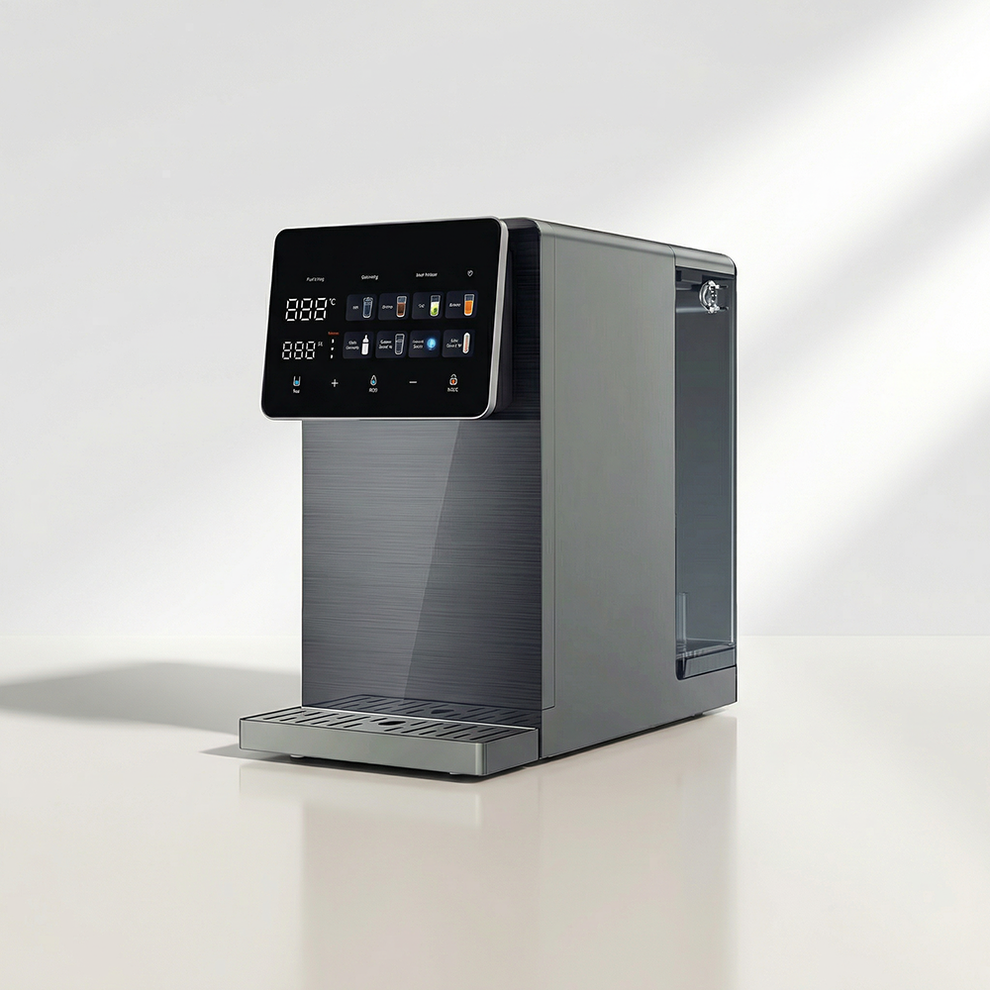
Puflow RO32 Countertop RO System Instant Hot and UV
Engineered for uncompromising purification, the RO32 transforms standard tap water into pristine, laboratory-grade hydration. Featuring a heavy-duty 0.0001μm membrane and an instant heating block, it delivers pure water precisely tailored from ambient to boiling temperatures in seconds.
- Filtration Precision: 0.0001μm RO Membrane with integrated UV sterilization.
- Heating Temperatures: 113°F–205°F (45°C–96°C) for perfect tea, coffee, and formula.
- Tank Capacity: Massive 7 Liter manual-fill reservoir limits refill frequency.
- Certifications: NSF, CE, RoHS, REACH compliant for absolute safety.
- Installation Type: 100% Countertop. Zero plumbing required.
Frequently Asked Questions
Are countertop reverse osmosis systems as good as under-sink ones?
Yes, in terms of water quality, they are functionally identical. Both systems utilize semi-permeable membranes with a 0.0001-micron rating to reject dissolved solids and heavy metals. The only difference is the form factor and the water delivery method (manual tank refill vs. direct plumbing line).
Do countertop RO filters remove healthy minerals?
Reverse osmosis is non-selective; it removes harmful toxins like lead and PFAS, but it also strips out trace minerals like calcium and magnesium. However, the human body acquires the vast majority of its essential minerals from food, not water. If you prefer mineralized water for taste, many premium countertop units include a remineralization stage to add healthy electrolytes back into the pure water before dispensing.
How often do I need to change the filters in a countertop RO system?
Maintenance schedules depend on your local water hardness and daily usage. Generally, the preliminary carbon/sediment block must be replaced every 6 months. The primary Reverse Osmosis membrane is highly durable and typically requires replacement every 12 to 24 months. Smart countertop systems feature digital displays that actively monitor filter life and alert you when a change is required.
Authoritative Industry References
To ensure uncompromising accuracy regarding water purification and contaminant rejection, our analysis references data and standards established by the following authorities:
- United States Environmental Protection Agency (EPA) - Federal guidelines on safe drinking water standards and the efficacy of reverse osmosis in mitigating PFAS and heavy metal contamination.
- NSF International - The leading independent global health organization defining the rigorous structural integrity and material safety standards (NSF/ANSI 58) for reverse osmosis systems.
- Centers for Disease Control and Prevention (CDC) - Scientific breakdowns of home water treatment technologies, confirming the microscopic barrier capabilities of RO membranes against pathogens and toxins.