


How Does a Reverse Osmosis Plant Work?
If you want reverse osmosis plant work explained without the fluff, here is the practical answer: water is first prepared, then pressurized, then forced through a semi-permeable membrane, and finally split into purified water and a reject stream. EPA describes reverse osmosis as a membrane separation process that physically removes contaminants by forcing water at high pressure through semi-permeable membranes, while USGS notes that reverse osmosis is a leading desalination method and that it uses applied pressure to let water permeate while rejecting salts. NSF also points out that RO systems commonly include extra filters around the membrane and that NSF/ANSI 58 is the key standard for point-of-use RO systems.

A reverse osmosis plant works by combining pretreatment, pressure, membrane separation, post-treatment, and maintenance controls into one system. The process is worth buying when you need to reduce dissolved contaminants, improve water quality, or produce consistent purified water. It is not worth overspending on if your only issue is taste or odor. For home buyers, the same logic applies to Under-Sink RO Systems, Countertop RO Systems, and higher-output High-Flow RO Systems. For renters or light-use buyers, a smaller setup may be smarter than a full install.
Direct answer: what happens inside a reverse osmosis plant
A reverse osmosis plant is not just “a filter.” It is a staged treatment train. First, the feed water is conditioned so the membrane does not clog too quickly. Then a high-pressure pump pushes the water across the membrane. The membrane lets water molecules pass more easily than dissolved salts and many other contaminants. What comes through is the permeate, or product water; what stays behind becomes the reject stream, sometimes called concentrate or brine. EPA and USGS both describe that pressure-driven membrane logic, and that is the core of reverse osmosis plant work.
From our experience, this is where buyers either save money or waste it. If the feed water is easy, a compact home system may be enough. If the feed water is difficult, such as brackish or high-TDS water, then the plant needs stronger pretreatment, tighter maintenance, and a more serious membrane strategy. That is why Puflow’s home lineup makes sense as a consumer entry point, while larger projects should be judged by capacity, recovery ratio, and serviceability rather than appearance alone.
Table of contents
Quick Summary Table
| Stage | What it does | Why it matters | Buying decision signal |
|---|---|---|---|
| Pretreatment | Removes sediment, chlorine, and other membrane-killers before the RO stage. NSF notes that most RO systems incorporate additional filters on either side of the membrane. | Protects the membrane from fouling and premature failure. | Never skip this stage unless the feed water is already very clean. |
| High-pressure pumping | Forces feed water through the membrane. | This is the engine of the plant. | If pressure is weak, performance will be weak. |
| Membrane separation | Creates permeate and rejects contaminants that do not pass through easily. | This is the actual purification step. | Membrane quality should be one of your top questions. |
| Post-treatment | Polishes taste, adds safety features, or improves usability. | Makes the water more practical for real-world use. | Useful when you care about final taste or hygiene. |
| Maintenance and monitoring | Tracks pressure, recovery, filter life, and membrane condition. | Keeps the plant efficient over time. | Good monitoring is not optional in serious systems. |
What a reverse osmosis plant is

A reverse osmosis plant is a water treatment system that uses pressure and a semi-permeable membrane to separate cleaner water from a feed stream. EPA groups RO with nanofiltration as membrane separation technologies that physically remove contaminants from water, and USGS describes RO as a leading desalination process for saline water. In plain English, the plant is built to let water through while holding back things you do not want in the finished water.
At home scale, the “plant” may be a countertop dispenser, an under-sink system, or a high-flow unit for a kitchen or office. At larger scale, the same logic is used in bigger treatment trains. The difference is not the principle; it is the scale, pressure, recovery design, and service burden. That is why buyers who understand reverse osmosis plant work make better purchasing decisions than buyers who only compare tank size and price.
If you are shopping for a home system, it helps to start with the right format first. A permanent kitchen setup usually points toward Under-Sink RO Systems. Renters often do better with Portable & Non-Electric options. Families that use a lot of drinking water should look at High-Flow RO Systems before they look at anything else.
How reverse osmosis plant work step by step
1. Pretreatment prepares the feed water
The feed water does not go straight into the membrane unless the water is already very clean. Pretreatment usually removes sediment, chlorine, and other contaminants that can damage the membrane or reduce performance. NSF says most RO systems include one or more extra filters around the membrane, which is exactly why pretreatment is not an optional add-on. It is part of the plant.
2. Pressure does the heavy lifting
Reverse osmosis is not passive. The plant needs pressure to push water through the semi-permeable membrane. EPA’s technology overview explains that RO and NF are pressure-driven membrane separation processes, while USGS notes that applied pressure causes water to permeate the membrane while salts are rejected. If the pressure is wrong, the system underperforms. That is why pump sizing matters.
3. The membrane splits product water from reject water
Once the feed is pressurized, the membrane separates the stream into cleaner product water and a reject stream. EPA WaterSense describes RO systems this way for point-of-use applications, and the same principle scales upward in larger plants. This split is the reason RO is so effective for dissolved contaminants, but it is also why the process creates waste water and requires careful recovery planning.
4. Post-treatment makes the water usable
After membrane separation, the water may be polished for taste, stored in a tank, disinfected, or adjusted for the final use case. In a home product such as Puflow’s C9 Pro Hydrogen-Rich RO Countertop Water Purifier, post-treatment features include UV sterilization, hot-water dispensing, and hydrogen function. That kind of design makes sense for kitchens, apartments, offices, and dorms where convenience matters as much as purity.
5. Monitoring and cleaning keep the plant alive
A plant that is not monitored will drift out of spec. In real operations, operators watch pressure, recovery, filter age, and membrane condition. When scaling or fouling gets too high, performance drops and cleaning or replacement becomes necessary. USGS notes that scale formation is a major issue in RO desalination, especially in saline systems, which is why water chemistry and maintenance planning matter before purchase, not after failure.
Benefits of a reverse osmosis plant
The biggest benefit is straightforward: RO gives you a practical way to reduce dissolved contaminants at the point where other filters stop being useful. EPA notes that RO physically removes contaminants through membrane separation, which is why it is commonly used where broader contaminant reduction is needed. USGS also identifies RO as one of the most widely used desalination technologies, especially where saline or brackish feed water is involved.
The second benefit is flexibility. A well-designed plant can be scaled from a compact countertop unit to a larger system with higher output and better storage. That is why Puflow can offer both Countertop RO Systems and larger kitchen-oriented formats. The process is the same; the packaging changes.
The third benefit is buyer confidence. If you know what reverse osmosis plant work actually involves, you can make better trade-offs between flow rate, water waste, filter replacement cost, and footprint. That is where product selection becomes much easier. If your concern is microplastics, our guide on Best Water Filter for Microplastics can help you compare whether you need a full RO setup or a simpler approach.
Limitations and trade-offs you should not ignore
RO is not magic. It needs pressure, pretreatment, and maintenance. It also produces a reject stream, which is the price of strong contaminant reduction. That means RO is not always the most efficient answer for every household or site. USGS points out that RO desalination is effective but can be more expensive than other methods in saline applications. In practical terms, that means you should buy RO for the right reason, not because it sounds premium.
The second limitation is fouling and scaling. If the source water is hard, dirty, or heavily loaded, the membrane will need more help from pretreatment and more attention over time. That is not a flaw in the technology; it is the reality of membrane systems. Buyers who ignore this end up blaming the plant for a problem that really started at the intake.
The third limitation is overbuying. For beginners, a full system may be more than necessary if the only goal is better taste at the sink. In that case, a simple point-of-use product or a compact countertop unit may be enough. If you need something portable or low-power for travel or temporary use, compare that against Portable & Non-Electric products and even our Best Portable Water Filters for Travel guide.
Comparison Table: reverse osmosis plant versus common alternatives
| Option | Best for | Strength | Not the right fit when |
|---|---|---|---|
| Reverse osmosis plant | Reducing dissolved contaminants, improving drinking water quality, handling brackish or difficult feed water. | Strong membrane-based purification with real product control. | You only need basic taste/odor polishing. |
| Carbon filter | Taste and odor improvement, simple polishing. | Low friction, simple maintenance. | Your main issue is dissolved salts or broader contaminant reduction. |
| UV-only purifier | Disinfection-focused use cases. | Useful when microbes are the main concern. | You need dissolved solids removed. |
| Atmospheric water generator | Water from air rather than from a feed line. | Useful where source water is unavailable. | You already have usable inlet water and just need purification. |
If the problem is not dissolved contaminants, do not force an RO purchase. If the problem is only storage, taste, or delivery format, look at the product form first. For example, a family kitchen may be better served by New Arrival reverse osmosis system for home models or a higher-output unit, while a compact office may benefit more from a countertop design than a hidden cabinet install.
Pros vs Cons Table
Pros
- Reduces dissolved contaminants through membrane separation.
- Scales from small home units to larger systems.
- Useful when feed water is difficult or inconsistent.
- Can improve confidence in water quality when certified and maintained properly.
- Works well when the buyer knows the real problem.
Cons
- Needs pressure, pretreatment, and maintenance.
- Creates a reject stream that must be managed.
- Can be more expensive than simpler options in some desalination cases.
- Performance drops if membranes foul or scale.
- Can be overkill if your only issue is taste or odor.
Buying Guide Table: what to check before you buy
| Buying factor | What good looks like | Why it matters | What buyers usually miss |
|---|---|---|---|
| Membrane and certification | System documentation that aligns with RO standards, especially NSF/ANSI 58 for point-of-use products. | Certifications help verify safety and contaminant reduction claims. | People often compare appearance instead of standards. |
| Flow rate | Enough output for the actual household or office use case. | A slow system becomes annoying and gets underused. | Buyers often underestimate daily demand. |
| Recovery and waste | Clear understanding of how much water becomes product and how much becomes reject. | This affects operating cost and convenience. | Few buyers ask the waste question before purchase. |
| Pretreatment and filters | Replaceable sediment and carbon filters, plus membrane protection. | Pretreatment extends service life. NSF notes most RO systems use additional filters around the membrane. | Membrane cost is often ignored until replacement time. |
| Form factor | Countertop, under-sink, or portable, based on your space and use pattern. | The best technology still fails if the format is wrong. | Renters often buy permanent systems they cannot install. |
| Service and replacement filters | Easy access to parts and filters, with a replacement schedule. | Maintenance determines real ownership cost. | People forget the second purchase after the first one. |
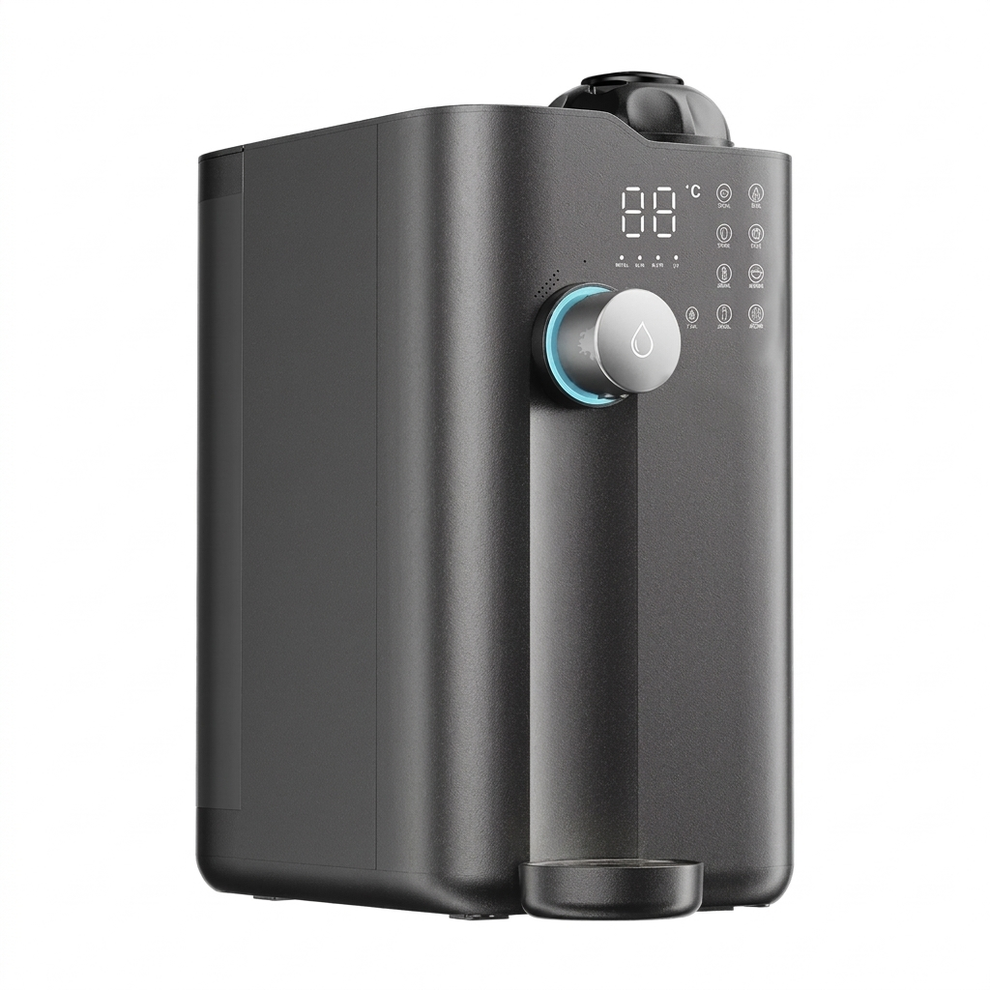
For home buyers, the most practical comparison is usually not “plant versus plant.” It is “which format fits my life?” If you want a premium countertop option, the Puflow C9 Pro Hydrogen-Rich RO Countertop Water Purifier is worth considering because it combines RO with UV sterilization, a 4.2L tank, 0.52L/min purified water flow, hot-water dispensing, and a cordless design. That makes it easier for apartments, kitchens, dorms, and offices where installation is limited. For buyers who want to browse broadly, start with All products reverse osmosis system for home and then narrow by use case.
Who should use it, and who does not need it
Use a reverse osmosis plant if your water has dissolved contaminants you actually want removed, if your source water is brackish or otherwise difficult, or if you need a consistent purified water supply for drinking and cooking. That is the right answer for many households, offices, and light-commercial settings.
Do not buy one just because it sounds advanced. If your main issue is taste, chlorine smell, or a simple polishing job, a carbon stage may be enough. If you are a traveler, a renter, or someone who needs flexibility, check Best Portable Water Filters for Travel first. If your challenge is water from the air, then Atmospheric Water Generator is the different category to evaluate.
For commercial users, the decision is usually about consistency and trust. For beginners, the decision is about not overbuying. For heavy-duty applications, the decision is about recovery, maintenance, and source-water chemistry. Those are not the same problem, and they should not lead to the same purchase.
Common mistakes buyers make
- Buying an RO system without checking source-water quality first.
- Ignoring pretreatment because the membrane is the “main part.”
- Choosing output based on marketing instead of daily usage.
- Forgetting that reject water is part of the process.
- Skipping certification checks such as NSF/ANSI 58 on point-of-use units.
- Assuming all home RO systems behave the same.
- Not planning filter replacements and membrane service.
From our experience, the most expensive mistake is buying too much system and too little maintainability. A slightly smaller system that gets used correctly is a far better purchase than a larger one that sits half-neglected under the sink.
Expert recommendation
We recommend choosing reverse osmosis only when the problem is actually dissolved contaminants, difficult source water, or a serious need for purified output. EPA and USGS make clear that RO is a pressure-driven membrane separation process with real desalination value, while NSF/ANSI 58 gives buyers a practical standard for point-of-use systems. That combination should guide the purchase, not brand hype.
For home buyers, start with the format. Countertop is best when installation is limited. Under-sink is best when you want a hidden permanent solution. High-flow is best for families. Portable and non-electric is best for renters and travel-minded users. Puflow’s product range maps well to those choices, and the C9 Pro is a sensible example of a feature-rich countertop unit when you want RO plus UV plus hot water in one device.
If your shopping is still broad, use the category pages first: Countertop RO Systems, Under-Sink RO Systems, High-Flow RO Systems, and Replacement Filters. That is the most practical way to move from understanding reverse osmosis plant work to making a purchase you will not regret.
Bottom Line
A reverse osmosis plant works because pressure pushes water through a semi-permeable membrane, separating cleaner permeate from a reject stream after pretreatment has protected the membrane. EPA, USGS, and NSF all describe the process in ways that point to the same buying lesson: RO is a strong solution when you need dissolved-contaminant reduction, but it is not the cheapest or simplest solution for every situation.
Buy it when the water problem is real. Skip it when the problem is only taste or convenience. And if you are buying for home use, choose the format that fits your space and usage pattern before you choose the brand.
FAQs
What does a reverse osmosis plant actually remove?
It removes a wide range of dissolved contaminants by forcing water through a semi-permeable membrane, while the contaminants are largely held back in the reject stream.
Is reverse osmosis good for home use?
Yes, when the goal is stronger purification than a basic carbon filter can provide. For home buyers, the right format may be under-sink, countertop, or high-flow.
Does every reverse osmosis system waste water?
Yes, in the sense that the process creates a reject stream. That is part of how the membrane protects product water quality.
What is NSF/ANSI 58?
It is the key standard for point-of-use reverse osmosis drinking water treatment systems.
What is the biggest mistake when buying an RO plant?
Buying by price or flow rate alone and ignoring pretreatment, maintenance, recovery, and certification.
Should I buy a countertop RO or under-sink RO?
Countertop is usually better for apartments, offices, and renters. Under-sink is better when you want a permanent installation with less visible equipment.
References