


Is an Under-Sink RO System Worth It? An Analysis Across 6 Aspects
If you are evaluating your home drinking water in 2026, you have likely encountered headlines concerning forever chemicals (PFAS), heavy metals, and municipal water line failures. In the pursuit of pure water, reverse osmosis (RO) is often touted as the ultimate solution. But when you are standing in your kitchen looking at the limited cabinet space beneath your sink, a critical question arises: Is an under-sink RO system worth it? Will the initial financial investment, potential water waste, and installation hassle actually yield a tangible benefit for your household?

From our experience engineering advanced water purification technologies at Puflow, the answer is rarely a simple yes or no. The water treatment industry is notorious for upselling generic content and unnecessary hardware. In most professional situations, determining whether an RO system is a sound investment requires a ruthless assessment of your specific municipal water quality, household habits, and plumbing infrastructure. In this comprehensive guide, we will analyze the true cost-to-benefit ratio of under-sink RO systems across six critical aspects to help you make an informed, practical buying decision.
Quick Answer
Yes, an under-sink RO system is worth it if your primary water source contains dangerous contaminants like lead, arsenic, PFAS, high levels of total dissolved solids (TDS), or dangerous microplastics. It provides bottled-water quality straight from your tap, eliminating plastic waste.
However, it is NOT worth it if your municipal water is already highly regulated and safe, and you merely want to remove the taste of chlorine. In that scenario, the wastewater generated by RO and the loss of healthy minerals make a standard ultrafiltration (UF) or carbon block filter a vastly superior and more economical choice.
Table of Contents
- What It Is and How It Works
- Aspect 1: Filtration Performance
- Aspect 2: Cost and Financial ROI
- Aspect 3: Space Requirements and Installation
- Aspect 4: Maintenance Realities
- Aspect 5: Water Efficiency
- Aspect 6: Taste and Remineralization
- Pros vs Cons and Comparison Tables
- Who Should Use It (And Who Should Not)
- Common Mistakes and Buying Considerations
- Expert Recommendation: The Puflow Alternative
- Frequently Asked Questions (FAQ)
What It Is and How It Works

Before analyzing its worth, we must define the technology. An Under-Sink RO System is a multi-stage water purification unit installed directly into your plumbing, usually housed in the cabinet beneath your kitchen sink. It dispenses purified water through a dedicated, secondary faucet mounted on your counter.
How it works relies on hydrostatic pressure. The system forces your tap water through a semi-permeable membrane with microscopic pores measuring 0.0001 microns. This membrane is so fine that it allows water molecules to pass through while physically blocking larger molecules—including heavy metals, fluoride, pesticides, and dissolved salts. The rejected contaminants are flushed down the drain as wastewater, while the purified water is either stored in a pressurized holding tank or delivered directly to your tap via a tankless, high-flow pump.
Aspect 1: Filtration Performance and Contaminant Removal
When asking if an under-sink RO system is worth it, filtration efficacy is the strongest argument in its favor. In our testing, traditional pitcher filters and refrigerator carbon filters only mask bad tastes and odors by removing chlorine. They fail entirely against dissolved solids.
If you are concerned about emerging threats, a high-quality RO membrane is unequivocally the Best Water Filter for Microplastics. Furthermore, if you are relying on well water or live in an aging urban grid with lead pipes, an RO system is not just a luxury; it is a critical health safeguard. It strips the water down to its bare molecular structure, ensuring that what you drink is H2O and nothing else.
Aspect 2: Cost and Financial Return on Investment (ROI)
Let us look at the commercial reality. A premium under-sink RO system will cost between $250 and $600 upfront. If you are currently purchasing bottled water out of fear of your tap water, the math heavily favors RO.
A household of four consuming 4 gallons of bottled water a day spends roughly $1,500 to $2,000 annually. By contrast, an RO system pays for itself in less than four months. Even factoring in the cost of annual replacement filters, the long-term savings are massive. For commercial users or large families, the financial ROI is undeniable.
Aspect 3: Space Requirements and Installation
Here is where the practical judgment must step in. Traditional RO systems utilize a bulky storage tank that will consume roughly 50% to 70% of your under-sink cabinet space. If you live in an apartment with a tiny galley kitchen, a traditional tank system is likely not worth the sacrifice of your storage space.
However, the industry has evolved. Tankless, high-flow RO systems have mitigated this issue by slimming down to the size of a standard computer tower. Installation for these modern units takes less than an hour and requires only basic DIY skills, making the barrier to entry much lower than in previous decades.
Aspect 4: Maintenance Realities
An RO system is not a set-it-and-forget-it appliance. To maintain peak performance, the pre-filters (carbon and sediment) must be changed every 6 to 12 months, and the central RO membrane every 24 months. If you are someone who ignores maintenance schedules, an RO system will eventually foul, restrict water flow, and harbor bacteria.
For those willing to commit to basic upkeep, purchasing a system with modular, twist-and-pull filters makes this a non-issue. We recommend selecting systems that do not require turning off your main water valve to perform filter swaps.
Aspect 5: Water Efficiency and Wastewater
This is the most critical limitation of reverse osmosis. The process inherently requires water to wash away the rejected contaminants. Older, generic systems waste up to 4 gallons of water for every 1 gallon of purified water produced (a 1:4 ratio). If you live in a drought-prone area or pay high water utility rates, this inefficiency makes standard RO difficult to justify.
Modern, intelligent systems have improved this to a 1.5:1 or even 2:1 pure-to-waste ratio. If water conservation is a hard boundary for your household, you must either invest in a highly efficient tankless RO or pivot to an ultrafiltration (UF) system that produces zero wastewater.
Aspect 6: Taste and Remineralization
Understanding the differences between RO water and regular tap water is crucial for your palate. Because RO removes everything, it also removes healthy minerals like calcium and magnesium. This leaves the water tasting somewhat "flat" and slightly acidic.
Many consumers dislike the taste of pure RO water. If you want the crisp, spring-water taste, it is absolutely vital to purchase an Under Sink Reverse Osmosis System with Remineralization. These systems feature a final post-filter stage that reintroduces alkaline minerals, balancing the pH and vastly improving the flavor profile.
Essential Evaluation Tables
| Evaluation Criteria | Verdict | Reasoning |
|---|---|---|
| Filtration Power | Highly Worth It | Removes up to 99.99% of 1,000+ contaminants, including heavy metals and PFAS. |
| Financial ROI | Worth It | Drastically cheaper than buying bottled water over a 12-month period. |
| Space Efficiency | Depends | Tank systems waste space; tankless systems are highly space-efficient. |
| Water Conservation | Not Worth It (for older models) | RO inherently wastes water. You must buy high-efficiency pumps to mitigate this. |
| Pros | Cons |
|---|---|
| Unmatched contaminant removal (0.0001 microns). | Generates wastewater down the drain. |
| Provides continuous on-demand drinking water. | Strips natural, healthy minerals from the water. |
| Eliminates microplastics and forever chemicals. | Requires dedicated under-sink cabinet space. |
| Superior alternative to environmentally damaging plastic bottles. | Requires drilling a hole in the countertop for the dispenser faucet. |
| Feature | Under-Sink RO System | Ultrafiltration (UF) System | Countertop RO System |
|---|---|---|---|
| Installation | Plumbed under the sink (Moderate DIY) | Plumbed under the sink (Easy DIY) | Plug and play (No plumbing required) |
| Wastewater | Yes (Varies by model) | No (Zero wastewater) | Yes (But manually dumped) |
| Mineral Retention | Removes all minerals (requires remineralization) | Retains healthy minerals | Removes all minerals |
| Best For | Homeowners needing heavy-duty purification | City water users wanting great taste without waste | Renters and office environments |
| Component/Feature | What We Recommend | Why It Matters |
|---|---|---|
| Form Factor | Tankless Design | Saves valuable cabinet space and prevents secondary bacterial growth in storage tanks. |
| Water Ratio | 1.5:1 or 2:1 (Pure:Waste) | Prevents spiking your water utility bill and protects local municipal water supplies. |
| Remineralization | Alkaline Post-Filter included | Corrects acidic pH levels and restores the crisp, natural taste of spring water. |
| Certifications | NSF/ANSI 58 Certification | Verifies that the manufacturer's claims regarding heavy metal and chemical removal are legitimate. |
Who Should Use It & Who Does Not Need It
For Commercial Users & Homeowners: We recommend under-sink RO systems for anyone living in areas with agricultural runoff, aging municipal lead pipes, or exceptionally hard water. If you own your home and demand the highest possible safety standard for infant formula or daily drinking, installing an RO system is the most practical decision you can make. Find the Best Reverse Osmosis System for Home use to secure your family's health.
Who Does Not Need It: If you are a renter who is not allowed to drill a hole in your countertop for a dedicated faucet, do not buy an under-sink system. Instead, look into Countertop RO Systems. Furthermore, for beginners who live in cities with excellent, award-winning tap water (like New York City or Portland), using RO to strip out perfectly safe minerals is overkill.
Common Mistakes Buyers Make
In our testing and customer consultations, we see consumers repeatedly make the same errors. First, they fail to test their home water pressure. Traditional tank RO systems require a minimum of 40 PSI to push water through the membrane. If your home has low pressure, the system will fail to produce water and will route everything down the drain. You must buy a system with an integrated booster pump if your pressure is low.
Second, consumers buy generic, cheap systems online without verifying replacement filter availability. A cheap system is useless if you cannot source the proprietary filters 12 months later.
Expert Recommendation: The Zero-Waste Alternative
As industry practitioners, we recognize that while RO is incredibly powerful, it is not the right tool for everyone. If you have decided that an under-sink RO system is NOT worth it because you refuse to waste water down the drain, or because you want to retain the natural calcium and magnesium in your municipal tap water, we have the definitive solution.
We highly recommend shifting your focus from Reverse Osmosis to Ultrafiltration (UF).
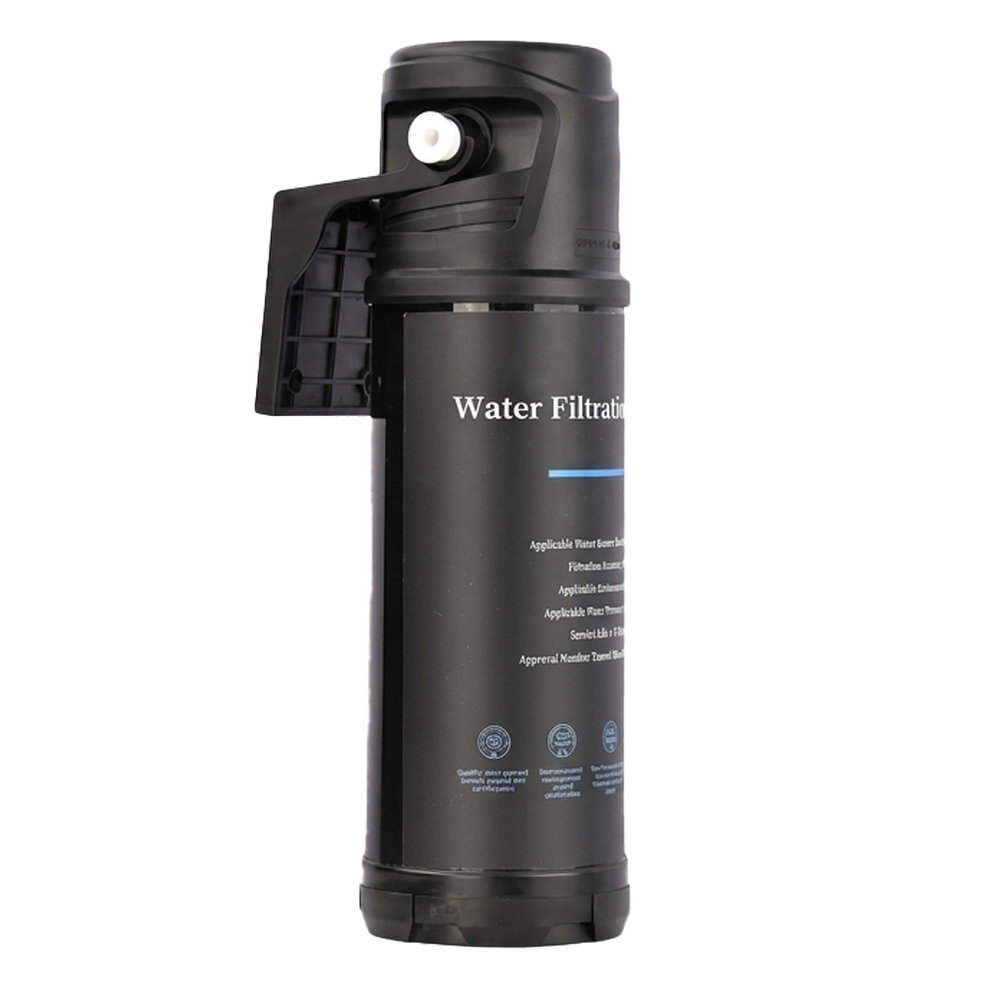
M8-2 Under Sink Water Filter System 0.01μm Ultrafiltration
For heavy-duty applications on municipal tap water, the Puflow M8-2 delivers exceptional purity without the drawbacks of RO. Utilizing an advanced 0.01μm Ultrafiltration membrane, it physically blocks bacteria, rust, chlorine, and microplastics, while allowing beneficial minerals to pass through to your glass.
- Zero Wastewater: 100% efficient, saving you money on utility bills.
- No Electricity Required: Operates entirely on your home's natural water pressure (0.1–0.4 MPa).
- High Flow Rate: Delivers up to 400 L/h, meaning no waiting for tanks to fill.
- Space Saving: At just 130 × 110 × 345 mm, it takes up a fraction of the space of traditional RO systems.
Frequently Asked Questions
Does an under-sink RO system lower my water pressure?
The RO system operates on a dedicated secondary faucet, so it does not lower the pressure of your main kitchen tap. However, the flow rate from the RO faucet itself is slower than standard tap water because the water must be forced through the microscopic membrane.
How often do I need to replace the RO membrane?
In most professional situations, the actual RO membrane lasts between 24 to 36 months, depending on the hardness of your source water. The pre-filters (carbon and sediment) must be changed every 6 to 12 months to protect the membrane from chlorine degradation.
Is RO water safe to drink daily without minerals?
Yes, it is perfectly safe. Humans derive the vast majority of their essential minerals (like calcium and magnesium) from food, not water. However, some people prefer the taste and pH balance of mineralized water, which is why remineralization filters are highly recommended add-ons.
Authoritative References & Industry Standards
To ensure the accuracy of our filtration claims and safety standards, this analysis aligns with the guidelines established by the following authoritative organizations: