


Is Reverse Osmosis Water Hard on Kidneys? The Scientific Truth Behind the Myth
The wellness industry is flooded with misinformation, and one of the most persistent rumors circulating today is that highly purified water is dangerous to your health. If you are researching residential filtration, you have undoubtedly encountered a blog post or social media influencer claiming that reverse osmosis water leaches minerals from your body and damages your renal system. As industry practitioners who design, test, and manufacture advanced filtration systems at puflow, we are uniquely positioned to address this anxiety with empirical science rather than pseudo-scientific scare tactics.

Let us clear the air immediately. We hear this question daily: is reverse osmosis water hard on kidneys? In most professional situations, the answer is an unequivocal no. In fact, by removing industrial heavy metals, microplastics, and trace pharmaceuticals from your daily hydration source, reverse osmosis is one of the most effective ways to protect your kidneys from chronic toxicity. The fear stems from a fundamental misunderstanding of human biology and how the body actually acquires necessary minerals. In this comprehensive guide, we will dismantle the myths, explain the exact biological impact of purified water, and provide actionable advice to help you make an informed decision for your home.
Quick Answer: Is Reverse Osmosis Water Hard on Kidneys?
No, reverse osmosis water is not hard on the kidneys. It is actually highly beneficial for renal health. The kidneys function as the body's primary filtration system. By drinking RO water, you drastically reduce the intake of heavy metals (like lead and arsenic), microplastics, and harsh chemicals that force the kidneys to work overtime. While RO water is stripped of minerals like calcium and magnesium, the human body absorbs 95% of these essential minerals from food, not water. If the flat taste of pure RO water bothers you, simply upgrading to a system with an alkaline remineralization stage resolves the issue completely.
Table of Contents
- What It Is: The Reverse Osmosis Process
- How It Works: Precision Filtration
- The Myth: Why Do People Think RO Water is Hard on Kidneys?
- Benefits of RO Water for Renal Health
- Limitations of Pure RO Water
- Who Should Use It & Who Does Not Need It
- Common Mistakes Consumers Make
- Crucial Buying Considerations
- Expert Recommendation & Product Spotlight
- Frequently Asked Questions
What It Is: The Reverse Osmosis Process
Reverse osmosis (RO) is the gold standard of water purification. Originally developed to desalinate seawater, this technology has been scaled down for residential and commercial use. An RO system forces tap water through a series of pre-filters and a semi-permeable membrane. This membrane is incredibly fine—down to 0.0001 microns—which is smaller than a strand of human hair by a factor of hundreds. This microscopic barrier effectively blocks dissolved solids, chemicals, heavy metals, viruses, and bacteria.
When comparing RO Water vs Tap Water, the distinction is profound. Tap water contains varying levels of Total Dissolved Solids (TDS), ranging from harmless calcium to dangerous industrial runoff. Reverse osmosis strips the water down to its pure $H_2O$ baseline.
How It Works: Precision Filtration
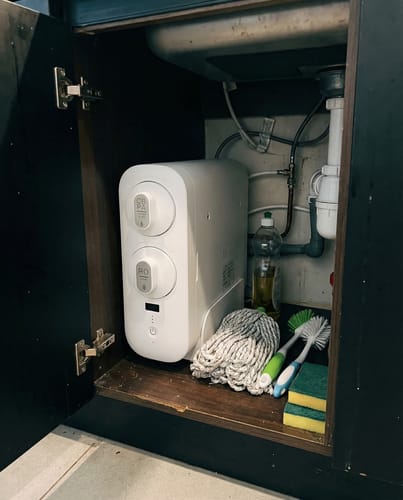
To understand why RO water interacts with your body the way it does, you must understand how the system works. In our testing and engineering of Under-Sink RO Systems, the process follows a strict multi-stage protocol:
- Sediment Filtration: Removes large physical particulates like rust, dirt, and pipe scale.
- Carbon Filtration: Neutralizes chlorine, chloramines, and volatile organic compounds (VOCs) that damage the delicate RO membrane.
- Reverse Osmosis Membrane: Hydrostatic pressure pushes water through the 0.0001-micron pores. Contaminants are flushed down the drain, leaving ultra-pure water.
- Post-Filtration / Remineralization: A final polish to enhance taste and, if equipped, add healthy minerals back into the water.
Because the membrane is so exact, it cannot differentiate between "good" minerals (calcium) and "bad" heavy metals (lead). It removes everything. This blank slate is what causes the confusion surrounding whether reverse osmosis water hard on kidneys.
The Myth: Why Do People Think RO Water is Hard on Kidneys?
The human kidneys are remarkable organs. They filter approximately 150 quarts of blood daily, balancing electrolytes, regulating fluid levels, and flushing out toxins through urine. The persistent myth claims that because RO water is "demineralized" or "dead water," it acts like a sponge, aggressively leaching essential minerals from your organs and bones, ultimately overworking and damaging your kidneys.
From a commercial and scientific standpoint, this is fundamentally incorrect. The World Health Organization (WHO) and leading nephrologists agree that the human body absorbs the vast majority of its essential minerals from diet, not drinking water. You would have to drink bathtubs full of tap water to equal the calcium found in a single glass of milk or a bowl of spinach. Water is a transport mechanism for the body, not its primary nutritional source.
Furthermore, the kidneys regulate homeostasis perfectly. If you drink pure, demineralized water, your kidneys easily process it, maintaining your blood's pH and electrolyte balance without any undue stress. The idea that pure water "attacks" the kidneys is a fundamental misunderstanding of osmotic pressure in the human body.
Benefits of RO Water for Renal Health
Rather than asking if reverse osmosis water hard on kidneys, we should be asking how much it protects them. Drinking RO water offers tremendous renal benefits:
- Elimination of Heavy Metals: Kidneys are highly susceptible to heavy metal toxicity. Lead, cadmium, and arsenic found in municipal pipes cause severe renal tubular damage. RO membranes reject up to 99% of these heavy metals.
- Removal of Endocrine Disruptors: PFAS (forever chemicals) and microplastics are increasingly found in municipal supplies. Using the Best Water Filter for Microplastics ensures these synthetic toxins never reach your kidneys.
- Optimized Hydration: Pure water is easier for the body to process. Without the burden of filtering out excess industrial contaminants, your kidneys operate with significantly less metabolic stress.
Limitations of Pure RO Water
While safe, pure RO water is not without practical limitations. Because the minerals have been removed, the water has a distinctly "flat" taste that some users dislike. Additionally, pure water absorbs carbon dioxide from the air rapidly, making it slightly acidic (around a pH of 6.0 to 6.5). While your body instantly neutralizes this slight acidity upon consumption, the acidic nature of pure RO water can be corrosive to metal plumbing fixtures if stored in copper or brass tanks.
| Feature | Reverse Osmosis Water | Standard Tap Water |
|---|---|---|
| Toxin Load on Kidneys | Near Zero (99% removal rate) | Variable (Depends on local pipe infrastructure) |
| Mineral Content | Low to None (Unless Remineralized) | Moderate (Calcium, Magnesium, Trace elements) |
| Microplastic Presence | Completely Removed | Highly Likely |
| Overall Kidney Safety | Extremely Safe | Potentially Risky over long term |
Who Should Use It & Who Does Not Need It
For commercial users and homeowners: If you live in an area with aging infrastructure, agricultural runoff, or industrial chemical presence, an NSF Certified Reverse Osmosis System is non-negotiable. It is the ultimate defense for your family's health.
Who does not need it: If you live in a municipality with pristine, heavily monitored natural spring water and pristine residential piping, a simple carbon block filter might suffice. However, in 2026, very few locations globally can guarantee microplastic-free tap water, making RO technology universally beneficial.
Common Mistakes Consumers Make
In most professional situations, we see users making the same critical errors. First, they fail to change their Replacement Filters on time. A degraded carbon pre-filter allows chlorine to hit the RO membrane, destroying it within weeks. Second, they worry endlessly about mineral loss in water while eating highly processed diets. If you are concerned about minerals, fix your diet first, then consider an Under Sink Reverse Osmosis System with Remineralization.
Buying Considerations
When selecting the Best Reverse Osmosis System for Home, prioritize these specifications:
- GPD (Gallons Per Day): Traditional systems produce 50 GPD and require a bulky storage tank. Modern tankless systems produce 400 to 600 GPD, offering direct flow without the risk of secondary tank contamination.
- Wastewater Ratio: Legacy systems waste 4 gallons for every 1 gallon purified (4:1). We recommend modern systems that achieve a 1.5:1 or even 1:1 ratio to conserve water.
- Remineralization Stages: If the "flat" taste or the myth of reverse osmosis water hard on kidneys worries you, ensure the system includes a post-filter that adds calcium and magnesium back into the purified water, balancing the pH.
| Pros (Benefits) | Cons (Limitations) |
|---|---|
| Protects kidneys by removing lead, arsenic, and PFAS. | Removes natural calcium and magnesium. |
| Eliminates microplastics and pharmaceutical runoff. | Generates wastewater during the purification process. |
| Provides a blank slate for perfect remineralization. | Produces slightly acidic water (if no alkaline filter is used). |
| Tastes incredibly clean and prevents scale buildup in appliances. | Requires routine filter maintenance. |
| System Type | Best Use Case | Kidney Health Impact |
|---|---|---|
| Under-Sink Tankless RO | Families wanting high-flow, on-demand pure water. | Excellent. Removes all toxins instantly. |
| RO with Remineralization | Users anxious about mineral intake and acidic pH. | Superior. Removes toxins and restores healthy electrolytes. |
| Atmospheric Water Generator | Off-grid living or areas with toxic tap water. | Excellent. Pulls pure moisture from the air. (Learn more) |
Expert Recommendation
We emphatically recommend upgrading to a tankless, direct-flow reverse osmosis system. The fear that reverse osmosis water hard on kidneys is a scientifically debunked myth. In reality, modern plumbing infrastructure simply cannot be trusted to deliver toxin-free water. To protect your renal system, you must control your water quality at the point of use.
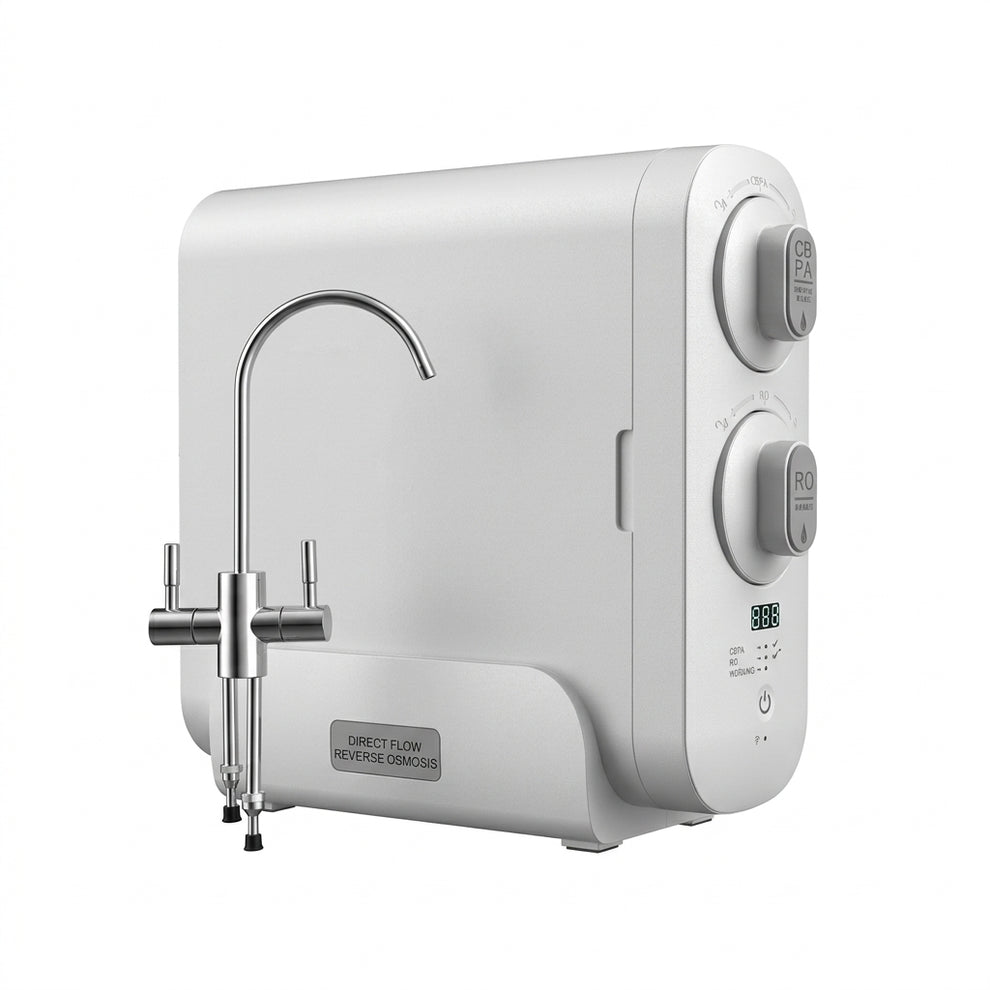
puflow Under Sink RO System 600 GPD Direct Flow TDS Display
From our experience, the most critical aspect of an RO system is its recovery rate and flow speed. The puflow 600 GPD system represents the pinnacle of modern residential filtration. It operates entirely without a storage tank, ensuring your water is never sitting stagnant. The built-in TDS display allows you to monitor your water's purity in real-time, giving you absolute peace of mind.
- Purification Capacity: 600 GPD with a robust 1.5–1.6 L/min flow rate.
- Filtration Precision: 0.0001μm membrane blocks heavy metals, PFAS, and microplastics.
- Efficiency: Boasts a 60% recovery rate with an incredibly low 1.5:1 wastewater ratio.
- Salt Rejection Rate: 95%, ensuring near-total purity.
- Smart Design: Compact dimensions (17.1 × 6.3 × 15.7 in) fit easily under modern sinks.
If you want to safeguard your family's health and reject the outdated myths surrounding water filtration, this is the heavy-duty application system we absolutely stand behind.
Frequently Asked Questions
Does reverse osmosis water cause kidney stones?
No. In fact, drinking high volumes of pure, contaminant-free water is one of the primary recommendations for preventing kidney stones. RO water helps dilute urine and flush the kidneys efficiently without adding excess inorganic calcium scale found in hard tap water.
Do I need to add salt or minerals back into my RO water?
Biologically, you do not need to add minerals back into RO water as long as you eat a balanced diet. However, many users prefer to use an alkaline remineralization filter simply to improve the taste and raise the pH level of the water to a more neutral state.
Is it safe to drink reverse osmosis water every day?
Yes. Millions of people, including naval personnel and residents of municipalities that desalinate seawater, drink reverse osmosis water daily. It is entirely safe and significantly healthier than drinking tap water contaminated with lead, chlorine byproducts, and industrial chemicals.
Authoritative References
To further understand the science of hydration, renal function, and water safety, we recommend reviewing the following authoritative sources:
- World Health Organization (WHO) - Reports and guidelines on the health risks and considerations regarding the consumption of demineralized drinking water.
- U.S. Environmental Protection Agency (EPA) - Comprehensive data on ground water, drinking water standards, and the health impacts of municipal contaminants like lead and PFAS.
- National Kidney Foundation - Medical insights into how hydration affects kidney function, toxin flushing, and the prevention of renal disease.