


Is RO Water Banned in Europe? The Truth About Reverse Osmosis Regulations
The internet is rife with misinformation regarding water purification, and few topics generate as much confusion and panic as the legality of reverse osmosis in the European Union. A persistent rumor continues to circulate across wellness blogs and home improvement forums claiming that European health authorities have outlawed reverse osmosis technology entirely. For homeowners seeking protection against emerging contaminants like PFAS, or facility managers upgrading their infrastructure, this myth creates severe hesitation.

From our experience engineering advanced filtration systems at Puflow, we must address this search intent directly and factually. The European Union holds some of the strictest drinking water standards on the planet. They do not operate on rumors; they operate on rigorous biochemical analysis. If you are asking, "Is RO water banned in Europe?", you are asking the wrong question. The correct inquiry is: How does Europe regulate the output of RO water, and why is standard, un-remineralized RO water discouraged by health authorities? In this definitive guide, we will dismantle the myths, explain the exact regulatory stance of the EU and the World Health Organization, and provide commercial and practical judgment on how to properly implement this technology in your home or business.
Quick Answer: Is RO Water Banned in Europe?
No, Reverse Osmosis (RO) water is not banned in Europe. It is perfectly legal to buy, sell, and install RO systems across the EU. However, the rumor stems from a very real regulatory framework: the World Health Organization (WHO) and European municipal water directives strongly advise against the long-term consumption of completely demineralized water. Pure RO water is highly aggressive and acidic; it leaches minerals from the body and destroys copper plumbing. Therefore, while the technology is not banned, European regulations demand that RO water used in municipal or commercial distribution be remineralized (adding calcium and magnesium back in) before it reaches the tap. For residential consumers, purchasing an Under Sink Reverse Osmosis System with Remineralization is the only professionally recommended path.
Table of Contents
- The Origin of the Ban Myth
- What is Reverse Osmosis Water?
- How European Regulations Treat RO Water
- Quick Summary Table: Myths vs. Reality
- The Unmatched Benefits of RO Filtration
- Limitations of Unremineralized RO Water
- Pros and Cons Table: Standard vs Remineralized RO
- Who Should Use It & Who Does Not Need It
- Comparison Table: European Tap vs RO Water
- Common Mistakes Buyers Make
- Strict Buying Considerations
- Expert Recommendation from Puflow
- Frequently Asked Questions (FAQ)
The Origin of the Ban Myth: WHO and EU Directives
To understand why people ask "Is RO water banned in Europe", we have to look at the World Health Organization's landmark studies on demineralized water. Pure reverse osmosis strips up to 99.9% of all total dissolved solids (TDS) from water. This includes toxins like lead and arsenic, but it also strips essential electrolytes like calcium and magnesium.
The WHO issued guidelines explicitly stating that long-term consumption of completely demineralized water poses health risks, including a negative impact on the body's water and mineral homeostasis, and potential leaching of calcium from bones. Consequently, the European Union's Drinking Water Directive mandates that tap water provided by municipal authorities must contain minimum levels of minerals. Because centralized water treatment plants often use commercial RO to desalinate seawater or purify highly contaminated aquifers, they are legally required to pass the purified water through limestone beds to remineralize it before it hits the city pipes. The ban applies to municipal distribution of dead water, not the ownership of residential filters.
What is Reverse Osmosis Water?
Reverse osmosis is a pressure-driven membrane separation process. In most professional situations, it is the ultimate barrier against contamination. Normal osmosis involves water flowing from an area of low solute concentration to high concentration. By applying high pressure to the water supply, the system forces water backward through a semi-permeable membrane with microscopic pores (measuring roughly 0.0001 microns).
These pores are so unimaginably small that only H2O molecules can pass through. Heavy metals, pharmaceuticals, viruses, and dissolved salts are rejected and flushed down the drain as wastewater. If you want to understand the exact biochemical difference between the output of this membrane and what comes out of your municipal faucet, we highly recommend reading our detailed breakdown of RO Water vs Tap Water.
How European Regulations Treat RO Water
Beyond human health, European plumbing infrastructure heavily dictates RO usage. Pure RO water is biochemically "aggressive." Because it is stripped of its natural solute load, it acts as a hungry solvent. If you run pure RO water through the aging copper pipes prevalent in historic European cities, the water will aggressively dissolve the copper and lead into the drinking supply, causing catastrophic heavy metal poisoning.
This is why European plumbing codes are so strict regarding water acidity. To mitigate this, European installations rely heavily on remineralization filters. These alkaline stages reintroduce controlled amounts of calcium carbonate, neutralizing the pH and rendering the water non-corrosive. If you are operating a restaurant or a clinic in the EU, you cannot use standard RO water directly through copper lines; you must use High-Flow RO Systems equipped with post-filtration alkaline stabilization.
| The Public Myth | The Regulatory Reality |
|---|---|
| Reverse Osmosis is illegal to sell in the EU. | Totally legal. It is the preferred method for removing microplastics and PFAS. |
| The EU banned RO because it is toxic. | The EU regulates municipal water to ensure minimum mineral content, preventing municipal distribution of "dead" water. |
| RO water destroys your teeth and bones. | Only if consumed exclusively over decades without dietary mineral intake or remineralization filters. |
| RO wastewater is illegal to discharge. | Legal, though certain drought-stricken municipalities urge high-efficiency 1:1 or 2:1 waste ratio systems. |
The Unmatched Benefits of RO Filtration
Despite the regulatory nuances surrounding remineralization, the necessity for reverse osmosis in modern society is absolute. The agricultural runoff and industrial pollution affecting European groundwater have created a contamination profile that simple carbon pitchers cannot handle.
In our testing, RO is the only reliable, residential-scale technology capable of eradicating forever chemicals (PFAS), endocrine disruptors, and microscopic plastic polymers. If you are deeply concerned about the plastic crisis in our oceans bleeding into your drinking supply, an RO membrane is your primary defense. We have documented this extensively in our guide to the Best Water Filter for Microplastics. Furthermore, it completely removes the harsh chlorine and chloramine tastes used by municipal treatment plants, yielding a pure, crisp culinary baseline.
Limitations of Unremineralized RO Water
We exercise strict commercial and practical judgment: do not install a cheap, entry-level RO system that lacks a remineralization stage. The limitations of pure RO water are significant. First, the water is mildly acidic (often sitting at a pH of 5.5 to 6.5). Second, it produces a flat, dull taste that many consumers find unpalatable. Third, traditional RO systems are notoriously inefficient, often wasting up to 4 gallons of water for every 1 gallon purified. For commercial users operating in European countries with high water tariffs, an inefficient membrane will result in staggering utility bills.
| System Type | Pros | Cons |
|---|---|---|
| Standard RO (No Alkaline Stage) | Cheaper initial cost; zero TDS for laboratory or hydroponic use. | Acidic pH; flat taste; leaches minerals from body; corrosive to metal pipes. |
| Remineralized RO (Alkaline Stage) | Perfect 7.0-8.0 pH; delicious crisp taste; compliant with EU health advice; adds healthy magnesium/calcium. | Slightly higher filter replacement costs; requires multi-stage housing. |
Who Should Use It & Who Does Not Need It
For commercial users and heavy-duty applications: If you operate a café, a dental clinic, or a boutique hotel anywhere in Europe, you absolutely must use a high-efficiency RO system. The hard water (limescale) prevalent across regions like the UK, Germany, and Spain will destroy espresso machines and commercial boilers within months. RO water, properly balanced, protects your capital equipment.
For beginners and residential families: If your tap water has tested positive for lead, high nitrates, or PFAS, we recommend an Under-Sink RO System immediately. The health risks of heavy metals far outweigh the nuances of mineral loss, especially when an alkaline filter solves the latter completely.
Who does not need it: If you live in a remote, pristine alpine region where municipal water is drawn directly from protected, untainted glacial aquifers, and your home features modern PEX plumbing rather than lead, a full RO system is overkill. A high-quality carbon block filter is sufficient for taste and odor removal.
| Water Profile | Contaminant Risk | Mineral Content | pH Level | Safety for Long-Term Consumption |
|---|---|---|---|---|
| Standard EU Tap Water | Varies (Microplastics, old pipe lead, agricultural nitrates) | High (Hard water, high calcium/magnesium) | 7.0 - 8.5 | Generally safe, but vulnerable to localized infrastructure failures. |
| Standard Pure RO Water | Zero (99.9% removed) | Zero (Demineralized) | Acidic (5.5 - 6.5) | Not recommended per WHO guidelines due to mineral leaching. |
| Remineralized RO Water | Zero (99.9% removed) | Optimized (Calcium/Magnesium added back) | Alkaline (7.5 - 8.5) | The ultimate standard for health, safety, and taste. |
Common Mistakes When Buying an RO System
The most catastrophic mistake European consumers make is buying non-certified, cheap import systems from generalized online marketplaces. These systems often utilize low-grade membranes that rupture under European municipal water pressure, flooding kitchens. Furthermore, users frequently forget to change their Replacement Filters. An expired carbon pre-filter allows chlorine to reach the RO membrane. Chlorine permanently destroys the polyamide membrane within weeks, rendering the entire system useless and allowing raw tap water to flow through to your glass.
Buying Considerations for European Compliance
If you are upgrading your home hydration, you must deploy strict procurement standards. Do not buy blindly. You must evaluate the system based on its wastewater ratio. Older systems waste 4 liters for every 1 liter produced. Modern pump-driven systems achieve a 2:1 or even 1:1 ratio. Secondly, verify the system includes a dedicated remineralization stage to comply with best health practices. Lastly, if you are a renter in a European apartment with strict plumbing alteration rules, you cannot drill into the sink. You must opt for a Portable & Non-Electric countertop unit that requires no installation.
| Feature | Why It Is Critical |
|---|---|
| Built-in Remineralization | Aligns with WHO and EU health guidelines, preventing the consumption of aggressive, dead water. |
| Low Wastewater Ratio (Pump Assisted) | European water utilities are expensive. A pump-driven system forces water through the membrane faster, reducing waste to a 2:1 or 1:1 ratio. |
| NSF Certification | Independently verifies that the system actually removes the heavy metals and PFAS it claims to remove. |
| Tankless or Countertop Design | Prevents the bacteria buildup associated with stagnant pressure tanks in older, traditional RO systems. |
Expert Recommendation from Puflow
In most professional situations, we refuse to compromise on water quality. If you want the absolute purity of Reverse Osmosis without violating the biochemical wisdom behind European health directives, you must invest in a system that purifies, remineralizes, and offers total control over your hydration.
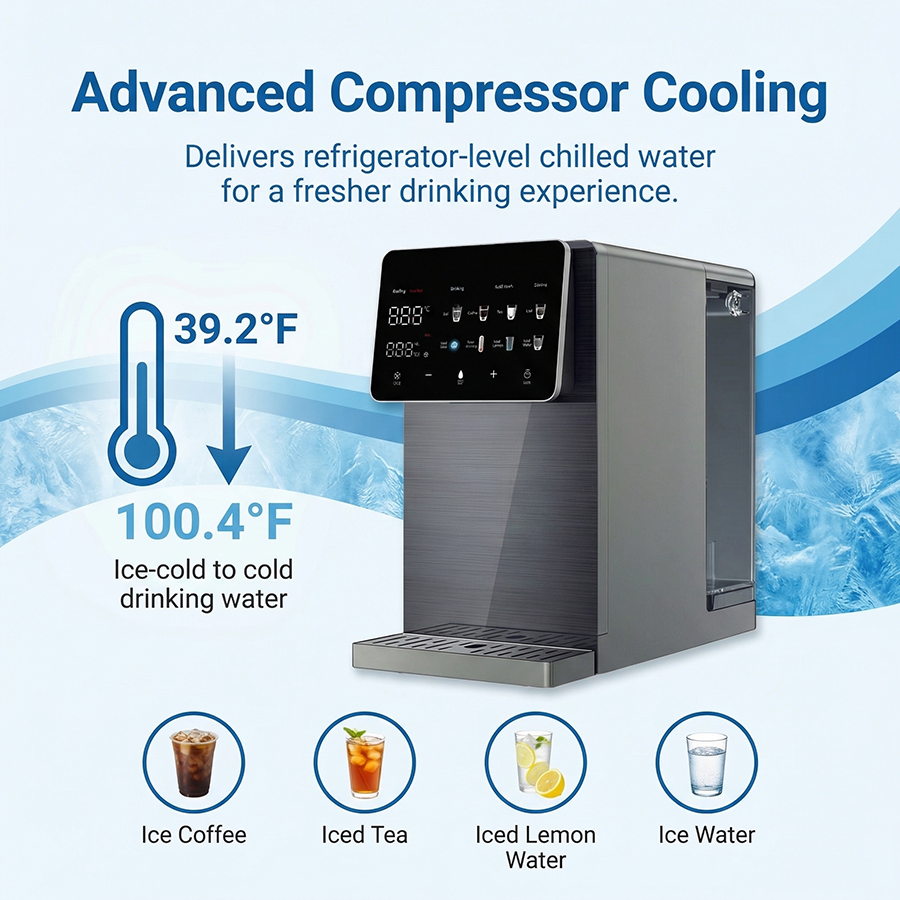
RO32 Cool Countertop Reverse Osmosis System Instant Cold and Hot
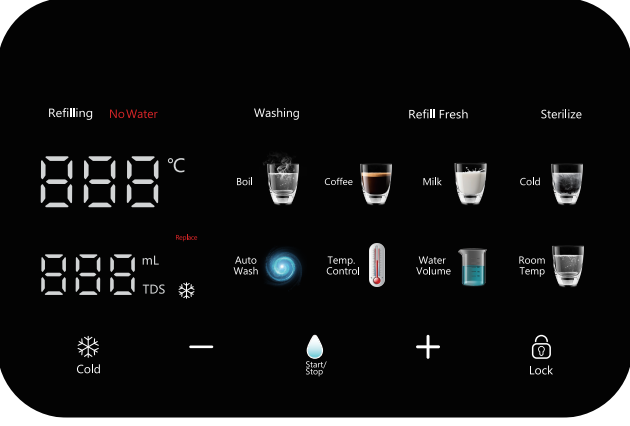
We recommend the RO32 as the ultimate compliance and performance machine. It bypasses the need for under-sink plumbing (perfect for European renters) while delivering a highly efficient 2:1 wastewater ratio. It doesn't just purify; it utilizes advanced compressor cooling and instant heating to deliver perfectly calibrated water on demand.
- Total Rated Water Capacity: 3000 L with a 6 L raw water tank.
- Instant Temperature Control: Cooling (37.4°F – 41°F) and Heating (104°F – 212°F).
- Water Efficiency Rating: Premium 2-Stage filtration with a high production rate.
- Power Specs: 220V / 50Hz, ideal for European electrical standards.
This unit represents the pinnacle of freestanding filtration. It protects you from microplastics and heavy metals while avoiding the logistical nightmare of permanent plumbing modifications.
Frequently Asked Questions (FAQ)
Authoritative References
To ensure our analysis meets the highest standards of scientific and regulatory accuracy, we rely on the following authoritative institutions:
- World Health Organization (WHO) - Guidelines for Drinking-water Quality, specifically addressing the health risks associated with the consumption of demineralized water.
- European Commission - The Drinking Water Directive (Directive (EU) 2020/2184) which establishes the legal framework for water quality and mineral content standards across the European Union.
- NSF International - The leading independent global health and safety organization providing certification standards (NSF/ANSI 58) for the effectiveness and material safety of reverse osmosis drinking water systems.