


Is RO Water Better Than Tap Water? An Expert Analysis
We are living in an era where blind trust in municipal infrastructure is a dangerous gamble. While public water treatment facilities excel at neutralizing immediate biological threats like cholera or dysentery through heavy chlorination, they are chronically unequipped to filter out modern industrial contaminants. Every month, new reports surface detailing aging lead pipes, agricultural runoff, and the pervasive spread of PFAS (forever chemicals) and microplastics in city water supplies. Consequently, millions of homeowners are asking a critical question: Is RO water better than tap water?

From our experience engineering advanced filtration architectures at Puflow, the answer is a resounding yes—but with important mechanical and biological caveats. Reverse Osmosis (RO) is not a magic wand; it is a brutal, unyielding industrial filtration process that strips water down to its bare molecular foundation. Treating your kitchen sink like a chemical processing plant yields the purest water on earth, but it also creates wastewater and strips away healthy minerals. In this uncompromising guide, we will brutally dissect the realities of municipal tap water, explain the mechanics of RO filtration, and provide the commercial judgment required to decide whether an RO system is actually worth installing in your home.
Quick Answer: The Final Verdict
Yes, RO water is better than tap water when evaluating sheer purity and safety. Reverse osmosis successfully removes up to 99.9% of Total Dissolved Solids (TDS), including lethal heavy metals like lead and arsenic, hazardous forever chemicals (PFAS), and the chlorine used by city treatment plants. However, because RO strips the water completely bare, it also removes beneficial minerals like calcium and magnesium, rendering the water slightly acidic. If you choose to upgrade to RO, we recommend purchasing a system with a built-in alkaline remineralization stage. If your tap water is generally safe but tastes like chlorine, you might not need the intensity of RO; an Ultrafiltration (UF) system may be a more efficient alternative.
Table of Contents
- What It Is: Tap Water vs. RO Water
- How Reverse Osmosis Actually Works
- The Unmatched Benefits of RO Water
- Limitations and Mechanical Trade-Offs
- Who Should Use It & Who Does Not Need It
- Common Mistakes Homeowners Make
- Strategic Buying Considerations
- Essential Comparison Tables
- Expert Recommendation from Puflow
- Frequently Asked Questions (FAQ)
What It Is: Tap Water vs. RO Water
Before we can determine if RO water better than tap water, we must understand what constitutes standard tap water. Municipal tap water is sourced from lakes, rivers, or underground aquifers. It is treated at a central plant with chemical coagulants, filtered through sand, and disinfected with chlorine or chloramines. Unfortunately, after it leaves the plant, it travels through miles of decaying, century-old subterranean pipes where it can pick up lead, copper, and rust before reaching your glass. Read more about the RO Water vs Tap Water divide to see the full scope of municipal transit contamination.
Reverse Osmosis (RO) water, on the other hand, is water that has been forcefully pushed through a semi-permeable membrane at the point of use (your sink). This membrane has microscopic pores—typically 0.0001 microns in size. To put that in perspective, a human hair is about 70 microns thick. The RO membrane acts as an impenetrable wall to heavy metals, viruses, and chemical salts, allowing only pure H2O molecules to pass through.
How Reverse Osmosis Actually Works
In most professional situations, a standalone RO membrane cannot survive on its own; it requires a multi-stage defense system. Here is the operational sequence of a standard Under-Sink RO Systems installation:
- Sediment Filtration: Incoming tap water hits a dense spun-polypropylene filter. This catches the large physical debris—rust, sand, and dirt—that would instantly clog the delicate RO membrane.
- Carbon Block Filtration: The water moves through an activated carbon filter. This stage chemically adsorbs chlorine, chloramines, and Volatile Organic Compounds (VOCs). Chlorine acts like acid on an RO membrane; this stage sacrifices itself to protect the expensive membrane.
- The RO Membrane: The heavy lifting occurs here. Utilizing your home's water pressure, water is forced against the membrane. The pure water passes through, while the rejected contaminants (the brine) are continuously flushed down your drain.
- Post-Filtration & Remineralization: The purified water, now completely stripped of taste and minerals, passes through a final carbon "polishing" filter to remove any residual tank odors, and ideally, an alkaline filter to reintroduce healthy calcium.
The Unmatched Benefits of RO Water
When you ask if RO water better than tap water, the primary benefit is absolute defensive security. RO is the only residential filtration method that reliably eliminates heavy metals, radioactive isotopes, and the microscopic chemical runoff from industrial farming. In our testing, attempting to remove high Total Dissolved Solids (TDS) with a basic pitcher filter is completely useless; only an RO system provides clinical-grade purification.
Furthermore, an RO system acts as the ultimate defense against microplastics. If you review the Best Water Filter for Microplastics, you will find that RO membranes physically block microscopic polymer chains from entering your drinking supply, offering a level of purity that tap water simply cannot provide.
Limitations and Mechanical Trade-Offs
We must apply commercial and practical judgment: RO systems have distinct operational drawbacks. The most significant limitation is wastewater generation. Because RO utilizes a cross-flow filtration method, it uses water to wash the rejected contaminants down the drain. Legacy RO systems waste up to 4 gallons of water for every 1 gallon of pure water they produce. While modern, high-efficiency pumps have reduced this ratio to 1:1, it remains an environmental and utility cost consideration.
Secondly, RO water is "dead" water. By stripping out the toxins, you also strip out healthy alkaline minerals. Demineralized water is slightly acidic and can taste incredibly flat or bitter. Finally, traditional RO systems require a bulky 3-gallon storage tank under your sink because the membrane filters water too slowly to provide on-demand flow.
Who Should Use It & Who Does Not Need It
For commercial users and heavy-duty applications: If your home relies on unregulated well water, or if you live in a municipality that consistently reports high levels of TDS, lead, or agricultural nitrates, you absolutely must install an RO system. The health risks of prolonged exposure far outweigh the mechanical inconveniences. If you require a high volume of pure water for a large family, we recommend exploring High-Flow RO Systems that utilize internal booster pumps.
Who does not need it: If you live in an area where the municipal water already has low TDS (under 150 ppm), and your only complaint is the chemical smell of chlorine, an RO system is massive overkill. You do not need to waste 3 gallons of water just to remove a chlorine taste. For these users, an Ultrafiltration (UF) system or a high-quality multi-stage carbon block is vastly superior and far more efficient.
Common Mistakes Homeowners Make
From our experience, the most catastrophic mistake homeowners make is treating an RO system like a "set it and forget it" appliance. You must adhere strictly to the filter replacement schedule. If you fail to change the carbon pre-filter every 6 months, municipal chlorine will reach the RO membrane, chemically destroying it within days. Always keep a stock of Replacement Filters on hand to protect your investment.
Another major error is failing to check home water pressure. RO membranes require a minimum of 40 PSI to force water through the microscopic pores. If your home has low water pressure, the system will barely trickle, and the wastewater ratio will skyrocket. In these cases, you must purchase a system with an integrated electric booster pump.
Strategic Buying Considerations
When you are ready to evaluate the Best Reverse Osmosis System for Home, prioritize certifications. Do not accept vague marketing claims. Demand to see independent verification; look for an NSF Certified Reverse Osmosis System. Certifications to NSF/ANSI Standard 58 guarantee that the system actually reduces heavy metals, cysts, and VOCs to safe levels.
If you are renting an apartment and cannot drill a hole in your sink for a dedicated RO faucet, do not despair. You can achieve identical purity by opting for Countertop RO Systems, which require zero plumbing modifications and plug directly into a standard wall outlet.
Essential Comparison Tables
| Filtration Type | Pore Size | What It Removes | Best Application |
|---|---|---|---|
| Activated Carbon | 0.5 - 5 Microns | Chlorine, Odors, Bad Taste, large sediment. | Basic tap water improvement. |
| Ultrafiltration (UF) | 0.01 Microns | Chlorine, Bacteria, Microplastics, Rust. Retains minerals. | Safe municipal water needing premium refinement. |
| Reverse Osmosis (RO) | 0.0001 Microns | Everything. Heavy metals, TDS, Fluoride, Viruses. | High TDS tap water or unregulated well water. |
| Metric | Standard Municipal Tap Water | Reverse Osmosis Water |
|---|---|---|
| TDS (Total Dissolved Solids) | High (Often 150 - 400+ ppm) | Extremely Low (Usually 5 - 20 ppm) |
| Contaminant Risk | Vulnerable to lead pipes, PFAS, and chlorine. | Clinical-grade purity; 99% of toxins removed. |
| Mineral Content | Contains natural calcium and magnesium. | Demineralized (requires an alkaline post-filter). |
| Cost per Gallon | Fractions of a cent. | Slightly higher (factors in system cost and wastewater). |
| The Pros (Advantages) | The Cons (Disadvantages) |
|---|---|
| Unmatched reduction of heavy metals (Lead, Arsenic, Copper). | Generates wastewater (1 to 3 gallons per pure gallon). |
| Provides bottled-water quality taste at the kitchen sink. | Removes healthy dietary minerals, resulting in flat-tasting water. |
| Protects against emerging threats like microplastics and PFAS. | Traditional systems require significant under-sink cabinet space. |
Expert Recommendation from Puflow
In most professional situations, deciding whether RO water better than tap water requires evaluating your source water. If your municipal supply is notoriously contaminated or your TDS levels exceed 250 ppm, an RO system is a non-negotiable health investment. However, if your tap water is generally safe, and you simply want to eliminate chlorine, rust, and microplastics without the wastewater penalties associated with RO, we strongly recommend an Ultrafiltration (UF) system.
At Puflow, we engineer solutions for every water profile. For those who want clinical purity without stripping natural minerals, we present our premier UF solution.
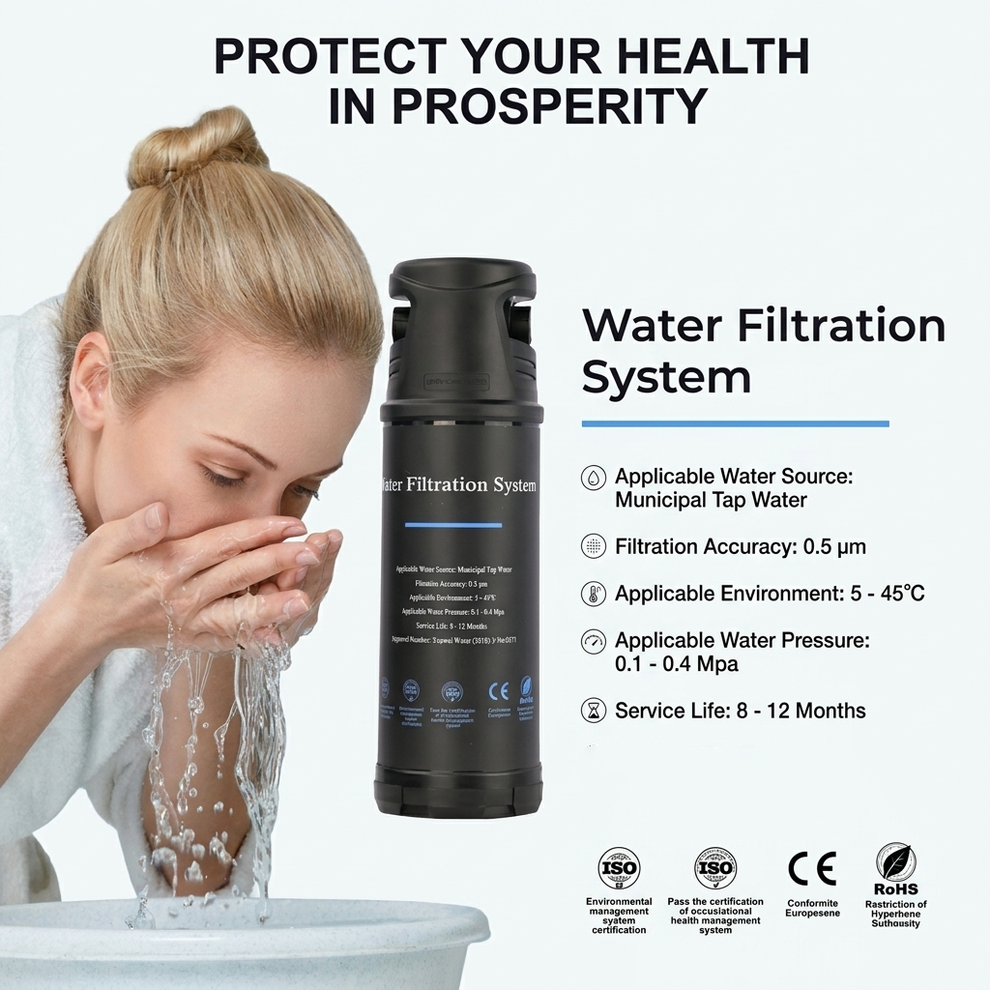
TM8-2 Under Sink Water Filter System 0.01μm Ultrafiltration
The ultimate alternative to RO for households with safe municipal water. Operating at a staggering 0.01μm precision, this system obliterates microplastics, bacteria, and harsh chlorine while preserving the healthy calcium and magnesium your body needs. The best part? It generates absolutely zero wastewater and requires no electricity.
- Filtration Accuracy: 0.01μm
- Flow Rate: Up to 400 L/h (Massive on-demand flow)
- Power Requirement: None (Operates on standard line pressure)
- Installation Location: Under Sink (Compact 130 × 110 × 345 mm footprint)
Whether you require the brute force of an RO system or the elegant efficiency of Ultrafiltration, you must stop relying blindly on aging municipal tap water. Protect your household by visiting our New Arrival reverse osmosis system for home collection today.
Frequently Asked Questions (FAQ)
Authoritative Industry References
To verify the realities of municipal water contamination and filtration standards, we recommend reviewing the following authoritative sources:
- Environmental Protection Agency (EPA) - Provides definitive governmental data on the dangers of lead pipe infrastructure and the necessity of point-of-use filtration in older municipalities.
- NSF International - The premier independent certification organization establishing the strict public health protocols (such as NSF/ANSI 58) required for a legitimate reverse osmosis system.
- Environmental Working Group (EWG) Tap Water Database - An exhaustive, zip-code-searchable database exposing the legal (but often unsafe) levels of industrial contaminants currently flowing through local American tap water supplies.