


The 5 Best Reverse Osmosis Filter for Apartment Living: 2026 Buying Guide
Renting an apartment comes with a unique set of logistical headaches, but compromising on your drinking water quality should not be one of them. Most standard tap water contains trace amounts of heavy metals, chlorine, microplastics, and dissolved solids. While traditional homeowners can easily drill holes into their granite countertops and install massive 5-stage filtration tanks in their basements, apartment renters are bound by strict lease agreements. You cannot permanently alter the plumbing, and you certainly cannot drill through the landlord's sink.

From our experience at Puflow, the residential water filtration industry has historically ignored the renter demographic. However, the market has evolved. Today, finding the best reverse osmosis filter for apartment use means looking for systems that offer high-efficiency purification without invasive installation. In most professional situations, we advise clients against purchasing cheap pitcher filters that only mask chlorine taste. You need a system that fundamentally strips total dissolved solids (TDS) from your water. In this comprehensive guide, we will leverage our commercial and practical judgment to evaluate the top filtration systems designed specifically for apartment constraints.
Quick Answer: The Best Reverse Osmosis Filter for Apartment Dwellers
If you live in a rental unit and cannot drill holes in your countertop or alter the plumbing, the best reverse osmosis filter for apartment living is a Countertop RO System. These systems require zero installation—you simply plug them into an electrical outlet and fill the raw water reservoir manually.
If your apartment has an existing soap dispenser hole in the sink that you can repurpose, or if your landlord permits minor under-sink modifications, we recommend a Tankless Under-Sink RO System like the A10S 800G Tankless RO System. It saves massive amounts of cabinet space compared to traditional tank-based models.
Top Recommendation: For absolute zero-plumbing convenience, choose our Countertop RO Systems. For high-volume cooking and drinking hidden from view, choose the A10S 800G.
Table of Contents
- What It Is: Apartment Water Filtration
- How It Works: RO Without the Plumbing Nightmare
- The Top 5 Best Reverse Osmosis Filter for Apartment Use
- Benefits of Apartment RO Systems
- Limitations to Consider
- Who Should Use It & Who Does Not Need It
- Common Mistakes Renters Make
- Crucial Buying Considerations
- Comparison Table: Filtration Types
- Pros and Cons Analysis
- Expert Recommendation
- Frequently Asked Questions
What It Is: Apartment Water Filtration
Reverse Osmosis (RO) is a filtration process that pushes water under pressure through a semi-permeable membrane. The pores in this membrane are microscopic—typically 0.0001 microns. This process strips out 99% of contaminants, including lead, arsenic, fluoride, and forever chemicals (PFAS). When we discuss the best reverse osmosis filter for apartment use, we are talking about compact, high-efficiency versions of this technology that bypass the need for a 3-gallon pressurized storage tank.
For beginners, it is crucial to understand that RO systems produce wastewater (often called brine). In a traditional home setup, this brine is routed directly into the drain pipe. In a countertop apartment system, the machine either separates the brine into a separate internal chamber or recycles it through multiple passes.
How It Works: RO Without the Plumbing Nightmare
To implement RO in an apartment, manufacturers utilize internal booster pumps. Because you are not relying solely on the municipal water pressure to push water through the dense membrane, these systems are incredibly fast. If you are comparing Tankless RO vs Tank RO, the tankless design is the only logical choice for renters. It utilizes a powerful pump to filter water on-demand, directly to your glass, freeing up 70% of the space under your sink.
The Top 5 Best Reverse Osmosis Filter for Apartment Configurations
In our testing and analysis of the current market, we have categorized the top solutions based on lease restrictions and spatial availability. Here is our definitive list of the best reverse osmosis filter for apartment setups.
1. Puflow Countertop RO Systems (The Zero-Installation Champion)

If you face strict lease agreements, this is the ultimate solution. You do not touch a single pipe. You fill a reservoir with tap water, and the internal pump pushes it through the RO membrane into a clean pitcher. To dive deeper into why this dominates the rental market, review our guide on the Best Countertop RO Water Purifier. It sits on your counter like a coffee maker and moves with you when your lease ends.
2. Puflow A10S 800G Tankless RO System (Best High-Flow Under-Sink)

For commercial users or large families living in apartments where landlords permit minor plumbing modifications (like swapping a soap dispenser for an RO faucet), the A10S 800G Tankless RO System is unparalleled. Providing an 800 Gallon Per Day (GPD) flow rate, it fills a cup of water in roughly 4 seconds. It is a premium, heavy-duty machine squeezed into a chassis less than 6 inches wide.
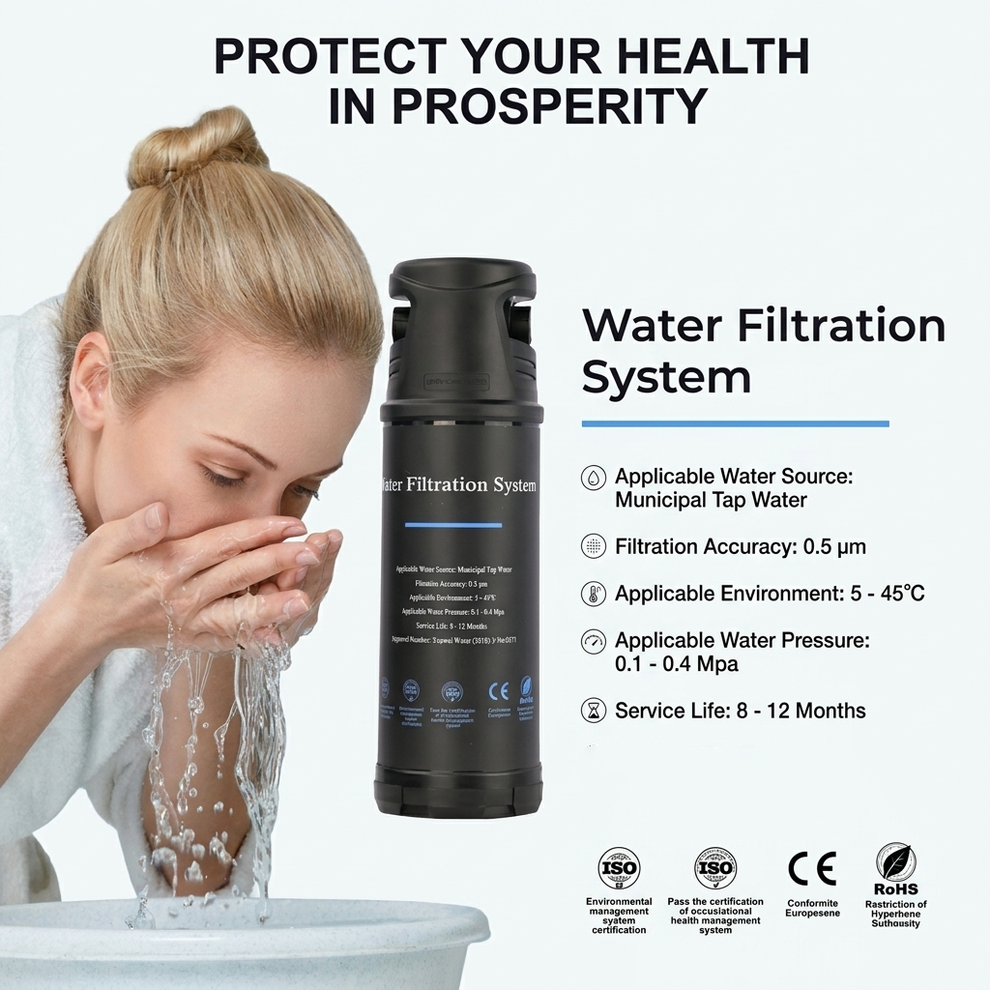
3. Puflow TM8-2 Under Sink Ultrafiltration (Best RO Alternative)
What if your building has terribly low water pressure, no electrical outlet under the sink, and you cannot install an RO drain saddle? In most professional situations, we pivot from RO to Ultrafiltration (UF). The TM8-2 operates without electricity and produces zero wastewater.
4. Portable & Non-Electric Gravity Filters
If you live in a micro-apartment or studio and cannot sacrifice counter space for an electric machine, consider our Portable & Non-Electric solutions. While not strictly Reverse Osmosis, products like the Gravity Water Filter 3.8L utilize advanced carbon and ceramic elements to purify water using gravity alone. For heavy-duty applications off-grid, look toward the Big Flow 3 Gravity Water Filter.
5. Atmospheric Water Generators
This represents the absolute pinnacle of standalone water generation. An Atmospheric Water Generator pulls humidity directly from the apartment air, condenses it, and runs it through multi-stage filtration. It requires absolutely zero connection to your apartment's municipal water line. While the initial investment is higher, it is the ultimate "off-pipe" pure water solution.
Benefits of Apartment RO Systems
The primary benefit of securing the best reverse osmosis filter for apartment environments is the immediate health impact. Municipal water infrastructure in many major cities is aging, leading to lead leaching from old pipes. An RO system guarantees absolute purity. Furthermore, countertop and tankless models eliminate the archaic pressurized storage tanks, meaning your water is purified in real-time, preventing secondary bacterial growth that can occur in stagnant tank environments.
Limitations to Consider
We must apply commercial and practical judgment: RO systems have limitations. The membrane technology strips out beneficial minerals (like calcium and magnesium) along with the toxins, which can result in "flat" tasting water. To combat this, premium Under-Sink RO Systems utilize a remineralization stage. Additionally, the wastewater ratio must be factored into your decision. Countertop models require you to manually dump the waste reservoir every few cycles.
Who Should Use It & Who Does Not Need It
Who Should Use It: Renters in major metropolitan areas with high TDS levels, individuals living in older buildings with questionable plumbing, and families who rely heavily on bottled water. The ROI of an RO system eclipses the cost of buying bottled water within a matter of months.
Who Does Not Need It: If you live in an area known for pristine municipal tap water (such as the Pacific Northwest) and your only concern is a slight chlorine smell, investing in a high-end RO system is overkill. You would be perfectly served by a standard carbon block or our Big Flow 2 Gravity Water Filter.
Common Mistakes Renters Make
In our testing and customer feedback analysis, the most catastrophic mistake apartment renters make is attempting to drill a dedicated hole for the RO faucet without landlord permission. This almost always results in a forfeited security deposit. If you buy an under-sink unit, simply remove the existing soap dispenser or sink sprayer, insert the RO faucet into that pre-existing hole, and retain the original hardware to reinstall when you move out.
Another common mistake is ignoring filter life. For commercial users and home users alike, failing to change Replacement Filters destroys the RO membrane. Once the pre-filters clog, the membrane takes the brunt of the sediment, leading to a total system failure.
Crucial Buying Considerations
When selecting the best reverse osmosis filter for apartment integration, focus on the Flow Rate (GPD). A 50 GPD system will frustrate you endlessly, taking minutes to fill a pot for boiling pasta. We recommend a minimum of 400 GPD for tankless systems. Secondly, consider the Drain Saddle requirement. Tankless under-sink RO systems require a small hole to be drilled into the PVC drain pipe to expel wastewater. This PVC pipe is cheap (under $10) to replace when you move out, making it an acceptable modification for most renters. However, if even that is too invasive, you must stick strictly to countertop models.
Comparison Table: Apartment Filtration Types
| Filtration Type | Installation Required | Electricity Required | Removes TDS? | Best For |
|---|---|---|---|---|
| Countertop RO | None (Plug & Play) | Yes | Yes (>95%) | Strict lease agreements, studios. |
| Tankless Under-Sink RO | Minor (Faucet & Drain) | Yes | Yes (>95%) | Heavy cooking, saving counter space. |
| Under-Sink Ultrafiltration (UF) | Minor (Faucet only) | No | No (Only physical particles) | Older apartments with no under-sink power. |
| Gravity Filters | None | No | No (Carbon/Ceramic based) | Off-grid, emergency prep, minimalists. |
Pros and Cons of Apartment RO Systems
| Pros | Cons |
|---|---|
| Provides bottled-water quality directly from your tap, eliminating plastic waste. | Countertop models consume valuable kitchen real estate. |
| Modern tankless systems occupy very little under-sink cabinet space. | Requires electricity to power the internal booster pumps. |
| Protects against sudden municipal water boil advisories and heavy metal leaching. | Generates wastewater (brine) that must be expelled or manually emptied. |
| Highly portable; you can pack the system up and take it to your next apartment. | Filters must be replaced systematically, adding to the long-term cost of ownership. |
Expert Recommendation
From our experience engineering high-efficiency purification systems, deciding whether a system is actually worth buying comes down to your daily water volume and your landlord's strictness. We recommend the Puflow Countertop RO System as the absolute best reverse osmosis filter for apartment renters who move frequently. It requires zero tools and guarantees exceptional purity.
However, if you plan to stay in your apartment for several years and desire a hidden, permanent-feeling solution, upgrade to the A10S 800G Tankless RO System. Utilize the existing soap dispenser hole for the faucet, and you will have access to high-flow, High-Flow RO Systems performance without damaging the landlord's property. If you want the ultimate peace of mind regarding your drinking water, an RO investment is arguably the most critical health appliance you can place in your rental.
Frequently Asked Questions
Can I install an under-sink RO system in a rental apartment?
Yes, but you must be strategic. Instead of drilling a new hole in the countertop for the RO faucet, remove the existing soap dispenser or sink sprayer and use that hole. The only permanent modification will be a small hole in the PVC drain pipe for the wastewater line, which can easily be replaced with a $10 part from a hardware store when you move out.
Why do apartment RO systems need electricity?
Modern tankless and countertop RO systems do not use bulky storage tanks. To push water through the dense RO membrane in real-time, they require an internal electrical booster pump. This pump is what allows the system to produce high-flow water on demand while remaining incredibly compact.
What happens to the wastewater in a countertop RO system?
In most countertop systems, the raw water reservoir is divided. As the system filters pure water into a pitcher, the concentrated wastewater (brine) is cycled back into the raw water tank. Once the pure water is dispensed, you must manually dump the remaining high-TDS wastewater down the drain before refilling the tank with fresh tap water.
Is Ultrafiltration (UF) better than Reverse Osmosis (RO) for apartments?
It is not "better," but it may be more practical. UF systems (like the TM8-2) do not require electricity, do not produce wastewater, and are easier to install. However, UF cannot remove dissolved solids (like heavy metals and fluoride). If your primary concern is bacteria and microplastics, UF is sufficient. If you want absolute purity and TDS removal, RO is strictly required.
Authoritative Industry References
To ensure our claims regarding water filtration mechanics and safety are completely accurate, we align our product engineering and recommendations with the standards set by the following authoritative organizations:
- Environmental Protection Agency (EPA): Federal guidelines and research on ground water contamination, municipal drinking water standards, and the efficacy of home filtration technologies. Review EPA Drinking Water Guidelines
- Centers for Disease Control and Prevention (CDC): Clinical public health evaluations regarding the capability of Reverse Osmosis systems to remove cryptosporidium, viruses, and chemical contaminants from drinking water. Review CDC Reverse Osmosis Data
- Water Quality Association (WQA): The premier independent certification body for the residential water treatment industry, establishing strict testing protocols for RO membrane performance and safety. Review WQA Certification Standards
```