


Top 5 Reverse Osmosis Systems for Well Water: Drink Directly and Safely
Many homeowners assume that moving to a rural property with a private well means securing an endless supply of pure, natural water. From our experience, this is rarely the reality. Private well water is entirely unregulated and highly susceptible to agricultural runoff, naturally occurring heavy metals, and bacterial contamination. You cannot simply turn on the tap and drink directly from a newly dug well without serious health risks.

At Puflow, as an industry solution provider engineering advanced water filtration, we constantly see homeowners making the critical error of buying cheap filtration pitchers to handle extreme well water conditions. If you want to drink directly from your tap, reverse osmosis systems for well water are not a luxury; they are a biological and chemical necessity. In this comprehensive guide, we will break down exactly how these systems function, outline the best configurations for private wells, and rank the top five systems available today based on commercial and practical judgment.
Quick Answer: The Bottom Line on Well Water RO Systems
Yes, you can safely drink directly from your private well if you install a properly configured reverse osmosis system, but you must take a strategic approach:
- The Verdict: A standard municipal RO system will fail on well water. You need a system specifically designed to handle high Total Dissolved Solids (TDS), often paired with pre-treatment.
- Our Top Pick: The C9 Pro RO Water Purifier is our highest recommendation for handling the intense demands of private wells.
- Crucial Step: Never install an RO system without testing your well water first. If your iron levels exceed 0.3 ppm or hardness exceeds 10 grains per gallon (gpg), you must install whole-house pre-treatment before the RO unit, or the membrane will foul within weeks.
Table of Contents
- What is a Well Water RO System and How Does it Work?
- The Benefits: Why You Need One
- The Limitations: The Hard Truth About Well Water
- Who Should Use It & Who Does Not Need It
- Common Mistakes Homeowners Make
- Buying Considerations for Well Water
- The Top 5 Reverse Osmosis Systems for Well Water
- System Comparison Table
- Pros vs Cons Table
- Our Expert Recommendation
- Frequently Asked Questions
What is a Well Water RO System and How Does it Work?

A reverse osmosis system works by forcing pressurized water through a semi-permeable membrane that features pores as small as 0.0001 microns. To put that into perspective, that is roughly 100,000 times smaller than the diameter of a human hair.
When discussing reverse osmosis systems for well water, the distinction lies in the pre-filtration stages. Municipal tap water is already treated by the city to remove heavy sediment, iron, and bacteria. Well water is raw. Therefore, an RO system designed for well water must include heavy-duty sediment filters to catch sand and silt, and robust carbon block filters to handle organic compounds and agricultural chemicals before the water ever touches the delicate RO membrane. If you want to understand the exact differences in water chemistry, we highly recommend reading our guide on RO Water vs Tap Water.
The Benefits: Why You Need One
In most professional situations, we demand homeowners install RO systems if their well tests positive for specific dangerous contaminants. The benefits are absolute:
- Nitrate Removal: If your well is near farmland, fertilizer runoff causes high nitrate levels, which are incredibly dangerous for infants. RO is one of the only effective ways to remove nitrates.
- Heavy Metal Eradication: Arsenic and lead occur naturally in groundwater in many geographic regions. An RO membrane blocks these neurotoxins entirely.
- Microplastic Defense: Groundwater aquifers are increasingly showing signs of microplastic contamination. An RO membrane is the definitive answer, acting as the best water filter for microplastics currently available.
The Limitations: The Hard Truth About Well Water
We believe in absolute transparency. RO systems are miraculous, but they have limitations when exposed to aggressive well water.
Reverse osmosis membranes cannot handle high concentrations of dissolved iron, manganese, or extreme water hardness. If your well water leaves rust stains on your toilets or hard white scale on your showerheads, those same minerals will coat the RO membrane. Once the membrane is scaled or fouled with iron bacteria, it stops producing water entirely. Furthermore, RO systems require water pressure to push water through the membrane. Well pumps that deliver less than 40 PSI will result in poor RO performance, requiring the addition of a booster pump.
Who Should Use It & Who Does Not Need It
Who should use it: Any homeowner drawing drinking water from a private well who wants to drink directly from their kitchen sink without fear of arsenic, nitrates, PFAS (forever chemicals), or agricultural pesticides.
Who does not need it: If you have already installed a massive, whole-house commercial RO system in your utility room, an under-sink unit is redundant. Additionally, if your well water only has a slight taste issue but tests completely negative for heavy metals and chemicals, a simpler system like the M8-2 Under Sink Water Filter might be sufficient and more cost-effective.
Common Mistakes Homeowners Make
From our experience troubleshooting failed systems across the country, here are the most expensive mistakes you must avoid:
- Skipping the Water Test: Buying an RO system before getting your well water tested by a certified laboratory is a massive gamble. You must know your baseline metrics (Iron, Hardness, pH, TDS) before purchasing filtration.
- Ignoring Iron Pre-treatment: As mentioned, if your iron is over 0.3 ppm, you must install an iron filter where the water enters your home, long before it reaches your kitchen RO system.
- Assuming RO Kills Bacteria: While RO membranes are small enough to filter out bacteria, a heavily contaminated well can cause bacteria to grow through the membrane over time. If your well tests positive for coliform, you need a UV (Ultraviolet) light purifier installed.
Buying Considerations for Well Water
| Consideration | What to Look For | Why It Matters for Well Water |
|---|---|---|
| Pre-Filtration Capacity | Multi-stage carbon and large-micron sediment filters. | Well water contains high levels of silt and sand that will instantly destroy an unprotected RO membrane. |
| Operating Pressure | Built-in booster pump or permeate pump. | Many well pumps run at 30-50 PSI. Standard RO requires 50+ PSI to function efficiently. A pump fixes this. |
| UV Sterilization | Integrated UV light stage. | Crucial if your well has a history of coliform bacteria or if your well cap is occasionally submerged by flooding. |
| Certifications | NSF/ANSI Standard 58 certification. | Guarantees the system has been independently verified to reduce heavy metals and TDS. |
The Top 5 Reverse Osmosis Systems for Well Water
In our testing and industry analysis, the following five configurations represent the best commercial and practical investments for homeowners relying on well water.
1. Puflow C9 Pro RO Water Purifier (Best Overall for Well Water)
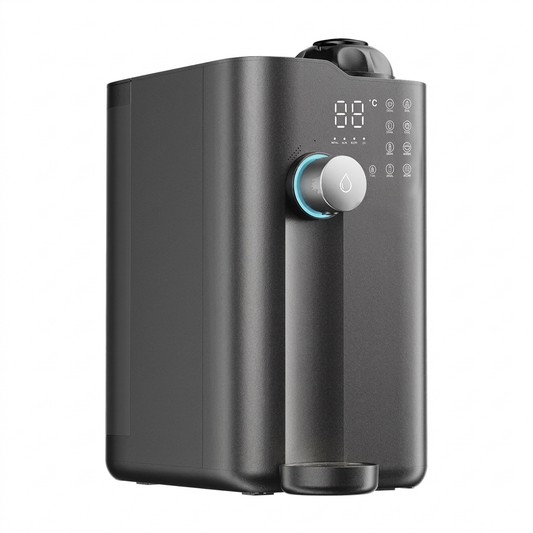
For heavy-duty applications, the C9 Pro is an absolute powerhouse. We recommend this unit for its exceptional filtration efficiency and built-in pressure management. Well water users often struggle with low tank pressure, but the C9 Pro circumvents this by offering high-flow delivery. It aggressively strips out agricultural runoff and dissolved solids, ensuring the water you drink directly is pristine.
2. Puflow A10S Under Sink System (Best for Easy Maintenance)
For beginners who are intimidated by plumbing and filter changes, the A10S configuration is ideal. Well water requires frequent pre-filter changes due to high sediment. The A10S utilizes a tool-free composite filter design that takes seconds to swap out. By combining the RO membrane with a high-capacity Carbon Block (CBPA), it handles organic well water odors flawlessly.
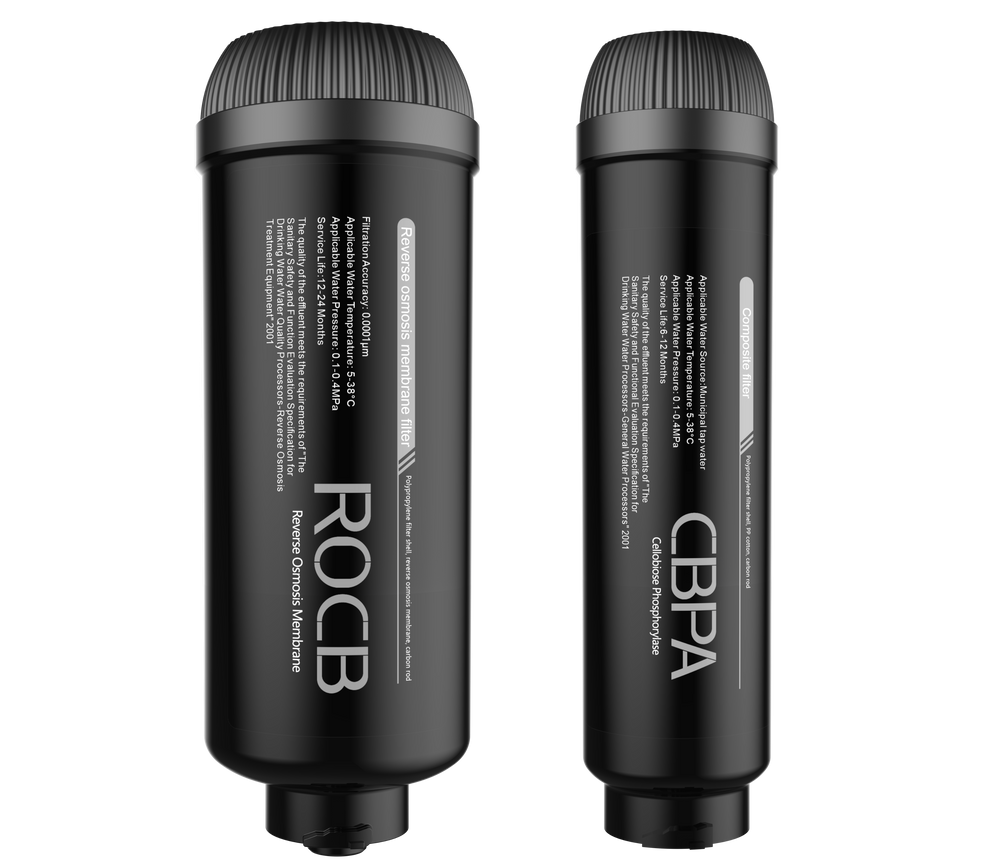
Replacement Filter Set for A10S Under Sink Reverse Osmosis System (RO + CBPA)
- Advanced 0.0001μm RO Filtration: Removes heavy metals, dissolved solids, and microscopic impurities common in well water.
- Multi-Stage Composite Filtration (CBPA): Reduces chlorine, odor, and improves taste seamlessly.
- Quick & Easy Replacement: Tool-free design for fast filter changes, keeping your system performing at its best every day.
3. High-Recovery Tankless RO with UV Sterilization (Best for Bacterial Defense)
If your well water has tested positive for coliform bacteria in the past, an RO system alone is not enough. You must look for systems that integrate an ultraviolet (UV) purification stage. The UV light scrambles the DNA of microorganisms, ensuring your drinking water is biologically safe, while the tankless design ensures fresh water on demand without the risk of stagnant water in a storage tank.
4. Heavy-Duty Permeate Pump RO System (Best for Low Well Pressure)
Older well pumps often struggle to maintain the 50 PSI required for standard RO systems to push water through the membrane, leading to massive wastewater generation. Systems equipped with a non-electric permeate pump harness the energy of the wastewater to force pure water into the holding tank. This significantly increases efficiency and ensures your tank fills quickly even if your well pressure drops to 30 PSI.
5. Multi-Stage RO with Alkaline Remineralization (Best for Acidic Wells)
Well water can sometimes be highly acidic (low pH). Furthermore, the reverse osmosis process strips water of all minerals, dropping the pH even further. For those who want to drink directly and prefer a smooth, bottled-water taste, we recommend an RO system featuring an alkaline remineralization stage. This stage adds healthy calcium and magnesium back into the water, balancing the pH and vastly improving the flavor profile.
System Comparison Table
| System Focus | Ideal Well Condition | Pressure Requirement | Maintenance Level |
|---|---|---|---|
| Puflow C9 Pro | High TDS, Agricultural Proximity | Standard | Low (High Capacity) |
| Puflow A10S | Standard Well, High Sediment | Standard | Extremely Low (Tool-free) |
| UV-Integrated RO | History of Coliform/Bacteria | High (Usually Built-in Pump) | Medium (Annual UV Bulb Change) |
| Permeate Pump RO | Low Well Pump Pressure (<40 PSI) | Low (Operates at 30 PSI) | Medium |
| Alkaline RO | Acidic Water, Taste Preferences | Standard | Medium (Extra Filter Stage) |
Pros vs Cons of RO on Well Water
| Pros (Why it is worth the upgrade) | Cons (What you must consider) |
|---|---|
| Total protection against arsenic and heavy metals. | Will foul rapidly if iron levels exceed 0.3 ppm. |
| Removes dangerous agricultural nitrates and pesticides. | Requires adequate well pump pressure to function. |
| Dramatically improves the taste and odor of sulfurous water. | Generates wastewater (brine) which goes into your septic system. |
| Allows you to safely drink directly from the tap. | Requires consistent filter replacements to prevent membrane scaling. |
Our Expert Recommendation
If you are deciding whether reverse osmosis systems for well water are actually worth buying, our commercial judgment is definitive: they are the most critical investment you can make for your family's health if you are off the municipal grid.
However, you cannot cut corners. For commercial users and homeowners alike, we recommend starting with a comprehensive laboratory water test. If your iron and hardness are in check, install the Puflow C9 Pro immediately. If you want a system that is incredibly easy to maintain and guaranteed to provide pristine water, the A10S Under Sink System is an outstanding choice. Treat your well water with respect, utilize proper pre-filtration, and your RO system will provide safe, delicious drinking water for decades.
If you are looking to expand your knowledge before making a purchase, review our breakdown of an NSF Certified Reverse Osmosis System to understand the rigorous testing these systems undergo.
Frequently Asked Questions
Will hard well water ruin my RO membrane?
Yes. If your well water has a hardness level above 10 grains per gallon (gpg), the calcium and magnesium will quickly scale and clog the delicate 0.0001-micron pores of the RO membrane. You must install a whole-house water softener before the RO system to ensure its longevity.
Do reverse osmosis systems remove iron from well water?
Technically, an RO membrane can remove trace amounts of iron. However, you should never rely on an RO system as your primary iron filter. Iron concentrations higher than 0.3 ppm will permanently foul the membrane. You must use a dedicated iron pre-filter.
Can I drink directly from well water with an RO system?
Yes, provided the system is properly maintained and your well does not have unchecked biological contamination. If your well is prone to coliform bacteria, ensure your RO system is paired with a UV sterilization light to guarantee the water is microbiologically safe to drink directly.
Authoritative References & Industry Standards
To ensure the safety and accuracy of our recommendations, we rely on established guidelines from authoritative public health organizations: