


Which Water Filter Removes the Most Contaminants? An Expert Guide
Navigating the water filtration market is an exercise in deciphering aggressive marketing jargon. Consumers are constantly bombarded by claims of "pure water" and "advanced filtration," yet very few brands are willing to discuss the exact micron ratings or the specific spectrum of pathogens and chemicals their systems actually eliminate. As infrastructure ages and reports of PFAS (forever chemicals), heavy metals, and microplastics in municipal water supplies skyrocket, homeowners are rightfully asking a critical question: which water filter removes the most contaminants?

From our experience in water purification technology, relying on basic pitcher filters to protect your household is a dangerous game of false security. Standard activated carbon pitchers improve taste and odor, but they completely fail to capture dangerous dissolved solids, heavy metals, and persistent organic pollutants. If you are serious about water quality, you must look at advanced multi-stage systems. In this uncompromising guide, we will cut through the noise, evaluate the dominant filtration technologies, and definitively state which water filter removes the most contaminants and whether it is actually worth upgrading your home setup.
Quick Answer: The Filtration Hierarchy
- Tier 1: Reverse Osmosis (Removes 99.9%) - The undisputed champion. Eliminates everything from lead and arsenic to fluoride and radioactive isotopes. The only choice for absolute purity.
- Tier 2: Ultrafiltration / Gravity Filters (Removes ~90-95%) - Excellent for bacteria, cysts, and chlorine. Fails to remove dissolved solids, fluoride, or heavy concentrations of heavy metals.
- Tier 3: Carbon Block / Pitcher Filters (Removes ~70-80%) - Good for aesthetic improvements (taste, odor, chlorine reduction). Practically useless against modern chemical threats like PFAS and heavy metals.
Table of Contents
- What It Is: Understanding the Technologies
- How It Works: The Physics of Purity
- The Benefits of Superior Filtration
- Limitations and Operational Realities
- Who Should Use It
- Who Does Not Need It
- Common Mistakes in Water Filtration
- Critical Buying Considerations
- Expert Recommendation
- Contaminant Comparison Table
- Pros and Cons Table
- Frequently Asked Questions (FAQ)
What It Is: Understanding the Technologies
To accurately determine which water filter removes the most contaminants, you must understand the physical mechanisms behind the three dominant technologies on the market.
Activated Carbon Filters: Found in common fridge dispensers and pitchers, these filters use a highly porous carbon block to chemically adsorb impurities. They excel at binding with chlorine, which drastically improves the taste of RO Water vs Tap Water. However, their micron rating is usually between 1.0 and 0.5 microns, allowing heavy metals, dissolved minerals, and microscopic pathogens to pass right through.
Gravity Water Filters: These are countertop stainless steel units, such as the Gravity Water Filter 3.8L or the larger Big Flow 3 Gravity Water Filter. They utilize dense ceramic or advanced carbon-block elements. They operate at a sub-micron level (often around 0.2 microns), successfully trapping bacteria, cysts, and microplastics while requiring zero electricity. They are robust, but they do not remove dissolved inorganic compounds like fluoride.
Reverse Osmosis (RO): This is an industrial-grade technology scaled down for residential use. An RO system forces water under high pressure through a semi-permeable membrane with pores sized at 0.0001 microns. It physically strips the water molecule from the contaminants, flushing the waste down the drain and leaving you with pure H2O. When consumers ask which water filter removes the most contaminants, RO is the singular, scientifically proven answer.
How It Works: The Physics of Purity
Reverse Osmosis is not merely a filter; it is a molecular separation process. In most professional situations, a true RO system operates in multiple stages to protect the delicate membrane and ensure maximum contaminant removal.
First, water enters a sediment pre-filter to trap rust, dirt, and pipe scale. Second, it passes through a carbon block to eliminate chlorine, which would otherwise destroy the RO membrane. The third stage is the actual Reverse Osmosis membrane. Because the pores of this membrane are 0.0001 microns wide, only water molecules can squeeze through. Contaminants like Hexavalent Chromium, lead, arsenic, and PFAS (forever chemicals) are simply too large. They are rejected and washed away in the brine stream.
Because this process is so aggressive that it removes beneficial minerals like calcium and magnesium, modern engineering integrates a final remineralization stage. Utilizing an Under Sink Reverse Osmosis System with Remineralization restores pH balance and improves the mouthfeel of the water.
The Benefits of Superior Filtration
Why is it actually worth upgrading to the water filter removes the most contaminants? In our testing, the benefits of RO water extend far beyond simple taste.
- Absolute Health Security: Municipal water treatment facilities are frequently overwhelmed by agricultural runoff and industrial chemicals. RO provides a secure, final barrier against unregulated pharmaceutical runoff and emerging contaminants like microplastics and PFAS.
- Appliance Longevity: Because RO removes all dissolved solids (TDS), it creates "soft" water. Using this water in your coffee maker, kettle, or humidifier eliminates scale buildup, drastically extending the life of your appliances.
- Culinary Superiority: Cooking with perfectly pure water allows the true flavors of coffee, tea, and broths to emerge without being masked by municipal chlorine or pipe rust.
Limitations and Operational Realities
We believe in providing commercial and practical judgment without bias. Reverse Osmosis systems have strict limitations. Because the filtration process is so precise, it operates slowly, which is why older systems require a bulky storage tank that takes up your entire under-sink cabinet. Furthermore, RO systems generate wastewater. For every gallon of purified water produced, older systems waste up to three gallons down the drain. Modern tankless systems have vastly improved this ratio (often 1.5:1 or 2:1 pure-to-waste), but the water waste is a reality of the physics involved.
Finally, RO systems require specific municipal water pressure to push the water through the membrane. If your home has terrible water pressure, you will need a system with a built-in booster pump.
Who Should Use It
For commercial users: Cafes, restaurants, and medical offices must use RO systems to guarantee product consistency and sterilization standards.
For heavy-duty applications: Homes operating on unregulated private well water, or those in older municipal grids with aging lead infrastructure, have zero room for compromise. You must use an NSF Certified Reverse Osmosis System. If your Total Dissolved Solids (TDS) meter reads above 200 PPM, RO is not a luxury; it is a necessity.
Who Does Not Need It
For beginners: If you live in an apartment, cannot alter the plumbing, or reside in an area renowned for pristine municipal water (low TDS, low hardness), you do not strictly need Reverse Osmosis. In these scenarios, a robust gravity system like the Big Flow 2 Gravity Water Filter provides exceptional bacterial and chlorine removal without the installation headache or wastewater generation.
Common Mistakes in Water Filtration
The most dangerous mistake consumers make is assuming their refrigerator filter is protecting their family. Refrigerator filters are basic carbon blocks designed solely to make ice cubes taste better. They do absolutely nothing to stop heavy metals or forever chemicals.
Another common operational failure is neglecting filter replacement schedules. When an RO pre-filter clogs, the membrane is forced to process heavy particulate matter, which destroys its 0.0001-micron structure. You must change your filters on schedule, which is why we advocate for systems with smart monitoring capabilities.
Critical Buying Considerations
When selecting the Best Reverse Osmosis System for Home use, you must evaluate the following metrics:
- Flow Rate (GPD): Traditional systems offer 50 Gallons Per Day (GPD). This is painfully slow. We recommend tankless systems offering 400 to 800 GPD for instantaneous, on-demand pure water.
- Tank vs. Tankless: Tanks breed bacteria over years of use and consume cabinet space. Tankless systems are the modern standard, offering infinite fresh water without storage contamination.
- Smart TDS Monitoring: A premium system will have an LED faucet that displays your real-time Total Dissolved Solids. If the number rises, you immediately know the membrane has failed.
Expert Recommendation
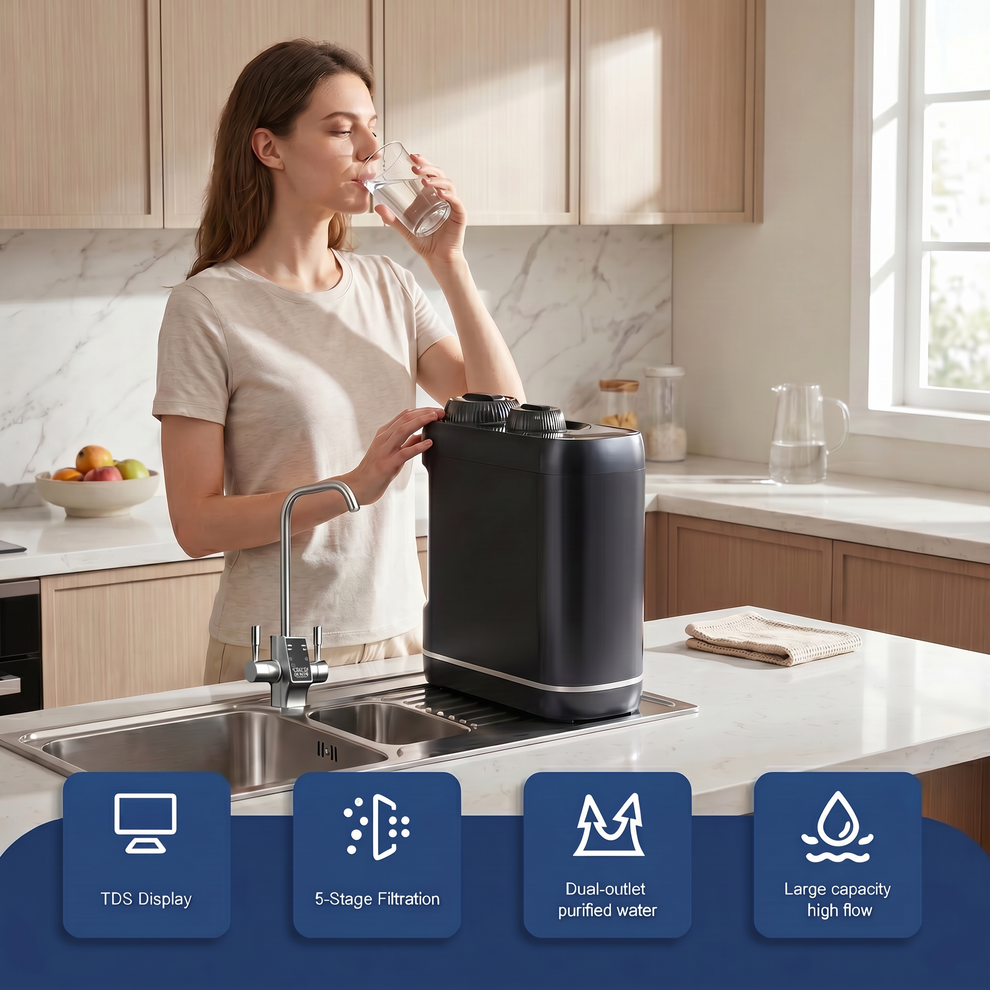
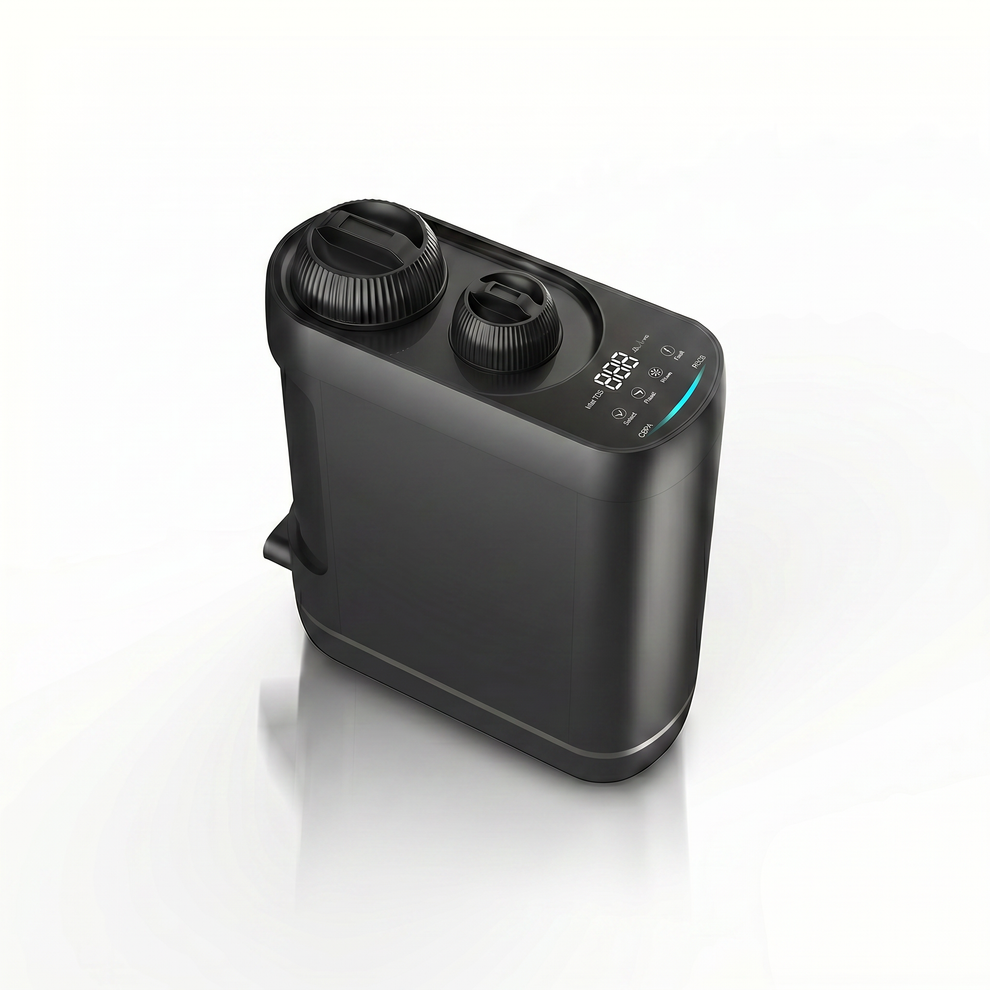
A10S 800G Tankless RO System with Smart TDS
Engineered by Puflow, this system represents the apex of residential water purification. It utilizes a massive 800 Gallons Per Day membrane to provide instant, limitless RO water without the bacterial risk of a storage tank, while an intelligent LED faucet monitors your water purity in real time.
| Filtration Type | Reverse Osmosis (RO) |
|---|---|
| Filtration Precision | 0.0001μm |
| Flow Rate | 1.58–2.1 L/min |
| Rated Capacity | 4000L |
| Water Pressure | 0.1–0.4 MPa |
| Dimensions | 381 × 165 × 435 mm (Ultra-slim profile) |
Contaminant Removal Comparison Table
| Contaminant Type | Standard Carbon Pitcher | Gravity Filter (Sub-Micron) | Reverse Osmosis (0.0001μm) |
|---|---|---|---|
| Chlorine / Bad Taste | Excellent | Excellent | Excellent |
| Bacteria & Cysts (Giardia) | Poor | Excellent | Excellent |
| Heavy Metals (Lead, Arsenic) | Poor to Moderate | Moderate | Excellent (99%+) |
| Forever Chemicals (PFAS/PFOA) | Poor | Moderate | Excellent (99%+) |
| Fluoride & Nitrates | Zero Removal | Zero Removal | Excellent (95%+) |
Pros and Cons of Reverse Osmosis Systems
| Pros | Cons |
|---|---|
| Unequivocally the water filter removes the most contaminants. | Generates wastewater during the purification process. |
| Protects against emerging threats like microplastics and PFAS. | Requires under-sink space and dedicated plumbing access. |
| Tankless designs provide infinite, on-demand pure water. | Strips beneficial minerals (requires remineralization stage). |
| Eliminates scale buildup in coffee machines and kettles. | Requires electricity to run internal booster pumps. |
Frequently Asked Questions (FAQ)
Does Reverse Osmosis remove beneficial minerals from my water?
Yes. Reverse Osmosis is so aggressive that it removes everything, including calcium and magnesium. However, we acquire the vast majority of our dietary minerals from food, not water. To improve taste and pH balance, premium RO systems include a remineralization cartridge that adds healthy minerals back into the water before it reaches your faucet.
Is boiling water better than filtering it?
No. Boiling water only kills biological pathogens like bacteria and viruses. It does absolutely nothing to remove heavy metals, PFAS, or chemical toxins. In fact, boiling water causes the pure H2O to evaporate, which actually increases the concentration of heavy metals and chemicals left behind in the pot. You must use mechanical filtration to remove chemical contaminants.
Do water filters remove PFAS (Forever Chemicals)?
Basic carbon pitchers do not effectively remove PFAS. To safely eliminate polyfluoroalkyl substances (PFAS) from your drinking water, you must use a Reverse Osmosis system with a 0.0001-micron membrane, which is proven to be the most effective consumer method for removing these persistent synthetic chemicals.
Authoritative References & Industry Standards
To verify the contaminant reduction capabilities of various water filtration technologies, please consult the following authoritative bodies:
- Environmental Protection Agency (EPA) - Federal guidelines on drinking water quality, municipal violations, and acceptable contaminant limits.
- NSF International - The independent public health organization that establishes the rigid testing protocols (NSF/ANSI 53, 58, 401) for water filtration systems.
- Water Quality Association (WQA) - The premier trade association representing the residential and commercial water treatment industry, providing certification and technical education.