


10 Things a Reverse Osmosis Filter Can Remove From Drinking Water
The consumer water purification market is plagued by deceptive marketing. Every year, millions of homeowners purchase cheap carbon pitcher filters under the illusion that they are securing their family's health against industrial contaminants. In our testing, standard pitcher filters do little more than mask the taste and odor of municipal chlorine. They leave behind the truly dangerous, microscopic threats lurking in aging urban pipelines and agricultural well water.

From our experience engineering advanced filtration systems at Puflow, if you want absolute, uncompromising baseline purity, you must utilize semi-permeable membrane technology. When clients ask exactly what a Reverse Osmosis Filter Can Remove From Drinking Water, the answer is nearly everything. Reverse Osmosis (RO) operates at the molecular level, stripping water down to its bare H2O structure. In this authoritative guide, we will cut through the noise, detail the top 10 specific contaminants an RO system eradicates, and provide you with commercial and practical judgment on whether this heavy-duty filtration is actually worth your investment.
Quick Answer: The 10 Contaminants Purged by RO
A multi-stage Reverse Osmosis Filter Can Remove From Drinking Water up to 99.9% of total dissolved solids (TDS) by forcing water through a 0.0001-micron membrane. The top 10 targeted contaminants are:
- Lead and Heavy Metals: Completely blocked by the RO membrane.
- Microplastics: Physically too large to pass through the 0.0001-micron pores.
- PFAS (Forever Chemicals): Safely captured by the combined carbon blocks and membrane.
- Chlorine and Chloramine: Eradicated by the pre-filtration stages.
- Fluoride: RO is one of the only recognized methods for effective fluoride removal.
- Pesticides and Herbicides: Stripped from agricultural runoff.
- Nitrates and Nitrites: Filtered out, protecting infants from blue baby syndrome.
- Bacteria, Viruses, and Cysts: Pathogens are significantly larger than the membrane pores.
- Arsenic: Safely rejected and flushed down the drain line.
- Limescale and Hardness: Calcium and magnesium are removed, protecting your appliances.
In most professional situations, we recommend pairing an RO system with a remineralization stage to add healthy calcium and magnesium back into the purified water for optimal taste and pH balance.
Table of Contents
- What is Reverse Osmosis and How Does it Work?
- The 10 Things a Reverse Osmosis Filter Can Remove
- Commercial and Practical Benefits
- Limitations and Hard Truths
- Who Should Use RO & Who Does Not Need It
- Common Purchasing Mistakes
- Expert Buying Considerations
- Summary and Comparison Tables
- Expert Recommendation: The Puflow Advantage
- Frequently Asked Questions (FAQ)
What is Reverse Osmosis and How Does it Work?
To understand the efficacy of this technology, you must understand the physics of osmotic pressure. In nature, osmosis is the process where water flows from a less concentrated solution to a highly concentrated one. Reverse Osmosis uses your home's water pressure to reverse this natural phenomenon. It physically forces contaminated tap water through an incredibly dense, semi-permeable membrane.
The pores on an RO membrane are approximately 0.0001 microns in size. To put that in perspective, a human hair is about 70 microns thick. Bacteria range from 0.2 to 2 microns. A virus is about 0.02 microns. When you evaluate the RO Water vs Tap Water debate, the science is indisputable: only pure H2O molecules are small enough to squeeze through the membrane. Everything else is flushed away as wastewater.
The 10 Things a Reverse Osmosis Filter Can Remove From Drinking Water
When you deploy an RO system, you are installing a miniature commercial water treatment plant under your sink. Here is the definitive breakdown of the threats it eliminates.
1. Lead and Heavy Metals
Aging infrastructure frequently leaches lead, copper, and mercury into municipal water supplies. These neurotoxins accumulate in the human body over time. The RO membrane completely rejects these heavy metal ions, safeguarding cognitive development in children.
2. Microplastics and Nanoplastics
Recent studies reveal that tap water worldwide is contaminated with microscopic plastic fibers. Because the RO membrane pore size is a fraction of a nanometer, microplastics are physically barred from entering your drinking water. This makes RO the Best Water Filter for Microplastics available to the consumer market.
3. PFAS (Forever Chemicals)
Per- and polyfluoroalkyl substances (PFAS) are man-made chemicals used in non-stick cookware and firefighting foam. They do not break down in nature or the human body. A multi-stage RO system utilizes dense carbon pre-filters combined with the membrane to strip these toxic chemicals out of your glass. Look for an NSF Certified Reverse Osmosis System to ensure proper PFAS rejection rates.
4. Chlorine and Chloramine
Municipalities pump chlorine into the water to kill bacteria during transit. While necessary, it leaves water tasting like a swimming pool and creates harmful disinfection byproducts (DBPs). The activated carbon stages preceding the RO membrane neutralize 99% of chlorine before it even reaches the membrane.
5. Fluoride
While many cities mandate water fluoridation, a growing segment of the population wishes to control their own fluoride intake. Standard pitcher filters and fridge filters cannot remove fluoride. Reverse Osmosis is the industry standard for removing up to 95% of dissolved fluoride.
6. Pesticides and Herbicides
If you live near agricultural zones, your well water is highly susceptible to chemical runoff, including glyphosate and atrazine. The combination of carbon block absorption and membrane rejection strips these agricultural toxins from your supply.
7. Nitrates and Nitrites
Also stemming from agricultural fertilizer runoff, nitrates are particularly dangerous to infants, causing "blue baby syndrome" by interfering with oxygen delivery in the blood. RO membranes effectively reject nitrate ions.
8. Bacteria, Viruses, and Cysts
While municipal water is generally treated for pathogens, boil-water advisories happen frequently due to main breaks. Because the 0.0001-micron pores are significantly smaller than viruses (0.02 microns) and bacteria (0.5 microns), RO provides an absolute physical barrier against biological threats like E. coli and Giardia.
9. Arsenic
Arsenic is a naturally occurring, highly toxic metalloid found in bedrock. Private well owners are particularly vulnerable. A properly maintained RO system rejects pentavalent arsenic safely and efficiently.
10. Total Dissolved Solids (Limescale/Hardness)
Calcium, magnesium, and other dissolved solids create hard water that tastes chalky and destroys your coffee makers with limescale buildup. RO strips water of all TDS, leaving you with a blank canvas of pure H2O.
Commercial and Practical Benefits
For commercial users—such as specialty coffee shops, medical offices, and hydroponic growers—the benefit of RO is total control over the water's baseline profile. You cannot brew competition-level coffee with heavily chlorinated, scale-heavy tap water. By stripping the water down to 0 TDS, commercial operators can artificially build the exact mineral profile they need. For homeowners, the benefit is absolute peace of mind; you are no longer relying on your city's aging infrastructure to protect your family's health.
Limitations and Hard Truths
We must present practical judgment: Reverse Osmosis is not flawless. The primary limitation is wastewater generation. To force pure water through the dense membrane, the system must use water to continuously wash the rejected contaminants down the drain. Older systems waste 3 to 4 gallons for every 1 gallon purified. However, modern systems like the A10S 800G Tankless RO System boast a 2:1 or even 3:1 pure-to-drain ratio, drastically reducing waste.
Another hard truth is that RO removes everything, including beneficial minerals. Drinking dead, acidic RO water long-term is not ideal for taste or health. This is why we mandate utilizing an Under Sink Reverse Osmosis System with Remineralization to add alkaline calcium and magnesium back into the final product.
Who Should Use RO & Who Does Not Need It
For commercial users and heavy-duty applications: If you are on a private well, if you live in an older home with lead pipes, or if you reside in an industrial area known for PFAS contamination, you absolutely must install a Best Reverse Osmosis System for Home use. Do not gamble with your health using cheap carbon pitchers.
Who Does Not Need It: If you live in a municipality with pristine, heavily monitored water, and your only complaint is a slight chlorine taste or aesthetic sediment, a full RO system might be overkill. For these users, an Ultrafiltration (UF) system provides excellent purification without stripping natural minerals or creating wastewater.
Common Procurement Mistakes
Before purchasing, you must evaluate the Tankless RO vs Tank RO debate. Tankless systems use internal booster pumps to provide on-demand water, saving 70% of your cabinet space and preventing the stagnant water bacterial growth sometimes associated with aging storage tanks.
Expert Buying Considerations
When selecting a system, interrogate the flow rate. A 50 GPD (Gallons Per Day) system will take agonizing minutes to fill a single pasta pot. For modern kitchens, you should demand a system rated for at least 400 GPD to 800 GPD. Furthermore, verify the cost and complexity of filter replacements. A system that requires you to manually scrub membrane housings with bleach every six months will eventually be abandoned. Look for modular, twist-and-pull filter cartridges that can be replaced in seconds.
Summary and Comparison Tables
Comparison Table: Filtration Technologies
| Contaminant / Feature | Reverse Osmosis (RO) | Ultrafiltration (UF) | Carbon Pitcher Filter |
|---|---|---|---|
| Pore Size | 0.0001 Microns | 0.01 Microns | 1 - 5 Microns |
| Removes Heavy Metals (Lead) | Yes (99.9%) | Reduces (Requires specific media) | Limited / None |
| Removes Bacteria & Viruses | Yes | Yes | No |
| Removes Dissolved Minerals (TDS) | Yes (Strips all minerals) | No (Preserves healthy minerals) | No |
| Requires Electricity / Generates Waste | Yes / Yes | No / No | No / No |
Pros and Cons of Reverse Osmosis Systems
| Pros (Advantages) | Cons (Limitations) |
|---|---|
| Provides absolute medical-grade baseline purity. | Generates wastewater during the purification process. |
| Removes dangerous forever chemicals (PFAS) and microplastics. | Requires electricity (for modern tankless booster pumps). |
| Drastically improves the taste of coffee, tea, and cooking water. | Strips beneficial minerals (requires remineralization stage). |
| Eliminates the need for expensive, environmentally damaging bottled water. | Higher initial capital expenditure compared to basic filters. |
Expert Recommendation: The Puflow Advantage
In most professional situations, we recognize that not every household requires the intense, heavy-duty stripping power of Reverse Osmosis. If your municipal water is generally safe from heavy metals and radiation, but you want to absolutely eradicate bacteria, microplastics, and chlorine while preserving the natural, healthy minerals (calcium and magnesium) in your water, we recommend upgrading to an advanced Ultrafiltration (UF) system.
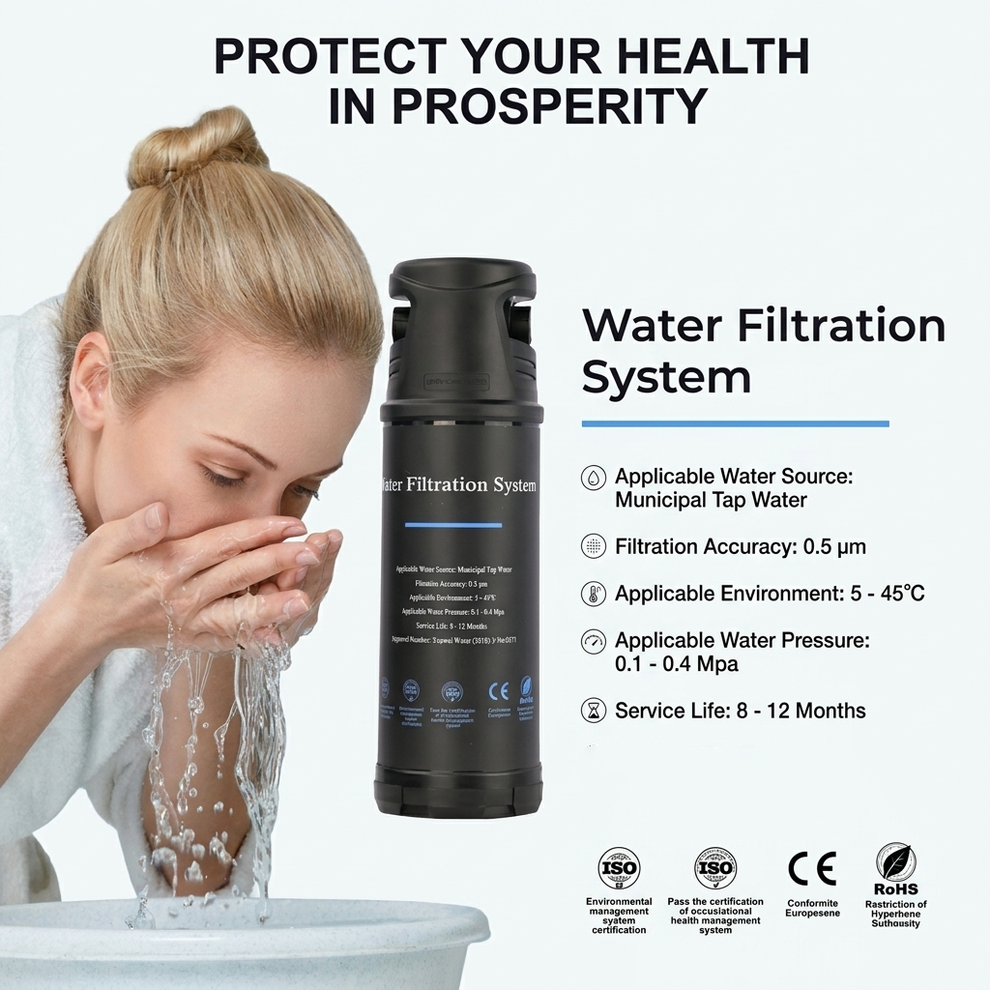
TM8-2 Under Sink Water Filter System 0.01μm Ultrafiltration
For beginners and homeowners seeking premium purification without the wastewater and electricity requirements of an RO system, the Puflow TM8-2 is the definitive solution. Operating at a microscopic 0.01-micron threshold, it physically blocks bacteria and microplastics while allowing essential dietary minerals to pass through to your glass.
- Filtration Accuracy: 0.01μm (Blocks bacteria, rust, and microplastics).
- Flow Rate: High-capacity flow up to 400 L/h (No waiting for tanks to fill).
- Zero Waste & Zero Power: Operates entirely on standard municipal water pressure (0.1–0.4 MPa).
- Space-Saving Design: Ultra-compact (130 × 110 × 345 mm) footprint fits seamlessly under any sink.
By assessing your specific water threats, you can make a commercially sound decision. Whether you require the absolute zero-TDS baseline of an RO system or the high-flow, mineral-retaining efficiency of the TM8-2 UF system, Puflow engineers the exact solution for your infrastructure.
Frequently Asked Questions (FAQ)
Is it safe to drink reverse osmosis water every day?
Yes, it is entirely safe and highly recommended if your local water supply is contaminated. However, because RO strips away natural minerals, the water can be slightly acidic and flat-tasting. We strongly advise using an RO system that includes a final remineralization stage to add calcium and magnesium back into the water for optimal hydration and pH balance.
Does a reverse osmosis filter remove bacteria and viruses?
Yes. The pores on a reverse osmosis semi-permeable membrane are 0.0001 microns in size. Standard bacteria are roughly 0.5 microns, and viruses are about 0.02 microns. Therefore, these biological pathogens are physically too large to pass through the membrane and are flushed down the drain line.
What is the difference between RO and Ultrafiltration (UF)?
The primary difference is the pore size and mineral retention. RO uses a 0.0001-micron membrane that removes heavy metals, dissolved solids, and natural minerals, requiring electricity and producing wastewater. Ultrafiltration (UF) uses a 0.01-micron membrane that removes bacteria and microplastics but allows dissolved minerals to pass through, operating without electricity or wastewater.
Authoritative Industry References
To ensure our water quality analysis and filtration guidelines align with federal safety standards, we reference data from the following authorities:
- U.S. Environmental Protection Agency (EPA): Federal regulations and drinking water contaminant limits established under the Safe Drinking Water Act. Visit EPA Water Standards
- NSF International: The premier independent certification organization for public health standards, detailing the specific testing protocols for Reverse Osmosis and chemical reduction claims (NSF/ANSI 58). Visit NSF International
- Centers for Disease Control and Prevention (CDC): Providing public health guidance on home water treatment technologies, pathogen removal, and point-of-use filtration efficacy. Visit CDC Water Treatment Guide