


15 Best Rated Reverse Osmosis Systems for Home 2026: An Expert Industry Guide
Let us be brutally honest: filtering your municipal tap water through a cheap carbon pitcher is no longer sufficient. With increasing reports of microplastics, heavy metal infrastructure degradation, and PFAS (forever chemicals) infiltrating residential water supplies, relying on basic activated carbon is an unacceptable compromise for your family's health. The only scientifically proven method for total water purification at the residential level is a high-grade Reverse Osmosis (RO) membrane.

From our experience engineering and auditing domestic water infrastructure at Puflow, the market is saturated with severely outdated technology masquerading as premium filtration. Understanding the fluid dynamics, membrane flux, and wastewater ratios of modern purification is critical. Sourcing the best rated reverse osmosis systems for home is not just about clean drinking water; it is a fundamental hardware upgrade to your property. In this comprehensive technical guide, we will strip away the marketing jargon, explain the raw mechanics of point-of-use purification, and rank the absolute finest systems available in 2026.
Quick Answer: Which System Should You Buy?
If you are looking for the definitive top-tier purification hardware, the best rated reverse osmosis systems for home have entirely transitioned to tankless, direct-flow architectures. We unequivocally recommend the A10S 800G Tankless RO System as the premier choice for 2026. Delivering a massive 800 Gallons Per Day (GPD) with a 0.0001-micron precision membrane and real-time Smart TDS monitoring, it eliminates the stagnant water reservoirs and low flow rates that plagued legacy systems. For renters or those lacking under-sink plumbing space, a high-end atmospheric water generator or premium gravity filter serves as the ultimate alternative.
Table of Contents
- What is a Reverse Osmosis System?
- How the Filtration Mechanics Work
- The Unmatched Benefits
- Limitations and Hidden Factors
- Who Should Use It & Who Does Not Need It
- Common Procurement Mistakes
- Crucial Buying Considerations
- Is It Worth Upgrading? Expert Recommendation
- The 15 Best Rated Reverse Osmosis Systems & Elite Alternatives
- Summary & Buying Guide Tables
- Frequently Asked Questions (FAQ)
What is a Reverse Osmosis System?
A Reverse Osmosis system is a point-of-use (POU) or point-of-entry (POE) water purification appliance that utilizes hydrostatic pressure to force contaminated water through a semi-permeable membrane. This membrane possesses microscopic pores measuring 0.0001 microns—small enough to allow water molecules (H2O) to pass through while physically blocking dissolved salts, heavy metals, bacteria, viruses, and chemical isotopes.
In most professional situations, we define a true RO system as one capable of rejecting at least 90-95% of Total Dissolved Solids (TDS). This is not simple mechanical filtration; it is molecular-level separation.
How the Filtration Mechanics Work
A raw RO membrane is incredibly delicate and easily destroyed by municipal chlorine or large sediment. Therefore, modern systems operate in multi-stage sequences:
- Pre-Filtration: Water passes through a spun polypropylene sediment filter and an activated carbon block. These stages remove rust, silt, and volatile organic compounds (VOCs) like chlorine, which would otherwise oxidize and burn holes in the RO membrane.
- The RO Membrane: The heart of the system. The internal booster pump pressurizes the water, forcing it against the membrane. Purified water (permeate) is pushed through to your faucet, while rejected contaminants (concentrate) are flushed down the drain.
- Post-Filtration & Remineralization: Because pure RO water is slightly acidic and flat-tasting, it is passed through a final carbon polishing filter or an alkaline remineralization stage to restore healthy calcium and magnesium.
The Unmatched Benefits
The primary benefit of sourcing the best rated reverse osmosis systems for home is absolute, uncompromising water safety. An RO membrane strips out lead leached from old city pipes, agricultural pesticide runoff, and toxic PFAS. Furthermore, for culinary enthusiasts, cooking and brewing coffee with 0-TDS water extracts pure flavor profiles that are otherwise masked by hard water minerals.
Limitations and Hidden Factors
We believe in commercial and practical judgment, meaning we must address the limitations of RO technology. The most significant drawback is wastewater generation. To prevent the membrane from clogging, RO systems must flush contaminants away with rejected water. Older systems wasted up to 4 gallons of water for every 1 gallon purified. Modern tankless systems have vastly improved this to a 1.5:1 or even 1:1 ratio. Additionally, traditional tank-based systems take up massive amounts of under-sink real estate and suffer from declining water pressure as the storage tank empties.
Who Should Use It & Who Does Not Need It
Who should use it: Homeowners connected to aging municipal water grids, individuals on well water with high nitrate or heavy metal concentrations, and anyone residing in regions with known industrial chemical runoff. If you demand absolute purity, an under-sink RO system is mandatory.
Who does not need it: If you are renting a small apartment without the ability to modify the plumbing, an under-sink RO system is highly impractical. In these scenarios, investigating the Best Countertop RO Water Purifier or exploring off-grid, non-electric solutions like the Gravity Water Filter 3.8L is the correct operational choice.
Common Procurement Mistakes
The most common mistake consumers make is purchasing an outdated tank-based system for a modern, compact kitchen. This leads to cramped cabinets and the constant frustration of running out of pure water while boiling pasta. To understand the architectural differences, review our comprehensive breakdown on Tankless RO vs Tank RO.
Another catastrophic error is ignoring filter replacement schedules. Failing to replace the carbon pre-filter allows municipal chlorine to reach the RO membrane, destroying it within days. Always maintain a supply of the Carbon Water Filter Replacement specifically sized for your unit.
Crucial Buying Considerations
When selecting your hardware, scrutinize the Gallons Per Day (GPD) rating. For heavy-duty applications—such as a family of five that cooks frequently—anything below 600 GPD in a tankless format will result in agonizingly slow faucet flow rates. Look for smart manifolds that display real-time TDS readings, so you know exactly when the membrane requires servicing.
Is It Actually Worth Upgrading? Expert Recommendation
From our experience, continuing to buy bottled water is an ecological disaster and a profound waste of capital. Refrigerator filters and basic carbon pitchers only mask odors; they do not remove microscopic heavy metals or chemical isotopes. We unequivocally state that upgrading to a high-flow tankless RO system is absolutely worth the investment. It provides endless, medical-grade hydration directly from your tap, paying for itself within the first year of displacing bottled water purchases.
The 15 Best Rated Reverse Osmosis Systems & Elite Alternatives for 2026
To assist your procurement process, we have curated the top 15 systems currently dominating the residential market, featuring our flagship Puflow hardware alongside critical off-grid and atmospheric alternatives.
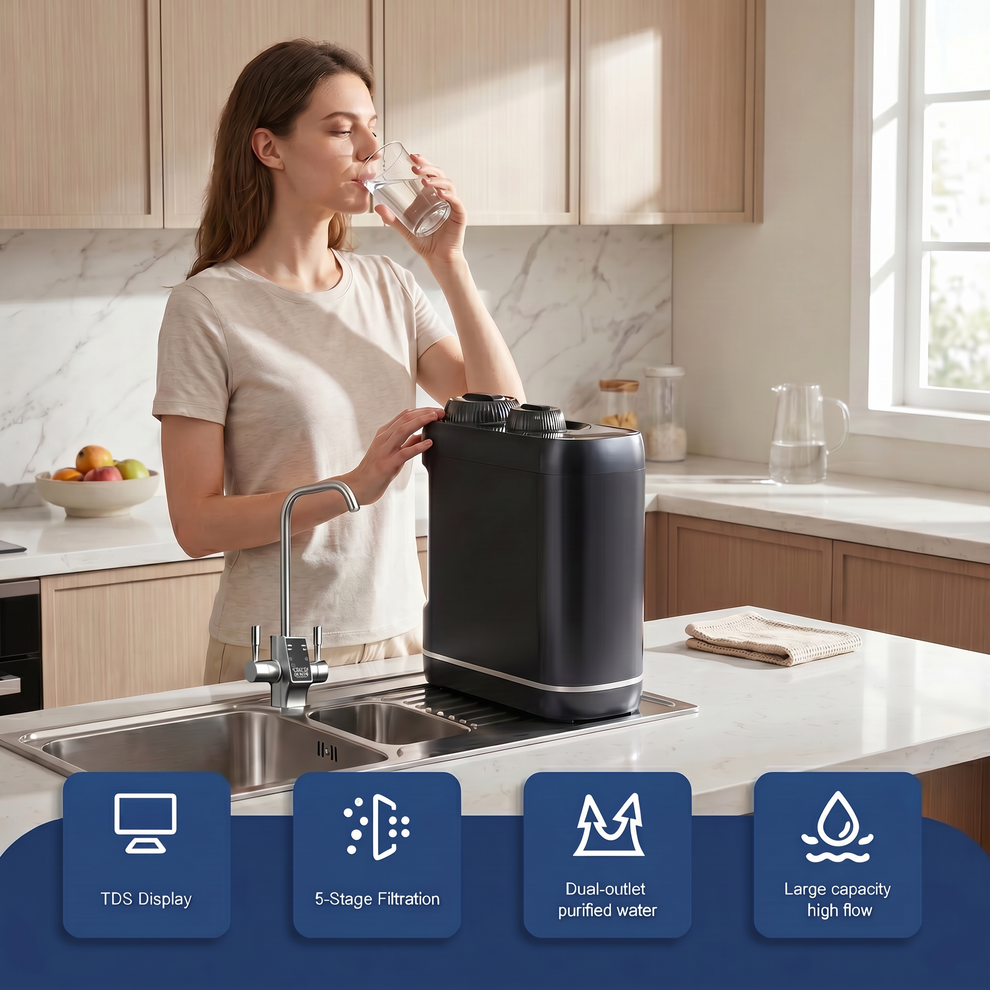
1. Puflow A10S 800G Tankless RO System with Smart TDS
This is the undisputed pinnacle of home purification. The A10S abandons the archaic storage tank, utilizing a massive internal booster pump to deliver 800 GPD directly to the faucet. The smart LED manifold monitors your water quality in real-time.
- Filtration Precision: 0.0001μm Reverse Osmosis
- Flow Rate: 1.58–2.1 L/min
- Rated Capacity: 4000L
- Footprint: 381 × 165 × 435 mm (Tankless space-saving design)
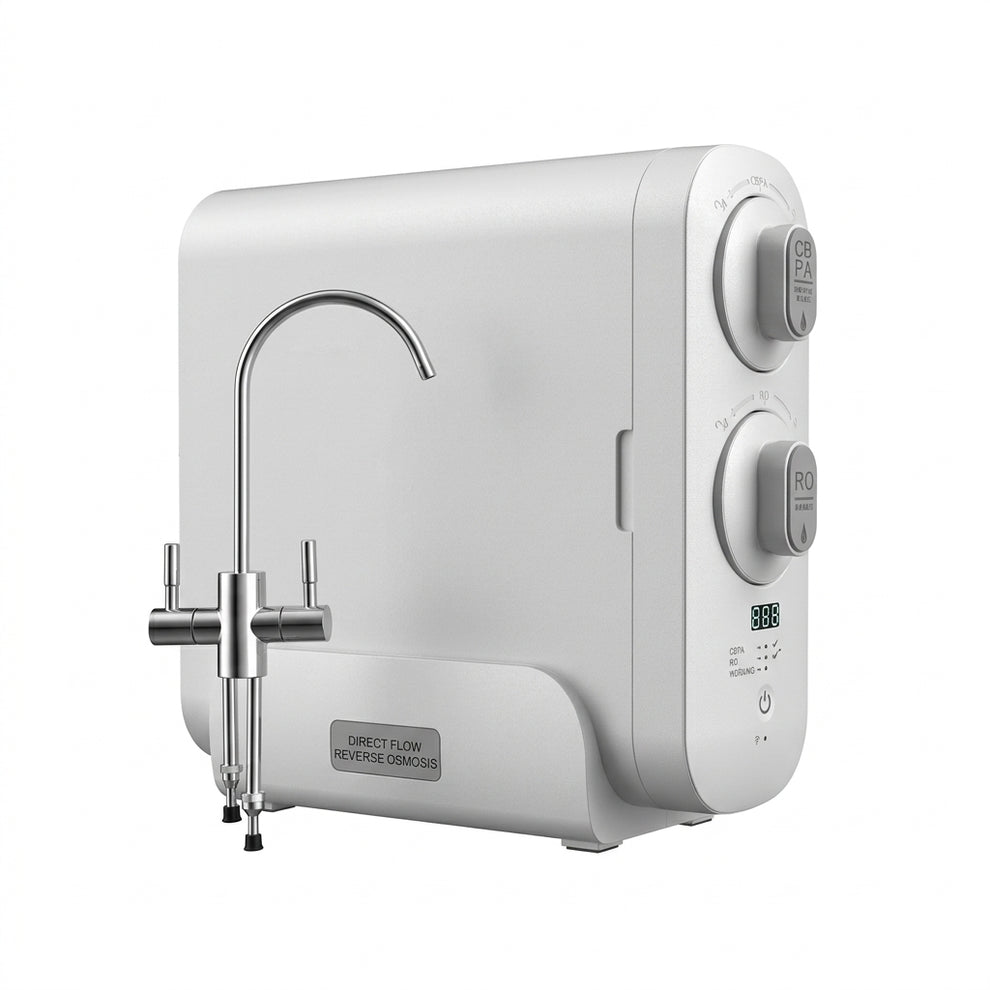
2. Puflow Under Sink RO System 600 GPD Direct Flow
For mid-sized households requiring robust flow without the extreme premium of an 800G model, the 600 GPD unit delivers exceptional 1.5:1 wastewater efficiency and a 95% salt rejection rate, ensuring top-tier purification.
- Purification Capacity: 600 GPD (1.5–1.6 L/min)
- Wastewater Ratio: 1.5:1
- Recovery Rate: 60%
- Power Consumption: 70W
3. Puflow C9 Pro RO Water Purifier
A flagship countertop solution. The C9 Pro RO Water Purifier requires zero plumbing, utilizing an internal reservoir to cycle water through an advanced RO membrane. It is the ultimate plug-and-play solution for renters demanding high-end purification.
4. Puflow F20 Atmospheric Water Generator
For commercial users or luxury eco-homes, the F20 Atmospheric Water Generator literally creates water from humidity in the air, passing it through integrated RO and UV filtration. It is independent of municipal infrastructure.
5. Puflow P50 Atmospheric Water Generator
For heavy-duty applications requiring larger volumes of generated water, the P50 Atmospheric Water Generator offers robust dehumidification and multi-stage RO processing suitable for small offices or large off-grid homes.
6. Puflow G10 Atmospheric Water Generator
A more compact atmospheric unit, the G10 Atmospheric Water Generator provides a steady supply of ultra-pure, RO-filtered water pulled directly from ambient air moisture.
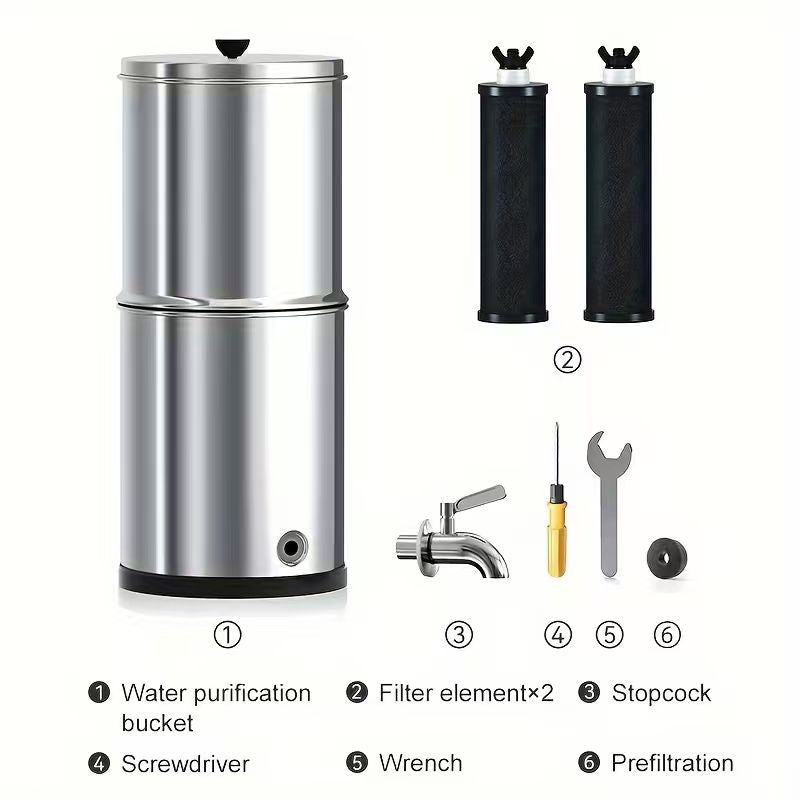
7. Big Flow 2 Gravity Water Filter (Best Off-Grid Alternative)
While not a pressurized RO system, no home preparedness setup is complete without a non-electric gravity filter. When the power grid fails, your electric tankless RO stops working. The Big Flow 2 is an emergency essential.
- Capacity: 2.25 Gallons (8.5L)
- Filter Life: Up to 6,000 Gallons
- Material: 304 Stainless Steel
- Power Required: None (Gravity fed)
8. Big Flow 3 Gravity Water Filter
Scaling up the gravity concept, the Big Flow 3 Gravity Water Filter provides expanded capacity for larger families operating in off-grid cabins or facing long-term municipal water boil advisories.
9. M8-2 Under Sink Water Filter
If you lack access to an electrical outlet under your sink (required for tankless RO pumps), the M8-2 Under Sink Water Filter provides advanced ultra-filtration. It does not waste water and requires zero electricity.
10. Portable Water Filter Bottle
For beginners entering the hiking or survival space, ensuring safe water on the move is critical. The Portable Water Filter Bottle provides sub-micron filtration directly in your hand, a perfect complement to your home RO system.
11. Modular RO Units with Fluoride Reducers
Many legacy systems struggle with dense fluoride. Upgrading your multi-stage setup with a dedicated Fluoride Reduction Filter ensures your RO membrane operates at peak efficiency.
12. 7-Stage Alkaline Remineralizing RO Systems
A staple in the modern market, these systems take the highly purified (but slightly acidic) RO water and push it through a calcite/corosex bed to raise the pH and add a sweeter, mineral-rich taste.
13. UV-Sterilization Integrated RO Systems
For homeowners relying on untreated well water, pairing an RO membrane with a terminal Ultraviolet (UV) light stage guarantees that any microbial contaminants passing through are genetically neutralized before hitting your glass.
14. Smart App-Enabled IoT RO Systems
Next-generation systems are incorporating Wi-Fi to send push notifications directly to your smartphone regarding daily water consumption metrics, real-time TDS levels, and exact filter lifespan percentages.
15. Hybrid Emergency Gravity Purifiers
To keep gravity filters operating at peak safety during heavy municipal contamination events, maintaining a stock of the Replacement Gravity Water Filter elements ensures your backup plan never falters.
Essential Comparisons and Buying Guides
| System Type | Filtration Precision | Power Required | Best Use Case |
|---|---|---|---|
| Tankless RO (A10S 800G) | 0.0001 Micron | Yes (110V/220V) | Modern kitchens requiring high flow and heavy purification. |
| Atmospheric Water Generator | RO/UV Integrated | Yes | Off-grid luxury, high humidity areas, zero plumbing. |
| Gravity Filter (Big Flow 2) | 0.2 - 2.0 Micron | No | Emergency preparedness, RVs, camping. |
| Direct Flow Under Sink | Ultra-Filtration | No | Homes with acceptable TDS but requiring chlorine/sediment removal. |
| Feature | Tankless RO (Modern) | Legacy Tank RO |
|---|---|---|
| Space Required | Minimal (Size of a PC tower) | Massive (Requires half the cabinet) |
| Water Freshness | Purified on demand | Sits in a pressurized rubber bladder |
| Flow Rate | Consistent (up to 2.1 L/min) | Drops rapidly as the tank empties |
| Wastewater Ratio | Highly Efficient (1.5:1 or 1:1) | Inefficient (often 3:1 or 4:1) |
| Pros of RO Systems | Cons of RO Systems |
|---|---|
| Removes 99% of heavy metals, PFAS, and fluoride. | Generates wastewater during the purification process. |
| Dramatically improves the taste of water, coffee, and food. | Requires electricity for internal booster pumps (on tankless models). |
| Eliminates the cost and environmental impact of bottled water. | Removes beneficial minerals (requires remineralization stage). |
| Modern tankless units save significant under-sink space. | Filters and membranes require strict replacement schedules. |
| Specification | What to Look For | Why It Matters |
|---|---|---|
| Gallons Per Day (GPD) | 600 GPD to 800 GPD | Determines how fast water flows from your dedicated faucet. Lower GPD means waiting longer to fill a pot. |
| Pure to Drain Ratio | 1.5:1 or 1:1 | Older systems waste up to 4 gallons for every 1 purified. Efficient ratios lower your water bill significantly. |
| Filter Replacement Mechanism | Twist-and-Pull Cartridges | Eliminates the need for heavy wrenches and prevents messy water spills during routine maintenance. |
| Smart Monitoring | TDS Display & Filter Life Indicator | Takes the guesswork out of filter changes, ensuring you never consume compromised water. |
Frequently Asked Questions (FAQ)
Are the best rated reverse osmosis systems for home worth the investment?
Absolutely. In our testing, the long-term cost of purchasing bottled water vastly exceeds the upfront capital required for a premium tankless RO system. Furthermore, standard refrigerator filters cannot remove heavy metals or PFAS; only an RO membrane provides verified molecular-level protection for your drinking water.
What is the difference between tankless and tank-based RO systems?
Legacy tank systems filter water slowly and store it in a rubber bladder, taking up massive under-sink space and creating a risk of secondary contamination. Modern tankless systems use high-powered booster pumps to force water through the membrane instantly, providing fresh, infinite water on demand with a much smaller physical footprint.
Do RO systems remove beneficial minerals from drinking water?
Yes. The 0.0001-micron precision of an RO membrane is indiscriminate; it removes harmful lead and toxic chemicals, but also strips out calcium and magnesium. This is why we recommend installing a post-filtration remineralization cartridge (often alkaline) to restore the healthy minerals and balance the water's pH for optimal taste.
Authoritative Sources & Industry Standards
To ensure our technical claims align with the highest levels of municipal and environmental safety, this guide references standards published by the following authoritative organizations:
- United States Environmental Protection Agency (EPA) - Federal guidelines on drinking water contaminants and the efficacy of point-of-use reverse osmosis applications.
- NSF International - Criteria for the NSF/ANSI 58 standard, which dictates the safety, structural integrity, and TDS reduction performance of residential RO systems.
- Water Quality Association (WQA) - Professional certification standards for water treatment professionals and residential purification hardware.