


6 Tips for Using Portable Reverse Osmosis Filters: An Expert Industry Guide
The pursuit of pure, unadulterated drinking water is no longer confined to static residential kitchens. As mobile lifestyles, overlanding, van life, and off-grid living surge in popularity, the demand for high-grade mobile water purification has skyrocketed. However, the commercial market is currently flooded with cheap, white-labeled filtration systems wrapped in deceptive marketing. Many consumers purchase these devices assuming they operate like a simple Brita pitcher. This is a profound mechanical misunderstanding.

Reverse Osmosis (RO) is an aggressive, physics-driven process. It demands specific operating conditions to strip water of heavy metals, pharmaceuticals, and toxic chemicals. When consumers fail to understand the operational requirements, they end up with cracked membranes, agonizingly slow flow rates, and bacterial blooms inside their filter housings. From our experience designing and auditing advanced water filtration systems at Puflow, mastering the operational nuances is non-negotiable. If you are committed to Using Portable Reverse Osmosis Filters safely and effectively, you must abandon the plug-and-play mindset. In this comprehensive guide, we will break down exactly what these systems demand, providing commercial and practical judgment to help you optimize your mobile hydration strategy.
Quick Answer: Core Tips for Using Portable Reverse Osmosis Filters
To maximize the lifespan and safety of your portable RO system, you must actively manage its operating environment. 1. Monitor Feed Pressure: RO membranes require at least 40 PSI to function; without it, you must use a booster pump. 2. Manage Wastewater: Portable RO systems generate brine (waste) water; plan your routing so you do not flood your campsite or van. 3. Prioritize Pre-Filtration: Never feed raw, turbid water into an RO membrane without running it through sediment and carbon blocks first. 4. Perform Regular Flushes: Flush the membrane before and after use to prevent calcium scaling. 5. Regulate Temperature: Feed water must remain between 40°F and 90°F to prevent membrane rupture. 6. Remineralize for Drinking: Pure RO water is slightly acidic; always use a remineralization cartridge for drinking applications.
Table of Contents
- What It Is: The Mechanics of Portable RO
- How It Works: Osmotic Pressure Explained
- 6 Crucial Tips for Using Portable Reverse Osmosis Filters
- Benefits and Limitations
- Pros and Cons Table
- Who Should Use It & Who Should Not
- Comparison Table: Portable RO vs. Alternative Systems
- Common Operational Mistakes
- Expert Buying Considerations
- Expert Recommendation from Puflow
- Frequently Asked Questions (FAQ)
What It Is: The Mechanics of Portable RO
A portable reverse osmosis filter is a miniaturized version of industrial desalination plants. It is a multi-stage filtration apparatus designed to be moved, deployed quickly, and hooked up to temporary water sources like RV park spigots or garden hoses. Unlike standard Under-Sink RO Systems which are hard-plumbed into municipal lines, portable systems are housed in rugged, freestanding casings.
These systems utilize a Thin Film Composite (TFC) membrane with microscopic pores measuring approximately 0.0001 microns. To put that in perspective, this is small enough to block dissolved salts, lead, arsenic, and microplastics. If you are evaluating the Best Water Filter for Microplastics, reverse osmosis is the absolute gold standard.
How It Works: Osmotic Pressure Explained
In nature, osmosis moves water from an area of low solute concentration to an area of high solute concentration to achieve equilibrium. Reverse osmosis uses mechanical pressure to overpower this natural osmotic pressure. By forcing contaminated feed water against the TFC membrane, pure water molecules (permeate) are pushed through to the clean side. The contaminants are left behind on the dirty side and are flushed away continuously in a stream of wastewater (concentrate or brine).
6 Crucial Tips for Using Portable Reverse Osmosis Filters
In most professional situations, treating a portable RO system like a standard carbon pitcher leads to rapid equipment failure. Implement these six strategies to protect your investment.
1. Command Your Feed Pressure
Reverse osmosis is entirely dependent on pressure. A TFC membrane requires a minimum of 40 PSI to produce water, but it operates optimally between 60 and 80 PSI. When traveling in an RV, park spigots notoriously suffer from low pressure. If you attempt to run a portable RO on 30 PSI, the system will produce a trickle of pure water and an ocean of wastewater. We recommend always carrying a pressure gauge. If pressure is inadequate, you must invest in a system with an integrated electric booster pump.
2. Manage the Wastewater (Brine) Routing
You cannot ignore the physics of RO: it produces wastewater. A standard portable unit running on municipal pressure operates at roughly a 3:1 or 4:1 waste-to-pure ratio. If you are operating the unit outside your van, you must route this brine line into a drain, a gray water tank, or safely away from your campsite to prevent flooding. Do not try to cap the waste line; doing so will instantly destroy the membrane.
3. Never Skip Pre-Filtration
The RO membrane is the most expensive component in your kit, and it is highly vulnerable to two things: physical abrasion from sediment and chemical degradation from chlorine. You must ensure your raw water passes through a 5-micron spun polypropylene sediment filter and a high-quality carbon block before it reaches the RO membrane. Regularly sourcing Replacement Filters for your pre-stages is cheaper than replacing a blown membrane.
4. Perform Routine Membrane Flushes
As the system purifies water, dissolved solids (like calcium and magnesium) accumulate on the surface of the membrane. Over time, this causes mineral scaling, which chokes the water flow. Most high-quality portable systems feature a manual or automatic flush valve. Opening this valve allows water to rush over the membrane surface at high velocity, sweeping away the scale. Flush the system for three minutes before and after every heavy use session.
5. Strictly Regulate Water Temperature
Temperature dictates the viscosity of water, which heavily impacts RO production rates. Portable units are rated for water at 77°F (25°C). For every degree the water temperature drops below 77°F, production decreases by about 2%. Conversely, never run hot water (above 95°F) through the system, as heat will permanently melt and delaminate the synthetic membrane layers. Furthermore, if you leave a wet portable RO system in a freezing vehicle overnight, expanding ice will shatter the acrylic housings.
6. Utilize Remineralization for Drinking
When studying RO Water vs Tap Water, you will notice that RO water is highly aggressive. Because it has been stripped of all minerals, its pH drops, making it slightly acidic. While this is excellent for spot-free car washing or hydroponics, drinking purely demineralized water long-term is not ideal for human hydration. Always ensure the final stage of your portable setup includes a calcium/magnesium remineralization cartridge to restore pH balance and taste.
| Operating Parameter | Optimal Range | Danger Zone (Action Required) |
|---|---|---|
| Feed Pressure | 60 - 80 PSI | Below 40 PSI (Requires Booster Pump) |
| Water Temperature | 50°F - 85°F | Above 95°F (Membrane Damage) or Below 32°F (Freezing) |
| Pre-Filter Lifespan | Every 3 - 6 Months | Over 6 Months (Chlorine Breakthrough) |
| Membrane Lifespan | 24 - 36 Months | Sudden drop in flow rate / TDS spike |
Benefits and Limitations
The core benefit of Using Portable Reverse Osmosis Filters is absolute autonomy. Whether you are hooked up to a questionable campground spigot or dealing with heavily chlorinated city water on a road trip, you guarantee the clinical safety of your drinking water. For those exploring the Best Portable Water Filters for Travel, RO provides peace of mind that standard carbon filters cannot match.
However, the limitations are structural. These systems are bulky, heavy when filled with water, and slow. If you need 5 gallons of pure water immediately, a portable system running on low pressure might take over an hour to deliver it, wasting 15 gallons of brine in the process.
Pros and Cons Table
| Advantages (Pros) | Disadvantages (Cons) |
|---|---|
| Removes up to 99.9% of total dissolved solids (TDS), heavy metals, and toxins. | Generates a significant amount of wastewater (brine) that must be managed. |
| No permanent plumbing modifications required; ideal for renters and travelers. | Highly dependent on external feed water pressure to function efficiently. |
| Highly modular; pre-filters and membranes can be swapped easily in the field. | Requires meticulous protection against freezing temperatures and hot water. |
Who Should Use It & Who Should Not
For commercial users and transient lifestyles: RV owners, overland expedition vehicles, marine vessels (with specialized low-pressure freshwater feeds), and disaster preparedness teams are the ideal end-users. You require adaptability and absolute purification efficacy when moving between disparate water sources.
Who does not need it: Homeowners looking for a permanent kitchen solution should absolutely avoid portable RO systems. Do not clutter your countertop with hoses and waste lines. If you are stationary, you require a dedicated, hard-plumbed solution. For residential applications, review the Best Reverse Osmosis System for Home usage to maximize convenience and aesthetics.
Comparison Table: Portable RO vs. Alternative Systems
| Filtration Type | Portability | Wastewater Generated? | Power Required? | Best Use Case |
|---|---|---|---|---|
| Portable Reverse Osmosis | High (Briefcase/Bin style) | Yes (3:1 ratio typical) | Optional (For booster pumps) | RVs, Overlanding, Temporary sites |
| Under-Sink Ultrafiltration (UF) | Low (Hard-plumbed) | No (Zero waste) | No | Residential kitchens, municipal tap water |
| Gravity Drip Carbon Filters | Moderate (Countertop) | No | No | Off-grid cabins, low-volume drinking water |
| Atmospheric Water Generator | Low (Heavy machinery) | No | Yes (High consumption) | Areas with zero municipal water access |
Common Operational Mistakes
In our testing, the fastest way to destroy an RO system is "dry storage." When you are done traveling and put the portable unit in your garage for the winter, the membrane must not dry out. A dry membrane will crack, permanently ruining its microscopic pores. You must keep the system sealed with water inside, and if storing for over a month, use a proprietary membrane preservative solution to prevent bacterial growth.
Expert Buying Considerations
| Feature | Why It Is Crucial for Portable Use |
|---|---|
| Standardized Filter Sizes | Ensure the system uses standard 10-inch or 2.5-inch filters. Proprietary cartridges are impossible to find in hardware stores while traveling. |
| Built-in Booster Pump | If you anticipate low-pressure campground hookups, an integrated 12V or 110V pump is mandatory for efficient operation. |
| Rugged Housing | Exposed acrylic housings will shatter during transit. Look for systems housed in durable ABS plastic or steel frames. |
| NSF Certification | Verify the components meet rigorous standards. Review NSF Certified Reverse Osmosis System criteria for safety. |
Expert Recommendation from Puflow
In most professional situations, we see consumers buy portable RO systems for their kitchen simply because they want to avoid drilling a hole in their sink or modifying plumbing. This is a severe commercial mistake. Attempting to use a portable, hose-based system as a permanent daily driver in a residential kitchen leads to frustration, countertop clutter, and poor wastewater management.
If you are in a fixed location and your primary goal is to secure ultra-clean drinking water without the massive wastewater ratio associated with RO, we recommend pivoting to high-efficiency Ultrafiltration (UF). For homeowners and renters alike, the TM8-2 Under Sink Water Filter System 0.01μm Ultrafiltration is the superior choice.
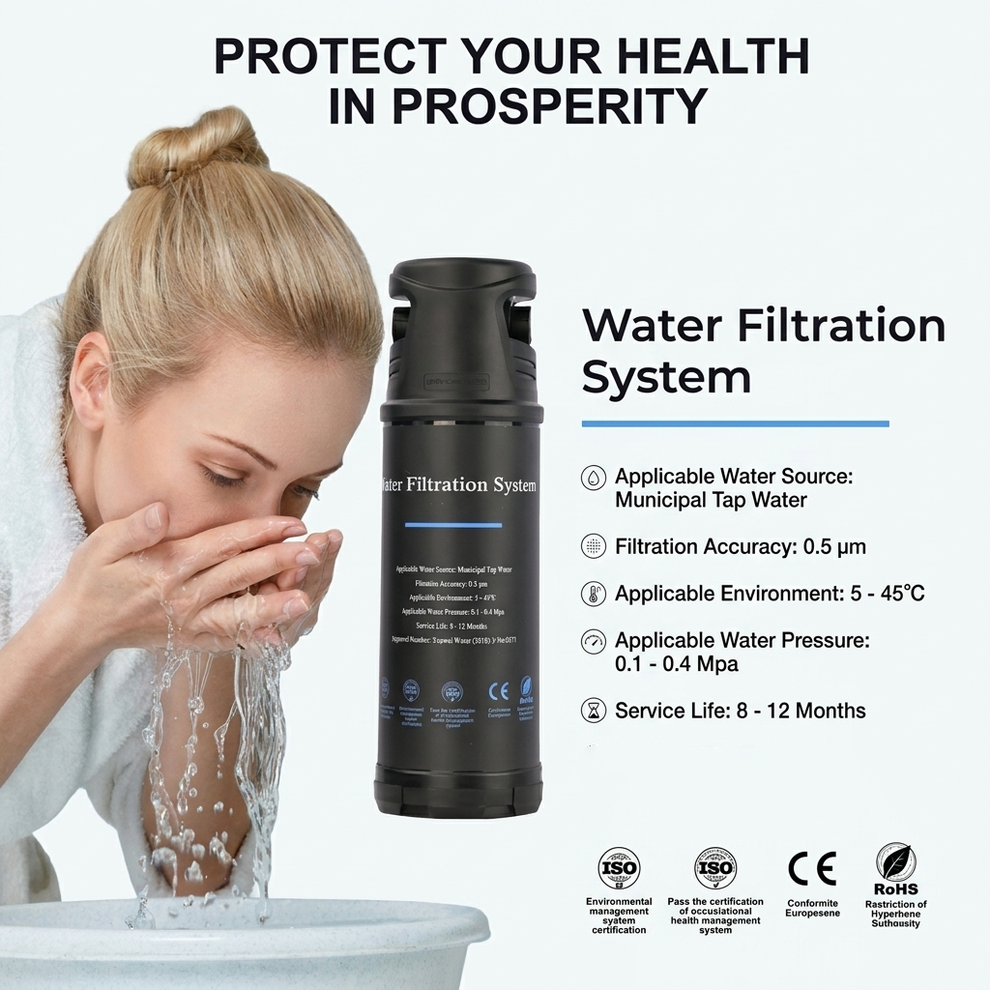
TM8-2 Under Sink Water Filter System 0.01μm Ultrafiltration
Designed for absolute efficiency in permanent installations, the TM8-2 delivers a massive flow rate with zero wastewater and zero electricity required. Operating at 0.01μm filtration accuracy, it strips out harmful contaminants while retaining the healthy, naturally occurring minerals in your municipal tap water.
- Filtration Accuracy: 0.01μm
- Flow Rate: Up to 400 L/h (No waiting for a tank to fill)
- Power Requirement: None
- Wastewater Generated: Zero
- Product Size: Ultra-compact 130 × 110 × 345 mm
For those who strictly require remineralized RO water at home, ensure you explore our guide on Under Sink Reverse Osmosis System with Remineralization options to achieve the perfect balance of purity and taste.
Frequently Asked Questions (FAQ)
For heavy-duty applications or when sourcing water from high-TDS (Total Dissolved Solids) environments like RV parks, we recommend flushing the RO membrane for 3 to 5 minutes before and after every use. This prevents mineral scaling and extends the life of the membrane.
In most professional situations, standard portable RO systems cannot desalinate seawater. Desalination requires specialized marine watermakers that operate at vastly higher pressures (800+ PSI) than what a standard residential or portable unit can generate.
Reverse osmosis physics dictate that wastewater (brine) is necessary to wash rejected contaminants away from the membrane. A standard portable unit running on low municipal water pressure will naturally produce a 3:1 or 4:1 waste-to-pure water ratio. Increasing feed pressure with a booster pump can improve this efficiency.
Authoritative Industry References
To ensure our operational advice aligns with global water safety and engineering standards, we consult the following authoritative bodies:
- U.S. Environmental Protection Agency (EPA) - Guidelines on national drinking water regulations and safe filtration practices.
- Centers for Disease Control and Prevention (CDC) - Scientific evaluations on the efficacy of reverse osmosis in removing viral and bacterial pathogens.
- Water Quality Association (WQA) - The premier industry trade association providing certification standards and technical parameters for residential and commercial water treatment technologies.