


How Does Reverse Osmosis Desalination Work?
For decades, the global water industry treated desalination as a costly, energy-intensive last resort—a technology reserved exclusively for wealthy desert nations and maritime vessels. However, as we navigate through 2026, the water-energy nexus has reached a critical tipping point. Driven by severe hydrologic volatility, saltwater intrusion into coastal aquifers, and groundbreaking advancements in membrane efficiency, reverse osmosis desalination has fundamentally shifted from an expensive alternative to a primary pillar of global water security.

From our experience engineering advanced water purification systems at Puflow, we see a massive disconnect between public perception and industrial reality. Consumers often conflate standard under-sink filters with the massive, hyper-pressurized municipal systems required to strip sodium chloride from the ocean. While the underlying physics are identical, the engineering, energy demands, and pretreatment architectures are vastly different. In this comprehensive practitioner's guide, we break down exactly how reverse osmosis desalination works, evaluate its commercial viability, and help you determine whether this technology is the right solution for your specific water challenges.
Quick Answer: How Does It Work?
Reverse osmosis (RO) desalination works by applying immense hydraulic pressure (typically between 800 and 1,200 psi for seawater) to force saline water through a semi-permeable, thin-film composite membrane. In nature, osmosis draws pure water into salty water to equalize concentration. Desalination reverses this natural flow. The specialized membrane pores are incredibly small (around 0.0001 microns), allowing pure H2O molecules to pass through while physically blocking up to 99.5% of dissolved salts, heavy metals, and microorganisms. The process yields two streams: pure, potable "permeate" water, and a highly concentrated brine that is discharged back into the source.
Table of Contents
- What is Reverse Osmosis Desalination?
- Quick Summary Table: Core Specifications
- How It Works: The 5-Stage Engineering Process
- The Strategic Benefits
- Limitations and Environmental Realities
- Who Should Use It (And Who Does Not Need It)
- Pros and Cons Table
- Common Mistakes in System Design
- Comparison Table: Desalination vs. Alternatives
- Commercial Buying Considerations
- Expert Recommendation
- The Bottom Line
- Frequently Asked Questions
What is Reverse Osmosis Desalination?
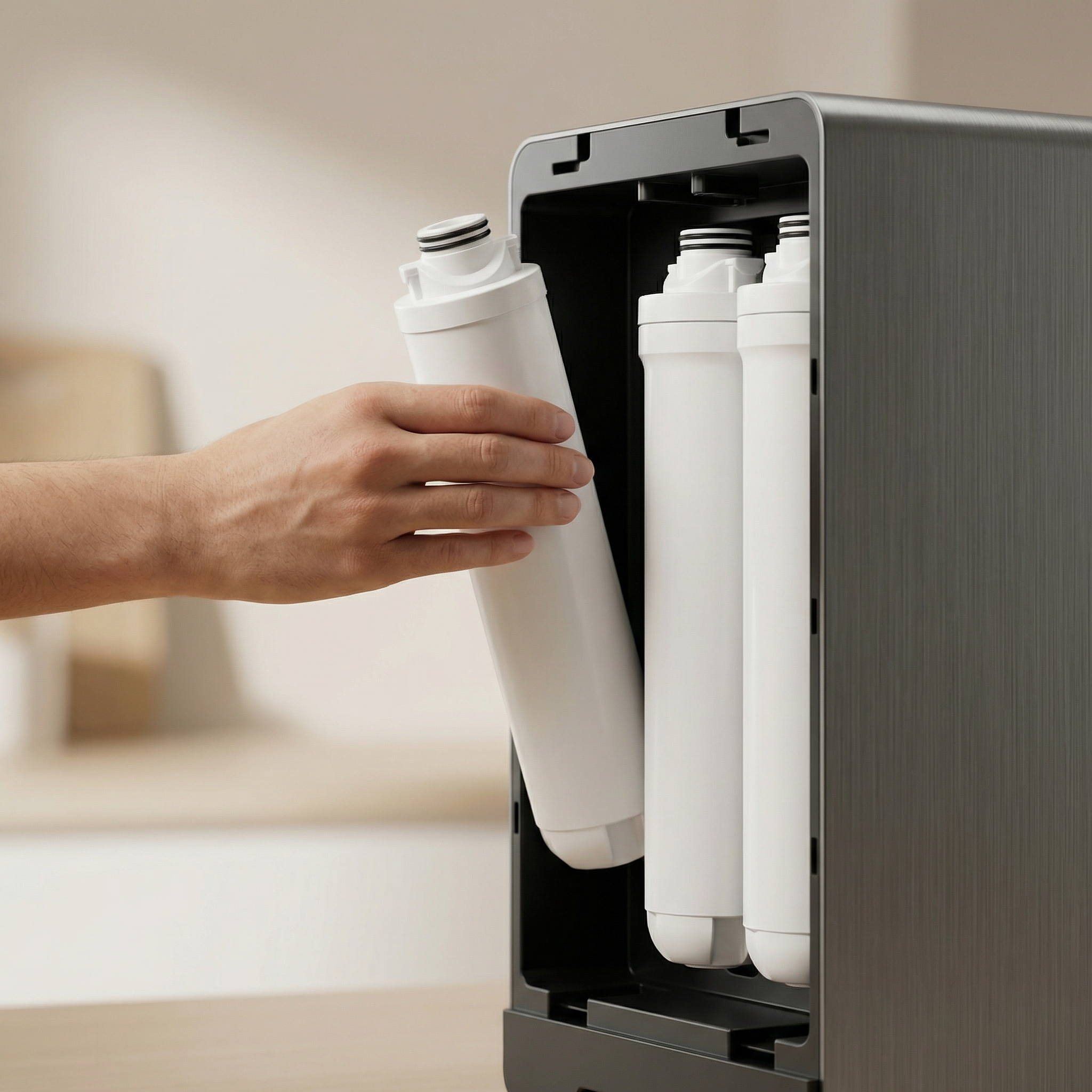
To understand reverse osmosis, you must first understand natural osmosis. If you place a semi-permeable membrane between a tank of pure water and a tank of seawater, the pure water will naturally migrate through the membrane into the seawater side to dilute the salt concentration. This creates a measurable force known as "osmotic pressure." Seawater possesses a natural osmotic pressure of roughly 390 psi (27 bar).
Reverse osmosis desalination deliberately overrides this natural thermodynamic drive. By utilizing high-pressure positive displacement pumps to apply an external force that vastly exceeds the osmotic pressure, the system literally squeezes the pure water out of the saline solution, leaving the solute (salts) behind. When evaluating RO Water vs Tap Water, the distinction is clear: municipal tap water is typically drawn from fresh surface water and lightly filtered, whereas desalinated RO water is stripped down to its molecular foundation, rendering it the purest form of water physically attainable on a mass scale.
Quick Summary Table: Core Specifications
| Parameter | Seawater Desalination (SWRO) | Brackish Water Desalination (BWRO) |
|---|---|---|
| Feed Water Salinity | 30,000 - 45,000 mg/L (ppm) | 1,000 - 10,000 mg/L (ppm) |
| Required Operating Pressure | 800 - 1,200 psi (55 - 82 bar) | 200 - 400 psi (14 - 27 bar) |
| Energy Consumption (Modern) | 2.5 - 3.5 kWh/m³ | 0.5 - 1.5 kWh/m³ |
| System Recovery Rate | 40% - 50% (50% goes to brine) | 70% - 85% |
How It Works: The 5-Stage Engineering Process
A modern SWRO (Seawater Reverse Osmosis) plant is not simply a massive pump attached to a filter. It is a highly calibrated chemical and mechanical refinery. If you attempt to push raw seawater directly into an RO membrane, the system will catastrophically foul within hours. In most professional situations, the process demands five distinct, non-negotiable stages.
1. Intake and Pretreatment
The feed water is drawn from the ocean through specialized sub-surface intakes to minimize marine life disruption. Once inside the plant, it undergoes aggressive pretreatment. Suspended solids, algae, and organic matter must be removed to protect the delicate RO membranes. This involves coagulation, flocculation, and passage through ultrafiltration (UF) or multimedia sand filters. Additionally, technicians dose the water with anti-scalants to prevent calcium carbonate from crystallizing and blinding the membrane surface.
2. High-Pressure Pumping
Once the water is chemically stabilized and clear of particulate matter, massive high-pressure pumps take over. Because seawater requires a minimum of 390 psi just to stop natural osmosis, these industrial pumps drive the feed water pressure up to 1,200 psi to ensure an adequate "flux" rate (the rate at which water crosses the membrane).
3. The Membrane Separation Phase
The highly pressurized water enters spiral-wound membrane elements housed inside fiberglass pressure vessels. These Thin-Film Composite (TFC) membranes are engineered with pores measuring approximately 0.0001 microns. As the water flows horizontally across the membrane (a process called cross-flow filtration), a portion of it is forced vertically through the microscopic pores into a central collection tube. This ensures that the system also acts as the Best Water Filter for Microplastics and nanoplastics, stripping virtually all physical contaminants from the supply.
4. Energy Recovery Devices (ERDs)
In modern 2026 configurations, this is where the magic happens. The brine stream that does not pass through the membrane remains under extreme pressure (e.g., 1,150 psi). Instead of bleeding this pressurized brine out to sea and wasting the mechanical energy, it is routed through Isobaric Pressure Exchangers. These devices transfer the pressure from the waste brine directly into the incoming raw seawater feed, recovering up to 96% of the energy. This single innovation is why desalination energy consumption has plummeted from 15 kWh/m³ in the 1990s to under 3 kWh/m³ today.
5. Post-Treatment and Remineralization
Water that exits the RO membrane is too pure; it is highly aggressive, acidic, and lacks essential minerals. If pumped directly into municipal pipes, it would immediately dissolve the copper and lead infrastructure. To correct this, the permeate water passes through calcite contactors where calcium and magnesium are reintroduced, stabilizing the pH and improving the taste. This exact same principle applies to residential systems, which is why we highly advocate utilizing an Under Sink Reverse Osmosis System with Remineralization for your home.
The Strategic Benefits
The primary benefit of RO desalination is absolute climate resilience. Traditional surface water supplies and reservoirs are entirely dependent on hydrologic cycles—snowpack and rainfall. Desalination creates a drought-proof water supply, offering complete geopolitical and environmental autonomy for coastal regions.
Furthermore, compared to older thermal desalination methods (Multi-Stage Flash Distillation), RO requires a fraction of the energy. It does not require boiling millions of gallons of water, making it far more compatible with integration into renewable energy grids, specifically solar and wind power.
Limitations and Environmental Realities
Despite the massive leaps in efficiency, reverse osmosis desalination remains an energy-intensive process. Even at 3 kWh/m³, producing desalinated water consumes substantially more electricity than pumping water from a local river or shallow aquifer.
The secondary limitation is brine management. A seawater plant operating at a 50% recovery rate discharges a concentrated brine solution back into the ocean. If this hyper-saline fluid is dumped statically in one location, it sinks to the ocean floor and creates toxic dead zones for benthic marine life. Modern plants must invest heavily in high-velocity offshore diffusers to rapidly mix and dilute the brine within the ocean currents.
Who Should Use It (And Who Does Not Need It)
For commercial users and municipalities: Coastal cities facing chronic groundwater depletion, island nations relying entirely on imported freshwater, and heavy-duty industrial facilities located near the ocean must invest in RO desalination. It is the only guaranteed way to secure uninterrupted baseline production.
Who does not need it: If you are a homeowner or a business located inland with access to a municipally treated freshwater supply, you do not need commercial desalination technology. Purchasing an oversized, hyper-pressurized system to treat standard city tap water is a catastrophic waste of capital. Instead, you need a high-efficiency residential purifier. If you are comparing Tankless RO vs Tank RO systems, a modern tankless unit provides the exact same membrane technology engineered specifically for the lower pressures of standard home plumbing.
Pros and Cons Table
| Pros of RO Desalination | Cons and Limitations |
|---|---|
| Provides a 100% drought-proof, reliable water supply. | High capital expenditure (CAPEX) for facility construction. |
| Significantly more energy-efficient than thermal distillation. | Requires complex offshore brine diffusion systems. |
| Removes heavy metals, PFAS, microplastics, and pathogens. | Pretreatment chemistry (anti-scalants) must be flawlessly managed. |
| Easily scalable due to modular membrane configurations. | Post-treatment remineralization is mandatory to prevent pipe corrosion. |
Common Mistakes in System Design
In our testing and industry observation, the most severe mistake operators make is underinvesting in pretreatment. Procurement teams often try to save money by utilizing cheaper sand filtration instead of ultrafiltration (UF) ahead of the RO membranes. Consequently, microscopic algae and silt bypass the primary filters and organically foul the RO elements, leading to massive spikes in operating pressure and premature membrane replacement.
Another common failure is ignoring feed water temperature fluctuations. RO membranes become less permeable as water temperature drops. A system engineered to produce 10,000 gallons per day in August may only produce 7,000 gallons per day in January unless the high-pressure pumps are outfitted with Variable Frequency Drives (VFDs) to ramp up pressure and compensate for the colder, thicker water.
Comparison Table: Desalination vs. Alternatives
| Technology Type | Primary Application | Energy Footprint | Target Contaminant Removal |
|---|---|---|---|
| Seawater RO (SWRO) | Coastal municipalities, ships. | High (~3.0 kWh/m³) | High-salinity NaCl, dissolved ions. |
| Thermal Distillation (MSF) | Middle East co-generation power plants. | Extreme (Thermal + Electric) | Extreme salinity environments. |
| Residential Tankless RO | Home kitchens, light commercial. | Minimal (Standard 110V/220V) | Chloramine, lead, PFAS, trace minerals. |
Commercial Buying Considerations
If you are procuring a desalination system for a commercial facility, you must evaluate the Total Cost of Ownership (TCO), not just the initial capital quote. The three metrics that govern your daily operational costs are the Specific Energy Consumption (SEC), the membrane replacement frequency, and the chemical dosing requirements.
| Procurement Metric | What to Demand from Manufacturers |
|---|---|
| Energy Recovery | Demand isobaric pressure exchangers (e.g., PX devices). Do not accept older Francis turbine technology. |
| Pretreatment | Insist on automated Ultrafiltration (UF) skids. They offer a vastly superior Silt Density Index (SDI) over sand. |
| Membrane Spec | Ensure the use of highly cross-linked, anti-fouling TFC membranes from tier-1 suppliers. |
Say goodbye to tap water worries. Puflow delivers clean, better-tasting water with advanced RO systems designed for fast flow, low waste, and effortless daily use.
Expert Recommendation
Applying Desalination Technology to Your Home
While massive industrial desalination plants secure municipal grids, you do not need a multi-million dollar facility to achieve absolute water purity in your own kitchen. If your goal is to eliminate microplastics, forever chemicals (PFAS), and heavy metals from your municipal or well water, you require the residential equivalent of this technology.
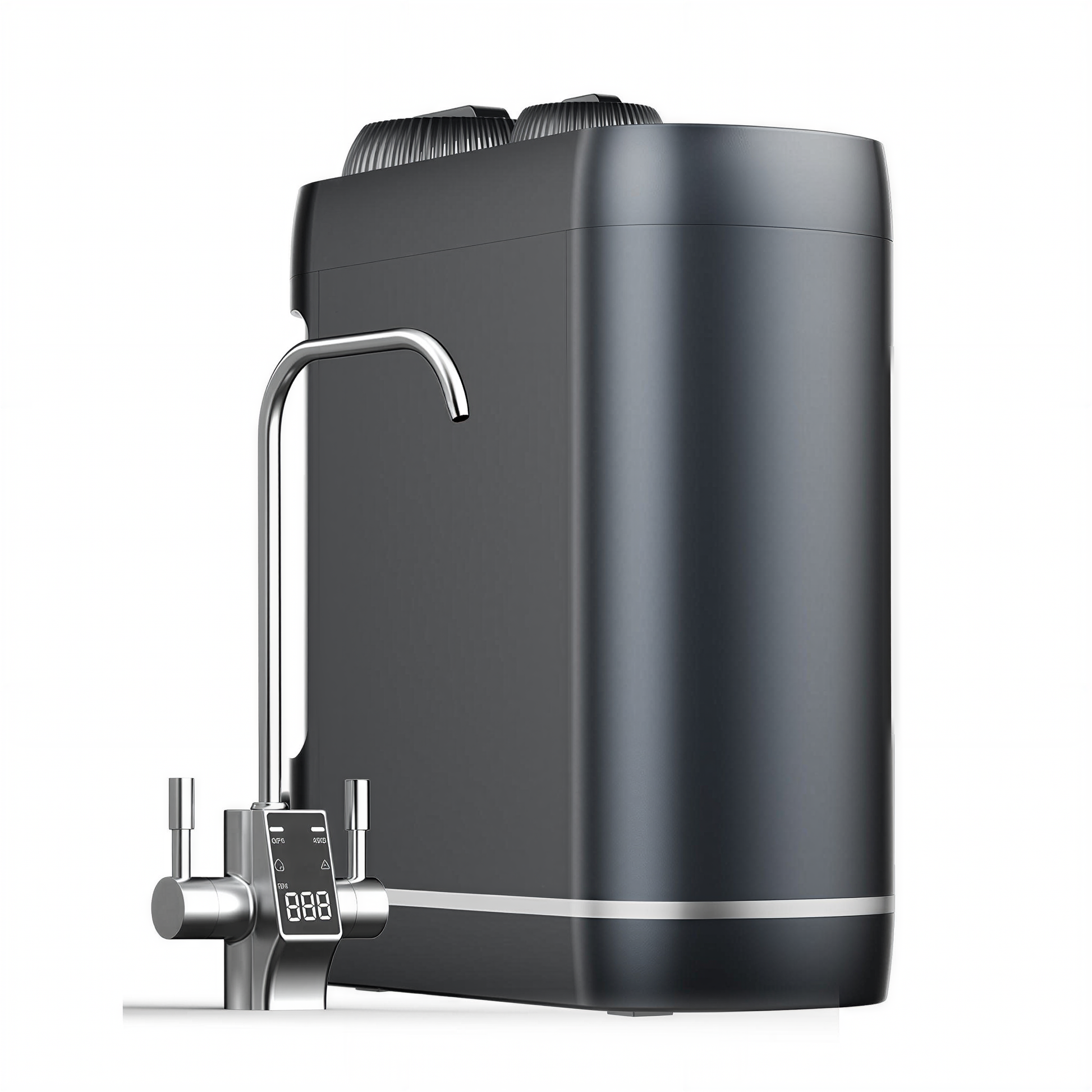
We highly recommend the A10S 800G Tankless RO System. It utilizes the exact same Thin-Film Composite membrane architecture found in commercial desalination, but it is precisely engineered to operate on standard household water pressure (aided by an internal booster pump). It delivers a massive 800 gallons per day flow rate without the bulky storage tank, ensuring you have unlimited access to purified, commercially graded water right at your sink. If you lack the plumbing space for an under-sink installation, exploring the Best Countertop RO Water Purifier options provides a viable, plug-and-play alternative.
The Bottom Line
Reverse osmosis desalination works by utilizing advanced high-pressure engineering to force saltwater through microscopic membrane barriers, stripping away 99% of impurities. As we face the climate realities of 2026, the technology has evolved from an energy-guzzling luxury to a hyper-efficient necessity. By integrating advanced energy recovery devices and ultrafiltration pretreatment, modern desalination represents the most viable, drought-proof solution to global water scarcity. Whether deployed on a coastal megacity scale or scaled down for an under-sink residential application, RO remains the undisputed gold standard for water purification.
Frequently Asked Questions
Does reverse osmosis desalination use a lot of energy?
Historically, yes. However, in 2026, modern seawater reverse osmosis plants utilize isobaric pressure exchangers that recover pressure from the waste brine stream. This has reduced specific energy consumption to approximately 2.5 to 3.5 kWh per cubic meter of purified water, making it vastly more efficient than older thermal distillation methods.
What happens to the salt removed during the desalination process?
The salts and minerals removed by the RO membrane are concentrated into a hyper-saline byproduct called brine. In commercial plants, this brine is carefully discharged back into the ocean using high-velocity offshore diffusers that rapidly mix the heavy brine into the surrounding seawater, preventing toxic settling on the ocean floor.
Can I use a regular home RO system to desalinate seawater?
Absolutely not. A standard residential RO system is engineered to handle tap water pressures of 40 to 80 psi and Total Dissolved Solids (TDS) under 1,000 ppm. Seawater has a TDS of 35,000 ppm and requires specialized pumps capable of generating over 800 psi to overcome osmotic pressure. Attempting to run seawater through a home unit will instantly destroy the membrane and the pump.