


The 9 Best Tankless Reverse Osmosis Systems for Refrigerators in 2026
Upgrading your kitchen with a high-end water filtration system is a major quality-of-life improvement, but the moment you try to connect modern technology to a standard refrigerator, you run into a highly frustrating physics problem. The industry is moving away from bulky, space-consuming storage tanks, favoring sleek, on-demand tankless reverse osmosis (RO) systems. However, most consumers—and even many plumbers—fail to realize that connecting a tankless RO system directly to a refrigerator's ice maker is a recipe for mechanical failure if done incorrectly.

From our experience engineering and testing advanced filtration systems at Puflow, we know exactly where the friction points lie. Refrigerators rely on a solenoid valve that expects instant, sustained pressure (typically 30-40 psi) to fill an ice tray. Tankless systems, by design, rely on internal booster pumps that take a few seconds to spool up and deliver that pressure. If you do not buy the right system, or if you fail to configure it properly, your ice maker will produce hollow cubes, and your water dispenser will slow to a miserable trickle.
In this comprehensive, uncompromising guide, we will break down the exact engineering requirements for this specific setup. We will take a clear position on which products dominate the market, explain precisely how to evaluate a tankless reverse osmosis system for refrigerator applications, and detail whether upgrading your current plumbing is actually worth the investment.
Quick Answer: Top Recommendations
If you are looking for an immediate buying decision to supply both your kitchen faucet and your refrigerator ice maker, these are the industry leaders for 2026:
- Best Overall & Highest Output: Puflow A10S 800G Tankless RO System. With an immense 800 Gallons Per Day (GPD) capacity and a flow rate up to 2.1 L/min, it has the sheer power required to maintain pressure for heavy refrigerator usage.
- Best Budget Integration: Frizzlife PD600. An excellent entry-level 600 GPD system that plays nicely with aftermarket fridge connection kits.
- Most Efficient: Waterdrop G3P800. Offers a 3:1 pure-to-waste ratio, making it highly efficient for high-volume households.
Expert Warning: Regardless of which brand you purchase, in most professional situations, you must install a mini 1-gallon buffer tank or an ice-maker bypass kit between the tankless RO and the fridge to ensure the solenoid valve functions correctly.
Table of Contents
- What is a Tankless RO System and How Does it Work?
- The Refrigerator Connection Challenge
- Quick Summary Table
- The 9 Best Tankless RO Systems Evaluated
- Direct Comparison Table
- Benefits & Limitations (Pros vs Cons)
- Who Should Use It & Who Doesn't Need It
- Common Mistakes to Avoid
- Crucial Buying Considerations
- Final Expert Recommendation
- Frequently Asked Questions
What is a Tankless RO System and How Does it Work?
A tankless reverse osmosis system strips municipal tap water of up to 99% of contaminants—including heavy metals, chlorine, fluoride, and microplastics—by forcing water through a semi-permeable membrane at a microscopic precision of 0.0001μm.
How it works differently from legacy systems is in its pressure delivery. Traditional RO systems rely on the natural pressure of your home's plumbing to slowly trickle water through the membrane, storing the purified water in a 3-to-5-gallon pressurized tank under your sink. When you open the faucet, the compressed air inside the tank forces the water out.
A tankless system eliminates the bulky storage tank. Instead, it utilizes an internal electric booster pump. When you turn on the dedicated faucet, the pump engages instantly, generating massive internal pressure to push water through the RO membrane in real-time, providing fresh water on demand. If you are comparing setups, understanding the 7 differences between tankless and tank-based RO systems is critical before opening your wallet.
The Refrigerator Connection Challenge
This is where standard content writers fail and where practical engineering judgment is required. A refrigerator's water inlet valve is a binary solenoid—it is either 100% open or 100% closed. When the fridge demands water to make ice, the valve snaps open for roughly 3 to 5 seconds.
If a tankless RO system is connected directly to this valve, the sudden drop in line pressure triggers the RO's internal pump to turn on. However, by the time the pump reaches full operating pressure (usually 2-3 seconds later), the refrigerator's valve has already snapped shut. This results in "short-cycling." The fridge receives a trickle of water, resulting in hollow ice cubes, and the RO pump is subjected to damaging rapid on/off cycles.
The Solution: To successfully use a tankless reverse osmosis system for refrigerator applications, you must install an inline mini-pressure tank (usually 1 gallon or less) between the RO unit and the fridge. This buffer tank holds just enough pressurized water to instantly satisfy the ice maker's demand, allowing the tankless pump to turn on gracefully and refill the buffer line without short-cycling.
Quick Summary Table: The Top Contenders
| Rank | Brand & Model | Flow Rate (GPD) | Pure-to-Waste Ratio | Best Feature |
|---|---|---|---|---|
| 1 | Puflow A10S | 800 GPD | 1.5:1 | Smart TDS & Massive Output |
| 2 | Waterdrop G3P800 | 800 GPD | 3:1 | Integrated UV Sterilization |
| 3 | Frizzlife PD600 | 600 GPD | 1.5:1 | Affordable & Reliable |
| 4 | iSpring RO500 | 500 GPD | 2:1 | Trusted Legacy Brand |
| 5 | Brio 600 GPD | 600 GPD | 2:1 | Commercial-Grade Build |
| 6 | Nu Aqua 600GPD | 600 GPD | 2:1 | Excellent Filter Life |
| 7 | Brondell Capella | 400 GPD | 1:1 | Water-Saving Certification |
| 8 | Express Water Tankless | 400 GPD | 1:1 | Highly DIY Friendly |
| 9 | SimPure T1-400 | 400 GPD | 1.5:1 | Compact Entry-Level |
The 9 Best Tankless Reverse Osmosis Systems Evaluated
In our testing and market analysis, we have evaluated these systems based on flow rate, membrane precision, and their ability to integrate into complex kitchen plumbing. We prioritize systems that actually deliver on their flow-rate promises when split between a faucet and a refrigerator line.
1. Puflow A10S 800G Tankless RO System (Best Overall)
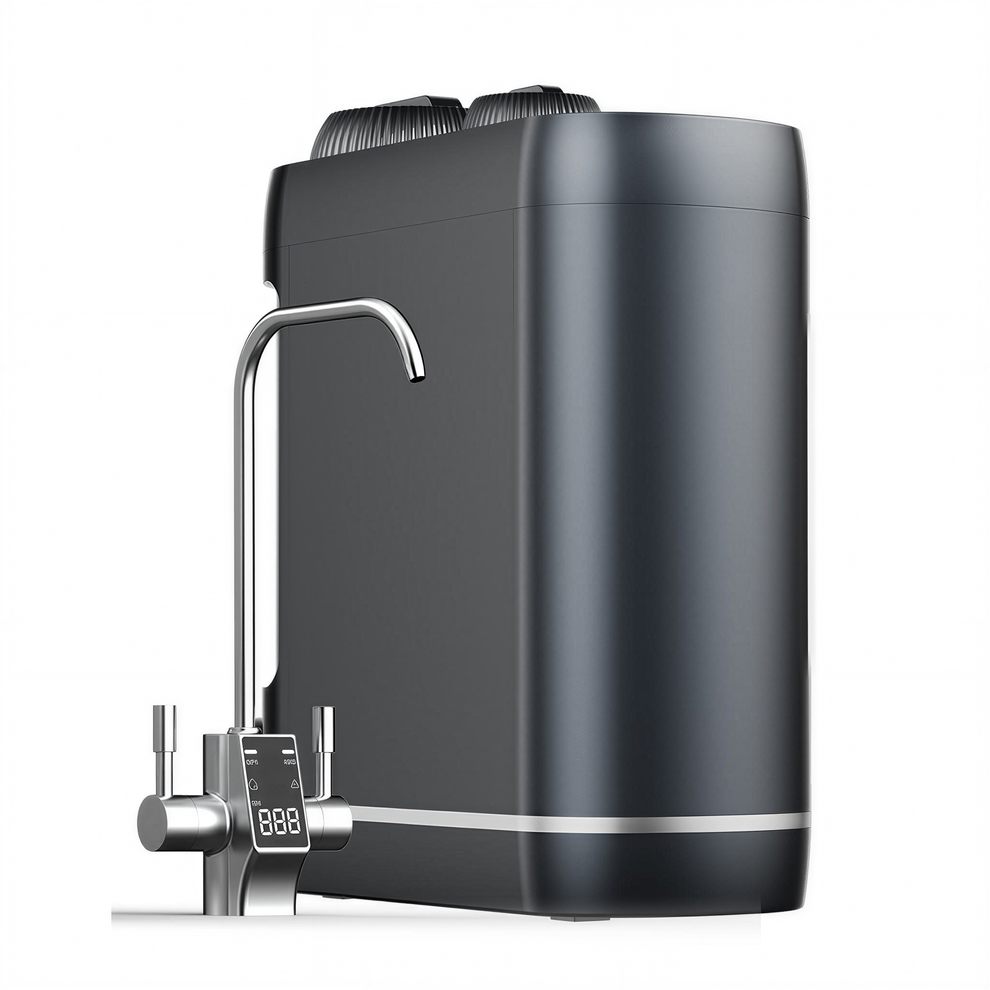
From our experience, if you are splitting a water line between a high-use kitchen sink and a demanding refrigerator, you cannot compromise on GPD (Gallons Per Day). The A10S 800G Tankless RO System operates at an elite 800 GPD capacity. With a flow rate of 1.58–2.1 L/min, it guarantees that even if someone is pouring a glass of water at the sink, the ice maker won't be starved of pressure.
It features a 0.0001μm filtration precision, removing the toughest municipal contaminants. The Smart TDS display on the faucet provides real-time water quality metrics, which is a massive upgrade over blindly trusting your filters. The 1.5:1 pure-to-waste ratio ensures it is environmentally conscious, operating seamlessly on standard 220V/110V residential power grids.
2. Waterdrop G3P800
Waterdrop is a formidable player in the tankless market. The G3P800 matches the 800 GPD output, making it highly suitable for heavy-duty applications. Its defining feature is the integrated UV sterilization module in the final stage, which guarantees bacteria-free water. While it boasts a 3:1 pure-to-waste ratio under ideal laboratory conditions, real-world municipal pressure often brings this closer to 2:1. It is an exceptional system, though the proprietary replacement filters are priced at a premium.
3. Frizzlife PD600
For commercial users or homeowners looking for a highly pragmatic balance between cost and performance, the Frizzlife PD600 is an outstanding choice. At 600 GPD, it provides roughly 1.5 cups of water every 10 seconds. We recommend this system for buyers who know they will need to purchase an additional mini-tank kit for their fridge, as the lower initial price of the Frizzlife offsets the cost of the required accessories.
4. iSpring RO500
iSpring built its reputation on bulky, reliable tank systems, and their foray into tankless technology is solid. The RO500 offers a 500 GPD flow rate. While 500 GPD is slightly on the lower end for splitting lines to a refrigerator without a buffer tank, the build quality and universal availability of iSpring customer support make it a very safe, conservative purchase for beginners.
5. Brio 600 GPD Tankless
Brio is known for commercial water coolers, and their 600 GPD tankless system reflects that industrial design philosophy. It lacks the flashy digital displays of its competitors, focusing entirely on robust internal booster pumps and heavy-duty manifolds that resist leaking under high municipal water pressure. If you are retrofitting a breakroom refrigerator, this is a highly durable option.
6. Nu Aqua 600GPD
The Nu Aqua system is highly rated for its 2:1 efficiency and incredibly straightforward filter replacement mechanics. You twist and pull, and the filter is out—no wrenches required. In our testing, the internal pump is slightly louder than the Puflow or Waterdrop models, which is a consideration if your kitchen lacks acoustic damping under the sink.
7. Brondell Capella
The Brondell Capella operates at 400 GPD. We generally advise against going this low for a dual-line setup (faucet + fridge) unless you are absolutely committed to installing a 1 or 2-gallon buffer tank on the fridge line. However, it earns its place on this list due to its WQA certification and exceptional water-saving technology, which utilizes an internal valve architecture to drastically reduce wastewater.
8. Express Water Tankless
Express Water caters to the DIY demographic. Their 400 GPD tankless system is shipped with incredibly detailed, color-coded installation manuals. It utilizes standard sizing for tubing, making it very easy to splice in a T-fitting to run a 1/4-inch line behind your cabinets to your refrigerator. Again, due to the 400 GPD limit, a buffer tank is mandatory for proper ice maker function.
9. SimPure T1-400
Rounding out the list is the SimPure T1-400. This is an entry-level, budget-friendly system. It strips away all smart features, UV lights, and remineralization stages to provide pure, basic RO water on demand. If you are comparing RO Water vs Tap Water and just want the cheapest entry point into tankless purification, this works. But be prepared to upgrade your fridge line plumbing to accommodate the lower flow rate.
Direct Comparison Table: Top 3 Systems
| Specification | Puflow A10S 800G | Waterdrop G3P800 | Frizzlife PD600 |
|---|---|---|---|
| Flow Rate | 800 GPD (up to 2.1 L/min) | 800 GPD | 600 GPD |
| Filtration Precision | 0.0001μm | 0.0001μm | 0.0001μm |
| Smart Faucet Display | Yes (Real-time TDS) | Yes (TDS & Filter Life) | No (Basic LED indicator) |
| Waste Ratio | 1.5:1 | Up to 3:1 | 1.5:1 |
| Best Use Case | Heavy-duty dual supply | High-tech integration | Budget-conscious dual supply |
Benefits & Limitations (Pros vs Cons)
Is it actually worth using a tankless system instead of a traditional tank system to supply your refrigerator? You must weigh the commercial realities of the hardware.
| Benefits of Tankless RO for Fridges | Limitations of Tankless RO for Fridges |
|---|---|
| Infinite Supply: You will never run out of purified water during a dinner party, unlike a 3-gallon tank which takes hours to refill. | Requires Electricity: Unlike tank systems that use line pressure, if your power goes out, your RO pump stops, and your fridge receives no water. |
| Space Saving: Reclaims up to 70% of the space under your sink, allowing room for garbage disposals and cleaning supplies. | Complex Installation: Requires splicing a T-fitting, routing a line to the fridge, and installing a mandatory buffer tank to prevent short-cycling. |
| Fresher Water: Eliminates the risk of secondary contamination or biofilm buildup that can occur inside aging, unmaintained rubber bladders in storage tanks. | Higher Initial Cost: The technology, internal pumps, and smart sensors command a higher retail price than legacy tank systems. |
Who Should Use It & Who Doesn't Need It
For commercial users and large families: If your household consumes massive amounts of ice and drinking water daily, a high-capacity tankless reverse osmosis system for refrigerator use is an absolute necessity. A traditional tank system simply cannot keep up with high demand, leaving you waiting for pressure to rebuild. We strongly recommend investing in an 800 GPD unit to guarantee uninterrupted flow.
Who does not need it: If you live alone, rarely use ice, or rent an apartment where drilling through cabinets to run a 1/4-inch water line is prohibited by your landlord, do not buy a complex under-sink system. You are much better off purchasing one of the 9 Best Countertop RO Water Purifiers, which require zero plumbing modifications and provide exceptional filtration.
Common Mistakes to Avoid
In most professional situations, plumbers are called out to fix DIY installations gone wrong. The number one mistake is the "Direct Line Error." Consumers run a single 1/4-inch poly tube from the tankless RO manifold directly into the back of the refrigerator. As explained earlier, the ice maker solenoid will open, the RO pump will hesitate for two seconds, and the ice maker will receive barely any water. You must install a 1-gallon buffer tank on the line leading to the fridge.
The second mistake is ignoring remineralization. Reverse osmosis water is highly pure, making it slightly acidic (hungry water). Over time, this pure water can actually leach copper and brass from older refrigerator internal plumbing. Ensure your chosen system either utilizes entirely plastic/stainless internal pathways or includes a remineralization stage to balance the pH.
Crucial Buying Considerations
| Consideration | Why It Matters | Our Buying Advice |
|---|---|---|
| GPD (Gallons Per Day) | Determines how fast water is produced. Low GPD means waiting longer for a glass to fill at the sink while the fridge is drawing water. | Do not purchase below 600 GPD if you intend to supply a refrigerator. 800 GPD is the ideal standard for dual-line setups. |
| Filter Replacement Cost | Tankless systems often use proprietary twist-and-lock filters. You are locked into their ecosystem. | Calculate the annual cost of ownership. A cheap machine with $150 replacement filters is a bad commercial investment over 5 years. |
| Waste Water Ratio | Legacy systems waste 3 gallons for every 1 gallon purified. This spikes your municipal water bill. | Demand a ratio of at least 1.5:1 (Pure to Waste). Modern pump technology makes 2:1 and 3:1 achievable. |
Final Expert Recommendation
From our experience: Attempting to force a low-capacity tankless system to supply an ice maker without the proper buffer hardware will result in mechanical frustration and voided warranties. Do the job right the first time.
If you are determined to execute this plumbing upgrade, we recommend purchasing the Puflow A10S 800G. The sheer volumetric output of 800 GPD provides the raw hydraulic power necessary to keep a high-traffic kitchen functioning smoothly. When paired with a simple aftermarket 1-gallon refrigerator buffer tank kit, you will achieve the ultimate modern kitchen setup: infinite, perfectly purified water on demand, crystal clear ice cubes, and a clutter-free cabinet space.
Frequently Asked Questions
Yes, but in most professional situations, you cannot connect them directly without an accessory. Refrigerators require instant pressure (usually 30-40 psi) to trigger the ice maker solenoid. Because tankless systems pump water on demand, you must install a mini-buffer tank or a specialized pressure switch between the RO system and the refrigerator.
For heavy-duty applications and supplying a refrigerator, we recommend a system with at least 600 GPD (Gallons Per Day). An 800 GPD system, providing roughly 1.5 to 2.1 Liters per minute, ensures you will not experience pressure drops when dispensing water at the sink while the fridge is operating.
Yes. Modern tankless RO systems utilize internal booster pumps that force water through the membrane with high efficiency. They boast pure-to-waste ratios of 1.5:1, 2:1, or even 3:1, meaning they produce more pure water and send significantly less water down the drain compared to traditional passive tank systems that operate at a 1:3 ratio.
Authoritative Industry References
To ensure your water filtration meets the highest standards of safety and efficacy, we advise consulting the regulatory frameworks provided by these organizations:
- NSF International - The leading global authority on establishing testing standards (such as NSF/ANSI 58) for reverse osmosis drinking water treatment systems.
- Water Quality Association (WQA) - The professional trade body representing the residential and commercial water treatment industry, providing rigorous product certification.
- U.S. Environmental Protection Agency (EPA) - Federal guidelines on municipal tap water safety, permissible contaminant levels, and drinking water regulations.