


What Is Reverse Water? How It Works and Whether It Is Worth Buying
People usually mean reverse osmosis when they say “reverse water.” The term is not the industry standard, but the buying question is real: does this kind of water treatment actually make sense for your home, apartment, RV, or backup setup? EPA describes reverse osmosis as a membrane separation process that forces water under pressure through a semi-permeable membrane, and NSF says RO systems fall under NSF/ANSI 58, the main standard buyers use to judge RO drinking-water systems. That is the right starting point, not social-media claims or vague “clean water” marketing.

Direct answer: what reverse water is and whether it is worth it
Reverse water, in practical buyer terms, means reverse osmosis water treatment. The system pushes feed water across a fine membrane under pressure, separates treated water from rejected contaminants, and usually adds pre-filters and sometimes post-filters to polish the result. USGS notes that reverse osmosis is an effective desalination method, while EPA says the process physically removes contaminants from water. For commercial users, that is worth paying for when you need reliable reduction of dissolved contaminants. For beginners, it is usually worth buying only when you want more than taste improvement.
If your water problem is mainly taste, odor, or simple sediment, you may not need full reverse water treatment at all. If the issue is dissolved solids, salinity, or a stricter drinking-water target, reverse osmosis is the stronger option. That is why the best buying process starts with the problem, not the product. If you want a deeper product path, start with Best Reverse Osmosis System for Home and NSF Certified Reverse Osmosis System before you compare models.
What it is: a pressure-driven membrane system that removes contaminants from water.
How it works: water is pushed through a semi-permeable membrane; treated water passes through and reject water carries away what the membrane blocks.
Benefits: strong contaminant reduction, useful for desalination, and a solid fit for point-of-use drinking water.
Limitations: it is not the cheapest or simplest treatment path, and it is overkill when you only need basic polishing.
Who should use it: households, apartments, RV users, and buyers who need better water quality control.
Who does not need it: people who only want a low-maintenance gravity filter or a basic no-plumbing option.
Common mistakes: buying without checking certification, overbuying for a simple water issue, and ignoring maintenance.
Buying considerations: NSF/ANSI 58 certification, tank vs tankless format, remineralization, flow rate, and installation style.
Expert recommendation: buy reverse water only when the water problem justifies the extra complexity.
Table of contents
Quick Summary Table
| Question | Practical answer | Why it matters |
|---|---|---|
| What is reverse water? | Most buyers mean reverse osmosis water treatment, a membrane process that uses pressure to separate cleaner water from rejected contaminants. | It sets the right expectation before you compare products. |
| How does it work? | Feed water is pushed through a semi-permeable membrane; the treated water becomes product water and the rest is rejected. | It explains why RO is stronger than a basic carbon filter. |
| Is it worth buying? | Yes, when you need actual contaminant reduction, not just taste improvement. | Prevents overbuying for a simple problem. |
| What certification matters? | NSF/ANSI 58 for point-of-use RO systems. | Certification matters more than a marketing claim. |
| What is the biggest trade-off? | RO is effective, but it adds cost and maintenance and is more expensive than some alternatives. | You should buy it for performance, not for novelty. |
What reverse water actually means
Reverse water is not the standard term used by water-treatment professionals. In practice, people usually mean reverse osmosis water, or an RO system that treats drinking water at the point of use. EPA defines RO as a membrane separation process that physically removes contaminants, and NSF says RO systems use reverse pressure to force water through a semi-permeable membrane. That is the core mechanic behind the category.
For home buyers, that means the discussion is not “Do I need reverse water?” The real question is whether you need a membrane system powerful enough to do more than a pitch-black carbon block or a gravity filter can do. If the answer is yes, then reverse water is worth shortlisting. If the answer is no, you can save money and complexity. For a straight product comparison, read RO Water vs Tap Water before you choose.
From our experience, buyers who use the wrong term usually have the right instinct but the wrong frame. They know they want better water. They just need the right treatment logic to get there.
How reverse water works step by step
1. Pretreatment gets the feed water ready
Most RO systems do not send raw water straight to the membrane. They use pre-filters to reduce sediment and other inputs that would make the membrane work harder. NSF notes that most reverse osmosis systems incorporate one or more additional filters on either side of the membrane. That is not decoration; that is part of how the system stays usable.
2. Pressure drives the process
RO is not passive filtration. EPA says the system forces water at high pressure through semi-permeable membranes. The pressure is what makes the separation happen, which is why the pump and pressure design matter so much. Without enough pressure, the system underperforms. With the wrong pressure behavior, you burn through membranes faster than you should.
3. The membrane separates product water from reject water
The membrane lets treated water pass and blocks a range of contaminants depending on their characteristics. USGS describes the process as product water passing through the membrane while salts are rejected and disposed of as brine. That is why reverse water is effective but not waste-free.
4. Post-treatment improves the drinking experience
Some systems add remineralization or other finishing stages so the water tastes better and feels less flat. That matters because reverse water can be extremely clean, but some people dislike the taste profile if there is no remineralization stage. If that sounds like your concern, compare Under Sink Reverse Osmosis System with Remineralization before buying. That upgrade is often worth it for commercial users and households who care about taste as much as purity.
5. The format determines whether the system fits your life
Treatment technology is only half the buying decision. The other half is format. A countertop RO system is easier for renters and small kitchens. An under-sink system is better when you want a permanent setup. A tankless design is usually the smarter choice when space matters, while a tank-based design can feel more forgiving if you want a water buffer. If you want to compare those options directly, start with Tankless RO vs Tank RO and Best Countertop RO Water Purifier.
Comparison Table: reverse water vs common alternatives
| Option | Best for | Main strength | When it is the wrong buy |
|---|---|---|---|
| Reverse water / RO | People who want strong contaminant reduction and point-of-use drinking-water treatment. | Pressure-driven membrane separation is strong and proven. | When you only need simple taste or odor improvement. |
| Gravity water filter | No-plumbing, no-electric buyers, RVs, apartments, camping, emergency use. | Simple, portable, and easy to live with. | When you want membrane-level purification rather than simplicity. |
| Atmospheric water generator | Users who need water from air, not from an inlet line. | Different problem, different solution. | When you already have usable tap water and just need treatment. |
| Basic tap filtration | Light polishing, taste improvement, low complexity. | Cheap and easy. | When dissolved contaminants are the main concern. |
Benefits of reverse water
The biggest benefit is simple: reverse water does a stronger job than basic filters when the problem is dissolved contaminants. EPA says RO physically removes contaminants, and USGS calls it an effective desalination method. That makes it a serious choice for households that want more control over what is in the glass.
The second benefit is flexibility in where it is used. Point-of-use RO systems are designed for the fixture where you actually drink the water, which is why under-sink and countertop systems are so common in real homes. NSF also ties RO systems to NSF/ANSI 58, which is a meaningful buying signal when you do not want to guess your way through water treatment.
The third benefit is product choice. Puflow offers home-focused options such as Best Reverse Osmosis System for Home, the A10S 800G Tankless RO System, and the Best Countertop RO Water Purifier. That matters because the buying decision is often about living with the system, not just installing it.
Limitations you should not ignore
Reverse water is not the cheapest route. USGS explicitly notes that reverse osmosis is effective for desalination but more expensive than some alternatives. That alone should stop buyers from treating RO as the default answer for every drinking-water problem. If your issue is simple sediment, taste, or convenience, a gravity filter may be the better commercial decision.
The second limitation is maintenance. RO systems work well because the membrane is doing real separation work, which means filters and membranes need care. NSF’s RO standard exists because buyers need a meaningful way to judge the system, not because the market likes paperwork. The same logic applies to maintenance: the more you ask from the system, the more you have to respect its service schedule.
The third limitation is overbuying. For beginners, a big under-sink system can be more commitment than they need. For commercial users, the better move may be a tankless RO setup or a compact countertop unit rather than a large permanent installation. For buyers who do not want electricity or plumbing, reverse water may be the wrong category entirely. In that case, Puflow’s Big Flow 3 Gravity Water Filter is a more sensible no-plumbing alternative.
Pros vs Cons Table
Pros
- Strong membrane-based contaminant reduction.
- Useful for point-of-use drinking water and desalination.
- Available in under-sink, countertop, and tankless formats.
- Can be paired with remineralization for better taste.
- Good fit for buyers who want a serious water-treatment upgrade.
Cons
- More expensive than some simpler alternatives.
- Needs maintenance and replacement filters.
- Can be overkill for basic taste improvement.
- May need more space or installation effort than gravity systems.
- Not the best choice if you want zero-plumbing simplicity.
Buying Guide Table: how to choose the right reverse water setup
| Buying factor | What good looks like | What to avoid | Best next step |
|---|---|---|---|
| Certification | NSF/ANSI 58 for RO systems. | Claims with no standard behind them. | Check the certified model before you compare looks. |
| Format | Countertop, under-sink, or tankless based on your space. | Buying a permanent system for a temporary living setup. | Start with space and installation reality. |
| Water quality goal | You know whether you need contaminant reduction, taste improvement, or both. | Buying RO just because it sounds premium. | Define the water problem first. |
| Maintenance | Easy filter replacement and a realistic service schedule. | A system that is hard to service. | Choose the system you will keep using. |
| Taste | Remineralization if you dislike very flat water. | Ignoring the final taste profile. | Review Under Sink Reverse Osmosis System with Remineralization. |
| No-plumbing need | Gravity-based or portable system. | Forcing a full RO install into a no-plumbing life. | Use Big Flow 3 Gravity Water Filter or Gravity Water Filter 3.8L. |
For buyers comparing tank-based and tankless RO, Tankless RO vs Tank RO is the best practical comparison. If you want a compact high-output option, the A10S 800G Tankless RO System is the product page to inspect. If you want a cleaner traditional setup, the internal route is still the same: pick the format that fits how you actually use water.
Who should use reverse water, and who does not need it
Use reverse water if you want stronger drinking-water treatment at the point where you actually consume the water. That makes sense for homes with poor source water, apartments where under-sink space is available, RV users who still want better water treatment, and commercial buyers who want a stronger, certification-backed option. NSF says RO systems are part of the point-of-use treatment category and NSF/ANSI 58 is the standard to watch.
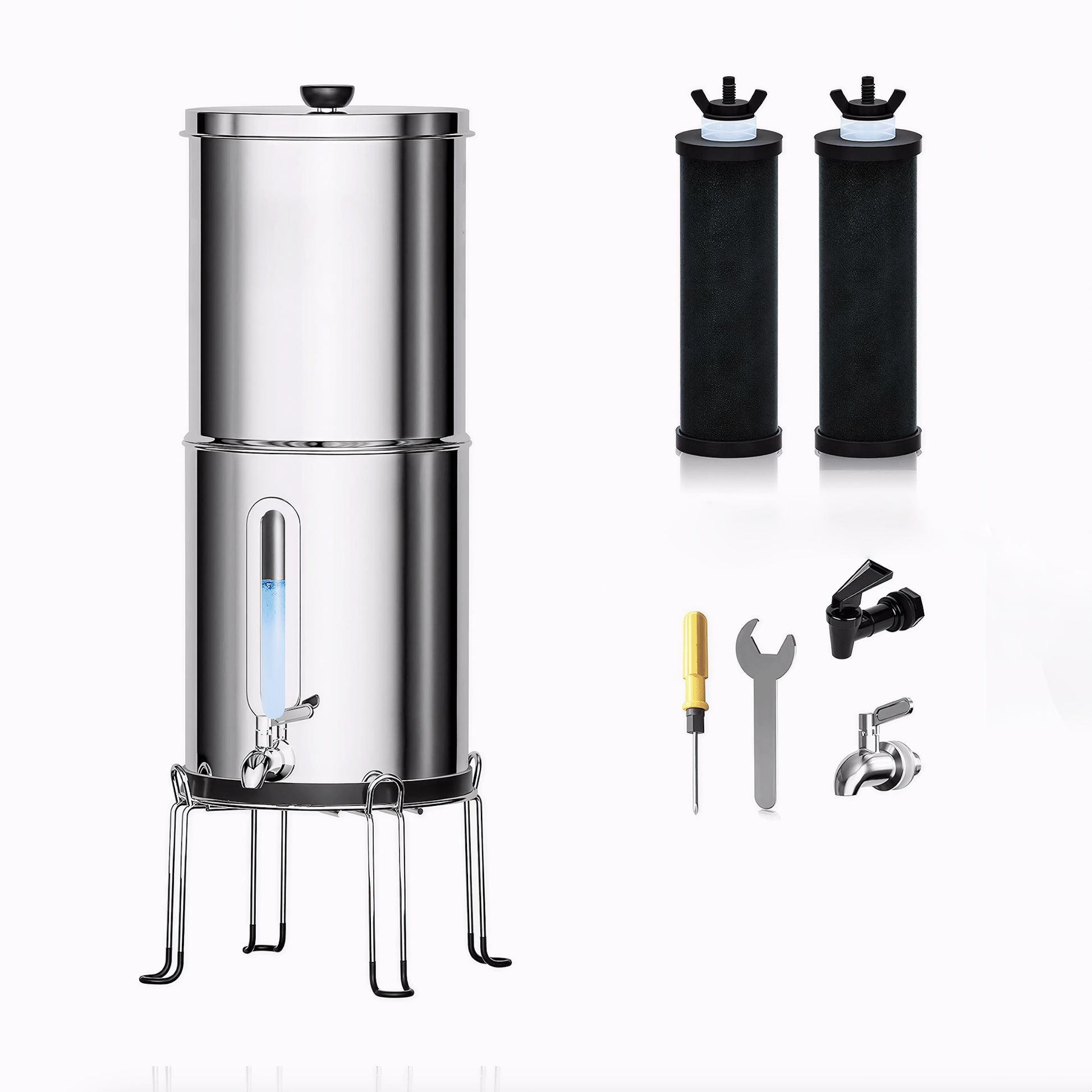
You do not need reverse water if your water is already acceptable and you only want a simpler, lower-maintenance setup. In that case, a gravity filter may be the better purchase. Puflow’s Big Flow 2 Gravity Water Filter and Big Flow 3 Gravity Water Filter are especially useful for home, apartment, RV, camping, and emergency preparedness because they require no electricity and no plumbing. That is the right choice when simplicity beats treatment complexity.
For commercial users, the question is usually not “Do I like reverse water?” It is “Does reverse water solve my water problem better than a lower-maintenance alternative?” For beginners, the answer should lean toward simplicity unless the source water clearly demands RO. For heavy-duty applications, reverse water is often worth the extra cost because reliability matters more than convenience.
Common mistakes buyers make
- Buying RO when a gravity filter would have been enough.
- Ignoring certification and only looking at photos. NSF/ANSI 58 exists for a reason.
- Choosing a system without thinking about tank, tankless, or countertop format.
- Forgetting that reverse osmosis is more expensive than some alternatives.
- Not planning filter replacement and service.
- Skipping remineralization if the taste profile matters to you.
- Buying a system that fits the kitchen and not the lifestyle.
Expert recommendation
We recommend reverse water when the problem is real and specific: dissolved contaminants, stronger water-quality control, or a need for a more serious point-of-use treatment system. EPA and USGS both support the logic behind RO as a membrane process and desalination tool, while NSF/ANSI 58 is the certification checkpoint buyers should use to separate real systems from marketing.
If you want the most practical purchase path inside Puflow, start here: Best Countertop RO Water Purifier for limited-space buyers, Best Reverse Osmosis System for Home for standard home installs, and Under Sink Reverse Osmosis System with Remineralization for people who care about taste as much as purification. If you do not want plumbing or electricity, the better buy is not RO at all; it is a gravity unit like the Big Flow line.
Bottom Line
Reverse water is really reverse osmosis water treatment: a pressure-driven membrane process that physically removes contaminants and is used in point-of-use drinking water systems. EPA, NSF, and USGS all point to the same conclusion: it works, but it is not the cheapest or simplest solution for every buyer.
Buy it when you need stronger treatment and can live with the added cost and maintenance. Skip it when a gravity filter, a no-plumbing solution, or a basic polishing filter will do the job better. That is the difference between a smart water purchase and an expensive habit.
FAQs
Is reverse water the same as reverse osmosis?
Yes, in practice that is what most buyers mean. The standard term is reverse osmosis, or RO. EPA and NSF both describe it as a membrane process that uses pressure to separate treated water from contaminants.
Does reverse water make water completely pure?
No system is perfect. RO is strong, but you should judge it by the specific contaminant reduction claim, the standard behind it, and the maintenance plan.
Is reverse water worth it for a home?
Yes when you need stronger treatment than a basic filter can provide. It is less compelling when you only want a simpler taste-improvement system.
Do I need NSF certification?
For point-of-use RO, NSF/ANSI 58 is the standard buyers should watch. It is the cleanest way to separate a real RO system from a marketing claim.
What is better than reverse water for no-plumbing use?
Gravity filtration is usually the smarter buy if you want no plumbing and no electricity. Puflow’s Big Flow 3 Gravity Water Filter is built for that kind of use case.
Should I choose tank or tankless?
Choose tankless when space and on-demand operation matter more. Choose tank-based when you want stored water and a more traditional setup. See Tankless RO vs Tank RO.
References