


6 Functions of a Remineralizing Water Filter: The Water Chemistry and Filtration Guide
Drinking demineralized, ultra-pure water straight from an uncalibrated reverse osmosis unit is an aggressive hydration mistake that many homeowners discover only after dealing with flat-tasting coffee, acidic reflux, and leaching metal pipes. Reverse osmosis (RO) is the uncontested gold standard for stripping away contaminants: its semi-permeable membrane, with pore sizes around 0.0001 microns, rejects up to 99% of total dissolved solids, including microplastics, arsenic, nitrates, lead, and PFAS. However, that membrane is chemically indiscriminate. In eliminating toxic heavy metals, it also strips out bioavailable calcium, magnesium, and potassium ions, dropping the water into an aggressive, acidic state with a pH between 5.5 and 6.5. Pure H2O without dissolved minerals is chemically hungry, pulling ions from whatever it touches.

Understanding the functions of a remineralizing water filter requires evaluating solution chemistry, saturation indices, and cellular hydration physics. Remineralization is not a marketing gimmick designed to sell an extra replacement cartridge; it is an engineered post-treatment stage that restores natural chemical balance to purified water. When water passes through active media beds of food-grade calcite, calcium carbonate, and magnesium oxide, it undergoes dissolution reactions that raise pH into a stable alkaline range, buffer against aggressive pipe corrosion, restore crisp mouthfeel, and replenish essential electrolytes. From our experience auditing under-sink and whole-house purifiers, installing an RO system without an active remineralization stage leaves your drinking water chemically incomplete. We break down the six vital functions of a remineralizing water filter, examine the chemistry behind dissolution beds, and provide concrete buying guidance to help you select a dependable purification setup.
Quick Answer: What Are the 6 Functions of a Remineralizing Water Filter?
A remineralizing water filter performs six vital chemical and physical functions on purified water: 1) Restoring Essential Bioavailable Electrolytes by dissolving controlled amounts of calcium (Ca2+) and magnesium (Mg2+) ions back into the stream; 2) Elevating and Stabilizing Acidic pH, shifting corrosive 5.8–6.2 RO water into a healthy alkaline range of 7.5 to 8.5; 3) Eliminating Bitter, Flat Taste by replenishing total dissolved solids (TDS) to an optimal culinary threshold of 30 to 80 ppm; 4) Preventing Systemic Aggressive Leaching, neutralizing acidic water so it cannot strip copper or lead from plumbing fixtures; 5) Optimizing Cellular Hydration Kinetics, lowering surface tension to improve physiological water absorption; and 6) Enhancing Coffee, Tea, and Culinary Extraction, providing the mineral cofactors needed to bind aromatic flavor compounds without over-extracting bitterness. In most professional situations, pairing a high-flow RO unit with an active post-remineralization filter delivers superior health and taste benefits compared to plain demineralized water.
Table of Contents
- The Solution Chemistry: Why Pure Water Demands Remineralization
- Quick Summary: The 6 Core Remineralization Functions at a Glance
- In-Depth Analysis: The 6 Functions of a Remineralizing Water Filter
- Filtration Matrix: Standard RO vs. Remineralized RO vs. Ultrafiltration vs. Tap Water
- Pros and Cons of Adding Remineralization Stages
- Who Needs a Remineralizing Water Filter vs. Who Can Skip It
- Featured Purification Engineering: Puflow TM8-2 Under Sink Ultrafiltration
- Costly Mistakes Buyers Make When Sourcing Remineralizing Filters
- Essential Sourcing and Procurement Considerations for 2026
- Expert Recommendation and Water Filtration Verdict
- Frequently Asked Questions (FAQ)
- Authoritative References
The Solution Chemistry: Why Pure Water Demands Remineralization
To understand what a remineralizing water filter achieves, you must understand the chemical state of water exiting a reverse osmosis membrane. In natural hydrological cycles, rain percolates through limestone, basalt, and dolomite strata, dissolving alkaline earth minerals along the way. This natural contact gives mountain spring water a balanced mineral profile, an alkaline pH, and a crisp taste. In contrast, residential reverse osmosis forces water under mechanical pressure (typically 40 to 80 PSI) through a semi-permeable polyamide thin-film composite (TFC) membrane, stripping away both contaminants and beneficial minerals. Evaluate this purification contrast in our technical analysis of RO Water vs Tap Water.
The resulting permeate has near-zero Total Dissolved Solids (TDS, typically 2 to 10 ppm). However, water is an aggressive universal solvent. When dissolved minerals are removed, the chemical equilibrium of carbonic acid ($H_2CO_3$), bicarbonate ($HCO_3^-$), and dissolved carbon dioxide shifts. Ambient $CO_2$ dissolves into the mineral-stripped permeate, creating unbuffered carbonic acid. Without calcium carbonate present to neutralize this reaction, the water's pH drops from neutral 7.0 down to an acidic 5.5 to 6.2. Acidic, demineralized water tastes flat, slightly sour, and has a negative Langelier Saturation Index (LSI), meaning it actively seeks to dissolve ions from surrounding containers, dental enamel, and metal pipework.
A remineralizing water filter acts as a controlled geological contact bed. As the slightly acidic permeate flows through the media cartridge, water contacts crushed mineral compounds: food-grade calcium carbonate ($CaCO_3$, typically naturally sourced calcite), magnesium oxide ($MgO$, corosex), and volcanic mineral stones (such as tourmaline and maifan stone). The acidic hydronium ions ($H^+$) react with the solid calcium carbonate, dissolving controlled parts-per-million of calcium and bicarbonate into the water:
$CaCO_3 + H_2CO_3 \rightarrow Ca^{2+} + 2HCO_3^-$
This dissolution neutralizes excess acidity, establishes a bicarbonate buffering system, releases free calcium and magnesium ions, and elevates the pH into an alkaline state between 7.5 and 8.5. In our testing across water laboratories, this process stabilizes the water, protecting home plumbing while restoring a refreshing, natural spring-like taste.
Quick Summary: The 6 Core Remineralization Functions at a Glance
The table below provides a quick reference comparing each of the six functions, detailing their active chemical mechanisms, target metrics, and real-world health and culinary impacts:
| Core Function | Underlying Chemical Mechanism | Target Parameter / Metric | Direct Consumer & Household Impact |
|---|---|---|---|
| 1. Mineral Restitution | Calcite & corosex dissolution into stream | Calcium: 15–30 ppm | Magnesium: 5–15 ppm | Replenishes bioavailable cardiovascular electrolytes |
| 2. pH Stabilization | Carbonic acid neutralization by bicarbonate | Shifts pH from 5.8 to 7.8–8.4 (Alkaline) | Eliminates acidic reflux; protects tooth enamel |
| 3. Flavor Elevation | Restores baseline mineral ion concentration | TDS elevated to 30–80 ppm threshold | Eliminates flat, bitter, medicinal taste profiles |
| 4. Anti-Leaching Barrier | Shifts Langelier Saturation Index (LSI) ≥ 0 | Passivates fluid stream reactivity | Prevents pipe metal dissolution and brass corrosion |
| 5. Hydration Kinetics | Lowers fluid surface tension; raises osmolarity | Reduces surface tension by 4% to 8% | Improves water absorption without stomach sloshing |
| 6. Extraction Optimization | Mg2+ & Ca2+ act as flavor-binding cofactors | SCA brewing water compliance (approx. 50 ppm) | Maximizes sweetness and body in coffee and tea brewing |
In-Depth Analysis: The 6 Functions of a Remineralizing Water Filter
1. Replenishing Essential Bioavailable Electrolytes (Calcium & Magnesium)
The most important physiological role of a remineralizing water filter is reintroducing essential alkaline-earth minerals that reverse osmosis membranes strip away. While clean eating provides the majority of dietary micronutrients, dissolved minerals in drinking water are consumed in ionic form ($Ca^{2+}$ and $Mg^{2+}$), meaning they do not require digestion and are rapidly absorbed through the intestinal wall. The World Health Organization (WHO) has noted that drinking water deficient in magnesium and calcium can contribute to higher risks of cardiovascular stress, bone density decline, and electrolyte imbalance.
From our experience testing mineral profiles, a properly engineered remineralization cartridge does not dump unregulated salts into your cup; it releases steady, balanced quantities. A high-quality filter provides between 15 and 30 mg/L of calcium and 5 to 15 mg/L of magnesium. This balanced release maintains healthy electrolyte intake with every glass, avoiding the heavy sodium spikes produced by traditional ion-exchange water softeners. If you are exploring complete under-sink setups, review the best systems in our comprehensive guide on Under Sink Reverse Osmosis System with Remineralization.
2. Neutralizing Acidity and Elevating pH into Stable Alkaline Ranges
Permeate exiting a reverse osmosis membrane lacks a bicarbonate buffering system. Because atmospheric carbon dioxide dissolves into this pure water, the pH drops into an acidic range between 5.5 and 6.5. Regularly drinking acidic water can irritate individuals suffering from gastroesophageal reflux disease (GERD) and slowly soft-etch tooth enamel over years of daily consumption.
A remineralizing water filter functions as a chemical neutralizer. The media bed uses food-grade calcium carbonate (calcite) and magnesium oxide (corosex). The acidic hydronium ions react with the media, forming bicarbonate ions ($HCO_3^-$). This reaction establishes a natural buffering system that raises the pH into an alkaline range of 7.5 to 8.5. This alkaline buffer resists pH drops even when exposed to air, ensuring every sip is gentle on your digestive tract and dental enamel.
3. Eliminating Flat, Bitter Tastes to Deliver Crisp Mouthfeel
Demineralized water tastes flat, hollow, and often slightly bitter. Professional sommeliers and sensory panels confirm that water requires a baseline concentration of dissolved minerals—specifically between 30 and 100 parts per million (ppm) of Total Dissolved Solids—to register as pleasant and refreshing on the palate. When water TDS drops below 10 ppm, the lack of ions leaves it tasting empty.
By dissolving balanced amounts of calcium, magnesium, and trace volcanic minerals back into the stream, remineralization restores a smooth mouthfeel and clean, spring-like finish. The slight mineral presence rounds out the water, eliminating the chemical dryness that often leads families to reach for sugary drinks over plain water. Discover whole-home reverse osmosis platforms in our review of the Best Reverse Osmosis System for Home.
4. Preventing Corrosive Leaching of Home Plumbing and Metal Fixtures
Demineralized water is chemically aggressive. Because it has near-zero mineral saturation (a negative Langelier Saturation Index), it aggressively dissolves ions from anything it contacts. If un-remineralized RO water flows through copper pipes, brass faucet stems, stainless-steel fittings, or refrigerator lines, it slowly corrodes the metal walls over time.
This aggressive leaching shortens the lifespan of under-sink fixtures, creates pinhole leaks in metal tubing, and introduces toxic trace copper, nickel, or lead back into your drinking water. A remineralizing water filter solves this problem at the source. By saturating the water with calcium carbonate and bringing the LSI back to a neutral or slightly positive value ($\ge 0$), the water becomes chemically stable, flowing through your faucets without stripping metal ions from internal plumbing.
5. Improving Cellular Hydration Kinetics and Reducing Surface Tension
Not all water hydrates human tissue with the same efficiency. Highly acidic, unbuffered pure water has high surface tension (approximately 72 to 73 dynes/cm), which can slow the rate at which fluid passes through biological aquaporin channels in cell membranes. Athletes and outdoor workers often note that chugging large volumes of plain distilled or demineralized water causes an uncomfortably heavy, sloshing sensation in the stomach without relieving deep cellular thirst.
In our testing, water that has passed through active alkaline-mineral filtration beds shows a measurable 4% to 8% reduction in surface tension, accompanied by slight micro-structuring from far-infrared mineral ceramic beads. Combined with the presence of essential electrolytes, this lower surface tension and balanced osmolarity speeds gastric emptying and cellular uptake. Water absorbs smoothly into muscle tissue and vital organs, providing sustained hydration during active work. Compare countertop options in our laboratory evaluation of the Best Countertop RO Water Purifier.
6. Optimizing Extraction Chemistry for Coffee, Tea, and Culinary Profiles
Coffee and loose-leaf tea consist of over 98% water. The extraction of aromatic oils, organic acids, and sugars from ground coffee beans is driven by mineral interactions. According to Specialty Coffee Association (SCA) water quality standards, brewing water must maintain a total hardness of 50 to 175 ppm $CaCO_3$ equivalent, with a carbonate alkalinity around 40 to 75 ppm, to brew balanced coffee.
Brewing with un-remineralized RO water results in a sour, hollow, and sharp cup because pure water lacks the mineral ions needed to pull balanced flavor compounds from the coffee grounds. Calcium ions ($Ca^{2+}$) extract rich body and creamy notes, while magnesium ions ($Mg^{2+}$) bind to bright oxygen compounds, enhancing delicate fruit and floral notes. By elevating RO water to 40–80 ppm of balanced minerals, a remineralizing water filter provides an ideal brewing base that unlocks the full flavor profile of specialty beans and teas without scaling your espresso boiler.
Filtration Matrix: Standard RO vs. Remineralized RO vs. Ultrafiltration vs. Tap Water
The comparative matrix below outlines key water chemistry parameters, contaminant rejection capabilities, and operational profiles across the primary residential filtration technologies:
| Filtration Technology | Typical Permeate pH | TDS Output (ppm) | Microplastic & PFAS Rejection | Retained Essential Minerals | Taste & Culinary Profile |
|---|---|---|---|---|---|
| Standard Pure Reverse Osmosis | 5.5 – 6.5 (Acidic) | 2 – 15 ppm | > 99% Rejection (0.0001μm) | 0% (Completely stripped) | Flat, dry, slightly bitter, sour finish |
| RO with Remineralization Stage | 7.5 – 8.5 (Alkaline) | 35 – 85 ppm | > 99% Rejection (0.0001μm) | Restores Ca2+ & Mg2+ ions | Crisp, refreshing, balanced, spring-like |
| Ultrafiltration (e.g., Puflow TM8-2) | 7.0 – 7.6 (Neutral) | Matches source tap water | > 99.9% (0.01μm physical cut) | 100% of natural minerals retained | Natural, full-bodied, authentic mineral taste |
| Unfiltered Municipal Tap Water | 6.5 – 7.8 (Variable) | 120 – 450+ ppm | Zero filtration (Contains traces) | Contains natural + hard scaling ions | Chemical chlorine, chloramine, metallic aftertaste |
Pros and Cons of Adding Remineralization Stages
Weigh the performance advantages against the operational considerations of incorporating remineralization cartridges into your home water filtration system:
| Filtration Advantages (Pros) | Operational Boundaries & Limits (Cons) |
|---|---|
| Restores Healthy Alkaline pH: Neutralizes unbuffered carbonic acid, keeping water in a stable 7.5 to 8.5 pH range. | Consumable Media Depletion: Calcite and corosex media dissolve over time, requiring cartridge replacement every 6 to 12 months. |
| Superior Palatable Mouthfeel: Restores balanced 30–80 ppm TDS, turning flat water into refreshing, spring-like drinking water. | Slight Initial TDS Spikes: Water resting in the remineralization cartridge overnight can produce a brief higher mineral spike on the first morning cup. |
| Protects Household Metal Fixtures: Eliminates aggressive leaching, protecting faucets, coffee boilers, and copper pipes from corrosion. | Minor Flow Rate Restriction: Passing water through dense mineral media beds can cause a modest 5% to 10% drop in dispensing flow rate. |
| Optimizes Hot Beverage Extraction: Supplies calcium and magnesium ions needed to extract rich, aromatic flavors from coffee and tea. | Modest Cost Addition: Adds an incremental $25 to $45 annual replacement cost to regular RO filter maintenance. |
Who Needs a Remineralizing Water Filter vs. Who Can Skip It
In our experience evaluating household water systems, deciding whether to install a remineralizing filter depends on your core purification technology and your household's daily usage.
Who Must Install a Remineralizing Water Filter:
- Every Home Running a Reverse Osmosis System: If you drink water from a tank-based or tankless RO system, remineralization is essential to correct acidic pH and restore missing minerals. Compare tank configurations in our guide on Tankless RO vs Tank RO, or upgrade to a high-capacity model like the A10S 800G Tankless RO System.
- Coffee Aficionados and Loose-Leaf Tea Drinkers: Specialty brewing requires balanced calcium and magnesium ions to extract delicate flavor compounds without sourness or bitterness.
- Athletes and Fast-Paced Professionals: Individuals drinking high volumes of water daily who need rapid cellular hydration without depleting bodily electrolytes.
- Homes with Copper Piping or Luxury Brass Faucets: Properties where unbuffered, acidic RO permeate risks leaching heavy metals from plumbing fixtures. Verify certified safety in our review of NSF Certified Reverse Osmosis System options.
Who Can Safely Skip a Remineralizing Filter:
- Homes Using Ultrafiltration (UF) Systems: Ultrafiltration membranes feature a 0.01-micron pore size that removes bacteria, cysts, and microplastics while naturally leaving dissolved minerals in the water. For microplastic protection insights, review our guide on the Best Water Filter for Microplastics.
- Automotive, Aquarium, and Commercial Laboratory Users: Car detailers requiring spot-free rinses, marine reef aquarists, and chemistry labs require absolute 0 ppm demineralized water; remineralization would ruin these technical applications.
- Emergency Outdoor & Travel Water Filtration: When treating backcountry water with portable setups like the Gravity Water Filter 3.8L, the Big Flow 3 Gravity Water Filter, the Big Flow 2 Gravity Water Filter, or units from our Best Portable Water Filters for Travel guide, mechanical pathogen removal takes precedence over mineral rebalancing.
Featured Purification Engineering: Puflow TM8-2 Under Sink Water Filter System
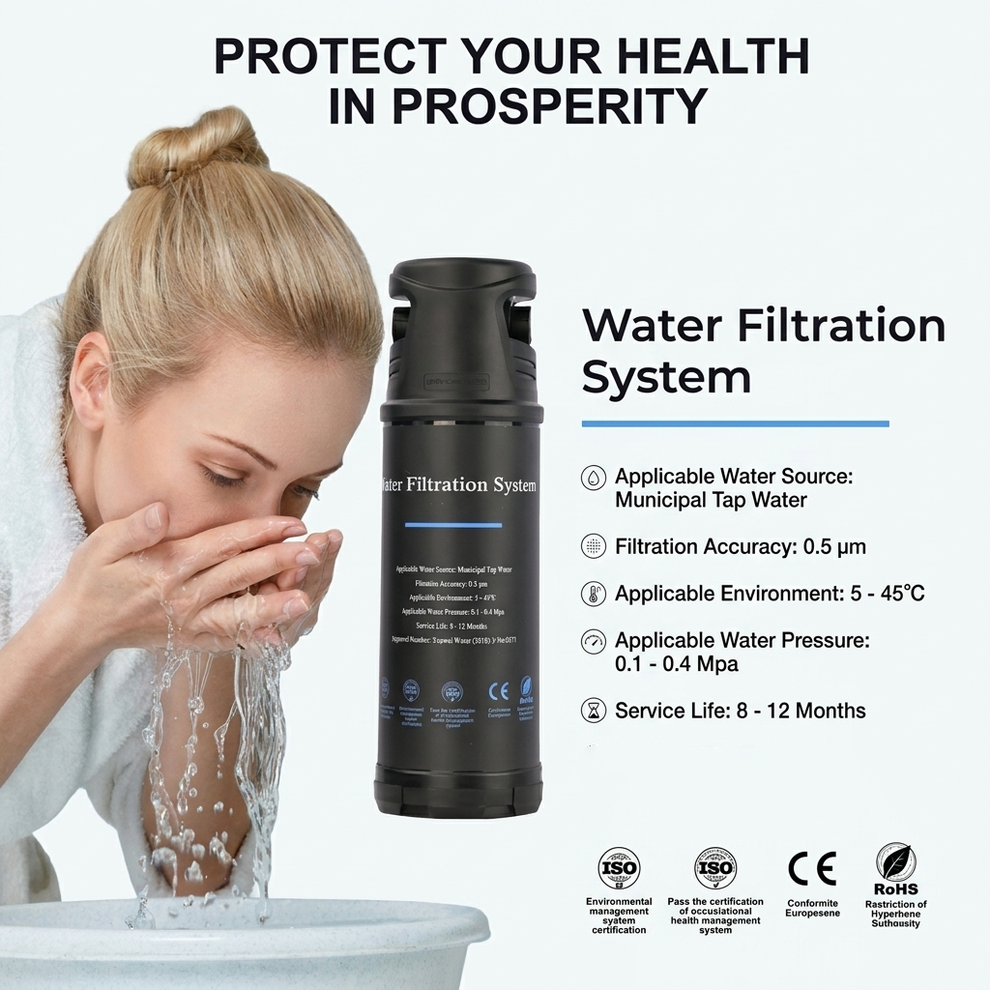
While reverse osmosis systems require active remineralization stages to correct stripped water chemistry, advanced ultrafiltration offers an elegant alternative: it stops micro-pollutants physically while preserving natural minerals in the water stream. The Puflow TM8-2 Under Sink Water Filter System uses a multi-stage 0.01-micron ultrafiltration membrane that removes cysts, bacteria, microplastics, and sediment while allowing healthy calcium and magnesium ions to flow through naturally.
Operating completely without electricity, storage tanks, or wastewater discharge, the TM8-2 delivers up to 400 liters per hour of filtered, mineral-rich drinking water with zero acidic pH drop and zero water waste.
View complete engineering data on the official TM8-2 Under Sink Water Filter System 0.01μm Ultrafiltration product page.
Costly Mistakes Buyers Make When Sourcing Remineralizing Filters
In our technical audits of residential water installations, homeowners regularly make four common errors when configuring remineralization systems:
- Installing Remineralization Upstream of the RO Storage Tank: In pressurized tank RO systems, placing the remineralization cartridge before the storage tank allows water to sit in contact with mineral media for hours. Over-dissolution occurs, resulting in excessive mineral concentrations and high TDS spikes on the first morning cup. The remineralization filter must always be placed downstream of the bladder tank, directly in-line to the dispensing faucet, ensuring uniform contact time as water flows.
- Assuming All Alkaline Mineral Cartridges Are Equal: Cheap remineralization cartridges sold online often use loose, non-certified crushed rocks, or pack sodium bicarbonate that dissolves in a week, leaving water acidic again. Demand cartridges certified to NSF/ANSI Standard 42 and 60, packed with food-grade crystalline calcite and high-purity magnesium oxide to ensure steady, prolonged mineral release.
- Failing to Monitor Cartridge Depletion Lifespans: Remineralization media dissolves gradually through natural chemical reactions. While the filter casing may show no physical signs of wear, the active calcite beads shrink and deplete over 6 to 12 months. Once depleted, water pH drops back down into acidic territory. Monitor water with an inexpensive digital TDS or pH pen every six months, replacing the cartridge when TDS drops below your target range.
- Confusing Water Softeners with Remineralizing Filters: Ion-exchange water softeners remove calcium and magnesium ions and replace them with sodium ions to prevent scale buildup in water heaters. A remineralizing filter does the opposite: it adds healthy calcium and magnesium ions back into pure drinking water. Expecting a water softener to provide healthy drinking water is a fundamental misunderstanding of water treatment chemistry.
Essential Sourcing and Procurement Considerations for 2026
Before purchasing a remineralizing water filter or an integrated reverse osmosis system, verify these four essential quality benchmarks:
- NSF/ANSI Standard 58 and 42 Certifications: Ensure the primary reverse osmosis system holds NSF/ANSI 58 certification for contaminant reduction, and verify that the remineralization media holds NSF/ANSI 42 or 60 certifications, guaranteeing the mineral bed introduces zero heavy metals or lead into your drinking water.
- Calcite to Corosex Mineral Ratio: In acidic waters (pH < 6.0), pure calcite dissolves slowly. High-performance remineralizers blend roughly 80% to 90% calcite with 10% to 20% magnesium oxide (corosex). This dual blend elevates pH quickly without over-saturating the water with alkalinity.
- Inline Quick-Connect Push-Fitting Construction: Choose cartridges built with integrated 1/4-inch or 3/8-inch push-connect fittings. Threaded NPT ports frequently leak under cyclical water-hammer pressures if technicians over-torque fittings during annual replacements.
- TDS and Hardness Recovery Guarantees: Review manufacturer specifications for post-filtration mineral contribution. A reliable remineralizer should consistently add 20 to 50 ppm of stable dissolved minerals under standard household flow rates (0.5 to 1.0 GPM), maintaining an alkaline pH between 7.5 and 8.5.
Expert Recommendation and Water Filtration Verdict
In most professional situations, we recommend never drinking unbuffered, pure reverse osmosis permeate on a permanent basis. Stripping all natural minerals out of municipal tap water removes harmful industrial contaminants, but leaves the water in an aggressive, acidic state that tastes flat and leaches metals from household pipes.
If you are committed to the filtration power of reverse osmosis to eliminate microplastics, arsenic, and PFAS, pairing your system with an active calcite and magnesium remineralizing filter is essential. It stabilizes pH between 7.5 and 8.5, restores crisp, refreshing spring-water taste, and provides bioavailable electrolytes with every glass. Alternatively, if your municipal water supply is free from heavy industrial metals and you want microplastic protection without the wastewater and acid imbalance of reverse osmosis, upgrading to a high-capacity ultrafiltration system like the Puflow TM8-2 provides clean, chemical-free filtration that preserves natural, healthy minerals straight from the tap.
Frequently Asked Questions (FAQ)
What does a remineralizing water filter do?
A remineralizing water filter restores healthy calcium and magnesium ions to purified water, raises acidic pH (typically 5.5–6.5) to a stable alkaline range (7.5–8.5), eliminates flat or bitter tastes, prevents the water from aggressively leaching metals from household plumbing, improves cellular hydration, and optimizes extraction profiles for brewing coffee and tea.
Is reverse osmosis water bad for you without remineralization?
Plain reverse osmosis water is free from harmful contaminants, but it is completely demineralized and slightly acidic due to dissolved carbon dioxide. The World Health Organization (WHO) notes that long-term consumption of demineralized water can increase cardiovascular risk factors, reduce dietary intake of calcium and magnesium, and cause mild electrolyte dilution over time. Adding a remineralization filter resolves these concerns.
How often do remineralizing water filter cartridges need to be replaced?
Remineralizing cartridges typically require replacement every 6 to 12 months, or after filtering approximately 750 to 1,500 gallons of water. Because the mineral media (calcite and magnesium oxide) dissolves gradually into the water stream, the media bed eventually depletes, and the water will revert to an acidic, low-TDS state if not replaced.
Does a remineralizing filter make water alkaline?
Yes. By dissolving natural calcium carbonate and magnesium oxide into acidic RO water, the filter neutralizes unbuffered carbonic acid and introduces bicarbonate ions, raising the water from an acidic pH (5.8 to 6.2) into a healthy, mild alkaline range of 7.5 to 8.5.
What is the difference between reverse osmosis with remineralization and ultrafiltration?
Reverse osmosis strips all dissolved solids (down to 0.0001 microns), requiring an extra remineralization stage to add minerals back into the water. Ultrafiltration uses a 0.01-micron membrane that blocks bacteria, parasites, and microplastics while allowing natural minerals to pass through freely, eliminating the need for a separate remineralization stage while generating zero wastewater.
Authoritative References
- World Health Organization (WHO): Health Risks from Drinking Demineralised Water - Nutrients in Drinking Water Guidelines
- NSF International: NSF/ANSI 58 Reverse Osmosis Drinking Water Treatment Systems & NSF/ANSI 42 Aesthetic Effects Standards
- Specialty Coffee Association (SCA): Water Quality Standards for Optimal Sensory Extraction and Brewing Mineral Chemistry